The Tech Edvocate

Top Menu

  • Advertisement
  • Apps
  • Home Page
  • Home Page Five (No Sidebar)
  • Home Page Four
  • Home Page Three
  • Home Page Two
  • Home Tech2
  • Icons [No Sidebar]
  • Left Sidbear Page
  • Lynch Educational Consulting
  • My Account
  • My Speaking Page
  • Newsletter Sign Up Confirmation
  • Newsletter Unsubscription
  • Our Brands
  • Page Example
  • Privacy Policy
  • Protected Content
  • Register
  • Request a Product Review
  • Shop
  • Shortcodes Examples
  • Signup
  • Start Here
    • Governance
    • Careers
    • Contact Us
  • Terms and Conditions
  • The Edvocate
  • The Tech Edvocate Product Guide
  • Topics
  • Write For Us
  • Advertise

Main Menu

  • Start Here
    • Our Brands
    • Governance
      • Lynch Educational Consulting, LLC.
      • Dr. Lynch’s Personal Website
      • Careers
    • Write For Us
    • The Tech Edvocate Product Guide
    • Contact Us
    • Books
    • Edupedia
    • Post a Job
    • The Edvocate Podcast
    • Terms and Conditions
    • Privacy Policy
  • Topics
    • Assistive Technology
    • Child Development Tech
    • Early Childhood & K-12 EdTech
    • EdTech Futures
    • EdTech News
    • EdTech Policy & Reform
    • EdTech Startups & Businesses
    • Higher Education EdTech
    • Online Learning & eLearning
    • Parent & Family Tech
    • Personalized Learning
    • Product Reviews
  • Advertise
  • Tech Edvocate Awards
  • The Edvocate
  • Pedagogue
  • School Ratings

logo

The Tech Edvocate

  • Start Here
    • Our Brands
    • Governance
      • Lynch Educational Consulting, LLC.
      • Dr. Lynch’s Personal Website
        • My Speaking Page
      • Careers
    • Write For Us
    • The Tech Edvocate Product Guide
    • Contact Us
    • Books
    • Edupedia
    • Post a Job
    • The Edvocate Podcast
    • Terms and Conditions
    • Privacy Policy
  • Topics
    • Assistive Technology
    • Child Development Tech
    • Early Childhood & K-12 EdTech
    • EdTech Futures
    • EdTech News
    • EdTech Policy & Reform
    • EdTech Startups & Businesses
    • Higher Education EdTech
    • Online Learning & eLearning
    • Parent & Family Tech
    • Personalized Learning
    • Product Reviews
  • Advertise
  • Tech Edvocate Awards
  • The Edvocate
  • Pedagogue
  • School Ratings
  • Devastating: Why Your Car Insurance Rates Are Skyrocketing in 2026 – And What You Can Do

  • 10,000+ Victims: This Accounting Giant’s Data Breach Just Got Much Worse

  • The Hidden Cost of EVs: Why Your Battery Could Cost More Than Your Car in 2026

  • Jensen Huang’s Shock Exit: This Unbelievable Scandal Just Rocked Nvidia and the AI World

  • Big Walk developer House House Confirms ‘Sparing’ Use of Gen AI – Press Start

  • Baffling: How a Cyber Breach at South Korea’s Top Security Watchdog Exposed Millions

  • Wenn Ordnung den Bildschirm beruhigt: Warum klare Abläufe Casino-Unterhaltung einladender machen

  • Reddit AI Reviews: The Quiet Reshaping of Online Opinion

  • The Chilling Truth: Iran Cyberattacks Europe’s Food and Blood Supplies

  • Anthropic’s $3.4 Billion Bet on Gas: The Unseen Cost of AI’s Future

Digital & Mobile Technology
Home›Digital & Mobile Technology›How Does AMD’s Ryzen 5 1600 Compare to Mainstream $200 CPUs?

How Does AMD’s Ryzen 5 1600 Compare to Mainstream $200 CPUs?
By Matthew Lynch
June 13, 2023
0
Spread the love

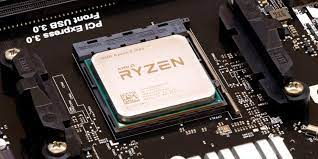
AMD’s Ryzen 5 1600 is a mid-range processor that offers a fantastic performance for its price point. It’s a six-core, twelve-thread CPU that can compete with mainstream CPUs that cost around $200. The Ryzen 5 1600 is undoubtedly a great choice for anyone looking to build a gaming PC, create content, or use their computer for heavy-duty work.

The Ryzen 5 1600 comes at a comparable price point as Intel’s i5-7600K, but in terms of performance, it’s closer to the i7-7700K, which is a more expensive CPU. The i5-7600K only has four cores and four threads, while the Ryzen 5 1600 has six cores and twelve threads, allowing for much more efficient and speedy processing. Additionally, the Ryzen 5 1600 has a base clock of 3.2 GHz, which can reach up to 3.6 GHz in turbo mode, whereas the i5-7600K has a base clock of 3.8 GHz and can reach up to 4.2 GHz in turbo mode. However, the Ryzen 5 1600 makes up for the difference in clock speed with a higher core count and thread count.

The Ryzen 5 1600’s performance can also be compared to the i5-8400, which is another popular mainstream CPU in the same price range. The i5-8400 has a higher base clock of 2.8 GHz, which can reach up to 4.0 GHz in turbo mode. However, it only has six threads compared to the Ryzen 5 1600’s twelve threads, which gives the Ryzen 5 1600 a significant advantage in multi-tasking and multi-threaded workloads.

When it comes to gaming performance, the Ryzen 5 1600 is slightly behind the i5-8400 and i5-7600K. However, the difference is not significant enough for the average user to notice. The Ryzen 5 1600’s gaming performance is still sufficient for most games, and it is more than capable of running modern games at 60 frames per second on high settings.

One of the significant advantages of the Ryzen 5 1600 over mainstream CPUs is its unlocked multiplier, which makes it easier for users to overclock the CPU and get even better performance. The Ryzen 5 1600’s TDP (thermal design power) is also lower than the i5-8400 and i5-7600K, which means that it consumes less power and generates less heat.

In conclusion, the Ryzen 5 1600 is an excellent CPU that is comparable to mainstream CPUs that cost around $200. It offers a higher core and thread count than its competitors, making it ideal for multi-tasking and multi-threaded workloads. Its gaming performance may be slightly lower than its competitors, but it’s still sufficient for most games. The Ryzen 5 1600’s unlocked multiplier and lower TDP make it a great option for those looking to overclock their CPU or build a more power-efficient system. Overall, anyone looking for an affordable yet powerful CPU should consider the Ryzen 5 1600.

Previous Article

Ways to Free Up Storage Space in ...

Next Article

The Best Apps to Count Calories on ...

Matthew Lynch

Related articles More from author

  • Digital & Mobile Technology

    Monkey’s Audio Definition: What is the APE Format?

    June 11, 2023
    By Matthew Lynch
  • Digital & Mobile Technology

    Why Is Apple Called “Apple”?

    August 5, 2023
    By Matthew Lynch
  • Digital & Mobile Technology

    What Is an Example of Spam Email?

    June 4, 2023
    By Matthew Lynch
  • Digital & Mobile Technology

    How to Fix It When Roku TV Won’t Turn On

    June 1, 2023
    By Matthew Lynch
  • Digital & Mobile Technology

    Best Game Consoles for Kids

    June 21, 2023
    By Matthew Lynch
  • Digital & Mobile Technology

    What and When Is Blue Hour in Photography?

    June 12, 2023
    By Matthew Lynch

Search

Login & Registration

  • Log in
  • Entries feed
  • Comments feed
  • WordPress.org

Newsletter

Signup for The Tech Edvocate Newsletter and have the latest in EdTech news and opinion delivered to your email address!

About Us

Since technology is not going anywhere and does more good than harm, adapting is the best course of action. That is where The Tech Edvocate comes in. We plan to cover the PreK-12 and Higher Education EdTech sectors and provide our readers with the latest news and opinion on the subject. From time to time, I will invite other voices to weigh in on important issues in EdTech. We hope to provide a well-rounded, multi-faceted look at the past, present, the future of EdTech in the US and internationally.

We started this journey back in June 2016, and we plan to continue it for many more years to come. I hope that you will join us in this discussion of the past, present and future of EdTech and lend your own insight to the issues that are discussed.

Newsletter

Signup for The Tech Edvocate Newsletter and have the latest in EdTech news and opinion delivered to your email address!

Contact Us

The Tech Edvocate
910 Goddin Street
Richmond, VA 23231
(601) 630-5238
[email protected]

Copyright © 2026 Matthew Lynch. All rights reserved.