The Tech Edvocate

Top Menu

  • Advertisement
  • Apps
  • Home Page
  • Home Page Five (No Sidebar)
  • Home Page Four
  • Home Page Three
  • Home Page Two
  • Home Tech2
  • Icons [No Sidebar]
  • Left Sidbear Page
  • Lynch Educational Consulting
  • My Account
  • My Speaking Page
  • Newsletter Sign Up Confirmation
  • Newsletter Unsubscription
  • Our Brands
  • Page Example
  • Privacy Policy
  • Protected Content
  • Register
  • Request a Product Review
  • Shop
  • Shortcodes Examples
  • Signup
  • Start Here
    • Governance
    • Careers
    • Contact Us
  • Terms and Conditions
  • The Edvocate
  • The Tech Edvocate Product Guide
  • Topics
  • Write For Us
  • Advertise

Main Menu

  • Start Here
    • Our Brands
    • Governance
      • Lynch Educational Consulting, LLC.
      • Dr. Lynch’s Personal Website
      • Careers
    • Write For Us
    • The Tech Edvocate Product Guide
    • Contact Us
    • Books
    • Edupedia
    • Post a Job
    • The Edvocate Podcast
    • Terms and Conditions
    • Privacy Policy
  • Topics
    • Assistive Technology
    • Child Development Tech
    • Early Childhood & K-12 EdTech
    • EdTech Futures
    • EdTech News
    • EdTech Policy & Reform
    • EdTech Startups & Businesses
    • Higher Education EdTech
    • Online Learning & eLearning
    • Parent & Family Tech
    • Personalized Learning
    • Product Reviews
  • Advertise
  • Tech Edvocate Awards
  • The Edvocate
  • Pedagogue
  • School Ratings

logo

The Tech Edvocate

  • Start Here
    • Our Brands
    • Governance
      • Lynch Educational Consulting, LLC.
      • Dr. Lynch’s Personal Website
        • My Speaking Page
      • Careers
    • Write For Us
    • The Tech Edvocate Product Guide
    • Contact Us
    • Books
    • Edupedia
    • Post a Job
    • The Edvocate Podcast
    • Terms and Conditions
    • Privacy Policy
  • Topics
    • Assistive Technology
    • Child Development Tech
    • Early Childhood & K-12 EdTech
    • EdTech Futures
    • EdTech News
    • EdTech Policy & Reform
    • EdTech Startups & Businesses
    • Higher Education EdTech
    • Online Learning & eLearning
    • Parent & Family Tech
    • Personalized Learning
    • Product Reviews
  • Advertise
  • Tech Edvocate Awards
  • The Edvocate
  • Pedagogue
  • School Ratings
  • A Visitors Guide to Long Beach (CA), United States

  • A Visitor’s Guide to Fresno (CA), United States

  • A Visitors Guide to New Orleans (LA), United States

  • A Visitors Guide to Sacramento (CA), United States

  • A Visitors Guide to Lyon, France

  • JisuLife Ultra2 Portable Fan: A Powerful Multi-Function Cooling Solution

  • A Visitors Guide to Viña del Mar, Chile

  • A Visitors Guide to Århus, Denmark

  • A Visitors Guide to Bakersfield (CA), United States

  • A Visitors Guide to Aurora (CO), United States

Digital & Mobile Technology
Home›Digital & Mobile Technology›How Do Body Composition Scales Work and How Accurate Are They?

How Do Body Composition Scales Work and How Accurate Are They?
By Matthew Lynch
June 14, 2023
0
Spread the love

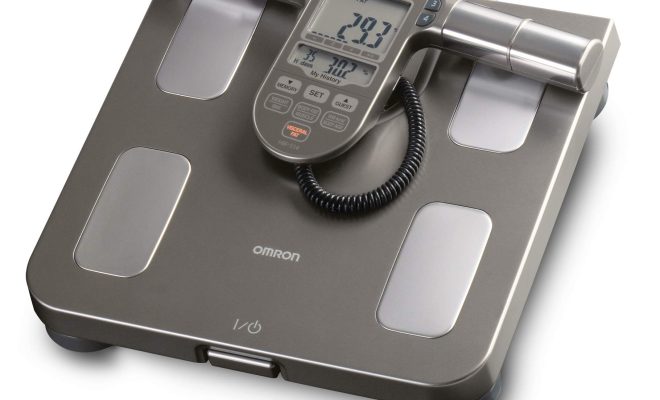
Body composition scales are becoming increasingly popular in modern society, as people are becoming more conscious about their health and fitness levels. These scales can measure body fat, muscle mass, water content, and even bone density, giving individuals insight into their overall health and physical wellbeing. But how do these body composition scales actually work, and just how accurate are they? Let’s dive in and explore.

How Body Composition Scales Work

Body composition scales typically use one of two methods to measure body composition: bioelectrical impedance analysis (BIA) or dual-energy X-ray absorptiometry (DXA).

BIA involves sending a small electrical current through the body via conductive pads on the scale’s surface. The current flows more easily through certain tissues, such as muscle, compared to others, such as fat. Based on the resistance to the electrical current, the scale can calculate the relative amounts of muscle, fat, and other tissues in the body.

DXA, on the other hand, uses low-dose X-rays to measure the amount of bone, fat, and muscle in the body. DXA scans typically provide more accurate results than BIA, but they are also more expensive and require specialized equipment.

Accuracy of Body Composition Scales

While body composition scales are useful tools for tracking changes in body composition, they are not always 100% accurate. Factors that can affect the accuracy of body composition scales include hydration levels, body temperature, and body positioning on the scale.

For example, if a person is dehydrated, they may appear more muscular than they actually are because the electrical current can pass more easily through dry tissue. Similarly, standing on the scale with one foot slightly off-center can throw off the readings.

Overall, the accuracy of body composition scales varies from person to person and according to the specific scale being used. Some scales may require frequent recalibration to maintain accuracy, while others may have inherent accuracy limitations due to the technology used.


Previous Article

How to Fast Forward on Hulu

Next Article

How to Use iCloud With a Windows ...

Matthew Lynch

Related articles More from author

  • Digital & Mobile Technology

    How to Access iCloud From Your Android Phone

    June 12, 2023
    By Matthew Lynch
  • Digital & Mobile Technology

    Reasons Why You Should Pick Android Over iPhone

    August 5, 2023
    By Matthew Lynch
  • Digital & Mobile Technology

    What Is a BAK File?

    June 6, 2023
    By Matthew Lynch
  • Digital & Mobile Technology

    Android Apps for Sending SMS Messages in Bulk

    June 15, 2023
    By Matthew Lynch
  • Digital & Mobile Technology

    How Many Users Does Spotify Have?

    June 12, 2023
    By Matthew Lynch
  • Digital & Mobile Technology

    How to Compare Two Columns in Excel

    August 5, 2023
    By Matthew Lynch

Search

Login & Registration

  • Register
  • Log in
  • Entries feed
  • Comments feed
  • WordPress.org

Newsletter

Signup for The Tech Edvocate Newsletter and have the latest in EdTech news and opinion delivered to your email address!

About Us

Since technology is not going anywhere and does more good than harm, adapting is the best course of action. That is where The Tech Edvocate comes in. We plan to cover the PreK-12 and Higher Education EdTech sectors and provide our readers with the latest news and opinion on the subject. From time to time, I will invite other voices to weigh in on important issues in EdTech. We hope to provide a well-rounded, multi-faceted look at the past, present, the future of EdTech in the US and internationally.

We started this journey back in June 2016, and we plan to continue it for many more years to come. I hope that you will join us in this discussion of the past, present and future of EdTech and lend your own insight to the issues that are discussed.

Newsletter

Signup for The Tech Edvocate Newsletter and have the latest in EdTech news and opinion delivered to your email address!

Contact Us

The Tech Edvocate
910 Goddin Street
Richmond, VA 23231
(601) 630-5238
[email protected]

Copyright © 2025 Matthew Lynch. All rights reserved.