The Tech Edvocate

Top Menu

  • Advertisement
  • Apps
  • Home Page
  • Home Page Five (No Sidebar)
  • Home Page Four
  • Home Page Three
  • Home Page Two
  • Home Tech2
  • Icons [No Sidebar]
  • Left Sidbear Page
  • Lynch Educational Consulting
  • My Account
  • My Speaking Page
  • Newsletter Sign Up Confirmation
  • Newsletter Unsubscription
  • Our Brands
  • Page Example
  • Privacy Policy
  • Protected Content
  • Register
  • Request a Product Review
  • Shop
  • Shortcodes Examples
  • Signup
  • Start Here
    • Governance
    • Careers
    • Contact Us
  • Terms and Conditions
  • The Edvocate
  • The Tech Edvocate Product Guide
  • Topics
  • Write For Us
  • Advertise

Main Menu

  • Start Here
    • Our Brands
    • Governance
      • Lynch Educational Consulting, LLC.
      • Dr. Lynch’s Personal Website
      • Careers
    • Write For Us
    • The Tech Edvocate Product Guide
    • Contact Us
    • Books
    • Edupedia
    • Post a Job
    • The Edvocate Podcast
    • Terms and Conditions
    • Privacy Policy
  • Topics
    • Assistive Technology
    • Child Development Tech
    • Early Childhood & K-12 EdTech
    • EdTech Futures
    • EdTech News
    • EdTech Policy & Reform
    • EdTech Startups & Businesses
    • Higher Education EdTech
    • Online Learning & eLearning
    • Parent & Family Tech
    • Personalized Learning
    • Product Reviews
  • Advertise
  • Tech Edvocate Awards
  • The Edvocate
  • Pedagogue
  • School Ratings

logo

The Tech Edvocate

  • Start Here
    • Our Brands
    • Governance
      • Lynch Educational Consulting, LLC.
      • Dr. Lynch’s Personal Website
        • My Speaking Page
      • Careers
    • Write For Us
    • The Tech Edvocate Product Guide
    • Contact Us
    • Books
    • Edupedia
    • Post a Job
    • The Edvocate Podcast
    • Terms and Conditions
    • Privacy Policy
  • Topics
    • Assistive Technology
    • Child Development Tech
    • Early Childhood & K-12 EdTech
    • EdTech Futures
    • EdTech News
    • EdTech Policy & Reform
    • EdTech Startups & Businesses
    • Higher Education EdTech
    • Online Learning & eLearning
    • Parent & Family Tech
    • Personalized Learning
    • Product Reviews
  • Advertise
  • Tech Edvocate Awards
  • The Edvocate
  • Pedagogue
  • School Ratings
  • 100 Best Apps for Active Recall

  • 100 Best Apps for Spaced Repetition

  • 100 Best Apps for Building a Second Brain

  • 100 Best Apps for Second Brain

  • A Casino Bonus Is Not Its Cash Value: How to Read Reviews Clearly

  • 100 Best Apps for Zettelkasten

  • 100 Best Apps for Bullet Journaling

  • 100 Best Apps for Getting Things Done

  • 100 Best Apps for GTD Method

  • 100 Best Apps for Overcoming Writer’s Block

Digital & Mobile Technology
Home›Digital & Mobile Technology›GPT-4 vs. GPT-3.5: 5 Key Differences Explained

GPT-4 vs. GPT-3.5: 5 Key Differences Explained
By Matthew Lynch
July 31, 2023
0
Spread the love

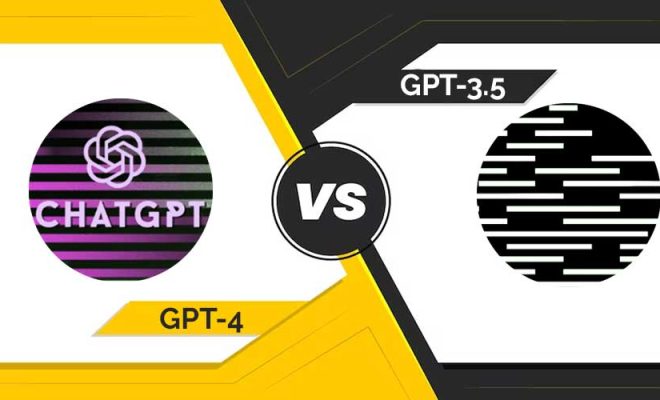
As technology advances, so do the capabilities of artificial intelligence (AI) models like GPT-3 and its predecessor GPT-2. Now, with the anticipated release of GPT-4, many are eagerly anticipating the next level of AI language processing power. But how does it compare to GPT-3.5, a rumored, intermediate version of the model? Here are 5 key differences between the two.

1. Size and parameters

Size matters when it comes to deep learning models like GPT. GPT-3, released in 2020, boasts 175 billion parameters, making it the largest AI language model to date. GPT-4, however, purportedly plans to surpass this with a whopping 300 billion parameters.

GPT-3.5, meanwhile, appears to be a false rumor. Some speculate it refers to an internal version of GPT-3 modified by OpenAI for commercial clients, rather than a distinct model. Either way, it’s unlikely to have a significant impact on the development of GPT-4.

2. Training data

One of the factors that sets GPT-3 apart from its predecessors is the sheer amount of training data it was fed – over 45 terabytes of internet text. GPT-4 intends to surpass this too, by using both raw text and structured data from the internet, as well as other sources like books and scientific papers.

GPT-3.5, if it exists, is unlikely to have had access to data significantly different from the original GPT-3 training dataset.

3. Speed and efficiency

While larger models are generally more powerful, they typically come at a cost of speed and efficiency. GPT-4 will likely need high-performance computing infrastructure to run effectively, however, OpenAI may have found ways to optimize it for real-world applications to strike a balance. In addition, new hardware and software optimizations may help to compensate for the expected performance hit.

GPT-3.5, if it exists, is likely to have a similar overhead cost as GPT-3.

4. Multimodality

GPT-3 is particularly adept at language processing, but it still lacks some multimodal capabilities. For instance, it has proven adept with images but struggles with more challenging multimedia inputs like video thus leaving the domain of multimodal capabilities to be broken by other models like DALL-E. GPT-4 plans to integrate multimodality into language models to better understand and reason with information.

GPT-3.5, if it exists, is unlikely to address this issue as GPT-3 is already adept at multimodality processing.

5. Quality and accuracy

Ultimately, the value of any AI model depends on its quality and accuracy at performing tasks like language translation, dialogue generation, and more. GPT-4 hopes to expand on the improvements made by GPT-3 with better question-answering capabilities, more natural language generation techniques, and better overall accuracy. These improvements may come at the cost of the model’s size and training requirements, or adequate hardware and computational capacity.

GPT-3.5, if it exists, would likely not bring any significant new improvements in quality and accuracy compared to GPT-3.

In conclusion, while much is still unknown about GPT-4 and the validity of GPT-3.5, it’s clear that GPT models will continue to evolve and become more powerful. Businesses and industries that rely on natural language processing capabilities should carefully consider these key differences when making decisions about using AI technology. With new capabilities come new challenges and considerations, so it’s important to stay informed about the latest developments in AI language models.


Previous Article

The 4 Best Android Apps for Taking ...

Next Article

What does “SMS Threaded view” mean on ...

Matthew Lynch

Related articles More from author

  • Digital & Mobile Technology

    How to Use Battery Saver Mode on Android

    June 1, 2023
    By Matthew Lynch
  • Digital & Mobile Technology

    Discord Nitro vs. Discord Nitro Classic: Understanding the Differences

    August 5, 2023
    By Matthew Lynch
  • Digital & Mobile Technology

    What Is a Network Switch and How Does It Work?

    June 13, 2023
    By Matthew Lynch
  • Digital & Mobile Technology

    You Can Now Blend Spotify Playlists With Friends

    June 23, 2023
    By Matthew Lynch
  • Digital & Mobile Technology

    Why Does Restarting Fix Many Computer Problems?

    June 12, 2023
    By Matthew Lynch
  • Digital & Mobile Technology

    Linksys Router Admin IP Address 192.168.1.1

    June 11, 2023
    By Matthew Lynch

Search

Login & Registration

  • Log in
  • Entries feed
  • Comments feed
  • WordPress.org

Newsletter

Signup for The Tech Edvocate Newsletter and have the latest in EdTech news and opinion delivered to your email address!

About Us

Since technology is not going anywhere and does more good than harm, adapting is the best course of action. That is where The Tech Edvocate comes in. We plan to cover the PreK-12 and Higher Education EdTech sectors and provide our readers with the latest news and opinion on the subject. From time to time, I will invite other voices to weigh in on important issues in EdTech. We hope to provide a well-rounded, multi-faceted look at the past, present, the future of EdTech in the US and internationally.

We started this journey back in June 2016, and we plan to continue it for many more years to come. I hope that you will join us in this discussion of the past, present and future of EdTech and lend your own insight to the issues that are discussed.

Newsletter

Signup for The Tech Edvocate Newsletter and have the latest in EdTech news and opinion delivered to your email address!

Contact Us

The Tech Edvocate
910 Goddin Street
Richmond, VA 23231
(601) 630-5238
[email protected]

Copyright © 2026 Matthew Lynch. All rights reserved.