The Tech Edvocate

Top Menu

  • Advertisement
  • Apps
  • Home Page
  • Home Page Five (No Sidebar)
  • Home Page Four
  • Home Page Three
  • Home Page Two
  • Home Tech2
  • Icons [No Sidebar]
  • Left Sidbear Page
  • Lynch Educational Consulting
  • My Account
  • My Speaking Page
  • Newsletter Sign Up Confirmation
  • Newsletter Unsubscription
  • Our Brands
  • Page Example
  • Privacy Policy
  • Protected Content
  • Register
  • Request a Product Review
  • Shop
  • Shortcodes Examples
  • Signup
  • Start Here
    • Governance
    • Careers
    • Contact Us
  • Terms and Conditions
  • The Edvocate
  • The Tech Edvocate Product Guide
  • Topics
  • Write For Us
  • Advertise

Main Menu

  • Start Here
    • Our Brands
    • Governance
      • Lynch Educational Consulting, LLC.
      • Dr. Lynch’s Personal Website
      • Careers
    • Write For Us
    • The Tech Edvocate Product Guide
    • Contact Us
    • Books
    • Edupedia
    • Post a Job
    • The Edvocate Podcast
    • Terms and Conditions
    • Privacy Policy
  • Topics
    • Assistive Technology
    • Child Development Tech
    • Early Childhood & K-12 EdTech
    • EdTech Futures
    • EdTech News
    • EdTech Policy & Reform
    • EdTech Startups & Businesses
    • Higher Education EdTech
    • Online Learning & eLearning
    • Parent & Family Tech
    • Personalized Learning
    • Product Reviews
  • Advertise
  • Tech Edvocate Awards
  • The Edvocate
  • Pedagogue
  • School Ratings

logo

The Tech Edvocate

  • Start Here
    • Our Brands
    • Governance
      • Lynch Educational Consulting, LLC.
      • Dr. Lynch’s Personal Website
        • My Speaking Page
      • Careers
    • Write For Us
    • The Tech Edvocate Product Guide
    • Contact Us
    • Books
    • Edupedia
    • Post a Job
    • The Edvocate Podcast
    • Terms and Conditions
    • Privacy Policy
  • Topics
    • Assistive Technology
    • Child Development Tech
    • Early Childhood & K-12 EdTech
    • EdTech Futures
    • EdTech News
    • EdTech Policy & Reform
    • EdTech Startups & Businesses
    • Higher Education EdTech
    • Online Learning & eLearning
    • Parent & Family Tech
    • Personalized Learning
    • Product Reviews
  • Advertise
  • Tech Edvocate Awards
  • The Edvocate
  • Pedagogue
  • School Ratings
  • The AI Education Revolution: 10 Urgent Questions Universities Must Answer Now

  • Explosive Zero-Day Vulnerability: 15 Million Websites Under Siege – Is Yours Next?

  • The Ultimate Kuru Footwear Trio: A Comfort Revolution for Every Adventure

  • Why Your Mortgage Could Be Denied by Biased AI – And What the Fed Is Doing About It

  • Unprecedented: Lawsuit Demands Total AI Shutdown Amid Rising Global Panic

  • The Astonishing Truth: Microcredentials Now Trump MBAs for Data Science Jobs

  • The Astonishing Twist: AI Cuts Your Job, Then Helps You Sue Your Boss

  • The Staggering Truth About Palo Alto’s $4.5 Billion AI Bet

  • Mind-Blowing: Satellite Metals Now Outweigh Meteoroids, Sparking Urgent Insurance Crisis

  • The Silent Threat From Above: Your Sky Is Changing, And Here’s Why

Special Education
Home›Special Education›Five Top Technology Trends In Special Education

Five Top Technology Trends In Special Education

By Matthew Lynch
March 26, 2021
0
Spread the love

Researchers and ed-tech companies, backed by changing state policies, technological advances, and continual encouragement from advocates, are creating new strategies and tools to better serve learners with special needs. 

Experts state that there is a growing recognition underlying various new trends that creating learning resources from the start with students with special learning needs in mind can actually benefit all learners. 

Some promising technologies, like virtual reality, are still in the experimental stage and might stay there for a little while longer. However, there is still a lot to be hopeful about. We’re going to show you five trends in technology that help special needs K-12 students. 

Better Personalization

While there are a number of innovative technologies that help users with poor eyesight to read the information on their screens, and ones that ‘speak’ the content on the screen for users who aren’t able to see at all, it’s frustrating to have to reset these preferences each time you start fresh on a computer or application. 

This doesn’t have to be the case anymore. Your profiles can now follow you when you log on to different devices so that your settings are ready right away. Google is leading this innovation, thanks to its massive contribution to K-12 with web-based Chromebooks and G-Suite productivity tools. 

Early Screenings

For the last 18 years, learners across the country have had their foundational reading abilities assessed with a tool called mCLASS, which was created by Amplify, an ed-tech company. However, Amplify recently modified this software in response to new legislation in many states.

Now, mCLASS can screen for dyslexia. However, it isn’t just Amplify that is doing this, and it is not just for dyslexia, and not just for schools. Babynoggin, a startup company, is targeting pediatricians with a mobile app suite that can screen kids for motor skill-development delays. 

VR

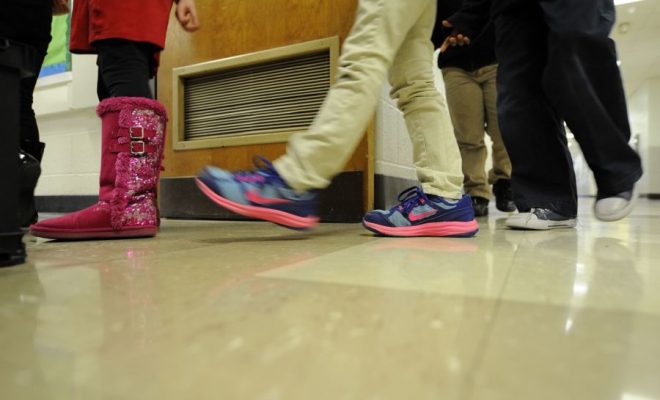
Lining up in the cafeteria or navigating through a busy hallway can be a nightmare for students with autism, but some professionals believe that practice in a VR environment can help. VR for students with disabilities includes settings that encourage mindfulness and let users with motor function problems interact with objects in ways that wouldn’t be possible physically. 

Accessible Computer Science for All

Bootstrap is a research project with its headquarters at Brown University. They develop curricular modules for computer science that are meant to be used in schools’ existing physics and math classes. 

One of their goals is to make their user interfaces more accessible, especially for students that can’t use a computer mouse. Another is to add a screen reader that can read the content of different programs. 

Opening Up OER

There can be many benefits when schools embrace open educational resources, but it also poses a problem – PDFs. This common file used for text and graphic documents does not work well with screen readers. 

However, there are new tools in development to combat these problems – tools that would make it easier for OER developers to put their content out in formats that are more adaptable. 

Concluding Thoughts

Now that technology is becoming an integral part of the classroom, we need to start paying more attention to the needs of special-ed learners than ever before. Technology should benefit all, not just the able.


Previous Article

Sharing Tools for Measuring Impactful Technology Use

Next Article

Introducing Game Design Into the Modern Classroom

Matthew Lynch

Related articles More from author

  • Special Education

    Evidence-Based SEN Practice: Enhance Learning & Assessment

    March 30, 2025
    By Matthew Lynch
  • Special Education

    Identifying Effective IEP Goals For Reading: Everything You Need to Know

    February 23, 2023
    By Matthew Lynch
  • Special Education

    Special Education is Should Be Temporary, Not Permanent

    January 9, 2023
    By Matthew Lynch
  • Adaptive LearningAdult EducationClassroom ManagementEarly ChildhoodEarly Childhood & K-12 EdTechElementary EducationElementary SchoolHigh SchoolHigher EducationK-12Matthew LynchMiddle SchoolMiddle School EducationOnline Learning & eLearningPreK-12Secondary EducationSpecial EducationStudents

    The Two Main Barriers Against Deep Learning

    October 23, 2020
    By Matthew Lynch
  • Special Education

    Examining the Special Needs Graduation Conundrum

    June 13, 2023
    By Matthew Lynch
  • Special Education

    Special Needs Kids Get A Voice of Their Own

    July 21, 2020
    By Matthew Lynch

Search

Login & Registration

  • Log in
  • Entries feed
  • Comments feed
  • WordPress.org

Newsletter

Signup for The Tech Edvocate Newsletter and have the latest in EdTech news and opinion delivered to your email address!

About Us

Since technology is not going anywhere and does more good than harm, adapting is the best course of action. That is where The Tech Edvocate comes in. We plan to cover the PreK-12 and Higher Education EdTech sectors and provide our readers with the latest news and opinion on the subject. From time to time, I will invite other voices to weigh in on important issues in EdTech. We hope to provide a well-rounded, multi-faceted look at the past, present, the future of EdTech in the US and internationally.

We started this journey back in June 2016, and we plan to continue it for many more years to come. I hope that you will join us in this discussion of the past, present and future of EdTech and lend your own insight to the issues that are discussed.

Newsletter

Signup for The Tech Edvocate Newsletter and have the latest in EdTech news and opinion delivered to your email address!

Contact Us

The Tech Edvocate
910 Goddin Street
Richmond, VA 23231
(601) 630-5238
[email protected]

Copyright © 2026 Matthew Lynch. All rights reserved.