The Tech Edvocate

Top Menu

  • Advertisement
  • Apps
  • Home Page
  • Home Page Five (No Sidebar)
  • Home Page Four
  • Home Page Three
  • Home Page Two
  • Home Tech2
  • Icons [No Sidebar]
  • Left Sidbear Page
  • Lynch Educational Consulting
  • My Account
  • My Speaking Page
  • Newsletter Sign Up Confirmation
  • Newsletter Unsubscription
  • Our Brands
  • Page Example
  • Privacy Policy
  • Protected Content
  • Register
  • Request a Product Review
  • Shop
  • Shortcodes Examples
  • Signup
  • Start Here
    • Governance
    • Careers
    • Contact Us
  • Terms and Conditions
  • The Edvocate
  • The Tech Edvocate Product Guide
  • Topics
  • Write For Us
  • Advertise

Main Menu

  • Start Here
    • Our Brands
    • Governance
      • Lynch Educational Consulting, LLC.
      • Dr. Lynch’s Personal Website
      • Careers
    • Write For Us
    • The Tech Edvocate Product Guide
    • Contact Us
    • Books
    • Edupedia
    • Post a Job
    • The Edvocate Podcast
    • Terms and Conditions
    • Privacy Policy
  • Topics
    • Assistive Technology
    • Child Development Tech
    • Early Childhood & K-12 EdTech
    • EdTech Futures
    • EdTech News
    • EdTech Policy & Reform
    • EdTech Startups & Businesses
    • Higher Education EdTech
    • Online Learning & eLearning
    • Parent & Family Tech
    • Personalized Learning
    • Product Reviews
  • Advertise
  • Tech Edvocate Awards
  • The Edvocate
  • Pedagogue
  • School Ratings

logo

The Tech Edvocate

  • Start Here
    • Our Brands
    • Governance
      • Lynch Educational Consulting, LLC.
      • Dr. Lynch’s Personal Website
        • My Speaking Page
      • Careers
    • Write For Us
    • The Tech Edvocate Product Guide
    • Contact Us
    • Books
    • Edupedia
    • Post a Job
    • The Edvocate Podcast
    • Terms and Conditions
    • Privacy Policy
  • Topics
    • Assistive Technology
    • Child Development Tech
    • Early Childhood & K-12 EdTech
    • EdTech Futures
    • EdTech News
    • EdTech Policy & Reform
    • EdTech Startups & Businesses
    • Higher Education EdTech
    • Online Learning & eLearning
    • Parent & Family Tech
    • Personalized Learning
    • Product Reviews
  • Advertise
  • Tech Edvocate Awards
  • The Edvocate
  • Pedagogue
  • School Ratings
  • The Brutal Truth: Why K-12 Cybersecurity Needs More Than Just Awareness

  • The Unseen Threat: How K-12 Cybersecurity Training Is Quietly Reshaping Education

  • The Staggering Truth: K-12 Cybersecurity Education Is Failing – Here’s How to Fix It

  • Why Millions Are Ditching Degrees For This Career-Boosting Secret

  • 7 Crucial Micro-Credentials Boosting Recent Grads’ Salaries by 15%

  • The Brutal Truth: Why Your College Degree Isn’t Enough Anymore

  • The Ethical AI Auditor Boom: Why Salaries Are Skyrocketing Globally

  • This Crucial Skill Now Pays $150,000 Starting — Here’s How to Get Certified in 2024

  • This Unforeseen Tech Job Pays Six Figures — And You Can Start Today

  • One Stunning Reason Why Quantum Certifications Trump Traditional IT

Digital & Mobile Technology
Home›Digital & Mobile Technology›DNS Caching and How It Makes Your Internet Better

DNS Caching and How It Makes Your Internet Better
By Matthew Lynch
July 6, 2023
0
Spread the love

DNS (Domain Name System) caching is a process that takes place behind the scenes every time you access a website. It’s an important feature that makes your internet experience smoother and faster, but many people don’t know what it is or how it works.

At its simplest, DNS caching is the process of storing previously looked up domain name information in a local cache on your computer or device. This means that when you visit a website, your browser doesn’t have to look up the IP address associated with that domain name every time. Instead, the information is already stored in your DNS cache, so your browser can retrieve it more quickly.

But why does this matter to you? The answer lies in the way the internet works.

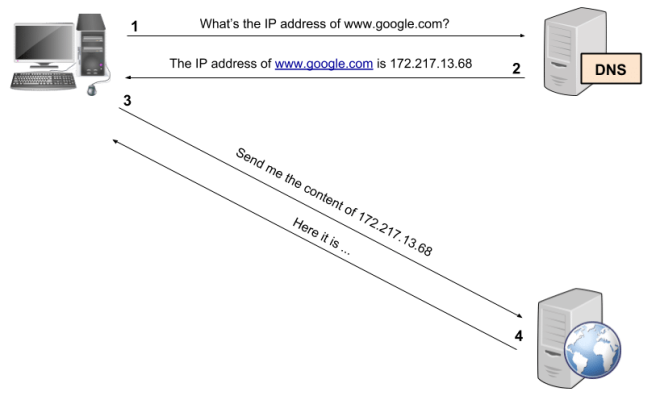
When you enter a URL into your browser, that address is essentially a human-readable name that the internet can use to find the corresponding IP address associated with the website. Think of it like looking up a phone number in a phone book – you know the name of the person or business you want to call, but you need a phone number to actually connect.

In the early days of the internet, every time you accessed a website, your computer would query a DNS server to get the IP address associated with that domain name. This could take time, especially if the DNS server was located far away or was under heavy traffic load. In some cases, it could take several seconds to complete the lookup process.

But with DNS caching, your computer can store that IP address information locally, so you don’t have to go through the lookup process every time. This means that when you visit a website you’ve been to before, your browser can retrieve the IP address from its local cache and load the site much more quickly.

In addition to speeding up website access, DNS caching also reduces the load on DNS servers by serving more requests from the local cache. This means that DNS servers can handle more traffic with fewer resources, which ultimately makes the internet as a whole more efficient and reliable.

Of course, DNS caching isn’t perfect. If a website changes its IP address or domain name, your local DNS cache won’t know about it until the cached information expires or is cleared manually. This can lead to errors and slow website access until the new information is cached.

But overall, DNS caching is an important feature that helps make the internet faster, more reliable, and more efficient. It’s a feature that most people take for granted, but it plays a critical role in keeping the web running smoothly. So the next time you load a website quickly, remember that DNS caching is working behind the scenes to make it happen.


Previous Article

What Is AF-Lock? (Also FE, AF, AE ...

Next Article

How to Copy and Paste on a ...

Matthew Lynch

Related articles More from author

  • Digital & Mobile Technology

    Ways to Find Hidden Cameras Using Your Mobile Phone

    August 5, 2023
    By Matthew Lynch
  • Digital & Mobile Technology

    The Best HTML and CSS Projects for Beginners

    June 15, 2023
    By Matthew Lynch
  • Digital & Mobile Technology

    How to Block Your Number When You’re Texting Someone

    May 19, 2023
    By Matthew Lynch
  • Digital & Mobile Technology

    How to Stop iMessages From Popping up on Other Devices

    June 12, 2023
    By Matthew Lynch
  • Digital & Mobile Technology

    How to Turn On the Flash for Your iPhone Camera

    August 5, 2023
    By Matthew Lynch
  • Digital & Mobile Technology

    How to Use SSH in Windows: Easy Ways

    June 21, 2023
    By Matthew Lynch

Search

Login & Registration

  • Log in
  • Entries feed
  • Comments feed
  • WordPress.org

Newsletter

Signup for The Tech Edvocate Newsletter and have the latest in EdTech news and opinion delivered to your email address!

About Us

Since technology is not going anywhere and does more good than harm, adapting is the best course of action. That is where The Tech Edvocate comes in. We plan to cover the PreK-12 and Higher Education EdTech sectors and provide our readers with the latest news and opinion on the subject. From time to time, I will invite other voices to weigh in on important issues in EdTech. We hope to provide a well-rounded, multi-faceted look at the past, present, the future of EdTech in the US and internationally.

We started this journey back in June 2016, and we plan to continue it for many more years to come. I hope that you will join us in this discussion of the past, present and future of EdTech and lend your own insight to the issues that are discussed.

Newsletter

Signup for The Tech Edvocate Newsletter and have the latest in EdTech news and opinion delivered to your email address!

Contact Us

The Tech Edvocate
910 Goddin Street
Richmond, VA 23231
(601) 630-5238
[email protected]

Copyright © 2026 Matthew Lynch. All rights reserved.