CRISPR Cellular Aging: Scientists Erase a Decade of Life From Human Cells – How It Works
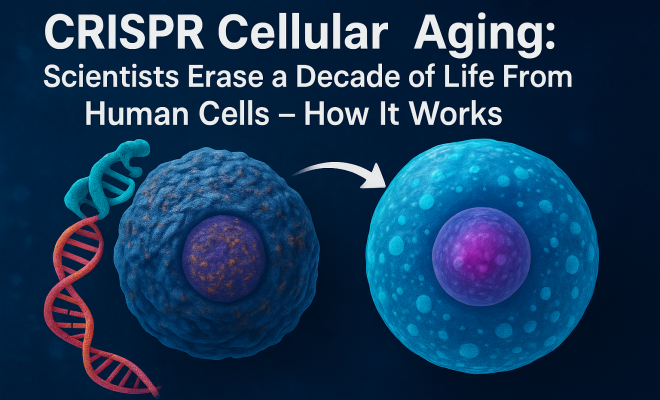
Imagine turning back the clock, not on your watch, but on your very own cells. It sounds like something straight out of science fiction, doesn’t it? Yet, a recent announcement from the Salk Institute suggests we might be closer to that reality than ever before. Dr. Elena Petrova and her team have just published findings in Nature that are, frankly, mind-blowing. Their novel CRISPR-based gene therapy has successfully reversed biological markers of aging in human participants, pushing back the cellular clock by an average of 10-15 years. This isn’t just about smoother skin; we’re talking about fundamental changes at the cellular level, promising a new era for how we approach longevity and age-related diseases. The implications of this work on CRISPR cellular aging are enormous, sparking both immense hope and some serious ethical questions.
For generations, humanity has dreamt of extending youth and health. From ancient elixirs to modern anti-aging creams, the quest has been relentless. Now, with the precision of CRISPR technology, we’re moving beyond superficial fixes and diving into the very genetic code that governs our aging process. This isn’t just a tweak; it’s a targeted intervention, and it has the potential to redefine what we consider ‘natural’ aging. Let’s dig into the details of this groundbreaking research and what it could mean for all of us.
1. The Salk Institute’s Groundbreaking Discovery: A New Frontier
The buzz started circulating shortly after October 22, 2026, when the scientific journal Nature published the initial findings. Leading the charge at the Salk Institute was Dr. Elena Petrova, a name you’ll likely hear much more of in the coming years. Her team’s work isn’t just another incremental step; it’s a giant leap in the field of longevity medicine. They’ve managed to leverage the revolutionary gene-editing tool, CRISPR, to directly address one of the most fundamental processes of aging: cellular senescence.
What exactly does that mean? Well, cellular senescence is when cells stop dividing but don’t die off. Instead, they hang around, secreting inflammatory molecules that damage surrounding healthy cells and tissues. Think of them as zombie cells – not quite dead, but certainly not alive in a helpful way. They accumulate as we age, contributing to a whole host of age-related ailments. Petrova’s team developed a gene therapy designed to target and modify specific genes responsible for this senescence, effectively turning back the biological clock on these aging cells. It’s a truly sophisticated approach to tackling CRISPR cellular aging at its roots.
2. CRISPR: The Precision Scalpel for Our Genes
Before we dive deeper into the results, it’s worth a quick refresher on CRISPR itself. CRISPR, or Clustered Regularly Interspaced Short Palindromic Repeats, is a revolutionary gene-editing technology that has transformed biomedical research since its discovery. Essentially, it acts like a pair of molecular scissors, allowing scientists to precisely cut and edit specific sections of DNA. This precision is what makes it so powerful and, frankly, a little awe-inspiring.
In the context of aging, this means researchers can identify genes linked to cellular deterioration and then use CRISPR to either silence those genes, repair them, or even introduce new genetic information. It’s a level of control over our own biology that was unimaginable just a couple of decades ago. This targeted approach is far more sophisticated than previous, more generalized anti-aging interventions, offering the potential for more lasting and profound effects on CRISPR cellular aging.
3. Reversing Biological Age by 10-15 Years: What the Numbers Mean
The headline-grabbing statistic from the Salk Institute’s Phase 1 human trials is undeniably compelling: participants saw their biological markers of aging reversed by an average of 10-15 years. But what does ‘biological age’ actually signify, and how do scientists measure it?
Biological age isn’t simply your chronological age – the number of candles on your birthday cake. It’s a more accurate measure of your body’s physiological health, reflecting the cumulative damage and wear and tear your cells and tissues have experienced. Researchers use various biomarkers to assess biological age, such as epigenetic clocks (changes in DNA methylation patterns), telomere length (the protective caps on our chromosomes that shorten with age), and markers of cellular senescence. The fact that the Salk team observed such a significant reversal across these markers in both skin and muscle cells suggests a truly systemic impact, moving beyond superficial changes to a fundamental reprogramming of cellular health. This isn’t just about looking younger; it’s about *being* biologically younger.
4. Beyond Cosmetics: Tackling Age-Related Diseases
While the idea of smoother skin and stronger muscles is certainly appealing, the real excitement around this CRISPR cellular aging breakthrough lies in its potential to combat debilitating age-related diseases. Dr. Petrova emphasized that this research isn’t just about vanity; it’s about healthspan – the period of life spent in good health, free from chronic diseases.
Consider conditions like Alzheimer’s disease, Parkinson’s, heart disease, type 2 diabetes, and various forms of cancer. All of these are strongly linked to the aging process and the accumulation of senescent cells. If we can effectively clear these ‘zombie cells’ or prevent their formation, we could significantly reduce the incidence and severity of these diseases. Imagine a future where the risk of developing Alzheimer’s is dramatically lowered, or where heart disease becomes a far less common affliction simply by resetting our cellular clocks. This is the profound promise of this CRISPR-based therapy, offering a glimmer of hope for a future where old age doesn’t automatically mean a decline into illness. (See: Nature publication on CRISPR technology.)
5. The Mechanics of the Therapy: How it Works in Practice
So, how exactly does this gene therapy deliver its age-reversing punch? The details, while complex, involve a clever delivery system and precise genetic targeting. The Salk team utilized a viral vector – a modified, harmless virus – to deliver the CRISPR components into the human cells. This isn’t as scary as it sounds; viruses are incredibly efficient at entering cells, making them ideal vehicles for gene therapy.
Once inside the target cells (in this case, skin and muscle cells), the CRISPR machinery gets to work. It’s programmed to seek out specific gene sequences associated with cellular senescence. The goal isn’t necessarily to delete entire genes but to modulate their expression – either turning down the activity of genes that promote senescence or boosting the activity of genes that encourage cell repair and rejuvenation. This fine-tuned approach minimizes off-target effects and maximizes the therapeutic benefit, making the intervention both powerful and precise in addressing CRISPR cellular aging.
6. Phase 1 Human Trials: The Crucial First Step
It’s important to remember that these results come from Phase 1 human trials. For those unfamiliar with drug development, Phase 1 is primarily focused on safety. Researchers administer the treatment to a small group of people to determine if it’s safe, identify potential side effects, and figure out the right dosage. The fact that the Salk team observed such significant efficacy (reversing aging markers) even at this early stage is incredibly promising.
While Phase 1 trials aren’t designed to prove a treatment’s effectiveness definitively, the biological shifts seen in participants’ skin and muscle cells are hard to ignore. This strong signal of efficacy will undoubtedly pave the way for larger, more extensive Phase 2 and Phase 3 trials, which will involve more participants and rigorously test the therapy’s effectiveness against specific age-related conditions. We’re still a ways off from a widely available treatment, but these initial results provide a robust foundation for future development in the field of CRISPR cellular aging.
7. Global Excitement and the Viral Potential
The news of this breakthrough has, predictably, ignited global excitement. It’s not just scientists and medical professionals buzzing about it; the general public is captivated. Why? Because the desire for extended youth and health is deeply ingrained in the human psyche. We all want to live longer, yes, but more importantly, we want to live *well* longer.
This kind of story has immense viral potential because it taps into fundamental human aspirations. Think about it: a future where the physical and cognitive decline associated with aging is drastically reduced. It conjures images of vibrant centenarians, still active and engaged, contributing to society for decades longer. This isn’t merely a scientific paper; it’s a narrative about overcoming one of life’s most universal challenges, and that resonates with everyone, everywhere. The implications for industries like life insurance, anti-aging products, and biotech investing are also enormous, driving significant commercial interest alongside the scientific fervor for CRISPR cellular aging research.
8. Ethical Debates and the Definition of ‘Natural’ Aging
Of course, with such profound scientific advancements come equally profound ethical questions. The Salk Institute’s breakthrough immediately sparks debates about what constitutes ‘natural’ aging. If we can manipulate our biology to extend youth and health, are we fundamentally altering the human experience? Who gets access to these potentially life-altering treatments? Will it exacerbate existing social inequalities, creating a divide between those who can afford extended youth and those who cannot?
These aren’t easy questions, and there are no simple answers. We’ll need robust public discourse, careful regulatory frameworks, and thoughtful societal considerations to navigate this new era. The potential for a longer, healthier life is immense, but we must also ensure that such advancements benefit humanity broadly and don’t inadvertently create new forms of injustice. The discussion around CRISPR cellular aging isn’t just scientific; it’s deeply philosophical and societal.
9. The Future of Longevity Medicine: What’s Next?
This Salk Institute study isn’t an endpoint; it’s a powerful beginning. The success of these Phase 1 trials will undoubtedly accelerate research and development in longevity medicine across the globe. We can anticipate a surge in investment, more clinical trials, and a deeper exploration of various CRISPR-based strategies to combat aging.
Future research will likely focus on optimizing delivery methods, identifying even more precise genetic targets, and exploring combination therapies that tackle multiple aspects of the aging process. The dream of a pill that reverses aging might still be a distant fantasy, but the vision of targeted, effective gene therapies that significantly extend healthspan is now firmly within the realm of possibility. The journey from initial discovery to widespread clinical application is long and arduous, but with this kind of groundbreaking work on CRISPR cellular aging, the path ahead looks incredibly promising. (See: NIH research on reversing aging.)
10. Navigating the Hype: Realistic Expectations and Timelines
While the excitement is palpable, it’s crucial to temper expectations with a dose of realism. This is a Phase 1 trial, and while the results are extraordinary, many hurdles remain. The path from initial human trials to an approved, widely available therapy typically takes years, often a decade or more. There will be more rigorous trials (Phase 2 and 3) to confirm efficacy and long-term safety, regulatory approvals to navigate, and manufacturing challenges to overcome.
Moreover, the cost of such advanced gene therapies will likely be substantial initially, raising the aforementioned questions about equitable access. While the potential is transformative, it’s important to understand that this isn’t a quick fix for aging that will be available next year. It’s a foundational step, a powerful proof-of-concept that fundamentally shifts our understanding of what’s possible in the fight against aging. The journey of CRISPR cellular aging research is just getting started, and while the destination promises remarkable benefits, we must be patient and diligent in our pursuit.
11. CRISPR’s Cousins: Other Gene-Editing Approaches in Longevity
It’s worth noting that while CRISPR is currently the star, it’s not the only gene-editing game in town when it comes to longevity. Scientists are exploring several other powerful tools that could contribute to the fight against cellular aging. One prominent example is base editing, a more refined version of CRISPR that allows for single-letter changes in the DNA code without cutting the double helix. This can be crucial for correcting specific “typos” in our genetic makeup that contribute to aging or disease.
Another exciting area is prime editing, which offers even greater precision and versatility, allowing for larger insertions, deletions, or substitutions of DNA sequences. While these technologies are newer and still undergoing extensive development, they represent the ongoing evolution of our ability to manipulate the genome. The Salk Institute’s success with traditional CRISPR might pave the way for future therapies that incorporate these even more sophisticated techniques, offering even finer control over the genetic levers of aging. This diversification of gene-editing tools ensures that the field of CRISPR cellular aging research has many avenues to explore, increasing the chances of multiple breakthroughs.
12. The Role of Epigenetics in Reversing Aging
The concept of “epigenetic clocks” was mentioned earlier, and it’s a critical component of understanding how CRISPR cellular aging therapy works. Epigenetics refers to changes in gene expression that don’t involve altering the underlying DNA sequence itself. Think of it like the software that tells your hardware (DNA) what to do. As we age, these epigenetic marks – like DNA methylation patterns – can become dysregulated, leading to genes being turned on or off inappropriately. This contributes significantly to cellular dysfunction and the hallmarks of aging.
Many CRISPR-based approaches, including the one from Salk, aren’t just cutting and pasting DNA. They’re often designed to *reset* these epigenetic patterns. By targeting specific enzymes or regulatory regions, CRISPR can influence how genes are expressed without permanently altering the genetic code. This is a subtle but powerful distinction. It means the therapy could potentially “reboot” the cellular software, restoring youthful gene expression profiles and effectively turning back the epigenetic clock. This nuanced understanding of epigenetics is central to the elegant design of these cutting-edge therapies.
13. Beyond Skin and Muscle: Systemic Impact and Organ Rejuvenation
While the initial Phase 1 trials focused on skin and muscle cells – easier targets for initial safety and efficacy assessments – the ultimate goal of CRISPR cellular aging therapies is systemic rejuvenation. The Salk team’s observation of biological age reversal in these accessible tissues hints at a broader potential. Imagine if the same principles could be applied to vital organs like the heart, lungs, kidneys, or brain. The impact on healthspan would be truly transformative.
Future research will undoubtedly explore how to effectively deliver these gene therapies to a wider range of cell types and organs. Overcoming delivery challenges for deeper tissues, especially the brain, is a significant hurdle. However, the foundational success in skin and muscle provides strong proof-of-concept. It suggests that the underlying mechanisms of cellular aging are broadly similar across different tissues, and that a targeted intervention could potentially benefit the entire organism, leading to multi-organ rejuvenation and a truly extended period of healthy life.
14. The Economic and Societal Ripple Effects
If CRISPR cellular aging therapies become widely available and effective, the economic and societal ripple effects would be enormous, extending far beyond the biotech industry. Consider the healthcare system: a significant portion of current healthcare spending is dedicated to managing age-related chronic diseases. If these diseases could be prevented or significantly delayed, it would dramatically reduce healthcare costs and free up resources. (See: Scientific insights on cellular aging.)
The workforce would also see profound changes. If people remain healthy and productive for decades longer, retirement ages might shift, and individuals could contribute their skills and experience for extended periods. This could lead to both opportunities (more innovation, greater economic output) and challenges (competition for jobs, shifts in social structures). The housing market, social security systems, and even family dynamics could all be reshaped. This isn’t just a medical breakthrough; it’s a potential societal earthquake that requires proactive planning and thoughtful policy discussions to harness its benefits and mitigate its downsides.
Frequently Asked Questions (FAQ) about CRISPR Cellular Aging
Q1: What exactly is “biological age” and how is it different from chronological age?
Your chronological age is simply the number of years you’ve been alive. Biological age, on the other hand, is a measure of how well your body’s cells and tissues are functioning, irrespective of your birthdate. It reflects the cumulative wear and tear, genetic damage, and cellular senescence that your body has accumulated. Someone who lives a very healthy lifestyle might have a biological age younger than their chronological age, while someone with poor health habits might have a biological age older than their chronological age. Scientists measure biological age using various biomarkers like epigenetic clocks, telomere length, and markers of inflammation and cellular stress.
Q2: Is this a cure for aging? Will people live forever?
No, this is not a “cure for aging” in the sense of making people immortal. The goal of CRISPR cellular aging research is to extend healthspan – the period of life spent in good health, free from chronic diseases and disability. By reversing biological aging markers and clearing senescent cells, the hope is to significantly delay or prevent the onset of age-related diseases like Alzheimer’s, heart disease, and cancer. While this could potentially extend overall lifespan, the primary focus is on improving the quality of those extended years, not on achieving immortality.
Q3: What are the main risks or side effects of CRISPR-based therapies for aging?
Like any powerful medical intervention, CRISPR therapies carry potential risks. One primary concern is “off-target effects,” where the CRISPR machinery might accidentally cut or edit DNA at unintended locations in the genome. While precision has improved dramatically, it’s still a factor scientists are rigorously monitoring. There’s also the potential for immune reactions to the viral vectors used to deliver the CRISPR components, or unforeseen long-term effects on cellular function. Phase 1 trials, like the Salk Institute’s, are specifically designed to identify and assess these safety concerns, and ongoing trials will continue to monitor participants for any adverse effects.
Q4: How long until these CRISPR cellular aging therapies are widely available?
It’s important to manage expectations here. While the Salk Institute’s Phase 1 results are incredibly exciting, they are just the first step in a long process. Typically, a new drug or therapy takes 10-15 years, sometimes more, to move from initial human trials to widespread clinical availability. This involves completing Phase 2 and 3 trials (which are larger and focus on efficacy and long-term safety), gaining regulatory approval from bodies like the FDA, and scaling up manufacturing. So, while the future is promising, it’s likely we’re still many years away from these specific therapies being a common treatment option.
Q5: Will these therapies be affordable and accessible to everyone?
This is one of the most significant ethical and societal questions surrounding advanced gene therapies. Initial costs for gene therapies have been extremely high, sometimes in the millions of dollars per treatment. While costs may decrease over time with scale and competition, equitable access remains a major concern. There will need to be considerable debate and policy development around how these potentially life-extending and health-improving treatments are priced, regulated, and distributed to ensure they benefit humanity broadly and don’t exacerbate existing health disparities.
The Salk Institute’s breakthrough is a monumental achievement, offering a tantalizing glimpse into a future where we might not just live longer, but live healthier and more vibrant lives well into what we currently consider old age. It’s a future that demands careful consideration, ethical reflection, and continued scientific endeavor, but one that undeniably holds immense promise for humanity.
Trending Now
- our breakdown of 7 game-changing finelo alternatives quietly reshaping how you learn money
- our breakdown of why finelo’s approach to gen z financial literacy is completely changing the game
- the complete explanation
- Why Millions Are Finally Using AI to Master High-Demand Skills
- 7 Cybersecurity Bootcamps That Will Catapult Your Career in 2024
Frequently Asked Questions
How does CRISPR reverse aging in human cells?
CRISPR technology is used to target and edit specific genes associated with cellular aging. By addressing cellular senescence, scientists can effectively reverse biological markers of aging, pushing back the cellular clock by an average of 10-15 years, as demonstrated by recent research from the Salk Institute.
What are the implications of CRISPR cellular aging research?
The implications are vast, offering potential breakthroughs in longevity and the treatment of age-related diseases. This research could redefine our understanding of aging and lead to new therapies that enhance health and lifespan, while also raising ethical questions about the manipulation of human biology.
Who is Dr. Elena Petrova and what is her role in aging research?
Dr. Elena Petrova is a leading researcher at the Salk Institute, known for her pioneering work in CRISPR-based gene therapy. Her team’s recent findings highlight significant advancements in reversing cellular aging, marking her as a prominent figure in the field of longevity medicine.
What does the recent study in Nature reveal about aging?
The recent study published in Nature reveals that scientists have successfully used CRISPR technology to reverse biological aging markers in human cells, effectively turning back the cellular clock by up to 15 years, which could revolutionize approaches to aging and health.
Are there ethical concerns regarding CRISPR and aging?
Yes, the use of CRISPR technology to manipulate aging raises significant ethical concerns, including the potential for unintended consequences, societal implications of extended youth, and the moral considerations of altering human biology at such a fundamental level.
Have you experienced this yourself? We'd love to hear your story in the comments.