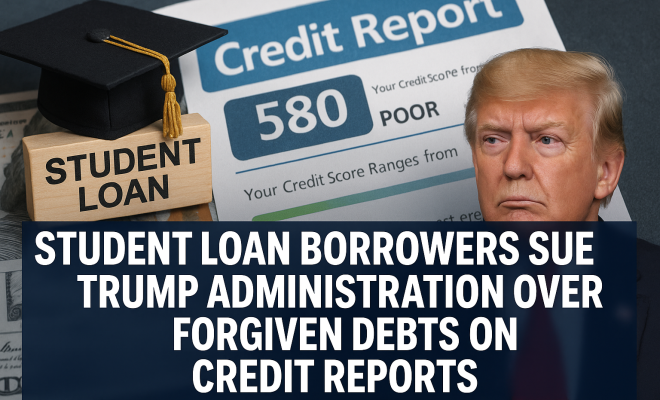
Student loan borrowers sue Trump administration over forgiven debts on credit reports
“`html
Imagine the relief. After years, perhaps even decades, of carrying the weight of student loan debt, you receive the official word: your loans have been forgiven. The slate is wiped clean. You breathe a sigh of relief, perhaps even dare to dream a little about what you’ll do with that newfound financial freedom. You might start thinking about buying a home, getting a car, or even just feeling a bit more secure. Then, the hammer drops. You check your credit report, and there it is, staring back at you in black and white: those same forgiven loans, still listed as active debt, still dragging down your credit score, still making it harder to get approved for anything, or forcing you to pay higher interest rates. It’s an infuriating betrayal, and it’s precisely what hundreds of thousands of student loan borrowers are alleging in a new class-action lawsuit against the U.S. Department of Education.
This isn’t a small oversight; it’s a systemic issue that’s causing real, tangible harm to people who thought they’d finally escaped the student loan trap. The core of this student loan forgiveness lawsuit is deceptively simple but devastating in its implications: the government granted forgiveness, but then, according to the complaint, failed to update credit bureaus, leaving borrowers in a financial purgatory. It’s a situation that combines the already potent outrage around student loan debt with the very real fear of credit score damage, creating a perfect storm of financial distress and legal action. For those affected, the promise of a fresh start has been cruelly snatched away, replaced by the lingering shadow of debt that should no longer exist.
The Core Allegations: Debt That Won’t Die
At its heart, this class-action student loan forgiveness lawsuit posits that the Education Department, despite officially forgiving federal student loans for certain borrowers, has failed to properly communicate these cancellations to credit reporting agencies. This oversight means that accounts that should show a zero balance, or be marked as paid-in-full, are instead appearing as active, outstanding debts. Think about that for a moment. You’ve done everything right, you’ve qualified for a legitimate government program designed to offer relief, and yet your financial records continue to reflect a burden you no longer bear. It’s not just an administrative error; it’s an active misrepresentation of a person’s financial standing, with direct and severe consequences.
The plaintiffs in this case aren’t just a handful of individuals with isolated problems. The complaint highlights that this issue affects a massive population: hundreds of thousands of borrowers. And we’re not talking about small sums either; the total amount of debt involved is staggering, estimated at roughly $4.6 billion. This isn’t a glitch; it’s a colossal failure in data management and borrower protection. When you combine that scale with the sensitive nature of credit scores – which dictate everything from housing applications to car loans, even some job prospects – you begin to grasp the depth of the problem. Borrowers who were promised a clean slate are finding themselves locked out of financial opportunities, or paying significantly more for them, all because of an alleged bureaucratic misstep.
Who Is Affected? The Victims of Predatory Schools
The specific group of borrowers at the center of this student loan forgiveness lawsuit are those whose federal student loans were canceled due to attending fraudulent or misleading colleges. This often falls under what’s known as ‘borrower defense to repayment’ – a provision designed to protect students who were defrauded by their educational institutions. These are individuals who, through no fault of their own, invested their time, money, and trust in schools that ultimately failed to deliver on their promises, often leaving them with worthless degrees and mountains of debt.
These borrowers have already been through a traumatic experience. They’ve faced the disappointment of a substandard education, the burden of unmanageable debt, and the often-lengthy process of proving their case for forgiveness. To finally receive that forgiveness, only to have their credit reports still reflect the very debt they fought so hard to shed, is an added layer of cruelty. It’s a second injury, inflicted not by the predatory schools, but by the very system designed to help them recover. For many, this isn’t just about a credit score; it’s about rebuilding lives after a devastating educational and financial setback, and the government’s alleged actions are, in effect, pulling the rug out from under them just as they try to stand up again.
The Mechanics of Credit Damage: Why This Matters So Much
Let’s talk about credit scores for a moment, because they are the invisible hand guiding so much of our financial lives. A good credit score is your passport to lower interest rates on mortgages, car loans, and credit cards. It can influence whether you get approved for an apartment, and in some cases, even land you a job. Conversely, a poor credit score can mean higher costs, outright rejections, and a constant uphill battle in nearly every financial transaction. When a forgiven loan remains on your credit report as active debt, it’s doing several things simultaneously to sabotage your financial standing.
First, it inflates your reported debt-to-income ratio. Lenders look at this ratio to assess your ability to take on new debt. If your credit report says you still owe tens of thousands of dollars in student loans that you actually don’t, it makes you look like a much riskier borrower. Second, it can negatively impact your payment history. Even if the loan is technically in forbearance or deferment, its mere presence as an open, active debt account can be a red flag, especially if there were any past delinquencies before forgiveness was granted. Third, and perhaps most insidiously, it can lower your overall credit score by increasing your total outstanding debt and potentially shortening the average age of your accounts, depending on how it’s reported. This isn’t theoretical; it translates directly into higher interest payments, denied applications, and a constant source of stress for those trying to move forward.
The Department of Education’s Role and Responsibility
The U.S. Department of Education isn’t just a loan servicer; it’s the ultimate guarantor and administrator of federal student loan programs. With that power comes immense responsibility, particularly when it comes to the accuracy of financial reporting. When the Department makes the decision to forgive debt, that decision carries legal weight and, more importantly, a moral obligation to ensure that the forgiveness is fully actualized in every relevant system, including credit reporting. Failing to do so isn’t just an administrative gaffe; it’s a breach of trust with borrowers who have already been through so much.
The lawsuit essentially argues that the Department has an affirmative duty to ensure that once a loan is forgiven, it’s accurately reflected across all financial systems. This isn’t a complex request; it’s a basic expectation of transparency and competence. For an agency responsible for trillions of dollars in student debt, the inability or unwillingness to update credit bureaus for hundreds of thousands of borrowers, affecting billions in debt, points to a potentially deep-seated systemic issue. It raises questions about the Department’s internal processes, its communication protocols with credit agencies, and ultimately, its commitment to truly helping the borrowers it claims to serve. (See: U.S. Department of Education.)
Why This Student Loan Forgiveness Lawsuit is Gaining Traction
This particular student loan forgiveness lawsuit hits a nerve for several reasons, making it highly impactful and widely discussed. Firstly, student loan debt is a national crisis, affecting millions of Americans. Any news related to forgiveness, or conversely, to systemic failures in the student loan system, immediately captures widespread attention. There’s a collective sense of frustration and anger among borrowers, and this lawsuit taps directly into that. For more context, see The Hidden Truth About AI Mortgage Tools.
Secondly, the issue of credit score damage is universally understood and feared. Most people know how crucial a good credit score is, and the idea of being penalized for something that’s been officially resolved is infuriating. It feels like a fundamental injustice. Thirdly, the victims in this case – those defrauded by predatory schools – evoke a strong sense of empathy. They are not seen as people who shirked their responsibilities, but rather as individuals who were exploited and are now facing further hardship. This combination of widespread relevance, palpable injustice, and sympathetic victims creates a powerful narrative that resonates with the public and puts significant pressure on the Department of Education.
The Potential Legal Ramifications for the Government
Should this student loan forgiveness lawsuit succeed, the legal ramifications for the U.S. government, specifically the Department of Education, could be substantial. Beyond the immediate financial cost of rectifying credit reports and potentially paying damages to affected borrowers, there’s the broader issue of precedent. A successful class action of this magnitude would send a clear message about the government’s accountability in managing federal loan programs and its duty to borrowers.
It could force a complete overhaul of how the Department communicates with credit bureaus, how it tracks forgiven debt, and how it handles borrower complaints. There might be mandates for stricter oversight, more transparent processes, and potentially even new legislation to ensure such failures don’t happen again. The reputational damage alone could be significant, further eroding public trust in federal student aid programs. This isn’t just about a few hundred thousand credit reports; it’s about the integrity of the entire student loan forgiveness system and the government’s role in protecting its citizens from financial harm.
Actionable Advice for Affected Borrowers
If you’re a borrower whose federal student loans were forgiven, particularly under borrower defense to repayment or similar programs, and you suspect this issue might affect you, there are immediate steps you should take. Don’t wait for the lawsuit to resolve; be proactive in protecting your financial health.
- Obtain Your Credit Reports: You are entitled to a free credit report from each of the three major bureaus (Equifax, Experian, and TransUnion) once every 12 months. Visit AnnualCreditReport.com to get yours. Review them carefully for any student loan accounts that should be closed or show a zero balance, but are still listed as active debt.
- Dispute Inaccurate Information: If you find an error, dispute it directly with the credit bureau(s). Provide documentation of your loan forgiveness (e.g., official letters from the Department of Education). The credit bureaus are legally obligated to investigate your dispute within a certain timeframe, usually 30 days.
- Contact Your Loan Servicer and the Department of Education: Even if the loan was forgiven, contact your former loan servicer and the Department of Education to ensure their records are accurate and to request they update credit bureaus. Keep detailed records of all communications, including dates, names of representatives, and summaries of conversations.
- Consult Legal Counsel: If you’re struggling to get the errors corrected, or if you believe you’ve been significantly harmed, consider reaching out to a legal professional specializing in consumer law or student loan issues. They can provide guidance on your rights and whether joining the existing student loan forgiveness lawsuit or pursuing individual action is appropriate.
Remember, the burden shouldn’t be on you to fix these errors, but unfortunately, sometimes it’s the only way to safeguard your financial future. Being vigilant is key.
Looking Ahead: The Future of Student Loan Forgiveness
This student loan forgiveness lawsuit casts a long shadow over the future of student loan forgiveness programs. While the Biden administration has pursued various avenues for debt relief, including expanding eligibility for existing programs and introducing new ones, incidents like this highlight the critical importance of effective implementation. It’s not enough to announce forgiveness; the administrative machinery must be robust enough to ensure that the relief is fully realized for borrowers.
The outcome of this lawsuit could fundamentally reshape how future forgiveness initiatives are handled, pushing for greater transparency, better data sharing between government agencies and credit bureaus, and more stringent oversight. It serves as a stark reminder that even well-intentioned policies can falter without meticulous execution. For millions of Americans still grappling with student loan debt, the promise of forgiveness is a lifeline, but that lifeline is only as strong as the systems that deliver it. This case will undoubtedly be a pivotal moment in the ongoing national conversation about student debt and governmental accountability.
The frustration is palpable, and for good reason. Forgiveness isn’t just a political talking point; it’s a deeply personal and often life-changing event for individuals. To have that promise undermined by administrative failures is not just disheartening, it’s a profound injustice that demands a swift and comprehensive resolution. Let’s hope this lawsuit forces the necessary changes to ensure that once a loan is truly forgiven, it stays that way, everywhere it counts.
Historical Context: Why Borrower Defense Exists
To fully grasp the gravity of this student loan forgiveness lawsuit, it’s helpful to understand the historical context of ‘borrower defense to repayment.’ This isn’t a new concept; it’s rooted in the Higher Education Act of 1965. However, it gained significant prominence and legal attention in the wake of widespread closures of for-profit colleges like Corinthian Colleges and ITT Technical Institute. These institutions often engaged in deceptive marketing practices, inflated job placement rates, and provided substandard education, leaving students with degrees that held little value and massive debt. (See: Consumer Financial Protection Bureau.)
When these schools collapsed, thousands of students were left in limbo. Many had borrowed federal student loans based on false promises. Recognizing the injustice, the Department of Education, under various administrations, began to process borrower defense claims, aiming to provide relief to these defrauded students. The idea was simple: if a school defrauded you, you shouldn’t be on the hook for the loans you took out to attend it. The process, however, has been anything but simple, often fraught with delays and changes in policy. This lawsuit suggests that even after navigating that complex path to forgiveness, borrowers are still facing hurdles, highlighting a persistent disconnect between policy intent and practical execution.
The Role of Credit Bureaus and Their Responsibilities
While the lawsuit targets the Department of Education, it’s also worth considering the role credit reporting agencies play in this mess. Equifax, Experian, and TransUnion are private companies, but they operate under strict regulations outlined in the Fair Credit Reporting Act (FCRA). This act mandates that credit bureaus maintain accurate information and conduct reasonable investigations into disputes. When the Department of Education fails to update its records, it creates a domino effect, leading to inaccurate information being reported to these bureaus. For more context, see The Mortgage AI Scandal: How RateGenius AI Algorithms Could Be Crushing Your Homeownership Dreams.
However, the FCRA also places a burden on the credit bureaus to ensure accuracy. If a borrower successfully disputes an inaccurate student loan entry with sufficient documentation, the credit bureau is supposed to investigate and correct it. The fact that so many borrowers are still seeing these errors suggests either a widespread failure of the Department to communicate with bureaus, a failure of the bureaus to adequately process disputes, or a combination of both. It points to a systemic breakdown in the financial information ecosystem that affects millions of people’s lives. Expert perspectives in consumer law often emphasize that while the original furnisher (the Department of Education) is primarily responsible for sending accurate data, credit bureaus also have a significant responsibility to verify and correct information when challenged.
Comparison to Other Debt Relief Administrative Issues
It’s important to recognize that this isn’t an isolated incident within the realm of government-administered debt relief. We’ve seen similar administrative issues plague other large-scale programs. For example, the Public Service Loan Forgiveness (PSLF) program has historically faced widespread criticism for its complex rules, high denial rates, and poor communication, leaving many public servants feeling betrayed. The issues often stem from data discrepancies between loan servicers and the Department of Education, as well as a lack of clear, consistent guidance.
Similarly, the recent “SAVE” repayment plan, while offering significant benefits, has also encountered initial rollout glitches, including incorrect payment calculations for some borrowers. These comparisons highlight a recurring theme: implementing large-scale federal programs, especially those involving complex financial data and multiple stakeholders (government agencies, loan servicers, credit bureaus), is incredibly challenging. This student loan forgiveness lawsuit serves as another stark reminder that good intentions in policy must be matched by flawless execution and robust oversight to truly deliver on their promise.
The Broader Economic Impact of Inaccurate Credit Reporting
Beyond the individual hardship, the widespread inaccurate reporting of forgiven student loans carries broader economic implications. When hundreds of thousands of individuals have artificially suppressed credit scores, it can dampen economic activity. People who can’t get mortgages at favorable rates might delay homeownership, impacting the housing market. Those denied car loans or credit cards might reduce their spending, affecting retail and manufacturing. It’s a drag on the economy when a significant segment of the population is unfairly penalized.
Furthermore, it creates a lack of trust in government programs and financial institutions. If people can’t rely on the accuracy of their own credit reports or the promises of government relief, it erodes confidence in the system as a whole. This can lead to decreased participation in beneficial programs and increased skepticism, making it harder for future initiatives to gain traction. The integrity of the credit reporting system is foundational to a functioning modern economy, and any widespread failure, like the one alleged in this student loan forgiveness lawsuit, undermines that foundation.
Frequently Asked Questions (FAQ) about the Student Loan Forgiveness Lawsuit
Q1: What exactly is this student loan forgiveness lawsuit about?
A1: The lawsuit alleges that the U.S. Department of Education failed to properly update credit reporting agencies after forgiving federal student loans for hundreds of thousands of borrowers, particularly those under ‘borrower defense to repayment.’ This means these forgiven loans still appear as active debt on credit reports, negatively impacting borrowers’ credit scores and financial opportunities.
Q2: Who are the plaintiffs in this lawsuit?
A2: The lawsuit is a class action, meaning it represents a large group of individuals. Specifically, it includes hundreds of thousands of borrowers whose federal student loans were forgiven, primarily due to attending fraudulent or misleading colleges, but who still see those loans on their credit reports as outstanding debt. (See: New York Times on student loans.)
Q3: What type of student loan forgiveness is at the center of this case?
A3: While the lawsuit broadly refers to forgiven federal student loans, it primarily focuses on those forgiven through ‘borrower defense to repayment.’ This provision allows borrowers to have their federal student loans discharged if their college engaged in misconduct or defrauded them.
Q4: How much debt is involved in this alleged oversight?
A4: Estimates suggest the total amount of debt involved in these alleged credit reporting inaccuracies is roughly $4.6 billion, affecting hundreds of thousands of borrowers.
Q5: How does an active, forgiven loan on my credit report hurt me?
A5: It can hurt you in several ways: it inflates your debt-to-income ratio, making you appear riskier to lenders; it can negatively impact your payment history; and it can lower your overall credit score, leading to higher interest rates on new loans, denied applications for housing or credit, and even impacting job prospects.
Q6: What should I do if I think I’m affected by this issue?
A6: First, obtain your free credit reports from AnnualCreditReport.com and review them for inaccuracies. If you find a forgiven loan still listed as active, dispute it directly with the credit bureaus. Also, contact your former loan servicer and the Department of Education to ensure their records are accurate. Keep detailed records of all your communications.
Q7: Can I join this class-action lawsuit?
A7: If you meet the criteria of the affected class, you may automatically be included, or you might need to take specific steps to opt-in or stay informed. It’s best to consult with a legal professional specializing in consumer or student loan law to understand your options and whether joining the lawsuit or pursuing individual action is appropriate for your specific situation.
Q8: What are the potential outcomes if the lawsuit succeeds?
A8: A successful outcome could force the Department of Education to rectify all inaccurate credit reports, potentially pay damages to affected borrowers, and overhaul its internal processes for communicating with credit bureaus. It would also set a significant precedent for government accountability in managing federal loan programs.
Q9: Will this affect future student loan forgiveness programs?
A9: This lawsuit highlights the critical importance of effective implementation for any forgiveness program. Its outcome could lead to more stringent oversight, better data sharing, and increased transparency in how future debt relief initiatives are administered, ensuring that forgiveness is fully realized for borrowers.
“`
Trending Now
Frequently Asked Questions
What is the lawsuit against the Trump administration regarding student loans?
The lawsuit alleges that the U.S. Department of Education failed to update credit bureaus about forgiven student loans, leaving borrowers with active debt on their credit reports. This oversight is said to harm their credit scores and financial opportunities.
How does student loan forgiveness affect credit scores?
While student loan forgiveness should relieve borrowers of debt, if the forgiveness is not reported to credit bureaus, the loans remain active on credit reports. This can negatively impact borrowers' credit scores, making it harder to secure loans or favorable interest rates.
What are the implications of the student loan forgiveness lawsuit?
The implications include potential financial distress for borrowers who believed their loans were forgiven. The lawsuit seeks to address the systemic issue of unreported loan forgiveness, which can lead to long-lasting credit damage and financial struggles.
Who is affected by the student loan forgiveness reporting issue?
Hundreds of thousands of student loan borrowers who had their loans forgiven but still see them listed as active debt on their credit reports are affected. This situation creates significant financial challenges for those individuals.
What should borrowers do if their forgiven loans are still on their credit reports?
Borrowers should contact their loan servicer and credit reporting agencies to rectify the situation. Additionally, they may consider joining the class-action lawsuit to seek proper reporting of their forgiven loans and potential damages.
What's your take on this? Share your thoughts in the comments below — we read every one.