Could Moon Dust Alien Technology Reveal Humanity’s Biggest Secret?
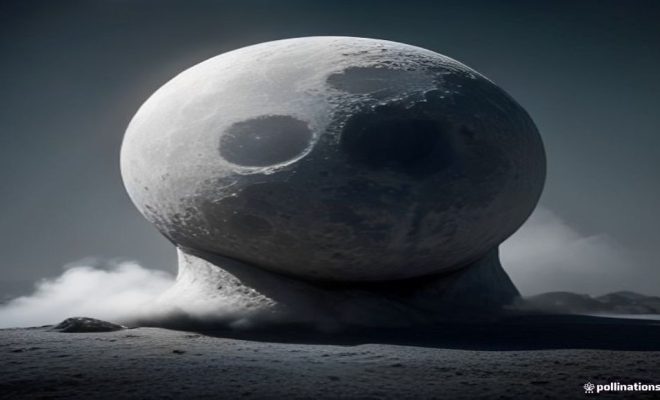
Imagine, for a moment, that the answer to one of humanity’s most profound questions – ‘Are we alone?’ – isn’t light-years away, nestled in the wisps of a distant nebula or buried under the ice of an exoplanet. What if it’s right next door, literally under our feet on the Moon? It sounds like science fiction, doesn’t it? Yet, a bold new paper, currently making its way through the rigorous gauntlet of peer review, suggests precisely that: microscopic alien technology could be hidden within the very moon dust we’ve been collecting for decades. This isn’t about little green men or crashed flying saucers; it’s about something far more subtle, far more ancient, and potentially far more world-changing: tiny, engineered particles from interstellar space, patiently accumulating on our lunar neighbor over billions of years. The notion of finding moon dust alien technology has certainly sparked a considerable buzz, especially among those who’ve long looked to the stars for answers.
The Radical Hypothesis: Technosignatures in Lunar Regolith
This isn’t just a whimsical thought experiment; it’s a serious scientific proposal, highlighted by none other than the SETI Institute – the organization dedicated to the Search for Extraterrestrial Intelligence. The core of this groundbreaking theory posits the existence of ‘microscopic technosignatures.’ Think of them not as obvious artifacts, but as incredibly tiny, engineered particles, perhaps no larger than a grain of sand or even a speck of dust, that originated from an advanced extraterrestrial civilization. These aren’t biological traces, like fossilized microbes, but rather evidence of technology – the detritus, if you will, of an ancient, interstellar journey or even a long-lost civilization’s industrial output. The idea is that these minuscule remnants, having traversed the vastness of space, would eventually settle on celestial bodies like our Moon, where they could remain preserved for unimaginable stretches of time.
Why the Moon, specifically? Well, it’s a rather unique cosmic vault. Unlike Earth, which is a geologically active planet with erosion, plate tectonics, and a thick atmosphere, the Moon is a remarkably stable environment. There’s no wind, no water, and virtually no atmosphere to erode or break down foreign objects. Anything that lands on its surface, particularly anything small enough to be protected by subsequent layers of regolith – that fine, powdery moon dust – tends to stay there, undisturbed, for eons. This pristine preservation makes the Moon an ideal candidate for harboring such ancient interstellar ‘artifacts.’ The paper suggests that future lunar missions, equipped with the right analytical tools, might just be able to sift through the lunar soil and uncover these elusive traces of moon dust alien technology.
Billions of Years of Cosmic Accumulation
The proposed timeline for this accumulation is truly staggering: billions of years. Imagine the sheer volume of interstellar dust and debris that has rained down on the Moon’s surface since its formation. Most of it is natural, of course – micrometeorites, solar wind particles, and the occasional larger impactor. But if this hypothesis holds true, a tiny fraction of that cosmic infall could be artificial. Picture it: a distant civilization, perhaps one that thrived and vanished billions of years ago, launching probes, or even just shedding technological waste into space. Over vast stretches of cosmic time, these microscopic pieces could have drifted across the galaxy, eventually being swept up by our solar system’s gravitational pull and settling on the Moon.
This long accumulation period is key. It means we’re not necessarily looking for evidence of a civilization that exists *now*, or even one that was active a few million years ago. We could be looking at relics from a civilization that predates even the emergence of complex life on Earth. The Moon, in this context, becomes a cosmic time capsule, preserving a record of interstellar activity that Earth’s dynamic processes would have long erased. The deeper we dig into the lunar regolith, the further back in time we might be able to look, potentially uncovering layers that hold secrets from epochs we can barely fathom. This deep-time perspective adds an incredible layer of intrigue to the search for moon dust alien technology.
The Fermi Paradox and Our Lunar Neighbors
The concept of moon dust alien technology ties directly into one of the most perplexing questions in astrobiology: the Fermi Paradox. This paradox, named after physicist Enrico Fermi, essentially asks: If the universe is teeming with life, and given its immense age, why haven’t we seen any obvious signs of intelligent civilizations? Where is everybody? The silence is deafening, leading to a host of possible explanations, from the ‘Great Filter’ (some insurmountable barrier that prevents civilizations from becoming interstellar) to the idea that civilizations are simply too far apart, or perhaps their signs are too subtle for us to detect with our current methods.
This new hypothesis offers a compelling, if subtle, potential answer to the Fermi Paradox. Perhaps the signs *are* there, but they’re not grand monuments or sweeping radio signals. Instead, they could be microscopic, scattered across the cosmos, and preserved in unlikely places like the lunar surface. If we could find these technosignatures, it would suggest that intelligent life isn’t just possible, but that it has existed, and perhaps still exists, and has even left its indelible mark right here in our cosmic backyard. It changes the scale of our search, moving from detecting active signals to archaeological digs on a cosmic scale, right next door. The implications for our understanding of our place in the universe would be profound, fundamentally altering our perspective on the uniqueness of human intelligence.
A Shift in Astrobiological Caution
It’s worth noting that this bold new theory emerges against a backdrop of considerable scientific caution, particularly regarding previous claims of alien life. The scientific community, especially astrobiologists, tends to be inherently skeptical – and for good reason. History is littered with enthusiastic announcements that later proved to be misinterpretations or false positives. Remember the much-hyped 2025 announcements about possible biological molecules on exoplanet K2-18b, or the intriguing mineral patterns observed on Mars that some initially linked to ancient life? A recent survey revealed that only a small percentage of astrobiologists were truly convinced by these findings. The ‘extraordinary claims require extraordinary evidence’ mantra is deeply ingrained in the scientific method, and rightly so.
This skepticism isn’t a dismissal of the possibility of extraterrestrial life; it’s a commitment to rigorous verification. So, for a theory suggesting moon dust alien technology to gain traction and be highlighted by an institution like SETI, it means the underlying scientific reasoning must be robust. It’s not about finding a fuzzy image or a statistical anomaly; it’s about proposing a concrete methodology for detection and a plausible mechanism for preservation. This careful approach is crucial, ensuring that any future discoveries, should they occur, are met with widespread scientific acceptance rather than immediate dismissal. (See: NASA's Moon exploration missions.)
The Allure of Proximity: Why the Moon Matters
The sheer proximity of the Moon to Earth is what makes this theory so captivating. We’re not talking about sending expensive, decade-long missions to distant star systems. We’re talking about our closest celestial neighbor, a body that humanity has already visited, and one we are actively planning to return to with crewed missions under programs like Artemis. The potential to find alien artifacts so close to home, within our immediate reach, is truly electrifying. It transforms the speculative search for extraterrestrial intelligence into something tangible, something that future astronauts might literally stumble upon.
Think about the practicalities: we already have samples of moon dust back on Earth, collected during the Apollo missions. While these samples weren’t analyzed with the specific intent of finding microscopic technosignatures, they could potentially be re-examined with new techniques and instruments. Furthermore, upcoming lunar missions, both robotic and crewed, offer unprecedented opportunities. Imagine specialized rovers designed not just to study geology, but to sift and analyze regolith for these specific, artificial particles. The relative ease of access compared to, say, drilling into the icy moons of Jupiter or exploring exoplanet atmospheres, makes the Moon an incredibly attractive target for this type of search. It changes the ‘where’ and ‘how’ of the search for alien intelligence dramatically, bringing it much closer to home and into the realm of current technological feasibility. This search for moon dust alien technology truly brings the cosmic mystery right to our doorstep.
What Would Microscopic Technosignatures Look Like?
This is where the speculation gets truly fascinating. If these technosignatures exist, what would they actually look like? We’re not talking about miniature spaceships or tiny tools with alien writing. We’re likely talking about materials with unusual compositions, highly ordered internal structures, or isotopic ratios that are not found naturally. Imagine finding a grain of dust that, under an electron microscope, reveals a perfectly symmetrical lattice structure made of elements that shouldn’t naturally combine in that way, or an alloy with properties far beyond anything we can synthesize. Perhaps it’s a fragment of a self-replicating nanobot, or a piece of advanced computing material, or even just the exhaust byproduct of some ancient, long-dead machine.
The key would be to identify anomalies – deviations from natural geological and astrophysical processes. Scientists would need to develop highly sensitive analytical techniques, perhaps involving advanced spectroscopy, electron microscopy, and even atomic-level examination, to differentiate these technosignatures from naturally occurring moon dust. It’s a needle-in-a-haystack problem, but one where the ‘needle’ would possess characteristics that scream ‘artificial’ to a trained eye. The sheer variety of potential forms these technosignatures could take makes the search both challenging and incredibly exciting. It requires us to broaden our definition of ‘alien artifact’ to include the truly microscopic.
The Social Media Swirl: Fueling Public Fascination
Unsurprisingly, the idea of finding alien artifacts on the Moon has generated massive social media interest. In an era where public fascination with space exploration and the search for extraterrestrial life is at an all-time high, a theory like this acts like rocket fuel for discussion. Hashtags light up, forums buzz with speculation, and articles go viral. It taps into a deep human curiosity about our origins and our place in the universe. This isn’t just about scientific papers; it’s about the public’s imagination being ignited.
While scientists rightly maintain their cautious approach, the public enthusiasm serves a vital role. It generates interest, which can translate into support for space programs and research funding. It encourages young minds to pursue careers in science and engineering, dreaming of being the ones who might make such a discovery. Of course, social media also comes with its downsides – the spread of misinformation, wild speculation, and conspiracy theories. But at its core, this widespread interest in moon dust alien technology reflects a genuine, profound human desire to know if we are truly alone, and the Moon offers a tantalizingly close potential answer.
Future Lunar Missions: A New Directive?
So, what does this mean for future lunar missions? It certainly adds a fascinating new dimension to their objectives. Beyond studying lunar geology, resource extraction, and establishing permanent bases, missions could now be tasked with actively searching for these microscopic technosignatures. This might involve developing new instruments specifically designed for this purpose, perhaps small, autonomous probes that can analyze regolith samples in situ, or even dedicated laboratory modules on future lunar outposts.
The Artemis program, with its ambitious goals of returning humans to the Moon and establishing a sustained presence, provides an ideal platform. Astronauts, with their dexterity and problem-solving abilities, could play a crucial role in collecting and analyzing samples from various depths and locations, guided by scientific hypotheses. It’s not just about bringing rocks back for study; it’s about a systematic, targeted search for something truly extraordinary. Imagine the headlines if an Artemis astronaut were to find the first definitive piece of moon dust alien technology. It would undoubtedly be one of the greatest discoveries in human history, forever changing our understanding of life beyond Earth.
Beyond the Moon: Other Cosmic Dust Traps
While the Moon presents a compelling case, it’s worth considering that other celestial bodies could also act as cosmic dust traps for these microscopic technosignatures. Anywhere that lacks significant geological activity, erosion, or a thick atmosphere could potentially preserve such ancient relics. Think about the asteroids in the asteroid belt, for example. These rocky remnants of the early solar system have largely remained unchanged for billions of years. If interstellar dust, artificial or natural, makes its way into our solar system, it could eventually settle on these airless bodies.
Even Mars, despite having a thin atmosphere and some evidence of past water activity, has vast regions that are incredibly ancient and stable. The polar caps, in particular, could be interesting, as ice can act as a natural preservative. However, the Moon’s proximity and the relative ease of access make it the prime candidate for initial investigations. The sheer volume of material that has accumulated on its surface, undisturbed for eons, gives it a distinct advantage. But if the search on the Moon proves successful, it opens up a whole new set of targets for future interstellar archaeology. (See: Research on lunar regolith properties.)
Challenges and the “Extraordinary Evidence” Bar
Of course, finding definitive proof of moon dust alien technology won’t be easy. The “extraordinary claims require extraordinary evidence” principle will be in full effect. Scientists will need to rule out every conceivable natural explanation before concluding that a particle is artificial. This means meticulous analysis, replication of results by independent labs, and a consensus among the scientific community. It’s not enough to find something “weird”; it has to be undeniably engineered.
Consider the potential pitfalls: contamination from Earth-based missions, natural geological formations that mimic artificial structures, or even highly unusual but naturally occurring crystals. The analytical tools will need to be incredibly precise, capable of detecting subtle anomalies in atomic structure, isotopic ratios, or material composition that scream “not from here, and not natural.” The scientific process will be slow, deliberate, and open to intense scrutiny. This isn’t a race to declare a discovery; it’s a marathon to build an irrefutable case.
The Ethical and Societal Impact of Discovery
Imagine for a moment that we do find irrefutable proof of moon dust alien technology. The societal and ethical implications would be staggering. How would humanity react? Would it unite us in a shared sense of cosmic wonder, or would it spark new divisions and fears? The discovery would force us to fundamentally re-evaluate our place in the universe, our understanding of life’s origins, and the potential trajectory of intelligent civilizations.
Governments and international bodies would need to establish clear protocols for handling such a discovery, from initial verification to public disclosure and subsequent research. What rights would these ancient artifacts have, if any? Who would own them? These aren’t just scientific questions; they’re philosophical and geopolitical ones. The very act of discovering such technosignatures would likely be the most significant event in human history, challenging our existing frameworks and prompting profound introspection. It would be a moment that transcends science, impacting religion, philosophy, art, and every facet of human culture.
Expert Perspectives: What Leading Scientists Say
While the paper is still undergoing peer review, the mere fact that it’s being discussed by institutions like SETI signals a growing openness in the scientific community to novel approaches to the search for extraterrestrial intelligence. Many leading astrobiologists, while maintaining their inherent caution, acknowledge the logical soundness of the Moon as a potential repository for ancient interstellar debris. Dr. Avi Loeb of Harvard University, known for his work on interstellar objects like ‘Oumuamua, has often championed the idea of looking for technosignatures in unconventional ways, suggesting that our current search methods might be too narrow.
Others, like Dr. Sarah Rugheimer, an astrobiologist at Oxford, emphasize the importance of distinguishing between biological and technological signatures, noting that the Moon, with its lack of biological activity, simplifies the search by removing one major variable. The consensus seems to be that while the idea is speculative, it’s a scientifically valid avenue of inquiry that warrants serious investigation, especially given the ongoing and planned lunar missions. It represents a subtle but significant shift in thinking, moving beyond purely biological searches to encompass the broader spectrum of artificial relics.
FAQ: Moon Dust Alien Technology
Q: What exactly are “microscopic technosignatures”?
A: These are incredibly tiny, engineered particles, perhaps the size of a grain of sand or smaller, that originated from an advanced extraterrestrial civilization. They are not biological traces, but rather evidence of technology – like fragments of ancient machines, waste products, or self-replicating nanobots. The key is that their structure or composition would be demonstrably artificial, not naturally occurring.
Q: Why is the Moon considered an ideal place to find them?
A: The Moon is geologically dead, meaning it has no wind, water, or plate tectonics to erode or bury objects deep underground. Anything that lands on its surface, especially small particles protected by subsequent layers of regolith (moon dust), tends to stay preserved for billions of years. It acts like a cosmic time capsule, much better than Earth, where geological processes would erase such ancient evidence.
Q: How would scientists differentiate these technosignatures from natural moon dust?
A: Scientists would look for anomalies: materials with unusual chemical compositions, highly ordered internal structures, or isotopic ratios not found in nature. Advanced analytical techniques like electron microscopy, spectroscopy, and atomic-level examination would be used to identify characteristics that scream “artificial” – patterns or properties that could not have formed through natural astrophysical or geological processes.
Q: Have we already collected moon dust samples that could contain these technosignatures?
A: Yes, the Apollo missions brought back hundreds of kilograms of lunar samples. While these weren’t originally analyzed with the specific goal of finding microscopic technosignatures, they could potentially be re-examined using modern, more sensitive instruments and new analytical techniques specifically designed for this purpose.
Q: What kind of alien civilization might have produced these technosignatures?
A: The theory suggests these could come from a civilization that existed billions of years ago, perhaps one that has long vanished. These particles could be the detritus of ancient interstellar probes, industrial processes, or even the remnants of a highly advanced self-replicating technology. It wouldn’t necessarily be evidence of a currently active civilization, but rather a past one.
Q: How does this hypothesis relate to the Fermi Paradox?
A: The Fermi Paradox asks why we haven’t seen signs of alien life. This hypothesis suggests that the signs might be incredibly subtle and microscopic, scattered across the cosmos, and preserved in places like the Moon. Instead of grand signals or monuments, the evidence could be tiny, requiring a different kind of “archaeological” search on a cosmic scale, right in our cosmic backyard.
Q: What are the challenges in proving this theory?
A: The main challenges include the “extraordinary claims require extraordinary evidence” bar, meaning any findings would need to be meticulously verified and natural explanations ruled out. Contamination from Earth, the vastness of the lunar surface, and the minuscule size of the potential artifacts also pose significant hurdles. It will require cutting-edge technology and rigorous scientific consensus.
Q: How would a discovery like this impact humanity?
A: A definitive discovery would be one of the most profound events in human history, forcing us to rethink our place in the universe, the origins of life, and the potential for advanced civilizations. It would have immense societal, ethical, philosophical, and even religious implications, potentially uniting humanity in a shared sense of wonder but also raising complex questions about our future.
The quest for extraterrestrial intelligence has always been a journey into the unknown, fraught with speculation and wonder. This new hypothesis, suggesting that alien technology might be literally at our fingertips on the Moon, transforms that journey from a distant dream into a tantalizingly close possibility. It reminds us that sometimes, the biggest secrets are hidden in the smallest places, patiently waiting to be discovered.
Trending Now
Frequently Asked Questions
What is moon dust alien technology?
Moon dust alien technology refers to the hypothesis that microscopic engineered particles from extraterrestrial civilizations may be hidden within lunar regolith. These tiny technosignatures, potentially no larger than a grain of sand, could provide evidence of advanced technology that has accumulated on the Moon over billions of years.
How could moon dust reveal if we are alone in the universe?
The study of moon dust could reveal if we are alone by potentially uncovering technosignatures—subtle remnants of alien technology. If these particles are found, they could indicate that advanced civilizations have existed beyond Earth, reshaping our understanding of life in the universe.
What are technosignatures?
Technosignatures are indicators of technology produced by intelligent life forms. Unlike biological traces, technosignatures are engineered particles that may reveal the presence of advanced civilizations, potentially found in places like moon dust, which has preserved them over eons.
Why is the SETI Institute interested in moon dust?
The SETI Institute is interested in moon dust because it could harbor microscopic technosignatures from extraterrestrial civilizations. By studying lunar regolith, scientists hope to find evidence of advanced technologies that could answer fundamental questions about life beyond Earth.
What implications would finding alien technology in moon dust have?
Finding alien technology in moon dust would have profound implications for humanity, suggesting that we are not alone in the universe. It could revolutionize our understanding of life, technology, and our place in the cosmos, potentially leading to new scientific discoveries.
What's your take on this? Share your thoughts in the comments below — we read every one.