The Tech Edvocate

Top Menu

  • Advertisement
  • Apps
  • Home Page
  • Home Page Five (No Sidebar)
  • Home Page Four
  • Home Page Three
  • Home Page Two
  • Home Tech2
  • Icons [No Sidebar]
  • Left Sidbear Page
  • Lynch Educational Consulting
  • My Account
  • My Speaking Page
  • Newsletter Sign Up Confirmation
  • Newsletter Unsubscription
  • Our Brands
  • Page Example
  • Privacy Policy
  • Protected Content
  • Register
  • Request a Product Review
  • Shop
  • Shortcodes Examples
  • Signup
  • Start Here
    • Governance
    • Careers
    • Contact Us
  • Terms and Conditions
  • The Edvocate
  • The Tech Edvocate Product Guide
  • Topics
  • Write For Us
  • Advertise

Main Menu

  • Start Here
    • Our Brands
    • Governance
      • Lynch Educational Consulting, LLC.
      • Dr. Lynch’s Personal Website
      • Careers
    • Write For Us
    • The Tech Edvocate Product Guide
    • Contact Us
    • Books
    • Edupedia
    • Post a Job
    • The Edvocate Podcast
    • Terms and Conditions
    • Privacy Policy
  • Topics
    • Assistive Technology
    • Child Development Tech
    • Early Childhood & K-12 EdTech
    • EdTech Futures
    • EdTech News
    • EdTech Policy & Reform
    • EdTech Startups & Businesses
    • Higher Education EdTech
    • Online Learning & eLearning
    • Parent & Family Tech
    • Personalized Learning
    • Product Reviews
  • Advertise
  • Tech Edvocate Awards
  • The Edvocate
  • Pedagogue
  • School Ratings

logo

The Tech Edvocate

  • Start Here
    • Our Brands
    • Governance
      • Lynch Educational Consulting, LLC.
      • Dr. Lynch’s Personal Website
        • My Speaking Page
      • Careers
    • Write For Us
    • The Tech Edvocate Product Guide
    • Contact Us
    • Books
    • Edupedia
    • Post a Job
    • The Edvocate Podcast
    • Terms and Conditions
    • Privacy Policy
  • Topics
    • Assistive Technology
    • Child Development Tech
    • Early Childhood & K-12 EdTech
    • EdTech Futures
    • EdTech News
    • EdTech Policy & Reform
    • EdTech Startups & Businesses
    • Higher Education EdTech
    • Online Learning & eLearning
    • Parent & Family Tech
    • Personalized Learning
    • Product Reviews
  • Advertise
  • Tech Edvocate Awards
  • The Edvocate
  • Pedagogue
  • School Ratings
  • Mind-Blowing: These Viral Amazon Products Are NOT What You Expect

  • Bizarre: AI-Generated Fake Health Influencers Are Invading Your Feed – Here’s How to Spot Them

  • Six Startups Launch IPOs in One Day: Is This India’s Most Audacious Bet Yet?

  • The Baffling Twitter Startup Name Change: Why ‘Bluebird’ Had to Die

  • The PlayStation Trump Tariff Refunds You Won’t Get: Why Sony’s Silence Is Infuriating Gamers

  • The White House ‘Arcade’ Scandal: Why the Tetris Controversy Is Just the Beginning

  • The Billion-Dollar Battle: Seattle Times’ AI Lawsuit Could Redefine Digital Rights

  • This OpenAI Pause Reveals a Disturbing Truth About AI’s Future

  • Stunning: Feds Quietly Erase Data on Gender-Based Bullying – What It Means for Vulnerable Students

  • The Raw Truth About the Colorado Student Walkout You Haven’t Heard

Assistive Technology
Home›Assistive Technology›Composite Video Connections Explained

Composite Video Connections Explained
By Matthew Lynch
June 9, 2023
0
Spread the love

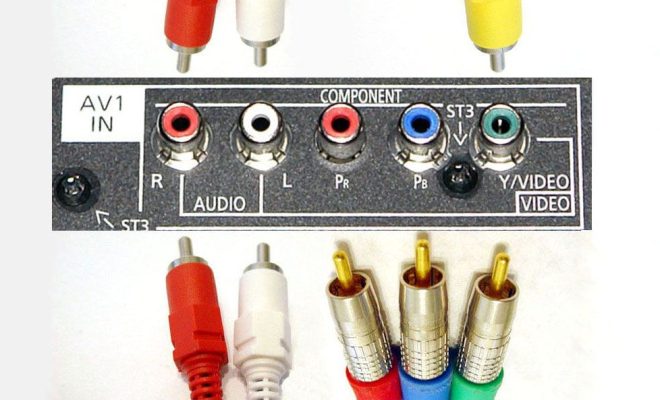
Composite video connections are widely used in the world of consumer electronics, especially in older devices that do not support digital video signals. It is a simple way of transmitting video signals from one device to another by combining all the video information into a single signal.

Basically, composite video involves combining all of the color and brightness information of a video signal into a single channel. This means that you don’t need to worry about multiple cables and connections to transmit video signals.

One of the advantages of composite video connections is that they are relatively easy to set up and use. All you need is a single RCA cable to connect your video source to your display device. This is in contrast to component video signals, which require three separate cables to transmit the video signal.

However, composite video connections do have some drawbacks. For example, the image quality tends to be relatively low, especially when compared to newer digital video standards like HDMI. This is because all of the video information is combined into a single analog signal, which can result in a loss of detail and color accuracy.

Another issue with composite video connections is that they tend to be susceptible to interference from other electronic devices. For instance, if you have a lot of cables or electrical equipment in close proximity to your composite video connection, you may experience signal degradation or distortion.

In general, composite video connections are a good choice for older devices that don’t support digital video signals like HDMI or DisplayPort. However, for newer devices, it’s generally better to use a digital video connection standard to ensure the best possible image quality and compatibility with modern hardware.

In conclusion, composite video connections are a simple and easy method for transmitting video signals between devices. However, they tend to have lower image quality than newer digital video standards, and are susceptible to interference from other electronic equipment.


Previous Article

Disable SSID Broadcast to Hide Your Wi-Fi ...

Next Article

50 Great Concept Artists to Inspire and ...

Matthew Lynch

Related articles More from author

  • Assistive Technology

    Ways to Fix Windows 10 Stuck in Airplane Mode

    August 5, 2023
    By Matthew Lynch
  • Assistive Technology

    How to Fix the “You’ll Need a New App to Open This Ms-Gamingoverlay” Error on Windows

    June 14, 2023
    By Matthew Lynch
  • Assistive Technology

    How to Boot Raspberry Pi 4 via SSD or Network

    June 23, 2023
    By Matthew Lynch
  • Assistive Technology

    How to Get a Better Look at Someone’s Discord Profile Picture

    June 14, 2023
    By Matthew Lynch
  • Assistive Technology

    How to Disable Sign-Ins on Windows 10

    June 22, 2023
    By Matthew Lynch
  • Assistive Technology

    Why Does My Xbox One Turn On by Itself?

    June 6, 2023
    By Matthew Lynch

Search

Login & Registration

  • Log in
  • Entries feed
  • Comments feed
  • WordPress.org

Newsletter

Signup for The Tech Edvocate Newsletter and have the latest in EdTech news and opinion delivered to your email address!

About Us

Since technology is not going anywhere and does more good than harm, adapting is the best course of action. That is where The Tech Edvocate comes in. We plan to cover the PreK-12 and Higher Education EdTech sectors and provide our readers with the latest news and opinion on the subject. From time to time, I will invite other voices to weigh in on important issues in EdTech. We hope to provide a well-rounded, multi-faceted look at the past, present, the future of EdTech in the US and internationally.

We started this journey back in June 2016, and we plan to continue it for many more years to come. I hope that you will join us in this discussion of the past, present and future of EdTech and lend your own insight to the issues that are discussed.

Newsletter

Signup for The Tech Edvocate Newsletter and have the latest in EdTech news and opinion delivered to your email address!

Contact Us

The Tech Edvocate
910 Goddin Street
Richmond, VA 23231
(601) 630-5238
[email protected]

Copyright © 2026 Matthew Lynch. All rights reserved.