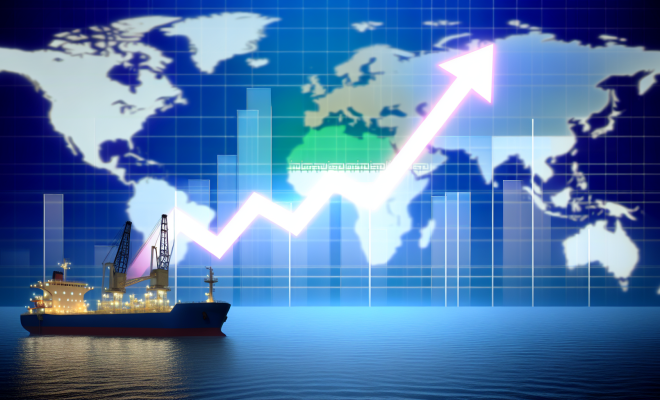
China’s Economic Resilience in Early 2026 Amid Global Turbulence
As the world grapples with geopolitical tensions and economic uncertainty, China’s economy has embarked on a promising trajectory at the start of 2026. Recent data from January and February indicates that the nation’s factory output and retail sales have surpassed expectations, showcasing a resilient response to external pressures.
Strong Performance in Key Economic Indicators
Reports show that China’s industrial production is projected to grow by 5.3%, a figure that highlights the country’s ability to maintain momentum despite apprehensions over global markets. Retail sales also exhibited notable improvement, rising by 2.5%, a significant uptick that signals consumer confidence in the domestic market.
Industrial Production and Consumer Spending
- Industrial production: Projected growth of 5.3% indicates strong manufacturing capabilities.
- Retail sales: An increase of 2.5% reflects consumer spending recovery.
These indicators suggest that while China faces external challenges, its internal market remains robust, driven by both industrial activity and consumer spending. This rebound is particularly noteworthy given the backdrop of increasing international tensions.
Challenges on the Global Stage
China’s economic upswing comes at a time when global stability is under threat. Recent events, including military actions by the United States against Iranian oil facilities, have raised alarms regarding energy security and trade routes, particularly in the strategically crucial Strait of Hormuz.
President Trump has called upon China to assist in maintaining security in this vital maritime corridor, which could have significant implications not just for energy supplies but also for global trade dynamics. The potential escalation of conflicts in the region poses risks that could ripple through the world economy, affecting markets and supply chains.
Impact of Geopolitical Tensions
- US-Iran tensions: Military strikes could disrupt oil supply chains.
- Strait of Hormuz: A crucial passage for global oil shipments at risk.
- Chinese involvement: Possible collaboration with the US to secure trade routes.
As these geopolitical issues unfold, China’s leaders must navigate the complexities of international relations while ensuring that their economy continues to thrive.
Fixed Asset Investments: A Mixed Bag
While the industrial and retail sectors show promise, fixed asset investments present a more challenging picture, remaining in negative territory. This decline may suggest a cautious approach from businesses regarding long-term investments amid the uncertain global landscape.
Analysts believe that the government may need to introduce stimulus measures or incentives to encourage growth in this area. Without a rebound in fixed asset investments, which are crucial for sustainable economic development, China may face challenges in maintaining its growth trajectory.
The Path Forward
As China moves deeper into 2026, the focus will be on balancing domestic growth with external risks. Policymakers are likely to prioritize initiatives that bolster consumer confidence and stimulate investment in key sectors.
The government’s response to international dynamics, particularly regarding energy security and trade, will be pivotal. Engaging in diplomatic efforts to stabilize regions affected by conflict, while simultaneously fostering economic resilience at home, will be critical for China’s long-term prospects.
Conclusion
In summary, China’s economy has kicked off 2026 with a strong performance in industrial production and retail sales, defying expectations in the face of global uncertainties. However, the challenges posed by geopolitical tensions and stagnant fixed asset investments underscore the need for strategic policymaking. As the nation navigates these complexities, its ability to adapt and respond will determine the sustainability of its economic momentum.
Looking ahead, the interplay between domestic policies and international relations will shape the future of China’s economy, making it a focal point for analysts and investors alike.