China’s Artificial Sun: A Stunning Leap Towards Unlimited Clean Energy
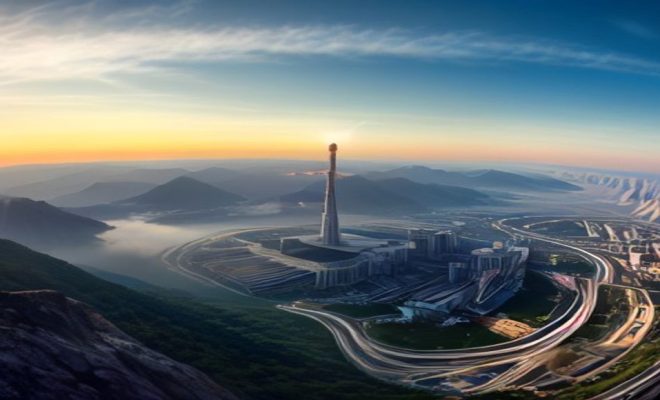
Imagine a future where energy isn’t a commodity, but an abundant, clean resource, available to everyone, everywhere. It sounds like science fiction, doesn’t it? Yet, China’s recent breakthrough with its ‘artificial sun’ — the Experimental Advanced Superconducting Tokamak, or EAST — has brought us a stunning step closer to that very reality. This isn’t just another scientific experiment; it’s a monumental achievement that could fundamentally reshape how China’s artificial sun affects clean energy globally, offering a path to sustainable solutions and energy independence that felt almost impossible just a few decades ago.
For years, nuclear fusion has been the holy grail of energy research. It’s the same process that powers our actual sun, where light atomic nuclei fuse together under immense heat and pressure, releasing colossal amounts of energy. The allure is obvious: fusion fuel, primarily isotopes of hydrogen, is practically limitless, derived from seawater. The process produces no long-lived radioactive waste, unlike nuclear fission, and carries no risk of meltdown. The dream has always been to replicate this stellar process here on Earth, in a controlled environment. And now, China’s EAST facility has made a truly significant stride in realizing that dream, by experimentally validating a critical theory that could unlock fusion’s full potential.
The Enigma of Fusion: Why It’s Been So Hard to Harness
Before we dive into the specifics of China’s achievement, let’s take a moment to appreciate why nuclear fusion has remained just out of reach for so long. It’s an incredibly complex challenge, requiring conditions that are literally stellar. To get hydrogen isotopes to fuse, you need to heat them to temperatures exceeding 100 million degrees Celsius – that’s ten times hotter than the core of our sun! At these temperatures, matter transforms into plasma, a superheated, ionized gas where electrons are stripped from their atoms.
Containing this scorching plasma is the core difficulty. No material on Earth can withstand such heat, which is why scientists use powerful magnetic fields to suspend and control the plasma, preventing it from touching the reactor walls. This magnetic confinement is typically achieved in devices called tokamaks, donut-shaped vacuum chambers. The challenge isn’t just creating the plasma and heating it; it’s maintaining its stability and density for long enough to achieve a net energy gain – meaning the fusion reaction produces more energy than it consumes to initiate and sustain. It’s a delicate dance of physics, engineering, and material science, pushing the boundaries of human ingenuity.
Many fusion experiments worldwide have made progress, but consistently achieving ignition and sustained reactions has been elusive. The sheer energy input required to get to those extreme temperatures, and then the struggle to keep the plasma stable, has been a major hurdle. This is precisely where the recent breakthrough at EAST offers such profound implications for how China’s artificial sun affects clean energy.
EAST: China’s ‘Artificial Sun’ and Its Decade-Long Quest
The Experimental Advanced Superconducting Tokamak, or EAST, isn’t new. It’s been a cornerstone of China’s fusion research program for well over a decade, quietly pushing the boundaries of what’s possible. Located at the Institute of Plasma Physics of the Chinese Academy of Sciences (ASIPP) in Hefei, EAST is a marvel of engineering. Its superconducting magnets allow for much stronger and more stable magnetic fields than conventional magnets, crucial for containing the superheated plasma.
Over the years, EAST has broken numerous records. In 2021, for example, it sustained plasma at 120 million degrees Celsius for 101 seconds and at 160 million degrees Celsius for 20 seconds. These are phenomenal achievements in themselves, demonstrating increasing control over the extreme conditions necessary for fusion. Each milestone has been a testament to the dedication of the Chinese scientific community and their commitment to mastering this incredibly challenging field. These incremental steps, often out of the global spotlight, have been building blocks for the more recent, pivotal discovery that truly changes the game for how China’s artificial sun affects clean energy.
The consistent investment and long-term vision behind projects like EAST highlight China’s strategic approach to scientific leadership. They understand that such ambitious endeavors don’t yield results overnight. It requires sustained funding, a robust talent pipeline, and a willingness to tackle complex, multi-disciplinary problems. This commitment is now paying dividends, not just for China, but potentially for the entire world seeking sustainable energy.
The Plasma-Wall Self-Organization (PWSO) Theory: A Game-Changer
The real ‘aha!’ moment, the one that has everyone in the fusion community buzzing, centers around the experimental confirmation of the plasma-wall self-organization (PWSO) theory. This theory, developed in 2021 by the brilliant physicist Dominique Escande, posits a fascinating and counter-intuitive link between the efficiency of a fusion reaction and the ‘tightness’ of the reactor wall. Essentially, it suggests that the interaction between the superheated plasma and the inner wall of the tokamak isn’t just a nuisance to be minimized, but a dynamic, self-organizing process that can actually enhance performance.
Think of it this way: for years, the focus has been on preventing the plasma from ever touching the wall, as any contact leads to energy loss and contamination. The PWSO theory, however, suggests that a certain optimal level of interaction, or ‘tightness,’ can actually help the plasma organize itself more efficiently, improving its confinement and stability. It’s like finding out that a little friction, in just the right way, can make a machine run better, rather than always trying to eliminate it entirely. This is a profound shift in thinking within fusion physics, moving from a purely containment-centric view to one that considers the plasma-wall interface as an active participant in the fusion process.
The experimental validation of PWSO by the EAST team is a monumental achievement. It means that Escande’s theoretical framework isn’t just a hypothesis; it holds true in the real, extremely complex environment of a fusion reactor. This isn’t a small adjustment; it’s a fundamental insight that could guide the design and operation of future fusion devices, making them far more efficient and bringing us significantly closer to practical fusion power. Understanding this mechanism is key to unlocking consistent, high-performance fusion reactions, which directly impacts how China’s artificial sun affects clean energy development globally. (See: Overview of nuclear fusion.)
From Theory to Reality: How EAST Validated PWSO
So, how exactly did the EAST team experimentally confirm Escande’s PWSO theory? It wasn’t a simple flick of a switch. It involved meticulous experimentation, precise measurement, and sophisticated analysis of the plasma’s behavior within the tokamak. The scientists at EAST conducted a series of experiments specifically designed to observe the plasma-wall interactions under various conditions, carefully adjusting parameters like plasma density, temperature, and the magnetic field configuration.
What they found was compelling. By optimizing the interaction between the edge of the plasma and the reactor wall – essentially creating the ‘tightness’ Escande predicted – they observed a significant improvement in plasma confinement and stability. The plasma demonstrated a natural tendency to self-organize into more efficient states, reducing turbulence and energy leakage. This wasn’t just a marginal gain; it was a clear demonstration of the PWSO effect, showing that by allowing for a controlled, optimal interaction with the wall, the overall fusion performance was enhanced. For more context, see Toyota's Game-Changing EV Battery.
This validation is incredibly exciting because it provides a new roadmap for engineers and physicists. Instead of solely battling against plasma-wall interactions, they can now explore ways to leverage them. It opens up new avenues for optimizing tokamak designs and operational strategies, potentially leading to more compact, more efficient, and ultimately more economical fusion reactors. The implications for how China’s artificial sun affects clean energy are far-reaching, offering a tangible path to overcoming some of the most persistent hurdles in fusion research.
The Global Implications: Energy Independence and Climate Change
The implications of this breakthrough stretch far beyond the confines of the EAST laboratory. For starters, let’s talk about energy independence. Imagine a world where nations aren’t beholden to volatile fossil fuel markets or geopolitical tensions over oil and gas supplies. Fusion power, fueled by readily available hydrogen isotopes from water, could offer unparalleled energy independence to any country with access to the ocean. This would be a geopolitical earthquake, reshaping global power dynamics and fostering unprecedented stability.
Then there’s the monumental challenge of climate change. The burning of fossil fuels is the primary driver of global warming, releasing vast amounts of greenhouse gases into our atmosphere. Fusion power, on the other hand, produces no carbon emissions. It’s a truly clean energy source. Widespread adoption of fusion energy could dramatically accelerate our transition away from fossil fuels, helping us mitigate the worst effects of climate change and preserve our planet for future generations. This is a future where smog-filled skies are a distant memory and clean air is the norm.
This isn’t just about reducing emissions; it’s about providing a reliable, baseload power source that doesn’t depend on the sun shining or the wind blowing. Fusion reactors could provide constant, on-demand energy, complementing intermittent renewable sources like solar and wind, creating a truly robust and resilient energy grid. This synergy between different clean energy technologies is crucial for a comprehensive, sustainable energy future, and how China’s artificial sun affects clean energy development is now a significant part of that global equation.
Economic Ripple Effects: Investment and New Industries
Beyond the environmental and geopolitical impacts, the economic ripple effects of a viable fusion energy source would be staggering. We’re talking about a completely new industry, on par with the development of the internet or the advent of the automotive age. This breakthrough will undoubtedly ignite a surge of investment in fusion research and development, both public and private. Venture capitalists, energy companies, and even national governments will be eager to capitalize on this transformative technology.
Think about the jobs this would create: physicists, engineers, material scientists, manufacturing specialists, construction workers, and countless others across a new supply chain. Entire new companies would emerge, specializing in fusion reactor components, plasma diagnostics, advanced materials, and energy grid integration. The economic stimulus from such an endeavor would be immense, driving innovation and prosperity globally. It also opens up new avenues for commercial searches like ‘invest in fusion energy’ or ‘clean energy stocks,’ highlighting the lucrative potential.
Moreover, the energy sector itself would undergo a profound transformation. Existing energy infrastructure would need to adapt, and new distribution networks would likely be developed. The cost of energy, currently a major factor in global economics, could potentially decrease significantly, leading to lower production costs for goods and services across all sectors. This would be a boon for developing nations, providing access to affordable, abundant energy, lifting millions out of energy poverty. The direct impact of how China’s artificial sun affects clean energy investment and the creation of entirely new economic ecosystems cannot be overstated.
Challenges Remaining on the Path to Commercial Fusion
While the excitement around the EAST breakthrough is entirely justified, it’s crucial to temper our enthusiasm with a dose of reality. This is a truly significant step, but it is still a step on a very long and challenging road to commercial fusion power. Several formidable hurdles remain before we see fusion reactors powering our cities.
First, there’s the engineering challenge of building a full-scale, net-energy-producing fusion power plant. While tokamaks like EAST demonstrate proof of concept, scaling them up to generate electricity on a commercial scale involves unprecedented engineering feats. We’re talking about managing incredible temperatures, intense magnetic fields, and neutron bombardment on reactor materials for sustained periods. The sheer complexity and scale of these future facilities are immense.
Then there’s the materials science aspect. The inner walls of a fusion reactor will be subjected to extreme conditions, including bombardment by high-energy neutrons, which can degrade materials over time. Developing materials that can withstand these harsh environments for decades, ensuring the longevity and safety of the reactor, is an active area of research. And finally, the cost. Building these first-of-a-kind fusion power plants will be incredibly expensive, and bringing the cost down to make fusion electricity competitive with other energy sources will require further innovation and optimization. So, while how China’s artificial sun affects clean energy is clearly positive, it doesn’t mean fusion power is just around the corner. (See: Recent advancements in fusion technology.)
The Role of International Collaboration and Competition
It’s fascinating to consider the interplay of international collaboration and competition in the fusion space. While China’s EAST project is a national endeavor, it also contributes significantly to the global understanding of fusion. The data and insights gained from EAST, particularly regarding the PWSO theory, will be invaluable to other major fusion projects worldwide, such as ITER (International Thermonuclear Experimental Reactor) in France.
ITER is a massive international collaboration involving 35 nations, including China, the European Union, India, Japan, Korea, Russia, and the United States. Its goal is to demonstrate the scientific and technological feasibility of fusion power on a scale never before attempted. The knowledge gleaned from experiments like EAST will undoubtedly inform ITER’s operations and help refine its design and experimental protocols. It’s a unique blend of national ambition and global scientific cooperation, all aimed at solving one of humanity’s greatest challenges. For more context, see Dramatic Breakthrough in Extreme Weather Research.
At the same time, there’s a healthy sense of competition. Nations and private companies are all vying to be at the forefront of fusion energy, recognizing its immense potential. This competition, when constructive, can accelerate progress, driving innovation and pushing boundaries faster than any single entity could alone. The race to harness fusion isn’t just about national prestige; it’s about being a leader in the next energy revolution, and how China’s artificial sun affects clean energy leadership is now a very real consideration.
A Glimpse into the Future: How China’s Artificial Sun Affects Clean Energy’s Trajectory
So, what does this all mean for the future trajectory of clean energy? China’s experimental confirmation of the PWSO theory is more than just a scientific curiosity; it’s a concrete step forward that provides a clearer, more efficient path to practical fusion power. It gives scientists and engineers a new lens through which to optimize reactor designs and operating parameters, potentially shaving years off the development timeline for commercial fusion.
This breakthrough reinforces the idea that fusion isn’t a pipe dream but an achievable goal. It injects renewed optimism and urgency into the field, attracting more talent, more funding, and more innovation. While we might not have fusion power plants in every city next decade, this development makes their eventual arrival feel far more inevitable, perhaps within the next few decades rather than centuries.
The journey to harness fusion power is a testament to human perseverance and ingenuity. It’s about looking at the fundamental forces that power the stars and daring to bring them down to Earth. China’s ‘artificial sun’ has just shown us a brighter, more direct path towards that incredible future, a future powered by clean, virtually limitless energy. It’s a future where the energy crisis, climate change, and geopolitical energy conflicts could become relics of the past. That’s a vision worth striving for, and the EAST team has just moved the goalposts significantly closer.
Understanding the Different Fuel Cycles for Fusion
When we talk about fusion fuel, we often simplify it to “hydrogen isotopes from water.” While deuterium, a heavy isotope of hydrogen, is indeed abundant in seawater and a primary fuel, there are actually a few different fusion fuel cycles scientists are exploring. The most common and easiest to achieve (relatively speaking) is the Deuterium-Tritium (D-T) reaction. Tritium, another hydrogen isotope, is radioactive and less abundant naturally. It has to be ‘bred’ within the reactor itself, typically by bombarding lithium with neutrons produced by the fusion reaction. This breeding process is an engineering challenge, but it ensures a self-sufficient fuel cycle.
Other, more advanced, fusion reactions include Deuterium-Deuterium (D-D) and Deuterium-Helium-3 (D-He3). D-D reactions don’t require tritium, making them inherently safer and potentially cleaner, but they require even higher temperatures and pressures to ignite. Helium-3 is extremely rare on Earth but found in relative abundance on the Moon, leading to speculative discussions about lunar mining for future fusion reactors. Each fuel cycle presents its own set of advantages and challenges in terms of temperature requirements, neutron production (which affects material degradation), and fuel availability. The EAST breakthrough primarily advances D-T research by improving plasma confinement, but insights gained here can often be extrapolated to benefit other fuel cycles too, pushing the entire field forward.
The Role of AI and Machine Learning in Fusion Research
It might sound futuristic, but artificial intelligence (AI) and machine learning (ML) are increasingly playing a crucial role in accelerating fusion research, including at facilities like EAST. The sheer complexity of plasma behavior in a tokamak – it’s a turbulent, dynamic, and non-linear system – makes it incredibly difficult to model and predict using traditional physics equations alone. This is where AI comes in.
Scientists are using AI to analyze vast amounts of experimental data from tokamaks, identifying patterns and correlations that human researchers might miss. ML algorithms can help optimize plasma control in real-time, adjusting magnetic fields and heating inputs to maintain stability and improve confinement. They can also predict disruptions – sudden losses of plasma confinement that can damage the reactor – allowing operators to take preventative action. For example, Google’s DeepMind collaborated with the Swiss Plasma Center to use deep reinforcement learning to control plasma in a tokamak. This kind of advanced computational power, working alongside theoretical physics and experimental validation like the PWSO theory, creates a powerful synergy that speeds up the journey towards practical fusion. It’s a testament to how multidisciplinary this quest truly is. (See: Understanding nuclear fusion energy.)
Comparative Analysis: Fusion vs. Fission vs. Renewables
To really grasp the potential of fusion, it helps to compare it with other major energy sources. Let’s look at fission power and renewable energy.
Fission Power: This is what we currently use in nuclear power plants. It involves splitting heavy atomic nuclei (like uranium) to release energy. Fission is carbon-free and provides reliable baseload power, but it generates long-lived radioactive waste that needs secure, long-term storage. There’s also the perceived, though statistically low, risk of meltdowns, and the potential for nuclear proliferation if the fuel cycle isn’t carefully managed. Fusion, by contrast, produces virtually no long-lived radioactive waste and inherently cannot have a runaway chain reaction like a fission reactor; if the plasma loses confinement, it simply cools down and the reaction stops.
Renewable Energy (Solar, Wind, Hydro): These sources are excellent for environmental reasons – no carbon emissions, no radioactive waste. They’re becoming increasingly cost-effective. However, solar and wind are intermittent; they only produce power when the sun shines or the wind blows. While battery storage is improving, it’s still a significant challenge for large-scale, grid-wide baseload power. Hydroelectric power is reliable but limited by geography and environmental impact concerns for dam construction. Fusion offers a constant, on-demand, carbon-free baseload power source that complements renewables perfectly, creating a truly robust and diversified clean energy portfolio. It’s not about replacing renewables, but about making the clean energy transition complete and reliable.
Frequently Asked Questions About China’s Artificial Sun and Fusion Energy
Q1: Is fusion energy truly safe? Does it carry the risk of a nuclear meltdown like fission?
No, fusion energy is inherently safe and cannot have a meltdown. Unlike nuclear fission, which relies on a chain reaction that could theoretically spiral out of control, a fusion reaction requires extremely precise and sustained conditions (immense heat and pressure). If any of these conditions are lost – for example, if the magnetic fields fail or the fuel supply is interrupted – the plasma instantly cools, and the reaction simply stops. There’s no risk of a runaway reaction or a meltdown. The fuel itself (deuterium and tritium) is also less hazardous than fission fuels, and the byproducts are non-radioactive helium.
Q2: How much ‘fuel’ would a fusion power plant need, and where would it come from?
A fusion power plant would need surprisingly little fuel. The primary fuel, deuterium, is readily extracted from ordinary seawater – there’s enough in the oceans to power humanity for millions of years. Tritium, the other common fuel component, is a radioactive isotope that would be produced directly within the fusion reactor itself from lithium, a common metal. To give you a sense of scale, the deuterium in one liter of seawater, combined with a small amount of lithium, could theoretically produce as much energy as 300 liters of gasoline. A single fusion power plant would only need a few hundred kilograms of fuel per year to power a city.
Q3: When can we expect commercial fusion power plants to be operational?
While breakthroughs like the one at EAST are incredibly exciting and accelerate progress, commercial fusion power is still a few decades away. Most experts predict that the first pilot fusion power plants, designed to generate electricity to the grid, could be operational by the 2040s or 2050s. Widespread commercial deployment would then follow. The challenges involve not just achieving net energy gain (producing more energy than consumed), but also developing materials that can withstand the extreme conditions for decades, designing reliable and maintainable power plants, and bringing down costs to make fusion competitive with other energy sources. It’s a marathon, not a sprint.
Q4: Does China’s ‘artificial sun’ project have any connection to nuclear weapons?
No, fusion energy research, including China’s EAST project, has no direct connection to nuclear weapons. Nuclear weapons rely on fission (splitting atoms) or a different, uncontrolled type of fusion reaction (thermonuclear weapons). Controlled nuclear fusion for energy production uses light elements (isotopes of hydrogen) and produces no fissile material suitable for weapons. In fact, the technology and physics involved are fundamentally different from those used in weapons development. All major international fusion projects are purely for peaceful energy generation.
Q5: How does the Plasma-Wall Self-Organization (PWSO) theory specifically improve fusion efficiency?
The PWSO theory suggests that a carefully managed, optimal interaction between the superheated plasma and the inner wall of the tokamak can actually help the plasma organize itself into a more stable and confined state. Traditionally, plasma-wall interactions were seen as detrimental, causing energy loss and contamination. However, the PWSO theory posits that at a certain ‘tightness’ or optimal interaction level, the plasma can reduce turbulence at its edge, improving its overall confinement. Better confinement means less energy leakage, allowing the fusion reaction to sustain itself more efficiently and potentially at lower input power, thus increasing the overall net energy gain. It’s a paradigm shift from fighting plasma-wall interactions to leveraging them.
Trending Now
Frequently Asked Questions
What is China's artificial sun?
China's artificial sun, known as the Experimental Advanced Superconducting Tokamak (EAST), is a nuclear fusion reactor designed to replicate the processes of the actual sun. It aims to produce clean, limitless energy by fusing hydrogen isotopes at extremely high temperatures, paving the way for sustainable energy solutions.
How does nuclear fusion work?
Nuclear fusion works by fusing light atomic nuclei, typically isotopes of hydrogen, under immense heat and pressure. This process releases vast amounts of energy and occurs naturally in stars, including our sun, where temperatures exceed 100 million degrees Celsius, transforming matter into plasma.
What are the benefits of nuclear fusion?
Nuclear fusion offers numerous benefits, including a virtually limitless fuel supply derived from seawater, minimal long-lived radioactive waste, and no risk of meltdown. This makes it a safer and cleaner alternative to traditional nuclear fission energy.
Why has nuclear fusion been difficult to achieve?
Nuclear fusion has been challenging to achieve due to the extreme conditions required for the process, such as temperatures above 100 million degrees Celsius. Maintaining these conditions in a controlled environment, while effectively containing the superheated plasma, poses significant scientific and engineering hurdles.
What recent advances has China made in fusion energy?
China has made significant advancements with its EAST facility, successfully validating critical theories needed for nuclear fusion. This breakthrough represents a monumental step toward harnessing fusion energy, potentially reshaping global clean energy solutions and promoting energy independence.
What did we miss? Let us know in the comments and join the conversation.