China Outspends US in R&D for First Time in 2024
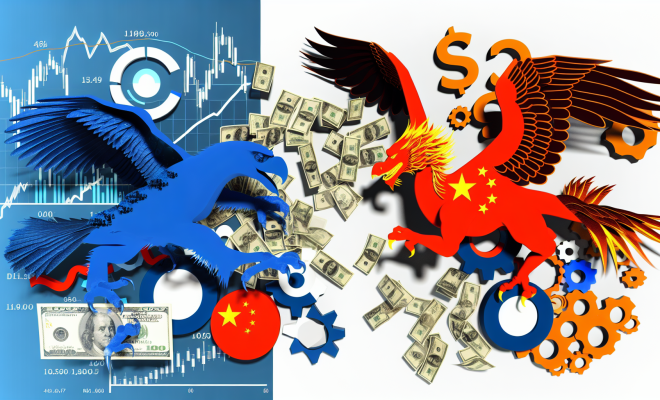
In a significant turn of events, China has officially surpassed the United States in research and development (R&D) spending for the first time in 2024. According to the latest figures released by the Organization for Economic Co-operation and Development (OECD), China invested an astounding $1.03 trillion in R&D, while the US spent approximately $1.01 trillion. This milestone marks a pivotal moment in the global landscape of innovation and technological advancement.
Understanding the Numbers
The reported figures reflect a growing trend in China’s commitment to enhancing its technological capabilities and global competitiveness. The increase in R&D expenditure is not merely a statistic; it signifies a broader push towards innovation in fields such as artificial intelligence, biotechnology, and renewable energy. This surge in funding has been driven by a mixture of government support, private sector investment, and a strategic focus on becoming a world leader in technology.
The Implications of China’s R&D Strategy
While the numbers are impressive, analysts express caution regarding the implications of China’s state-led approach to innovation. Y Tony Yang, an analyst who specializes in technological advancements and market trends, suggests that the quantitative leap in R&D spending does not necessarily equate to qualitative breakthroughs in innovation.
Yang emphasizes that the US continues to hold a distinct advantage in the realm of deep discovery and paradigm shifts. This perspective raises questions about whether China’s investment is fostering genuine innovation or merely enhancing its existing capabilities without leading to transformative breakthroughs.
The Genesis Spark: A Key Differentiator
One of the critical elements that Yang identifies is what he terms the ‘genesis spark’. This concept refers to the initial creative and innovative ideas that lead to groundbreaking technologies and advancements. Despite its substantial investment, China faces ongoing doubts regarding its ability to cultivate this spark of innovation.
- Historical Context: The US has a rich history of fostering environments conducive to innovation, driven by factors such as a culture of risk-taking, a robust venture capital ecosystem, and world-class research institutions.
- Collaborative Ecosystems: Many experts argue that the collaborative ecosystems that thrive in Silicon Valley and other US tech hubs create unique synergies, propelling innovation beyond mere financial investment.
- Intellectual Property Concerns: Concerns over intellectual property rights may also hinder the potential for innovative breakthroughs in China, as many foreign companies remain hesitant to invest heavily in a market where IP theft is a significant concern.
Government Policies and Their Impact
The Chinese government has implemented a range of policies aimed at boosting R&D spending and fostering innovation. These include tax incentives for research-intensive companies, increased funding for state-led initiatives, and a focus on enhancing STEM (science, technology, engineering, and mathematics) education.
However, the effectiveness of these policies remains a point of contention among experts. Critics argue that while state intervention can lead to short-term gains, it may stifle the organic growth of ideas that often arises from less structured, more spontaneous environments.
The Global R&D Landscape
China’s surpassing of the US in R&D spending is indicative of a shifting global landscape. Countries around the world are recognizing the importance of innovation as a driver of economic growth and national competitiveness. As nations ramp up their investments in R&D, the competition for technological supremacy is intensifying.
This global race raises important questions about collaboration versus competition. While nations like China and the US vie for dominance, there is also a growing recognition of the need for international cooperation in addressing global challenges such as climate change, public health, and cybersecurity.
What Lies Ahead?
With China now leading in R&D spending, the world is watching closely to see how this investment translates into tangible innovations. The coming years will be critical in determining whether China can bridge the gap in its innovative capabilities or if it will continue to lag behind the US in generating transformative technologies.
The journey ahead will not only shape the technological landscape but also influence geopolitical dynamics. As countries navigate this complex interplay of competition and collaboration, the future of innovation will likely be defined by both national ambitions and global partnerships.
In conclusion, while China’s achievement in surpassing the US in R&D spending is undoubtedly a noteworthy development, it is essential to examine the broader implications of this shift. The true measure of innovation lies not just in the amount of money spent, but in the ability to generate ideas that can change the world.