The Tech Edvocate

Top Menu

  • Advertisement
  • Apps
  • Home Page
  • Home Page Five (No Sidebar)
  • Home Page Four
  • Home Page Three
  • Home Page Two
  • Home Tech2
  • Icons [No Sidebar]
  • Left Sidbear Page
  • Lynch Educational Consulting
  • My Account
  • My Speaking Page
  • Newsletter Sign Up Confirmation
  • Newsletter Unsubscription
  • Our Brands
  • Page Example
  • Privacy Policy
  • Protected Content
  • Register
  • Request a Product Review
  • Shop
  • Shortcodes Examples
  • Signup
  • Start Here
    • Governance
    • Careers
    • Contact Us
  • Terms and Conditions
  • The Edvocate
  • The Tech Edvocate Product Guide
  • Topics
  • Write For Us
  • Advertise

Main Menu

  • Start Here
    • Our Brands
    • Governance
      • Lynch Educational Consulting, LLC.
      • Dr. Lynch’s Personal Website
      • Careers
    • Write For Us
    • The Tech Edvocate Product Guide
    • Contact Us
    • Books
    • Edupedia
    • Post a Job
    • The Edvocate Podcast
    • Terms and Conditions
    • Privacy Policy
  • Topics
    • Assistive Technology
    • Child Development Tech
    • Early Childhood & K-12 EdTech
    • EdTech Futures
    • EdTech News
    • EdTech Policy & Reform
    • EdTech Startups & Businesses
    • Higher Education EdTech
    • Online Learning & eLearning
    • Parent & Family Tech
    • Personalized Learning
    • Product Reviews
  • Advertise
  • Tech Edvocate Awards
  • The Edvocate
  • Pedagogue
  • School Ratings

logo

The Tech Edvocate

  • Start Here
    • Our Brands
    • Governance
      • Lynch Educational Consulting, LLC.
      • Dr. Lynch’s Personal Website
        • My Speaking Page
      • Careers
    • Write For Us
    • The Tech Edvocate Product Guide
    • Contact Us
    • Books
    • Edupedia
    • Post a Job
    • The Edvocate Podcast
    • Terms and Conditions
    • Privacy Policy
  • Topics
    • Assistive Technology
    • Child Development Tech
    • Early Childhood & K-12 EdTech
    • EdTech Futures
    • EdTech News
    • EdTech Policy & Reform
    • EdTech Startups & Businesses
    • Higher Education EdTech
    • Online Learning & eLearning
    • Parent & Family Tech
    • Personalized Learning
    • Product Reviews
  • Advertise
  • Tech Edvocate Awards
  • The Edvocate
  • Pedagogue
  • School Ratings
  • A Visitor’s Guide to Fresno (CA), United States

  • A Visitors Guide to New Orleans (LA), United States

  • A Visitors Guide to Sacramento (CA), United States

  • A Visitors Guide to Lyon, France

  • JisuLife Ultra2 Portable Fan: A Powerful Multi-Function Cooling Solution

  • A Visitors Guide to Viña del Mar, Chile

  • A Visitors Guide to Århus, Denmark

  • A Visitors Guide to Bakersfield (CA), United States

  • A Visitors Guide to Aurora (CO), United States

  • A Visitor’s Guide to Toledo (OH), United States

Social Media & Education
Home›Social Media & Education›Why children need social media lessons

Why children need social media lessons

By Matthew Lynch
June 8, 2017
0
Spread the love

Peter Coe, Aston University

It has given a voice to a generation, and helped unite people and communities far and wide. But social media is not always used as a force for good. In recent years, the misuse of social media has resulted in children and young people becoming both the perpetrators and victims of crime. As can been seen in the recent case of Felix Alexander – a teenager who took his own life after being bullied online.

Cyber-bullying is not, currently, a specific crime. But depending on the circumstances, and the age of the defendant, it can potentially be tried in a Crown Court – with a maximum sentence of two years’ imprisonment.

Online mob-type behaviour has also been the target of recent Crown Prosecution Service guidance – whereby inciting people to harass others online, known as virtual mobbing, could result in individuals being charged with encouraging an offence. If found guilty, they could be sent to prison.

Have a voice?

As predicated by US supreme court Judge Justice John Paul Stevens back in 1997, social media has allowed anyone to become a “town crier, with a voice that resonates further than it would from a soap box”. But social media users are not subject to the same “filters” as the traditional media – meaning there is often little, or no editorial control over what is published.

This can mean that what was once a casual comment or expression of emotion – shared with friends or family – can now become formalised and permanent, blurring the boundaries of online and offline life.

Employers now routinely “screen” applicants’ online profiles before deciding to hire candidates. So for young people, who have grown up with social media and a “life online”, this can mean their childhood activity could influence a future employer’s recruitment decision. Despite this, it is clear that social media users are increasingly oblivious to the risks generated by their relationship with it.

Social media lessons should start in schools from an early age.
Shutterstock

This is illustrated by the case of Paris Brown. Aged 17, Paris was the first Youth Police Crime Commissioner. But after just six days on the job, she resigned from her role over comments she had posted on twitter when she was as young as 14 which critics claimed could have been interpreted as homophobic and racist.

In an interview, she admitted to having “fallen into a trap of behaving with bravado on social networking sites”, but denied she held these views. A Google search for “Paris Brown” today still lists, within the top five results, a Daily Mail article from 2013 calling her “foul-mouthed” and “offensive”. This could follow Paris for the rest of her career.

Socially aware

Given all of this, it is my belief that social media education should be treated with the same level of importance as sex education. And as adults, educators, and employers, we need to take some responsibility in educating our children on the “birds and the bees” of social media use – because it has the potential to do serious damage to young people’s future’s and prospects.

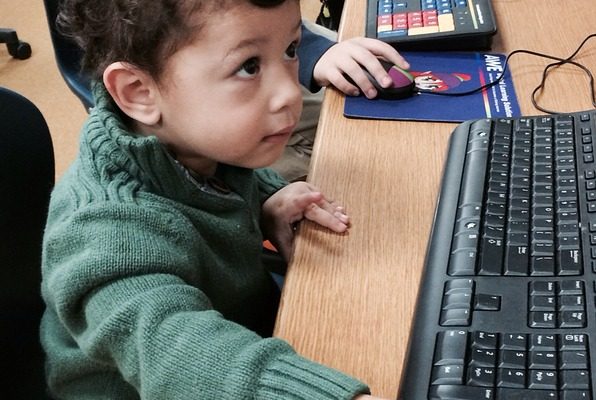
Most children start using the internet at around the age of three.
Shutterstock

Children today engage with social media at a young age, so the responsible use of it needs to be built into the curriculum at primary school level. As children progress through their education – what they are taught can evolve.

This means that from being made aware of issues such as their personal security and safety, they can move on to learning about how they could find themselves on the wrong side of the criminal and civil law for what they post or tweet. And how their online profiles can influence their job prospects – both negatively and positively.

The ConversationBecause in this modern age we live and work in today, this type of training could make a real difference to the futures of children and young people – both online and off.

Peter Coe, Senior Lecturer in Law, Aston University

This article was originally published on The Conversation. Read the original article.

TagsEdtechscreen mediascreen timesocial mediaSTEAMSTEM
Previous Article

Reading with your children: proper books vs ...

Next Article

Edtech in the Classroom: Improving Learning Opportunities ...

Matthew Lynch

Related articles More from author

  • Uncategorized

    Why Librarians are the Key to Future Ready Schools

    August 27, 2017
    By Matthew Lynch
  • EdTech Startups & Businesses

    The 5 Challenges of an Edtech Entrepreneur

    December 16, 2017
    By Matthew Lynch
  • Early Childhood & K-12 EdTechHigher EducationThe Hechinger Report

    Do classroom clickers improve learning? It depends.

    June 8, 2017
    By Matthew Lynch
  • Early Childhood & K-12 EdTechHigher Education

    Fighting online trolls with bots

    June 7, 2017
    By Matthew Lynch
  • Assistive TechnologyEdTech Policy & Reform

    How assistive technology is changing special education

    December 14, 2016
    By Matthew Lynch
  • EdTech News

    What cyber charter schools are and why their growth should worry us

    December 22, 2016
    By Matthew Lynch

Search

Login & Registration

  • Register
  • Log in
  • Entries feed
  • Comments feed
  • WordPress.org

Newsletter

Signup for The Tech Edvocate Newsletter and have the latest in EdTech news and opinion delivered to your email address!

About Us

Since technology is not going anywhere and does more good than harm, adapting is the best course of action. That is where The Tech Edvocate comes in. We plan to cover the PreK-12 and Higher Education EdTech sectors and provide our readers with the latest news and opinion on the subject. From time to time, I will invite other voices to weigh in on important issues in EdTech. We hope to provide a well-rounded, multi-faceted look at the past, present, the future of EdTech in the US and internationally.

We started this journey back in June 2016, and we plan to continue it for many more years to come. I hope that you will join us in this discussion of the past, present and future of EdTech and lend your own insight to the issues that are discussed.

Newsletter

Signup for The Tech Edvocate Newsletter and have the latest in EdTech news and opinion delivered to your email address!

Contact Us

The Tech Edvocate
910 Goddin Street
Richmond, VA 23231
(601) 630-5238
[email protected]

Copyright © 2025 Matthew Lynch. All rights reserved.