BOMBSHELL: How Vancouver’s Birch Street Project Became a Public Trust Nightmare
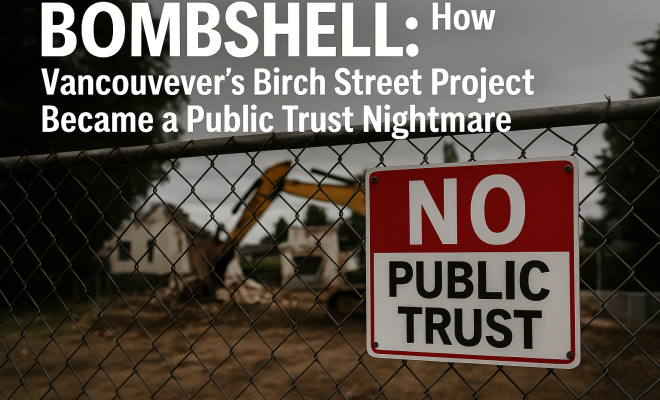
Vancouver’s housing crisis isn’t just a talking point; it’s a lived reality for thousands, a relentless squeeze on budgets and dreams. So, when a developer secures millions in public funds and significant policy concessions, all under the banner of creating much-needed rental housing, the public expects those promises to be kept. What unfolded at 2538 Birch Street, however, has ignited a firestorm of controversy, exposing what many are calling a classic bait-and-switch and a monumental breakdown of municipal oversight. This isn’t just a development dispute; it’s a full-blown Vancouver real estate scandal, a case study in how good intentions can seemingly be twisted, public trust eroded, and the urgent need for affordable homes seemingly exploited.
The core of the issue? A developer, having initially committed to a substantial long-term rental building, now seeks to convert the vast majority of those units into hotel rooms, primarily for medical tourists. This isn’t a minor tweak; it’s a fundamental shift, impacting 202 of 258 promised rental units. The public hearing on July 23, 2026, became a flashpoint, a moment where residents, community groups, and even some within City Hall grappled with the implications of such a drastic change. How did we get here? What does this mean for the future of housing affordability in Vancouver? And who, ultimately, is accountable when such a significant public promise appears to unravel?
The Genesis of a Promise: From Rental Hope to Development Quandary
To understand the depth of this particular Vancouver real estate scandal, we need to rewind a bit. The site at 2538 Birch Street began its journey with a clear and compelling vision: to address Vancouver’s dire need for rental housing. Initial approvals were granted for a 16-story building, a significant addition to the city’s housing stock. But the story didn’t stop there. The project was subsequently expanded to an ambitious 28 stories, a substantial increase in density. This expansion wasn’t simply granted on a whim; it was justified under the city’s Moderate-Income Rental Housing Pilot Program (MIRHPP).
The MIRHPP is a program designed with a noble goal: to incentivize developers to build rental housing that’s genuinely affordable for moderate-income households. In exchange for providing these much-needed homes, developers receive significant benefits, including density bonuses, faster approval processes, and often, substantial financial assistance. For the Birch Street project, this meant a dramatic increase in allowable height and, crucially, access to considerable public funding. The developer secured over $156 million in provincial loans – a staggering sum – and an additional $3.1 million in tax waivers. These weren’t gifts; they were investments made by the public, predicated entirely on the explicit promise of long-term rental housing.
When you boil it down, the city and province essentially said, ‘We’ll give you more height, quicker approvals, and a boatload of cash, but in return, you *must* deliver rental housing.’ It seemed like a win-win: the developer gets a more lucrative project, and Vancouver gets desperately needed homes. What nobody anticipated was the subsequent pivot, a move that would transform a community’s hope into widespread anger and mistrust. The commitment was clear, the public investment substantial, and the expectation of rental units was the bedrock of the entire agreement.
The Bait-and-Switch: A Radical Redefinition of the Project
Fast forward to the present, and the original vision for 2538 Birch Street has seemingly been jettisoned. The developer is now proposing to retain only 56 of the originally promised 258 rental units. The remaining 202 units? They’re slated for conversion into hotel rooms. This isn’t merely a minor adjustment to a floor plan; it’s a complete overhaul of the project’s fundamental purpose, and it feels like a slap in the face to anyone who believed in the initial promise. Critics are not mincing words, labeling this move a ‘classic bait-and-switch.’ It’s easy to see why.
Imagine buying a car with a specific set of features advertised, only to have the dealer swap out the engine and transmission for something entirely different after you’ve paid. That’s the level of disappointment and frustration many residents are feeling. The rationale provided for this radical shift centers around ‘medical tourism.’ While Vancouver certainly has world-class medical facilities, the idea that a significant, publicly subsidized rental housing project should be repurposed for short-term stays, especially when the city is in the throes of a housing crisis, strikes many as profoundly misguided. Is this truly the most pressing need? And does it justify overriding the initial, publicly funded mandate?
The community’s response has been swift and overwhelmingly negative. This isn’t just about one building; it’s about precedent. If a developer can secure significant public benefits for one purpose and then unilaterally change that purpose, what message does that send to other developers? What does it say about the integrity of the city’s planning processes and its commitment to its own housing policies? This isn’t just a local issue; it resonates with broader concerns about accountability and the perceived influence of developers over public interest in the Vancouver real estate market. (See: Vancouver housing crisis overview.)
Public Outrage and the Erosion of Trust
The public hearing on July 23, 2026, was not merely a procedural formality; it was a crucible of public sentiment. Residents, often feeling unheard and overlooked, seized the opportunity to voice their profound disappointment and anger. The air was thick with accusations of broken promises, misuse of public subsidies, and a perceived betrayal of community needs. This isn’t an isolated incident; it taps into a deep well of frustration within Vancouver, where the housing crisis has become a central defining issue. People are tired of seeing affordability slip further out of reach, and they are particularly incensed when public funds, intended to alleviate this crisis, appear to be diverted or misused.
For many, this Vancouver real estate scandal represents a ‘complete breakdown of municipal checks and balances.’ The question on everyone’s mind is, how could this happen? How could a project, so heavily reliant on public support and specific commitments, be allowed to pivot so dramatically? This isn’t just about the developer; it reflects on the City of Vancouver itself. Are the agreements robust enough? Are there sufficient safeguards to prevent such a radical departure from the initial proposal? The public’s trust in the planning process, and indeed in City Hall’s ability to protect their interests, has been severely shaken.
This isn’t just about abstract policies; it’s about real people. It’s about families struggling to find a place to live, about young professionals contemplating leaving the city due to unaffordability, and about seniors worried about being priced out of their long-time neighborhoods. When a project that promised to be a beacon of hope for rental housing suddenly shifts gears, it’s not just a commercial transaction; it’s a blow to the collective aspiration for a more equitable and affordable city. The emotional weight behind the public’s outrage is palpable and entirely understandable.
The Role of MIRHPP and Public Subsidies
The Moderate-Income Rental Housing Pilot Program (MIRHPP) was designed to be a crucial tool in Vancouver’s fight for housing affordability. Its premise is straightforward: offer significant incentives, primarily increased density and financial breaks, to developers willing to build rental housing that meets specific affordability criteria. In theory, it’s a smart policy. In practice, as the Birch Street case illustrates, its implementation can become fraught with challenges, raising serious questions about accountability and oversight.
The developer at 2538 Birch Street benefited immensely from MIRHPP. The ability to build 28 stories instead of 16 is a massive financial boon, allowing for significantly more units and, by extension, greater revenue. Coupled with the staggering $156 million in provincial loans and $3.1 million in tax waivers, this represents a monumental public investment. These aren’t small favors; they are substantial public funds and concessions, granted specifically because the project promised to deliver long-term rental housing. The very foundation of these subsidies was the rental commitment.
When a developer then seeks to fundamentally alter that commitment, it fundamentally undermines the spirit and intent of programs like MIRHPP. It raises a critical question: what recourse do the public and the city have when these conditions are seemingly disregarded? Should there be mechanisms to claw back funds or revoke concessions if the agreed-upon terms are not met? This incident forces a hard look at how such programs are structured, the robustness of their contractual agreements, and the efficacy of their enforcement. Without strong safeguards, such pilot programs, however well-intentioned, risk becoming vehicles for private gain rather than genuine public benefit, further fueling the Vancouver real estate scandal narrative.
Astroturf Activism and the Manipulation of Public Discourse
Adding another layer of complexity and suspicion to this unfolding Vancouver real estate scandal is the accusation of ‘astroturf activism.’ This term refers to campaigns that appear to be grassroots, spontaneously generated public movements, but are in fact covertly funded or directed by corporations, political entities, or other vested interests. In the context of the Birch Street proposal, critics suggest that certain voices advocating for the hotel conversion might not be entirely independent, potentially skewing public perception and creating a false sense of community support for the developer’s revised plans.
The implications of astroturf activism are profound. It undermines genuine public discourse, making it difficult for citizens to discern authentic community sentiment from manufactured consent. In a highly contentious issue like housing development, where emotions run high and stakes are significant, such tactics can be particularly damaging. They create an uneven playing field, where well-funded interests can potentially drown out the voices of genuine residents and community advocates. If true, it’s a cynical attempt to manipulate the democratic process and further erode trust in public consultations. (See: importance of healthy housing.)
Identifying astroturf campaigns can be challenging, but tell-tale signs often include unusually coordinated messaging, sudden emergence of new ‘community’ groups with unclear funding, or a disproportionate focus on highly specific, developer-friendly arguments. When citizens feel their concerns are being dismissed or that the narrative is being controlled by external forces, it only deepens their sense of powerlessness and cynicism. This aspect, if confirmed, would represent a particularly insidious dimension of the Birch Street controversy, highlighting the lengths some might go to push through their agendas, irrespective of public good.
The Overleveraged Developer: A Motivating Factor?
One perspective offered by critics is that the developer might be ‘overleveraged.’ In the high-stakes world of real estate development, particularly in an expensive market like Vancouver, projects often rely heavily on financing. Developers take on significant loans, betting on future revenues and market conditions. If a project encounters unexpected delays, cost overruns, or changes in market dynamics, a developer can find themselves in a precarious financial position, needing to find new revenue streams or drastically alter their plans to stay afloat.
If the developer at 2538 Birch Street is indeed overleveraged, the pivot from long-term rentals to short-term hotel rooms could be seen as a desperate measure to improve the project’s financial viability. Hotel rooms, especially for medical tourism, might offer higher per-unit revenue or a quicker return on investment compared to regulated rental units, particularly those under affordability programs. While this might be a sound business decision for the developer, it completely disregards the public commitment and the subsidies received, which were contingent on providing rental housing.
This raises a crucial policy question: should the city and province be taking on such significant financial risk with developers, particularly when the public benefit is explicitly tied to a specific outcome? And what mechanisms are in place to ensure that developers, once having received public funds and concessions, are held accountable even if their financial circumstances change? The potential for developers to use public funds for one purpose, and then alter that purpose due to their own financial difficulties, is a deeply troubling aspect of this Vancouver real estate scandal, and one that demands scrutiny of lending and oversight practices.
Precedent and the Future of Housing Policy
The outcome of the Birch Street controversy carries immense weight, far beyond the immediate site. It will set a powerful precedent for future development in Vancouver and potentially across the province. If the developer is allowed to proceed with the conversion of rental units to hotel rooms, despite the initial commitments and public subsidies, what message does that send to other developers? It could signal that promises made under programs like MIRHPP are not sacrosanct, that public funding comes with few enforceable strings attached, and that developers can effectively ‘bait-and-switch’ their way to more profitable ventures.
This scenario would be devastating for Vancouver’s housing policy. It would undermine the credibility of programs designed to incentivize affordable housing and erode public trust in City Hall’s ability to deliver on its housing goals. Why would residents support future density increases or public subsidies if they believe such agreements can be easily circumvented? The city’s ability to leverage private development for public good depends heavily on the certainty and enforceability of these commitments. If that certainty is lost, the city’s housing strategy could be severely hampered.
Conversely, if City Hall takes a strong stance, enforcing the original agreement or imposing significant penalties for the deviation, it would send an equally powerful message: that public commitments are serious, and public funds come with real accountability. This is a critical juncture for Vancouver’s housing future. The decision made on Birch Street will either reinforce the integrity of its planning processes or expose glaring vulnerabilities that could have long-lasting, detrimental effects on housing affordability and public confidence in the Vancouver real estate market.
Recommendations for Stronger Oversight and Accountability
The Birch Street incident serves as an urgent wake-up call, highlighting critical areas where municipal and provincial oversight needs to be strengthened. To prevent similar Vancouver real estate scandals in the future, several concrete measures should be considered. First and foremost, contracts and agreements for projects receiving public subsidies or significant policy concessions must be far more robust. They need to include explicit, legally binding clauses that detail the consequences of deviating from the agreed-upon purpose, especially regarding the type and tenure of housing. (See: affordable housing in Vancouver.)
This includes clear clawback provisions for public funds and tax waivers if commitments are not met. If a developer receives $156 million in provincial loans for rental housing and then converts those units to hotels, there should be an immediate and mandatory mechanism to recoup those funds, potentially with penalties. Furthermore, the city should consider implementing performance bonds or letters of credit that developers forfeit if they fail to deliver on specific housing targets or tenure types. This would provide a financial incentive to adhere to the original plans.
Beyond contractual measures, there needs to be greater transparency throughout the development process. All public hearings, applications, and any changes to approved projects should be easily accessible and clearly communicated to the public. The process for reviewing and approving changes to previously subsidized projects must be subjected to the highest level of scrutiny, with robust public consultation that cannot be easily manipulated. Finally, City Hall needs to empower its planning and legal departments to rigorously enforce these agreements, ensuring that public interest is consistently prioritized over private gain. This isn’t just about one project; it’s about restoring faith in a system that many feel is currently failing them.
The Broader Implications for Vancouver’s Housing Crisis
The controversy surrounding 2538 Birch Street is more than just a localized dispute; it’s a stark illustration of the deep-seated challenges facing Vancouver’s housing landscape. The city is grappling with an affordability crisis that continues to push residents to their limits. Rental vacancy rates remain critically low, and the cost of both renting and owning property is among the highest in the world. Against this backdrop, every single promised rental unit takes on outsized importance. When 202 units, explicitly supported by public funds and policy concessions, are threatened with conversion, it feels like a direct assault on the city’s ability to address its most pressing social issue.
The incident also underscores the delicate balance between encouraging development and safeguarding public interest. Developers are essential partners in building new housing, and incentives are often necessary to make projects viable in a high-cost environment. However, these partnerships must be built on trust and mutual accountability. When that trust is broken, as many believe it has been in this Vancouver real estate scandal, it poisons the well for future collaborations and makes it harder for the city to achieve its housing goals.
Ultimately, the Birch Street saga highlights the urgent need for a more coherent, transparent, and enforceable housing strategy. It’s not enough to simply approve projects; the city and province must ensure that those projects deliver on their promises, especially when public resources are involved. The future of Vancouver’s liveability, its economic vibrancy, and its social equity hinge on its ability to provide diverse and affordable housing options. This particular controversy serves as a painful reminder that without stringent oversight and unwavering commitment to public good, even the best-intentioned housing initiatives can go awry, leaving a community feeling betrayed and further exacerbating an already dire housing situation.
Trending Now
Frequently Asked Questions
What is the Birch Street Project in Vancouver?
The Birch Street Project is a controversial development in Vancouver initially intended to provide long-term rental housing. However, the developer is now proposing to convert most of the rental units into hotel rooms for medical tourists, raising concerns about the impact on housing affordability.
Why is the Birch Street Project controversial?
The project has sparked controversy due to a perceived bait-and-switch tactic by the developer, who initially promised rental housing but now seeks to convert many units into hotel accommodations, undermining public trust and the original intent of the project.
How many rental units were promised in the Birch Street Project?
The Birch Street Project initially promised 258 rental units. However, the developer now aims to change 202 of those units into hotel rooms, significantly altering the project's original commitment to affordable housing.
What are the implications of the changes to the Birch Street Project?
The proposed changes to the Birch Street Project could exacerbate Vancouver's housing crisis by reducing the availability of much-needed rental units. This shift raises concerns about accountability and the effectiveness of municipal oversight in ensuring housing commitments are met.
When was the public hearing for the Birch Street Project held?
The public hearing regarding the Birch Street Project took place on July 23, 2026. This meeting became a critical moment for residents and city officials to discuss the implications of the developer's proposed changes to the project.
Have you experienced this yourself? We'd love to hear your story in the comments.