BlueStacks X vs Xbox Cloud Gaming
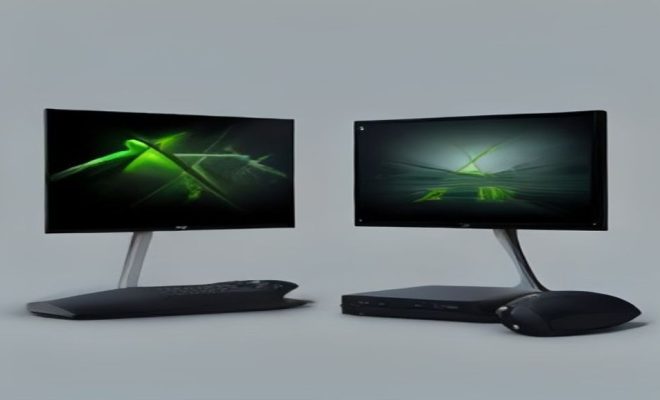
In the rapidly evolving landscape of digital entertainment, cloud gaming and application streaming have emerged as powerful forces, promising access to a vast library of experiences without the need for high-end local hardware. This shift is particularly evident when comparing two distinct yet often conflated platforms: BlueStacks X and Xbox Cloud Gaming. While both leverage the cloud, their fundamental purposes, target audiences, and underlying technologies differ significantly, creating a fascinating contrast for anyone looking to play games without a traditional console or powerful PC.
For years, PC gamers have been accustomed to local installations and hardware upgrades. Console players, too, have relied on dedicated boxes under their TVs. But what if you could sidestep all that? What if you could stream your favorite games, whether they’re mobile titles or AAA blockbusters, directly to almost any device with an internet connection? That’s the promise these platforms offer, and understanding the nuances of BlueStacks X vs Xbox Cloud Gaming is crucial for making an informed decision about where to invest your time and money.
1. Defining the Contenders: What Exactly Are We Comparing?
Let’s start by clarifying what each platform brings to the table. BlueStacks X, often simply called BlueStacks, is primarily an Android app player. Its core function is to allow users to run Android applications, including a massive library of mobile games, on Windows, macOS, and Linux computers. The ‘X’ in BlueStacks X signifies its cloud-hybrid approach, combining local emulation with cloud streaming for certain titles, giving you flexibility in how you access your mobile games.
On the other side, Xbox Cloud Gaming (formerly known as xCloud) is Microsoft’s foray into streaming console-quality video games. It’s an extension of the Xbox ecosystem, allowing subscribers to Xbox Game Pass Ultimate to stream a curated selection of Xbox Series X and Xbox One titles directly to a wide array of devices, including PCs, tablets, phones, and smart TVs. The key difference here is the origin of the games: BlueStacks X is about Android, while Xbox Cloud Gaming is about console titles.
2. The Core Purpose: Mobile Emulation vs. Console Streaming
The most fundamental distinction between BlueStacks X and Xbox Cloud Gaming lies in their primary objective. BlueStacks X is designed to bridge the gap between mobile and desktop computing. It recognizes that many fantastic games and applications exist exclusively on Android, and it provides a robust, often free, way to experience them on larger screens with traditional input methods like keyboards and mice. Think of it as bringing your smartphone’s capabilities to your PC, but with a performance boost and enhanced controls.
Xbox Cloud Gaming, by contrast, aims to liberate console gaming from its hardware shackles. It’s for those who want to play the latest Forza Motorsport, Halo Infinite, or Starfield without owning an Xbox console or a high-spec gaming PC. Microsoft’s vision is to make Xbox games accessible to anyone, anywhere, provided they have a decent internet connection and an Xbox Game Pass Ultimate subscription. It’s about expanding the reach of their premier gaming titles beyond the traditional console audience.
3. Game Libraries and Content: Worlds Apart
When you’re comparing BlueStacks X vs Xbox Cloud Gaming, the available game libraries are perhaps the most significant differentiator. BlueStacks X opens the door to virtually the entire Google Play Store. We’re talking millions of Android apps and games, from casual match-3 puzzlers to complex RPGs like Genshin Impact, Call of Duty Mobile, and Honkai: Star Rail. The sheer volume and diversity are staggering, encompassing free-to-play, premium, and subscription-based mobile titles. You’re getting the full mobile ecosystem, optimized for a desktop experience.
Xbox Cloud Gaming, on the other hand, offers a curated selection of games from the Xbox Game Pass library. While this library is extensive and includes hundreds of high-quality, graphically intensive console titles, it’s not an open-ended platform like Google Play. You’re limited to what Microsoft decides to include in Game Pass, which rotates periodically. That said, these are typically full-fledged, AAA console experiences, a stark contrast to many mobile-native titles. You’ll find critically acclaimed games and new releases available on day one for Game Pass subscribers.
4. Performance and Technical Underpinnings: Local vs. Remote Rendering
The technical architecture of BlueStacks X and Xbox Cloud Gaming dictates their performance characteristics. BlueStacks X primarily relies on local emulation. Your PC is doing the heavy lifting, running the Android operating system and applications within a virtualized environment. While the ‘X’ in BlueStacks X introduces cloud streaming for some titles (particularly those that are very graphically demanding or require specific hardware), the core experience for many users remains local. This means performance often depends on your PC’s CPU, RAM, and GPU.
Xbox Cloud Gaming is a pure cloud streaming service. The games are actually running on powerful Xbox Series X server blades located in Microsoft’s data centers. What you receive on your device is a compressed video stream of the gameplay, and your inputs are sent back to the server. This model means that your local device doesn’t need to be powerful; a basic laptop, an older phone, or a cheap tablet can deliver a premium gaming experience, provided your internet connection is robust and low-latency. The heavy lifting is done remotely, making it truly hardware-agnostic. (See: understanding cloud gaming technology.)
5. Input Methods and Control Schemes: Tailored Experiences
Input methods are another area where BlueStacks X vs Xbox Cloud Gaming diverge. BlueStacks X, being an Android emulator, is incredibly flexible. It supports touch controls (if you have a touchscreen device), but its strength lies in mapping mobile touch inputs to a keyboard and mouse. BlueStacks provides sophisticated control mapping tools, allowing you to customize virtual joysticks, buttons, and swipe gestures to your preferred keyboard keys and mouse movements. This can dramatically improve the playability of many mobile games on a PC.
Xbox Cloud Gaming is optimized for game controllers. While some titles support touch controls on mobile devices, the vast majority of Xbox games are designed with a gamepad in mind. Microsoft recommends using an Xbox Wireless Controller for the best experience, though many other Bluetooth controllers are compatible. Playing a fast-paced action game like Halo with a keyboard and mouse isn’t natively supported, as the server-side Xbox console environment expects controller inputs. This might be a dealbreaker for PC gamers who prefer keyboard and mouse for certain genres.
6. Cost and Accessibility: Free-to-Play vs. Subscription
Cost is always a critical factor, and here BlueStacks X and Xbox Cloud Gaming present different financial models. BlueStacks X is largely free to use. You can download and install the emulator on your PC without charge. While some mobile games within its ecosystem are premium titles or feature in-app purchases, BlueStacks itself doesn’t require a subscription. This makes it highly accessible for anyone wanting to explore the Android gaming world on their desktop.
Xbox Cloud Gaming is part of the Xbox Game Pass Ultimate subscription, which costs $16.99 per month (as of late 2023/early 2024). This subscription not only grants you access to cloud streaming but also includes a vast library of downloadable games for Xbox consoles and PC, Xbox Live Gold (for online multiplayer on console), and EA Play. So, while it’s not free, it’s part of a comprehensive gaming service that offers significant value for its price, especially if you also own an Xbox console or game on PC. For cloud gaming alone, you’re paying for the convenience and the premium content library.
7. Internet Requirements: Latency is King
Both platforms rely on an internet connection, but their demands differ slightly. For BlueStacks X’s local emulation, your internet connection is primarily needed for downloading games and updates, and for any online multiplayer components within those games. The actual game rendering happens on your PC, so a stable, high-speed connection isn’t as critical for raw performance, though a good connection is always beneficial for online play.
Xbox Cloud Gaming, being a pure streaming service, is far more sensitive to internet speed and, critically, latency. Microsoft recommends a minimum of 20 Mbps download speed, but a stable connection with low ping is arguably more important. High latency (lag) will introduce noticeable delays between your inputs and the on-screen action, making fast-paced games frustrating or unplayable. For the best experience, you’ll want a wired Ethernet connection if possible, or a very strong Wi-Fi signal on a relatively uncluttered network.
8. User Experience and Ecosystem Integration: A Matter of Preference
The overall user experience also offers a compelling point of comparison for BlueStacks X vs Xbox Cloud Gaming. BlueStacks X provides a familiar Android interface, allowing you to manage apps, settings, and even virtual devices much like you would a physical Android phone. It integrates well with the Google ecosystem, including your Google account, contacts, and cloud saves for many games. For those deeply embedded in the Android mobile world, it feels intuitive and natural.
Xbox Cloud Gaming offers a streamlined, console-like experience. The interface is designed to get you into games quickly, browsing the Game Pass library and launching titles with minimal fuss. It’s deeply integrated with the Xbox ecosystem, including achievements, friend lists, and cloud saves that sync across consoles, PC, and cloud streaming. If you’re already an Xbox gamer, or aspire to be one, the seamless integration and familiar UI will be a significant draw. It’s about bringing the Xbox experience to more places, simply and effectively.
9. Hardware Compatibility and Device Reach: Expanding Horizons
When you’re thinking about device compatibility, these two platforms again show their distinct approaches. BlueStacks X primarily targets desktop and laptop PCs running Windows, macOS, or Linux. While you can use it on a touchscreen laptop, its core design focuses on the traditional desktop input methods. The ‘X’ cloud component helps extend its reach by letting you stream some Android games even to less powerful PCs or web browsers, but the heavy lifting of full Android emulation still requires a capable local machine.
Xbox Cloud Gaming, on the other hand, is built for maximum device reach. It’s designed to run on almost anything with a web browser and an internet connection. This includes Windows PCs, Macs, Chromebooks, Android phones and tablets, iPhones and iPads (via browser), and even select smart TVs like Samsung’s Gaming Hub. This broad compatibility is one of its biggest selling points, truly enabling gaming anywhere you have a screen and decent internet. You don’t need a powerful gaming rig; just a capable display and a way to connect a controller.
10. Developer Support and Monetization Models: Different Ecosystems
The relationship each platform has with game developers and their monetization strategies also highlights key differences. BlueStacks X operates within the existing Android app ecosystem. Mobile game developers build their games for Android, often with free-to-play models supported by in-app purchases (IAPs) and advertisements. BlueStacks simply provides a robust environment for these existing games to run on PC. Developers don’t specifically “develop for BlueStacks”; they develop for Android, and BlueStacks makes those games accessible on a new platform, often enhancing the player experience with its control mapping and performance optimizations. (See: impact of technology on youth.)
Xbox Cloud Gaming is intrinsically tied to the Xbox Game Pass model. Developers whose games are included in Game Pass receive compensation from Microsoft, often through upfront payments, engagement-based royalties, or a combination. The monetization for players is primarily the Game Pass Ultimate subscription itself. While some Game Pass titles also offer IAPs (like cosmetic items in free-to-play games that are part of Game Pass, or DLC expansions for included games), the core value proposition for players is access to a rotating library of games for a single monthly fee. This model encourages developers to create high-quality, often premium, experiences knowing they’ll be part of a subscription service.
11. Innovation and Future Outlook: Evolving Cloud Strategies
Both BlueStacks X and Xbox Cloud Gaming are continuously evolving, reflecting the dynamic nature of cloud technology. BlueStacks is always working on improving its emulation engine, optimizing performance, and expanding its cloud-streaming capabilities to cover more Android titles directly from the browser. Their focus is on making the immense Android library even more seamless and performant on non-mobile hardware. You can expect continued refinements in control mapping, multi-instance support (running multiple apps at once), and deeper integration with desktop features.
Microsoft’s Xbox Cloud Gaming is also rapidly innovating. They’re constantly upgrading their server blades to more powerful Xbox Series X hardware, improving streaming quality, reducing latency, and expanding server regions to reach more players with a better experience. Future plans include potentially supporting mouse and keyboard for more games, integrating more deeply with Windows and other platforms, and exploring new ways to interact with cloud games, perhaps even bringing cloud gaming to new device categories. The long-term vision for Xbox is to be a gaming service that transcends specific hardware, and cloud gaming is central to that.
Expert Perspectives on Cloud Gaming’s Impact
Industry analysts often point to the democratizing effect of cloud gaming. Sarah Bond, Corporate Vice President at Xbox, has frequently emphasized that cloud gaming removes hardware barriers, allowing millions more people to access games they otherwise couldn’t. This aligns perfectly with Xbox Cloud Gaming’s mission.
On the mobile side, experts highlight how platforms like BlueStacks X validate the quality and depth of mobile gaming. What started as casual experiences has matured into complex, graphically rich titles. Dr. Serkan Toto, CEO of Kantan Games, an industry consultancy, has noted the increasing revenue and sophistication of mobile games, suggesting that bridging the gap to PC via emulators is a natural progression for players seeking larger screens and more precise controls.
The convergence of these trends suggests a future where the line between “mobile,” “console,” and “PC” gaming becomes increasingly blurred, with cloud technology acting as the ultimate unifier.
BlueStacks X vs Xbox Cloud Gaming: Key Statistics and Market Share
While direct comparisons of market share between an emulator and a cloud gaming service are tricky, we can look at some related statistics:
- Mobile Gaming Dominance: Mobile gaming generates significantly more revenue than PC and console gaming combined. In 2023, mobile gaming revenue was projected to be around $90 billion globally, compared to console gaming at around $53 billion and PC gaming at $38 billion (Newzoo). BlueStacks X taps directly into this massive mobile market.
- Xbox Game Pass Growth: Xbox Game Pass boasts over 30 million subscribers as of early 2024. While not all of these subscribers use cloud gaming, it represents a substantial user base with access to the service.
- Cloud Gaming Adoption: The global cloud gaming market is projected to grow from $3.5 billion in 2023 to over $15 billion by 2028 (Statista). Xbox Cloud Gaming is a major player in this rapidly expanding segment.
- BlueStacks User Base: BlueStacks has historically claimed hundreds of millions of users, indicating its widespread adoption for Android emulation, even before the ‘X’ cloud-hybrid model.
These figures underscore the vast audiences both platforms cater to and the significant growth trajectories they inhabit within their respective niches.
FAQs: Navigating Your Cloud and Emulation Choices
Q1: Can I play Xbox Cloud Gaming titles using a keyboard and mouse?
A1: Generally, no. Xbox Cloud Gaming primarily supports game controllers because the games are running on Xbox console hardware in Microsoft’s data centers, which are designed for controller input. While some specific games might have limited touch controls on mobile, native keyboard and mouse support for most titles is not available. This is a common point of contention for PC gamers.
Q2: Does BlueStacks X require a powerful PC to run all Android games?
A2: For most Android games, especially older or less graphically intensive ones, BlueStacks X (the local emulator part) can run well on a mid-range PC. However, for the very latest, most graphically demanding Android titles (like Genshin Impact or Honkai: Star Rail at high settings), a more powerful CPU, sufficient RAM (8GB+ recommended), and a dedicated GPU will significantly improve performance. The ‘X’ cloud streaming component is designed to offload some of this processing for specific titles, allowing them to run on less powerful local hardware. (See: recent developments in cloud gaming.)
Q3: What internet speed is truly “good enough” for Xbox Cloud Gaming?
A3: Microsoft recommends a minimum of 20 Mbps download speed. However, speed isn’t the only factor. Low latency (ping) is crucial. A stable connection with a ping of 20-30ms or less to Microsoft’s servers will provide the best experience. If your ping is consistently above 50ms, you’ll likely notice input lag, which can be very frustrating in fast-paced games. A wired Ethernet connection is almost always superior to Wi-Fi for cloud gaming.
Q4: Can I use my Google Play purchases within BlueStacks X?
A4: Yes! When you sign into BlueStacks X with your Google account, it’s essentially like signing into a new Android device. Any apps or games you’ve purchased on Google Play, or progress saved via Google Play Games, will generally be accessible and sync within BlueStacks X, provided the game supports cloud saves.
Q5: Is Xbox Cloud Gaming available worldwide?
A5: Xbox Cloud Gaming is available in a growing number of regions around the world, primarily in North America, Europe, and parts of Asia and Oceania. Microsoft is continuously expanding its data center infrastructure to bring the service to more countries. You should check the official Xbox website for an up-to-date list of supported regions.
Q6: Are there alternatives to BlueStacks X for Android emulation, or to Xbox Cloud Gaming for cloud streaming?
A6: Yes, there are several alternatives. For Android emulation, popular options include NoxPlayer, LDPlayer, and GameLoop (Tencent’s official emulator for some mobile games). For cloud gaming, other services like NVIDIA GeForce NOW (which streams PC games you own) and Amazon Luna (a subscription service with a curated library) are available. Google Stadia was another prominent player but shut down in early 2023.
Q7: Can I play games offline with either BlueStacks X or Xbox Cloud Gaming?
A7: BlueStacks X (the local emulator) allows you to play many Android games offline once they are downloaded and installed, assuming the game itself doesn’t require an active internet connection for its core gameplay or DRM. Xbox Cloud Gaming, by its very nature as a streaming service, requires a constant and stable internet connection to function. No offline play is possible with Xbox Cloud Gaming.
Which One Should You Choose?
Ultimately, the choice between BlueStacks X and Xbox Cloud Gaming boils down to what you want to play and how you want to play it. If your interest lies in the vast, diverse, and often free-to-play world of mobile gaming, and you want to experience those games on a larger screen with keyboard and mouse controls, BlueStacks X is your clear winner. It’s a fantastic, free tool for elevating your mobile gaming experience on a desktop.
However, if you’re chasing the latest AAA console releases, want to play high-fidelity games without investing in expensive hardware, and are comfortable with a subscription model and gamepad controls, then Xbox Cloud Gaming is the way to go. It delivers a premium console experience directly to your device, making gaming more accessible than ever before. There’s no single ‘better’ option here; it’s all about aligning the platform with your specific gaming desires and existing preferences.
Trending Now
Frequently Asked Questions
What is BlueStacks X?
BlueStacks X is an Android app player that allows users to run Android applications, including a wide range of mobile games, on Windows, macOS, and Linux computers. Its cloud-hybrid approach combines local emulation with cloud streaming for certain titles, providing flexibility in accessing mobile games.
How does Xbox Cloud Gaming work?
Xbox Cloud Gaming, formerly known as xCloud, enables users to stream console-quality games directly to various devices. It is part of the Xbox ecosystem and allows subscribers to Xbox Game Pass Ultimate to access a curated library of Xbox Series X and Xbox One titles without the need for a console.
What are the main differences between BlueStacks X and Xbox Cloud Gaming?
The primary difference lies in their focus: BlueStacks X is designed for running Android apps and games, while Xbox Cloud Gaming streams console-level games. BlueStacks offers a cloud-hybrid model for mobile titles, whereas Xbox Cloud Gaming provides access to high-quality Xbox games, showcasing distinct target audiences and technologies.
Can you play mobile games on Xbox Cloud Gaming?
No, Xbox Cloud Gaming is primarily focused on streaming console-quality games from the Xbox library. If you're looking to play mobile games, BlueStacks X is the better option, as it specializes in running Android applications and games on various platforms.
Do I need a powerful PC for BlueStacks X?
Not necessarily. BlueStacks X combines local emulation with cloud streaming, allowing users to play mobile games without needing high-end hardware. While a decent PC can enhance performance, the cloud streaming aspect means you can enjoy games on less powerful devices as well.
Agree or disagree? Drop a comment and tell us what you think.