Best AI Diagnostic Tools for Heart Health Monitoring in 2023

“`html
This AI Tool Spots Heart Disease in Seconds – The Future of Your Health Just Arrived
Imagine a world where the earliest signs of heart failure or a critical valve issue aren’t missed, caught instead by a system that sees more than the most experienced human eye, and does it in less time than it takes to blink. Sound like science fiction? Well, get ready, because that future is already here. Doctors have officially unveiled what can only be described as a ‘superhuman’ AI tool, capable of diagnosing heart failure and heart valve disease from a standard electrocardiogram (ECG) in under two seconds. This isn’t just a minor improvement; it’s a monumental leap forward, poised to fundamentally change how we approach cardiac care. It’s a compelling example of how the best AI diagnostic tools for heart health are transforming medicine as we know it.
Presented at the prestigious European Society of Cardiology annual congress, this breakthrough has understandably gone viral within the medical community and beyond. Why? Because heart disease remains a leading cause of mortality worldwide, and early detection is often the key to effective treatment and better patient outcomes. This AI, trained on millions of patient records, can extract nuances from an ECG that are simply imperceptible to human analysis. We’re talking about a technology that doesn’t just assist doctors; it augments their capabilities, offering a level of speed and accuracy that was previously unimaginable. It makes you wonder: what other medical mysteries can AI help us unravel?
1. The Superhuman AI: A Glimpse into its Capabilities
Let’s unpack what makes this particular AI tool so extraordinary. Its core strength lies in its ability to process a standard electrocardiogram (ECG) and identify markers of heart failure and heart valve disease with unprecedented speed and accuracy. An ECG, as you probably know, measures the electrical activity of the heart. For decades, cardiologists have relied on these squiggly lines to diagnose various heart conditions. However, the human eye, even that of a seasoned expert, has limitations. Subtle changes, faint patterns, or combinations of signals might be too diffuse or complex for even the sharpest human mind to synthesize in real-time.
This AI, however, doesn’t operate under those constraints. It was fed an enormous dataset – millions of patient records, each containing ECGs alongside confirmed diagnoses. Through this intensive training, the AI learned to recognize intricate patterns and correlations that signify specific cardiac conditions. It essentially developed a ‘superhuman’ ability to spot nuances that escape human perception, translating those subtle electrical signals into actionable diagnostic insights in less than two seconds. This isn’t just fast; it’s an entirely new paradigm for cardiac screening and diagnosis, setting a new benchmark for the best AI diagnostic tools for heart health.
2. Speed and Accuracy: The Dual Pillars of Breakthrough Diagnosis
The two standout features of this new AI are its astonishing speed and its remarkable accuracy. Think about it: a diagnosis for two common, critical conditions – heart failure and heart valve disease – delivered in under two seconds. This isn’t just about convenience; it’s about saving lives. In clinical settings, time is often of the essence. Delays in diagnosis can mean the difference between a treatable condition and irreversible damage.
When we talk about accuracy, it’s not just about getting it right most of the time. This AI has demonstrated a capability to extract more information from ECGs than the human eye ever could. This means it’s not just confirming what a doctor might already suspect; it’s potentially identifying conditions far earlier, or in cases where the human interpretation might be ambiguous. For instance, a patient might present with non-specific symptoms, and a standard ECG might look ‘normal’ to a human observer. This AI could flag subtle anomalies, prompting further investigation and potentially averting a crisis. This level of precision, combined with its speed, truly positions it among the best AI diagnostic tools for heart health we’ve seen to date.
3. Beyond Human Perception: How AI Sees More
The concept of ‘superhuman’ might sound like hyperbole, but in this context, it’s quite literal. Our brains are incredibly adept at pattern recognition, but there are limits to the complexity and volume of data we can process simultaneously. An ECG is a rich source of information, but much of that information is hidden in subtle variations in waveform morphology, intervals, and amplitudes that are too fine for the human eye and brain to consistently interpret across millions of cases.
AI, particularly advanced machine learning algorithms, excels at finding these hidden patterns. It can analyze thousands of data points within an ECG, identifying correlations and predictive markers that might be spread across different parts of the tracing or manifest as extremely subtle deviations from the norm. It’s like having a microscope for electrical signals, revealing details that were always there but previously invisible. This capability to go beyond human perceptual limits is what truly distinguishes this tool and makes it a vanguard among the best AI diagnostic tools for heart health.
4. Implications for Early Diagnosis and Patient Outcomes
The most profound impact of this AI tool will undoubtedly be on early diagnosis. Heart failure and heart valve disease are progressive conditions. The earlier they are detected, the more effective interventions can be. Imagine a routine check-up where a quick ECG, analyzed by this AI, flags an early sign of a developing issue. This could lead to lifestyle changes, medication, or minor procedures that prevent the condition from escalating into a life-threatening emergency. (See: Cardiovascular diseases fact sheet.)
For patients, this means a better quality of life and potentially a longer one. For healthcare systems, it means a shift from reactive crisis management to proactive preventative care. Fewer emergency hospitalizations, fewer complex surgeries, and a reduced burden on healthcare resources are all potential outcomes of widespread early detection. This isn’t just about fancy tech; it’s about fundamentally improving how we care for our hearts and, by extension, our overall well-being. It’s exactly the kind of innovation we need from the best AI diagnostic tools for heart health.
5. The Training Ground: Millions of Patient Records
How did this AI acquire its ‘superhuman’ abilities? The answer lies in the sheer volume and quality of its training data. The developers didn’t just feed it a few thousand ECGs; they trained it on millions of anonymized patient records. This massive dataset included ECGs from individuals with confirmed heart failure and valve disease, as well as those with healthy hearts and other cardiac conditions. For more context, see AI-Generated Fake Health Influencers Are Invading Your Feed.
This extensive training allowed the AI to learn the incredibly diverse manifestations of these conditions across a vast patient population. It’s similar to how a human doctor gains expertise through years of seeing countless patients. But the AI can ‘see’ and process those millions of cases in a fraction of the time, identifying subtle statistical patterns and correlations that would take multiple human lifetimes to discern. This robust training is what underpins the tool’s remarkable accuracy and reliability, cementing its place among the best AI diagnostic tools for heart health.
6. Revolutionizing Clinical Workflow and Accessibility
Beyond individual patient benefits, this AI tool has the potential to revolutionize clinical workflow. Imagine primary care physicians, who are often the first point of contact for patients, having access to such a powerful diagnostic aid. They could perform a quick ECG in their office, run it through the AI, and get an immediate, highly accurate assessment. This could reduce the need for lengthy referrals to specialists for initial screening, speeding up the diagnostic process significantly.
Furthermore, this technology could enhance accessibility to high-quality cardiac screening in underserved areas or regions with a shortage of cardiologists. A trained technician, with the AI’s assistance, could perform initial screenings, allowing specialists to focus their expertise on confirmed cases requiring advanced treatment. This democratizing effect on sophisticated diagnostics is a huge advantage, making it one of the most promising of the best AI diagnostic tools for heart health for global health equity.
7. Addressing Concerns: AI as an Aid, Not a Replacement
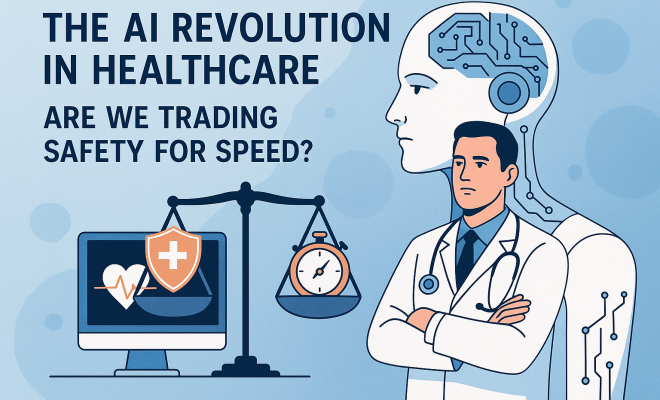
Whenever advanced AI enters a sensitive field like medicine, legitimate questions arise about its role and potential impact on human professionals. It’s crucial to understand that tools like this are designed to be powerful aids, not replacements for doctors. The AI provides a highly accurate, rapid assessment, but the ultimate diagnostic decision, treatment plan, and patient interaction remain firmly in the hands of the medical team.
Doctors will use this AI to enhance their capabilities, to catch things they might miss, and to streamline their workflow. It’s a second pair of ‘superhuman’ eyes, offering an additional layer of scrutiny. The human element of empathy, nuanced clinical judgment, and the ability to consider a patient’s broader health context, lifestyle, and preferences are irreplaceable. The best AI diagnostic tools for heart health, like this one, empower clinicians, making them even more effective.
8. The Future Landscape of Cardiac Care with AI
This breakthrough is just the beginning. The successful application of AI to ECG analysis for heart failure and valve disease opens the door to countless other possibilities in cardiac care. We could see AI tools developed to predict arrhythmias, identify genetic predispositions to heart conditions, or even monitor recovery post-surgery with unparalleled precision.
The continuous evolution of machine learning means these tools will only become more sophisticated, learning from even larger datasets and integrating with other diagnostic modalities like imaging (MRI, CT scans). The future of cardiac care will likely involve a seamless integration of human expertise and advanced AI, leading to more personalized, predictive, and preventative approaches to heart health. It’s an exciting prospect that promises a healthier future for us all, driven by the relentless innovation in the best AI diagnostic tools for heart health.
9. Beyond the ECG: The Broader Horizon for AI in Health
While this particular AI excels with ECGs for heart conditions, its success is a potent indicator of the broader potential for artificial intelligence across the entire spectrum of healthcare. Think about areas like radiology, pathology, and even personalized medicine. AI’s ability to process vast amounts of data, identify subtle patterns, and make rapid, accurate predictions isn’t limited to cardiac electrical signals. (See: Heart disease facts and statistics.)
We’re already seeing AI assisting in the early detection of cancers from mammograms and pathology slides, predicting disease progression, and even helping to design new drugs. This ‘superhuman’ ECG tool is a powerful example of how AI can move from theoretical promise to practical, life-saving application. It sets a precedent, demonstrating that with careful development and rigorous training, AI can truly augment human intelligence in ways that were once confined to science fiction. The implications for humanity’s health are truly staggering, and it’s clear that the best AI diagnostic tools for heart health are just one facet of a much larger revolution.
10. Comparing AI Diagnostic Tools: Beyond ECGs
While this ECG-focused AI is a game-changer, it’s important to remember that the field of AI diagnostics for heart health is much wider. Different AI tools are being developed to tackle various aspects of cardiac disease, each leveraging AI’s strengths in unique ways. For instance, some AI systems are focused on analyzing medical imaging like echocardiograms, cardiac MRIs, or CT scans. These tools can automatically segment heart chambers, measure ejection fractions, detect structural abnormalities, or even quantify plaque buildup in arteries with incredible precision, often surpassing human inter-observer variability. For more context, see AI-Powered Scam Revolution: Why Cybersecurity Pros Are Sounding the Alarm.
Then there are AI algorithms designed to process genetic data, identifying individuals at higher risk for certain inherited heart conditions. Others are being integrated into wearable devices, continuously monitoring heart rate, rhythm, and activity levels to detect subtle changes that might indicate an impending issue. Each of these applications, while distinct, shares the common goal of leveraging AI to provide earlier, more accurate, and more personalized insights into heart health. The best AI diagnostic tools for heart health aren’t just one solution; they’re a diverse toolkit, each piece contributing to a more comprehensive understanding of our cardiovascular system.
11. Ethical Considerations and Regulatory Hurdles for AI in Medicine
The rapid advancement of AI in healthcare, while exciting, also brings important ethical considerations and regulatory challenges. One major concern is data privacy. Training AI on millions of patient records requires robust anonymization techniques to protect sensitive health information. Ensuring patient consent for data usage is also paramount. There’s also the question of bias: if an AI is trained predominantly on data from one demographic group, it might perform less accurately when applied to others, potentially exacerbating existing health disparities. Developers must actively work to ensure diverse and representative datasets.
From a regulatory standpoint, integrating AI into clinical practice isn’t as simple as just rolling it out. Medical devices, even software-based ones, need rigorous validation and approval from bodies like the FDA in the US or the EMA in Europe. This involves demonstrating safety, efficacy, and consistent performance across diverse patient populations. Establishing clear guidelines for accountability – who is responsible if an AI makes a diagnostic error – is another complex area. Navigating these ethical and regulatory hurdles is crucial for the widespread adoption and trustworthiness of even the best AI diagnostic tools for heart health.
12. The Economic Impact: Cost Savings and Investment
The economic implications of AI in cardiac care are substantial. On one hand, the potential for early diagnosis and preventative care can lead to significant cost savings for healthcare systems. Catching heart failure early, for example, can reduce the need for expensive emergency room visits, hospitalizations, and complex surgical interventions down the line. A healthier population also means a more productive workforce, contributing to broader economic benefits.
However, there’s also the upfront investment required. Developing these sophisticated AI tools, collecting and curating massive datasets, and securing regulatory approval are all costly endeavors. Healthcare providers will also need to invest in infrastructure, training for staff, and integration into existing electronic health record systems. Balancing these initial costs with the long-term savings and improved patient outcomes is a key challenge. Ultimately, demonstrating a clear return on investment will be vital for the widespread adoption of the best AI diagnostic tools for heart health across different economic landscapes.
13. The Role of Explainable AI (XAI) in Building Trust
One of the common critiques of complex AI models, particularly deep learning, is their “black box” nature. It can be difficult to understand exactly how the AI arrived at a particular diagnosis. In medicine, where trust and accountability are paramount, this lack of transparency can be a barrier to adoption. This is where Explainable AI (XAI) comes in.
XAI aims to make AI decisions more understandable to humans. For a cardiac diagnostic tool, this might mean not just providing a diagnosis, but also highlighting the specific features on the ECG (e.g., certain waveform morphology changes, interval durations) that led the AI to its conclusion. This can help clinicians verify the AI’s reasoning, learn from its insights, and build confidence in its recommendations. By providing a window into the AI’s decision-making process, XAI helps bridge the gap between AI’s analytical power and human clinical judgment, making the best AI diagnostic tools for heart health more trustworthy and actionable. For more context, see This OpenAI Pause Reveals a Disturbing Truth About AI's Future. (See: AI in cardiovascular disease diagnosis.)
Frequently Asked Questions (FAQ) about AI in Heart Health Diagnostics
Q1: How accurate are these AI tools compared to human cardiologists?
A1: The accuracy of AI tools like the one described can be incredibly high, often matching or even exceeding human cardiologists in specific tasks, especially when it comes to identifying subtle patterns in large datasets. This particular AI, for example, spots nuances in ECGs that are imperceptible to human analysis. However, it’s crucial to remember that AI excels at pattern recognition and speed, while human cardiologists bring invaluable clinical judgment, empathy, and the ability to integrate a patient’s entire medical history and lifestyle into a diagnosis. AI is an aid, designed to augment, not replace, human expertise.
Q2: Can I use an AI diagnostic tool at home for my heart health?
A2: Currently, most advanced AI diagnostic tools for heart health are designed for clinical use and require supervision by medical professionals. While consumer wearables with some AI capabilities (like atrial fibrillation detection) are available, they are generally for monitoring and alerting, not definitive diagnosis. Always consult with a doctor for any health concerns. The AI tools discussed here are meant to assist physicians in making more accurate and faster diagnoses within a healthcare setting.
Q3: What types of heart conditions can AI diagnose from an ECG?
A3: The specific AI tool highlighted in the article is capable of diagnosing heart failure and heart valve disease from a standard ECG. However, AI research is rapidly expanding to cover a wider range of conditions, including various arrhythmias (irregular heartbeats), myocardial infarction (heart attack), and even predicting the risk of future cardiovascular events from ECG data. The potential for AI to detect diverse cardiac pathologies from electrical signals is immense.
Q4: How does AI handle rare heart conditions?
A4: AI’s ability to diagnose rare conditions depends heavily on the data it was trained on. If a rare condition is represented sufficiently in the training dataset, the AI can learn to recognize it. However, if data for a rare condition is scarce, the AI’s performance might be limited. This is an area where human expertise remains crucial, as cardiologists can draw upon their broader knowledge and experience with uncommon cases. Hybrid approaches, where AI flags potential issues and humans confirm rare diagnoses, are likely to be most effective.
Q5: Is patient data safe when used to train these AI systems?
A5: Data privacy and security are paramount. Developers of medical AI tools typically use anonymized patient records, meaning all identifying information is removed before the data is used for training. Stringent ethical guidelines and data protection regulations (like HIPAA in the US or GDPR in Europe) are followed to ensure patient confidentiality. Healthcare institutions partner with AI developers under strict data governance agreements to protect sensitive health information.
Q6: Will AI make healthcare more expensive or more affordable?
A6: This is a complex question. Initial development and implementation of advanced AI tools can be costly. However, in the long run, AI has the potential to make healthcare more affordable by enabling earlier diagnosis, facilitating preventative care, reducing unnecessary tests, and streamlining clinical workflows. Fewer emergency hospitalizations and more effective treatments for early-stage conditions can lead to significant cost savings for individuals and healthcare systems alike. The goal is to make high-quality diagnostics more accessible and efficient, potentially lowering overall healthcare burdens.
“`
Trending Now
- read the full story
- Bizarre: AI-Generated Fake Health Influencers Are Invading Your Feed – Here’s How to Spot Them
- this guide on the baffling twitter startup name change: why ‘bluebird’ had to die
- this guide on the playstation trump tariff refunds you won’t get: why sony’s silence is infuriating gamers
Frequently Asked Questions
What are the best AI diagnostic tools for heart health?
The best AI diagnostic tools for heart health in 2023 include advanced systems that analyze electrocardiograms (ECGs) to detect heart disease. These tools can diagnose conditions like heart failure and valve issues in seconds, significantly enhancing early detection and treatment options.
How does AI improve heart disease diagnosis?
AI improves heart disease diagnosis by processing ECGs faster and more accurately than human clinicians. It identifies subtle markers of heart conditions that may go unnoticed, allowing for quicker and more precise interventions, ultimately leading to better patient outcomes.
What is the role of AI in early heart disease detection?
AI plays a crucial role in early heart disease detection by analyzing large datasets from ECGs to identify risk factors and symptoms rapidly. This technology helps healthcare providers catch potential issues sooner, which is vital for effective treatment and management.
Can AI tools replace doctors in diagnosing heart conditions?
While AI tools significantly enhance the diagnostic process by offering speed and accuracy, they are not designed to replace doctors. Instead, they augment healthcare professionals' capabilities, providing valuable insights that aid in clinical decision-making.
What advancements have been made in AI for cardiac care?
Recent advancements in AI for cardiac care include tools that can analyze ECGs in under two seconds to detect heart failure and valve disease. These innovations are transforming traditional diagnostic methods, making early detection more efficient and effective.
Agree or disagree? Drop a comment and tell us what you think.