Baffling: China’s EV Charging Crisis Reveals a Global Infrastructure Time Bomb
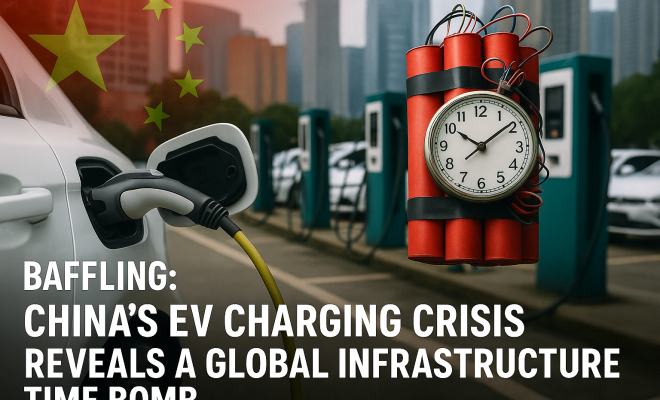
“`html
Imagine planning a relaxing holiday road trip, excited about the open road and the quiet hum of your electric vehicle. You’ve plotted your route, packed your bags, and are ready for adventure. Then, you pull off the highway, expecting a quick recharge, only to find a line of EVs stretching for miles, with drivers resignedly settling in for a wait that could easily span half a day, or even an entire night. This isn’t a dystopian fantasy; it was the harsh reality for countless electric vehicle owners in China during their recent National Day holiday. What unfolded on Chinese highways wasn’t just an inconvenience; it was a glaring spotlight on a looming global challenge – the China EV charging crisis – and it offers a stark warning about the readiness of our infrastructure for the electric revolution.
The scenes were dramatic: viral videos and social media posts showed drivers sleeping in their cars, some attempting to pass the time with impromptu roadside picnics, all while inching forward in queues that reportedly stretched for 5 to 7 hours, sometimes even longer. For many, a ‘quick top-up’ turned into an overnight ordeal, completely derailing their holiday plans. This wasn’t an isolated incident, but a widespread phenomenon that highlighted a critical infrastructure gap. EV adoption in China, the world’s largest automotive market, has accelerated at an astonishing pace. Yet, the charging network, despite significant expansion, simply couldn’t keep up with the sheer volume of electric vehicles hitting the roads during peak travel periods. This imbalance isn’t just a Chinese problem; it’s a preview of what other nations could face as they push for rapid EV transitions without adequately preparing the foundational support system.
The Holiday Surge: When Dreams Met Reality on Chinese Highways
China’s National Day holiday, typically a period of mass migration as families travel to reunite or explore the country, served as a stress test for its burgeoning EV ecosystem. The numbers speak for themselves: highway EV trips surged dramatically, indicating a growing confidence among Chinese consumers in using their electric vehicles for longer journeys. This is, in many ways, a positive sign, reflecting the successful push towards electrification and the increasing range capabilities of modern EVs. However, this confidence collided head-on with the limitations of the existing charging infrastructure.
Think about it: millions of people, all hitting the roads simultaneously, many of them in brand-new EVs with relatively unfamiliar charging needs. Unlike gasoline cars, which can refuel in minutes at ubiquitous stations, EVs require longer charging times, and the availability of high-speed chargers, particularly along major arteries, remains a bottleneck. The sheer density of vehicles at popular charging hubs created a perfect storm. One driver recounted waiting for over six hours, watching their holiday schedule evaporate. Another described arriving at a charging station to find dozens of cars ahead, realizing an overnight stay in the queue was inevitable. These aren’t minor hiccups; they are systemic failures that erode consumer confidence and threaten to slow the very transition they aim to accelerate. The emotional toll on drivers, many of whom had invested significantly in their EVs, was palpable, sparking a furious debate across Chinese social media platforms.
Understanding the Core Problem: Adoption Outpacing Infrastructure
At the heart of the China EV charging crisis lies a fundamental imbalance: the rate of EV adoption has simply outstripped the expansion and optimization of the charging infrastructure. China has been incredibly successful in incentivizing EV purchases through subsidies, tax breaks, and favorable policies. This has led to an explosion in EV sales, making China a global leader in electric mobility. However, building out a robust, reliable, and convenient charging network isn’t as simple as manufacturing more cars. It involves complex planning, massive investment, grid upgrades, land acquisition, and coordinated efforts between government, energy companies, and private enterprises.
Consider the scale: for every new EV sold, there needs to be a corresponding increase in charging capacity, not just in terms of the number of chargers, but also their speed, location, and the underlying grid support. During everyday commutes, local charging solutions—like home chargers or workplace chargers—can handle a significant portion of the demand. But holiday travel fundamentally shifts this paradigm. Suddenly, a vast number of vehicles are on unfamiliar roads, relying heavily on public fast-charging stations along highways. These stations become choke points, unable to cope with the simultaneous demand from thousands of vehicles needing significant recharges. It’s like trying to funnel an entire river through a garden hose; the system simply backs up.
The Global Ripple Effect: Why This Matters Everywhere
While the immediate scenes of charging chaos were in China, the implications of this China EV charging crisis resonate globally. Every country pushing for EV adoption faces similar challenges, albeit at different scales and stages. The European Union, the United States, and other nations are setting ambitious targets for phasing out internal combustion engines and promoting electric vehicles. These goals are laudable, but they come with a massive infrastructure homework assignment.
What happened in China serves as a critical stress test and a valuable case study. It highlights that simply increasing the number of EVs on the road without a commensurate, strategically planned expansion of charging infrastructure is a recipe for disaster. Prospective EV buyers in other countries are watching these developments closely. Concerns about ‘range anxiety’ are now compounded by ‘queue anxiety.’ If a highly developed EV market like China can experience such widespread issues, what does that mean for regions with less mature charging networks? Governments and automakers worldwide need to analyze these events, learn from China’s experience, and proactively address potential bottlenecks before their own holiday travel seasons expose similar vulnerabilities. It’s a wake-up call that the transition to electric mobility isn’t just about car manufacturing; it’s about building an entirely new energy ecosystem. (See: EV charging infrastructure challenges.) (future of electric vehicles)
The Economics of EV Charging: Personal Finance and Investment Insights
Beyond the immediate frustration, the China EV charging crisis has significant implications for personal finance and investment. For consumers, the calculus of EV ownership isn’t just about purchase price, fuel savings, and maintenance. It now includes the very real cost of time – hours spent waiting in queues – and the potential need for alternative travel arrangements if charging becomes too unreliable during peak periods. This can impact the perceived convenience and overall value proposition of an EV, especially for those considering it as their primary long-distance travel vehicle. For more context, see EV Charging Reliability.
This situation also creates a strong market for solutions. Home charging equipment, for instance, becomes even more critical. If public charging is unreliable, having a robust Level 2 charger at home becomes a non-negotiable for many, offering convenience and peace of mind. Similarly, comparisons of charging network subscriptions, offering preferential access or faster charging speeds, could become a significant decision factor for consumers. From an investment perspective, this crisis spotlights the immense opportunities in energy and infrastructure companies. Companies involved in manufacturing charging stations, developing smart grid technology, installing residential chargers, or even those creating innovative battery swapping solutions, stand to benefit from the urgent need to close this infrastructure gap. It’s a clear signal that investment in these areas is not just desirable, but absolutely essential for the future of transportation.
Addressing the Problem: More Than Just Adding Plugs
Solving the China EV charging crisis and preventing similar issues elsewhere requires a multi-faceted approach that goes far beyond simply installing more charging plugs. While an increase in the sheer number of charging points is undoubtedly necessary, the focus must also be on quality, speed, and strategic placement. Here are some key areas for development:
- High-Speed Charging Hubs: Concentration of ultra-fast chargers (350 kW+) at strategic locations along major highways is crucial. These hubs need to be large enough to accommodate dozens of vehicles simultaneously, reducing wait times significantly.
- Grid Reinforcement: The electrical grid itself needs substantial upgrades to handle the increased load from multiple high-power chargers. This includes new substations, stronger transmission lines, and smart grid technologies to manage demand fluctuations.
- Battery Swapping Technology: While not universally adopted, battery swapping offers a compelling alternative for certain segments, particularly commercial fleets. Companies like Nio in China have been pioneering this, allowing drivers to exchange a depleted battery for a fully charged one in minutes, effectively eliminating charging queues.
- Dynamic Pricing and Load Management: Implementing dynamic pricing structures could incentivize off-peak charging, spreading demand more evenly and reducing congestion during peak hours. Smart charging systems can also communicate with the grid to optimize charging times.
- Improved Navigation and Real-time Data: Better in-car navigation systems that provide accurate, real-time information on charger availability, queue lengths, and charging speeds would help drivers make informed decisions and avoid congested areas.
- Destination Charging: Encouraging hotels, restaurants, shopping centers, and tourist attractions to install chargers can help distribute demand and provide convenient charging options while people are engaged in other activities.
It’s about creating an intelligent, resilient, and user-friendly charging ecosystem, not just a collection of scattered charging points.
The Role of Smart Technology and Data Analytics
In this evolving landscape, smart technology and robust data analytics will play an increasingly vital role in preventing future charging crises. Imagine a scenario where your EV’s navigation system not only knows your destination but also predicts charging needs based on traffic, weather, and available charging points along your route. It could then dynamically re-route you to less congested charging stations or even suggest an optimal time to charge to avoid peak demand. There’s a fuller look at range extended electric vehicles.
Companies are already working on sophisticated platforms that integrate real-time charging station data – availability, queue length, charger speed, and even predicted wait times – directly into vehicle infotainment systems and smartphone apps. This level of transparency is essential for drivers to plan effectively and reduce anxiety. Furthermore, big data analytics can help infrastructure planners identify bottlenecks before they become critical. By analyzing historical charging patterns, holiday travel forecasts, and demographic data, authorities can strategically deploy new charging infrastructure where it’s most needed, ensuring that expansion is proactive rather than reactive. The integration of AI and machine learning could even allow for predictive maintenance on charging equipment, ensuring higher uptime and reliability, which is crucial when demand surges.
Behavioral Shifts and Consumer Expectations
The China EV charging crisis also underscores the need for a shift in consumer behavior and expectations. For decades, drivers of gasoline cars have been accustomed to a ‘fill it up when it’s almost empty’ mentality. With EVs, the optimal approach is often ‘top it up whenever convenient.’ This means utilizing home charging overnight, plugging in at work, or taking advantage of destination chargers while running errands. Relying solely on public fast chargers for every top-up, especially during peak travel times, mirrors the old gasoline car habit and puts immense strain on the system.
Educating new EV owners about efficient charging practices, understanding their vehicle’s charging curve (how quickly it charges at different battery levels), and encouraging proactive charging habits will be crucial. Automakers and charging network providers have a role to play here, offering clear guidance and incentives for smart charging. Moreover, consumers need to adjust their expectations for long-distance EV travel. While a gas car can be refueled in five minutes, an EV often requires a minimum of 20-40 minutes for a substantial fast charge. Factor in potential queues, and travel times will inevitably extend. Acknowledging this reality and planning accordingly – perhaps building in extra time or choosing routes with less congested charging options – will become a standard part of EV road trip planning. It’s a new paradigm, and adapting to it is part of the journey. (See: China's electric vehicle market growth.)
The Future of EV Charging: Innovation Beyond the Plug
The challenges highlighted by the China EV charging crisis are prompting a wave of innovation that looks beyond the traditional charging plug. Wireless charging, for example, is gaining traction. Imagine parking your EV over a pad in a parking lot or even a designated lane, and your car automatically begins to charge without any cables. This could significantly reduce friction and even allow for ‘opportunity charging’ in short bursts, distributing demand more effectively.
Another area of immense potential is vehicle-to-grid (V2G) technology. This allows EVs not just to draw power from the grid, but also to feed power back into it during times of high demand or low renewable energy generation. While still in early stages, V2G could transform EVs into mobile energy storage units, helping to stabilize the grid and potentially offering financial benefits to EV owners. Furthermore, advancements in battery technology that allow for faster charging speeds or greater energy density will inherently ease the pressure on charging infrastructure. If a car can gain 200 miles of range in 10 minutes, the impact on queue times and station throughput would be dramatic. The industry is constantly evolving, and these innovations will be critical in creating a truly seamless and robust EV charging experience for the future. For more context, see California's Clean Transit Initiative.
Expert Perspectives on Grid Readiness and Policy
Beyond the immediate solutions, many experts emphasize the foundational role of national power grids and supportive government policies. Dr. Li Wei, a prominent energy policy analyst at a Beijing-based think tank, noted in a recent interview that “China’s rapid EV adoption has been a policy triumph, but the grid modernization hasn’t quite kept pace. We need targeted investments in smart grid technology, not just at the distribution level but throughout the transmission network, to handle the concentrated power demand of ultra-fast charging hubs.” For more on this, see Tesla's new charging site.
Another perspective, shared by Professor Sarah Chen, an electrical engineering specialist at Shanghai Jiao Tong University, highlights the need for a collaborative approach. “The government sets the targets, but private utility companies and charging network operators are on the front lines. Incentives for private investment in grid upgrades, streamlined permitting for new charging stations, and clear interoperability standards across different charging networks are all crucial. Without these, even the best technology will struggle to scale.” These expert voices reinforce that the crisis isn’t just about the number of chargers; it’s deeply rooted in energy infrastructure and the regulatory environment.
Comparison with Other Markets: Learning from Diverse Approaches
While China’s scale is unique, other markets offer different models and lessons. Norway, for example, boasts the highest EV penetration per capita globally, and while they’ve faced occasional charging congestion, their decentralized approach to charging has helped. A high percentage of Norwegian EV owners rely on home charging, supplemented by a robust network of public chargers, often integrated with parking facilities in urban centers. This reduces the strain on highway fast chargers during peak periods.
In contrast, the United States is still building out its national charging infrastructure, with initiatives like the National Electric Vehicle Infrastructure (NEVI) program aiming to place fast chargers every 50 miles along major corridors. The challenges in the U.S. often revolve around permitting, grid interconnections, and ensuring equitable access across diverse geographical areas. The Chinese experience can inform these efforts by emphasizing the critical importance of anticipating future demand spikes, particularly during holiday travel, and building redundancy into the system from the start. Each market’s unique geography, population density, and existing grid infrastructure require tailored solutions, but the core principle of proactive infrastructure development remains universal.
FAQs: Navigating the EV Charging Landscape
Q1: What exactly caused the China EV charging crisis during the National Day holiday?
The crisis was primarily caused by a massive surge in electric vehicle travel during the holiday, which overwhelmed the existing public fast-charging infrastructure, particularly along major highways. While China has expanded its charging network significantly, the sheer volume of EVs hitting the roads simultaneously, combined with longer charging times compared to gasoline cars, created severe bottlenecks and long queues.
Q2: Is this a unique problem to China, or will other countries face it too?
While the scale of the recent crisis was particularly pronounced in China due to its rapid EV adoption and large population, the underlying challenge is global. Any country pushing for widespread EV adoption without adequately planning for and investing in a robust, high-capacity charging infrastructure, especially for peak travel times, could face similar issues. It’s a preview of potential problems for any rapidly electrifying market. For more context, see lithium-ion battery breakthrough. (See: Impact of EV adoption on infrastructure.)
Q3: What are the main solutions being proposed to prevent future crises?
Solutions include building more high-speed charging hubs in strategic locations, reinforcing the electrical grid to handle increased loads, promoting innovative solutions like battery swapping, implementing dynamic pricing to spread demand, and improving real-time data for drivers on charger availability. Encouraging home and destination charging to reduce reliance on public fast chargers is also key.
Q4: How can EV owners better prepare for long road trips to avoid charging queues?
EV owners can prepare by fully charging at home before departure, using in-car navigation and third-party apps for real-time charging station availability and queue lengths, planning routes that incorporate less congested charging options, building in extra travel time for charging stops, and understanding their vehicle’s optimal charging curve to maximize efficiency. See also trends in automotive innovation.
Q5: What role does smart technology play in resolving this crisis?
Smart technology, including AI and data analytics, is crucial. It can predict charging needs, dynamically reroute drivers to available stations, provide real-time information on queues and speeds, and help infrastructure planners strategically deploy new chargers based on historical data and future forecasts. Vehicle-to-grid (V2G) technology and wireless charging are also emerging innovations.
Lessons Learned and Looking Ahead
The China EV charging crisis during the National Day holiday was undoubtedly a challenging experience for many drivers, but it also served as an invaluable, if painful, lesson. It underscored that the transition to electric vehicles isn’t just about manufacturing cars; it’s a holistic shift that requires a complete overhaul of our energy and transportation infrastructure. For governments, it’s a clear signal to accelerate investment in smart grid technologies and public charging networks. For automakers, it’s a reminder to integrate better charging information into their vehicles and perhaps even collaborate more closely with charging providers. And for consumers, it’s an invitation to understand the nuances of EV ownership and adapt their habits accordingly.
The emotionally charged discussions on social media are not just complaints; they are expressions of a genuine desire for a reliable, sustainable future. Addressing these concerns proactively, with strategic planning, technological innovation, and strong public-private partnerships, will be paramount. The goal isn’t just to avoid future crises but to build an EV ecosystem that is truly convenient, efficient, and capable of supporting the widespread adoption that is so critical for our planet’s future. The road ahead for electric vehicles is long, but with the right infrastructure, it will be a smooth and enjoyable journey for everyone.
“`
Trending Now
Frequently Asked Questions
What caused the EV charging crisis in China during the National Day holiday?
The EV charging crisis in China during the National Day holiday was primarily due to a surge in electric vehicle usage, overwhelming the charging infrastructure. Despite significant expansion of the charging network, it could not accommodate the massive influx of EVs, leading to long wait times for drivers.
How long did EV owners have to wait for charging during the crisis?
During the EV charging crisis, many owners faced wait times ranging from 5 to 7 hours, with some even waiting overnight. This situation turned what was supposed to be a quick recharge into a frustrating ordeal, significantly impacting holiday plans.
Is the EV charging crisis in China a unique issue?
No, the EV charging crisis in China is not unique. It highlights a global challenge where rapid electric vehicle adoption may outpace the development of necessary infrastructure. Other countries may face similar issues as they transition to electric vehicles without adequate planning.
What are the implications of China's EV charging crisis for other countries?
China's EV charging crisis serves as a warning for other nations about the potential pitfalls of rapid electric vehicle adoption. It underscores the need for robust infrastructure development to support increasing EV numbers and avoid similar crises during peak travel times.
What can be done to improve EV charging infrastructure?
Improving EV charging infrastructure requires strategic investment in expanding charging stations, enhancing grid capacity, and implementing smart technology for better distribution. Collaboration between government and private sectors is essential to ensure that infrastructure keeps pace with growing EV demand.
Have you experienced this yourself? We'd love to hear your story in the comments.