Why Homebuilder Sentiment Just Hit a 14-Year Low – And What It Means For YOU
“`html
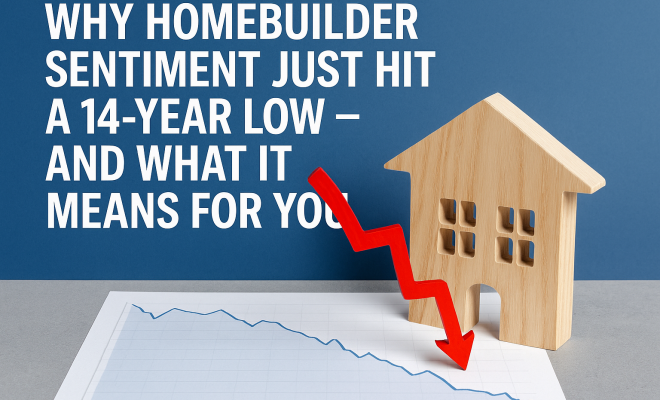
You might have heard the whispers, seen the headlines, or perhaps even felt it in your own search for a new place: the U.S. housing market is in a deep freeze. It’s not just a seasonal chill; it’s a profound downturn, and the latest numbers paint a stark picture. Homebuilder sentiment, a crucial barometer for the industry’s health, recently plunged to a staggering 14-year low, hitting 29 in October. That’s a level we haven’t witnessed since June 2012, when the nation was still reeling from the fallout of the 2008 financial crisis. This isn’t just a statistic; it’s a warning sign, and understanding why homebuilder sentiment has plummeted is key to understanding where the housing market might be headed next, and how it could impact your financial future.
This dramatic drop isn’t an isolated event. It’s a symptom of broader economic pressures, primarily the relentless ascent of mortgage rates. Last week, the average 30-year fixed mortgage rate soared to 7.4%, the highest it’s been in three years. For many prospective buyers, this sudden surge has been the final straw, pushing them squarely to the sidelines. When borrowing costs become prohibitive, even the most enthusiastic home seekers reconsider their plans. This creates a ripple effect, slowing down sales, increasing inventory, and ultimately, shaking the confidence of those who build our homes. The implications are far-reaching, touching everyone from first-time buyers to seasoned investors, and even those who simply own a home and wonder about its value.
1. The Plunge in Homebuilder Sentiment: A Historic Low
The headline figure itself is enough to make anyone in the real estate world pause: homebuilder sentiment, as measured by the National Association of Home Builders (NAHB)/Wells Fargo Housing Market Index (HMI), has fallen to 29. To put that in perspective, any reading below 50 indicates that more builders view conditions as poor than good. A score of 29 suggests a pervasive pessimism across the industry, a sentiment we haven’t seen since the depths of the post-2008 housing collapse. This isn’t just a minor dip; it’s a significant erosion of confidence that reflects deeply rooted problems in the current market.
This index is compiled from a monthly survey of NAHB members, asking them to rate the current sales of new homes, the expected sales for the next six months, and the traffic of prospective buyers. When all three components are flashing red, as they are now, it signals a tough road ahead. Builders are on the front lines, feeling the pulse of buyer demand and market conditions directly. Their collective sentiment is often a leading indicator, providing an early glimpse into the health of the broader housing market before other data points catch up. A 14-year low in homebuilder sentiment isn’t just a number; it’s a stark declaration from those who literally build our communities that the current environment is exceptionally challenging.
2. The Deep Freeze in Home Sales: 2026’s Grim Forecast
It’s not just the builders who are feeling the pinch; home sales themselves are stuck in a deep freeze. The projection for 2026 is particularly grim, with analysts forecasting it to be the worst year for sales since 2011. Think about that for a moment: we’re talking about a decade-and-a-half low in terms of transactions. This isn’t just about new homes; it encompasses the broader market, suggesting a widespread reluctance or inability of buyers and sellers to connect.
The data backs this up. Pending home sales, which track signed contracts on existing homes, dropped to a 14-year low in September. This metric is a crucial forward-looking indicator, as these sales typically close within one or two months. A drop in pending sales today means fewer closed sales tomorrow. It paints a picture of stagnation, where potential buyers are hesitant to commit, and current homeowners might be unwilling to sell and give up their lower mortgage rates, contributing to a lack of available inventory that further complicates the market.
3. Mortgage Rates on the March: A Three-Year High
If you’re looking for the primary culprit behind the current housing woes, you don’t have to search far. Mortgage rates have been on a relentless upward trajectory, and their impact is undeniable. The average 30-year fixed mortgage rate recently hit 7.4%, marking a three-year high. For context, just a couple of years ago, rates were hovering in the 3% range, making homeownership feel significantly more attainable.
This surge in borrowing costs fundamentally alters the affordability equation. A difference of even a couple of percentage points on a mortgage rate can translate into hundreds, if not thousands, of dollars added to a monthly payment. For many families, particularly those on tighter budgets, this increase makes the difference between qualifying for a loan and being priced out entirely. It’s a direct, tangible barrier that’s sidelining a significant portion of prospective buyers and applying immense downward pressure on demand, which in turn impacts homebuilder sentiment.
4. Buyer Traffic Plunges: Echoes of the Housing Crash
One of the most concerning indicators contributing to the low homebuilder sentiment is the dramatic drop in buyer traffic. Builders reported that prospective buyer traffic has plunged to levels not seen since the aftermath of the 2008 housing crash. Imagine open houses with sparse attendance or new home communities feeling eerily quiet. That’s the reality many builders are facing right now. (See: current household income statistics.) For more on this, see recent mortgage rate changes.
This isn’t just about a few less people showing up; it reflects a profound lack of demand. When fewer people are even looking at homes, it signals that the market’s engine is sputtering. It means that the pool of qualified and willing buyers has shrunk considerably, making it much harder for builders to move their inventory. This lack of engagement from buyers is a direct consequence of affordability challenges and general market uncertainty, creating a vicious cycle where low traffic begets low sales, which further depresses homebuilder sentiment.
5. Desperate Measures: Price Cuts and Incentives Abound
When demand wanes, sellers often resort to incentives to attract buyers. In the current market, builders are pulling out all the stops, and the numbers are telling. A significant 43% of builders reported cutting prices, trying to entice hesitant buyers with a lower entry point. But it doesn’t stop there. A staggering 65% of builders are offering sales incentives, ranging from covering closing costs to offering rate buydowns or upgrades. These aren’t minor tweaks; these are substantial efforts to make homes more appealing and affordable. For more context, see quietly reshaping the global property market.
The prevalence of these measures underscores the severity of the market slowdown. Builders wouldn’t be giving up margins or offering perks if homes were selling themselves. This indicates a desperate attempt to stimulate activity in a market that has otherwise gone quiet. For buyers who can still afford to enter the market, these incentives might present a unique opportunity, but for builders, they represent a reduction in profitability and a sign of challenging times ahead, further impacting homebuilder sentiment.
6. The Affordability Crisis: Beyond Mortgage Rates
While mortgage rates are a major factor, the current housing market challenges extend beyond just borrowing costs. We’re in the midst of a broader affordability crisis. Home prices, despite some recent cooling in certain markets, remain elevated in many areas, a legacy of the pandemic-era boom. Couple high prices with surging interest rates, and the monthly payment for even a modest home becomes astronomical for many households.
Consider the average income relative to home prices in many desirable areas. It’s an increasingly difficult equation to balance. Wages haven’t kept pace with the rapid appreciation of housing values, making the dream of homeownership feel further out of reach for a growing segment of the population. This isn’t just about a temporary blip; it reflects a systemic issue where housing costs are disproportionately high compared to earning potential, creating a significant barrier to entry for countless Americans and directly stifling homebuilder sentiment.
7. The ‘Lock-In Effect’: Homeowners Staying Put
An often-overlooked contributor to the housing market’s stagnation is what’s being called the ‘lock-in effect.’ Millions of homeowners refinanced or purchased homes when mortgage rates were at historic lows, often in the 2-4% range. Now, with rates hovering around 7.4%, many of these homeowners are effectively ‘locked in’ to their current homes.
Why would you sell a home with a 3% mortgage and buy another with a 7% mortgage, significantly increasing your monthly payment for a similar property? For most, it simply doesn’t make financial sense. This phenomenon severely limits the supply of existing homes on the market. Fewer existing homes for sale mean less overall inventory, which, while it might seem like it would push prices up, actually contributes to the overall slowdown by giving buyers fewer options and reducing transaction volume. This reduced churn in the market inevitably affects homebuilder sentiment, as fewer existing homes selling means less competition and potentially less incentive for new construction.
8. Inventory Challenges: A Double-Edged Sword
The current market presents an interesting paradox regarding inventory. On one hand, the ‘lock-in effect’ means there’s a scarcity of existing homes for sale, particularly those in desirable locations or with lower price points. This limited supply can, in theory, support prices to some extent, preventing a freefall. This builds on impact on your wallet.
However, for new construction, the situation is different. Builders might find themselves with completed homes or homes under construction that aren’t selling as quickly as anticipated. This accumulation of unsold inventory puts financial pressure on builders, leading to the price cuts and incentives we’re seeing. It’s a double-edged sword: a lack of existing inventory doesn’t necessarily translate into booming sales for new homes when affordability is such a massive hurdle. Builders are stuck between the high cost of construction and the dwindling pool of buyers, directly impacting homebuilder sentiment.
9. Regional Variations: Not All Markets Are Equal
While the overall national picture for homebuilder sentiment is grim, it’s crucial to remember that real estate is inherently local. The impact of high mortgage rates and low buyer demand isn’t uniform across the country. Some regions, particularly those that saw massive price appreciation during the pandemic boom, are experiencing more significant corrections.
Markets in the Sun Belt, for example, which saw an influx of buyers and rapid construction, might be feeling the pinch more acutely as demand pulls back. Conversely, some historically stable or supply-constrained markets might be holding up better. Understanding these regional nuances is vital for anyone looking to buy or sell. While national statistics provide an overview, your local market conditions, including job growth, population shifts, and specific inventory levels, will ultimately determine the micro-environment for homebuilder sentiment and home values in your area. (See: U.S. homebuilder sentiment report.) (understanding mortgage rate spikes)
10. What This Means for You: Buyers, Sellers, and the Economy
So, what does this historically low homebuilder sentiment and the broader market slowdown mean for you? If you’re a prospective buyer, particularly a first-time homebuyer, the current environment presents both challenges and potential opportunities. The challenge is clear: affordability is a major hurdle due to high interest rates. However, the opportunities lie in the fact that builders are desperate to sell. This means more negotiating power, potential price cuts, and a smorgasbord of incentives that simply weren’t available a year or two ago. You might find a better deal, but you’ll still contend with higher monthly payments unless rates come down.
If you’re a homeowner looking to sell, the picture is more complex. You’re likely sitting on significant equity if you purchased before 2022, which is great. But selling means potentially giving up a low mortgage rate and entering a market with fewer active buyers. Patience might be a virtue, and being realistic about pricing is paramount. For the broader economy, a sustained downturn in housing has significant implications. Housing is a massive sector, driving jobs in construction, real estate, finance, and countless related industries. A ‘deep freeze’ here can ripple through the economy, potentially impacting consumer confidence and overall growth. The dip in homebuilder sentiment isn’t just a sign for real estate; it’s a bellwether for wider economic health, reminding us that housing remains a foundational pillar of our financial landscape. For more context, see revolutionizing mortgage lending.
11. The Impact of Construction Costs and Labor Shortages
Beyond the demand side challenges, homebuilders are also grappling with significant pressures on the supply side, particularly rising construction costs and persistent labor shortages. Lumber prices, while off their pandemic-era peaks, remain volatile. Other essential materials like concrete, steel, and even basic fixtures have seen their costs climb steadily. This isn’t just a minor annoyance; it directly impacts the builder’s bottom line and the final price of the home.
Then there’s the labor issue. The construction industry has faced a shortage of skilled workers for years, a problem exacerbated by an aging workforce and a lack of new entrants. This means higher wages for available workers, longer project timelines, and sometimes, a struggle to complete homes efficiently. When builders have to pay more for materials and labor, they either absorb those costs, which cuts into their profits, or pass them on to buyers, which worsens the affordability crisis. It’s a lose-lose situation that adds another layer of stress, further dampening homebuilder sentiment and making it harder to deliver homes at prices buyers can stomach.
12. Government Policies and Regulatory Hurdles
Government policies and local regulations also play a quiet, yet powerful, role in shaping homebuilder sentiment and the housing market. Zoning laws, for instance, often restrict density, making it difficult to build more affordable housing options like townhomes or smaller single-family homes on less land. Permitting processes can be notoriously slow and cumbersome, adding months, if not years, to development timelines and increasing holding costs for builders.
Impact fees, which are charges levied by local governments on new construction to help fund infrastructure like roads and schools, also add to the final cost of a home. While these fees serve a purpose, their cumulative effect can be substantial, pushing prices even higher. Changes in building codes, while often aimed at improving safety or energy efficiency, can also increase construction expenses. Builders frequently point to these regulatory hurdles as significant barriers to meeting housing demand and keeping prices down, directly influencing their outlook on the market’s future and, thus, homebuilder sentiment.
13. The Role of Investor Activity: Shifting Dynamics
During the pandemic boom, investor activity surged, with institutional buyers snapping up single-family homes, often outbidding individual homebuyers. This contributed to price increases and reduced inventory for traditional buyers. However, with rising interest rates and a cooling market, the dynamics of investor activity are shifting. While some large investors might still see opportunities in distressed assets or specific rental markets, the widespread speculative buying has certainly pulled back.
This change has a mixed impact on homebuilder sentiment. On one hand, less investor competition could theoretically free up inventory for owner-occupants, which might seem like a positive. On the other hand, a significant portion of new construction has, at times, relied on investor interest to absorb units, especially in build-to-rent communities. A decline in this segment means builders have one less avenue for sales, forcing them to rely more heavily on traditional homebuyers who are currently facing severe affordability constraints. This shift makes the market more challenging for builders, adding to their overall pessimism.
14. Future Outlook for Homebuilder Sentiment: Glimmers of Hope?
While the current outlook for homebuilder sentiment is undeniably bleak, it’s worth considering what might lead to an improvement. The most significant factor would be a sustained decline in mortgage rates. If the Federal Reserve signals an end to its rate-hiking cycle and potentially begins cutting rates in the future, it would directly alleviate the affordability crisis and bring buyers back into the market. Even a modest drop of 100-150 basis points could make a meaningful difference for many. (See: economic impact on housing market.)
Beyond rates, stability in construction costs and a resolution to labor shortages would also provide a much-needed boost. Government initiatives aimed at streamlining permitting or incentivizing affordable housing could also help. However, these are often long-term solutions. In the short term, homebuilder sentiment will likely remain tied to the immediate economic environment, particularly inflation trends and the Fed’s response. Any sign of these pressures easing would be a welcome signal for builders, potentially marking the beginning of a slow recovery for the industry.
Frequently Asked Questions About Homebuilder Sentiment
Q1: What exactly is homebuilder sentiment and why is it important?
Homebuilder sentiment is a measure of the confidence among residential homebuilders regarding current and future market conditions for newly built homes. It’s typically tracked by the NAHB/Wells Fargo Housing Market Index (HMI). It’s incredibly important because builders are on the front lines of the housing market; they feel shifts in demand, affordability, and construction costs directly. Their collective sentiment often acts as a leading indicator, meaning it can signal future trends in the broader housing market, like sales volumes and pricing, before other economic data becomes available. When sentiment is low, it suggests builders expect fewer sales and tougher conditions ahead.
Q2: How is the NAHB/Wells Fargo Housing Market Index (HMI) calculated?
The HMI is derived from a monthly survey sent to NAHB members. The survey asks builders to rate three key aspects of the housing market: current sales of new homes, expected sales over the next six months, and the traffic of prospective buyers. Each component is rated as “good,” “fair,” or “poor” for current and expected sales, and “high/very high,” “average,” or “low/very low” for traffic. The responses are then seasonally adjusted, and a score is calculated. Any reading above 50 indicates that more builders view conditions as good than poor, while a reading below 50 means the opposite. The higher the number, the more optimistic builders are.
Q3: What factors are currently most impacting homebuilder sentiment negatively?
Several factors are hitting homebuilder sentiment right now. High mortgage rates are arguably the biggest culprit, as they significantly reduce buyer affordability and demand. Elevated home prices, even with recent cooling, still create a major barrier. Add to that the rising costs of construction materials and persistent labor shortages, which squeeze builder profit margins and make it harder to build affordably. The ‘lock-in effect,’ where existing homeowners are reluctant to sell their homes with low mortgage rates, also limits overall market activity and new construction opportunities. Essentially, it’s a perfect storm of high costs, low demand, and regulatory hurdles.
Q4: Are there any positive aspects for homebuyers in a market with low homebuilder sentiment?
Yes, absolutely. While low homebuilder sentiment signals a tough market for builders, it can create opportunities for buyers. When builders are struggling to sell homes, they become more motivated to offer incentives. This means you might find price cuts, options for builders to cover closing costs, or even temporary mortgage rate buydowns that reduce your initial interest rate. There’s generally more negotiating room for buyers, and less competition compared to a booming market. However, you’ll still be dealing with the underlying challenge of higher mortgage rates, so it’s a trade-off between a better deal on the home’s price/incentives and the cost of borrowing money.
Q5: How long do these periods of low homebuilder sentiment typically last?
The duration of low homebuilder sentiment periods can vary widely, depending on the underlying economic conditions driving the downturn. Historically, severe dips, like those seen after the 2008 financial crisis, can last for several years as the market slowly recalibrates. Milder corrections might see sentiment rebound within a year or two. The current low sentiment is heavily tied to inflation and the Federal Reserve’s interest rate policies. A sustained decrease in inflation, leading to stabilized or falling mortgage rates, would be the most significant catalyst for a quicker recovery in homebuilder sentiment. Predicting the exact length is difficult, but it usually correlates with the time it takes for affordability to improve and buyer confidence to return. Related reading: housing market challenges in 2023.
“`
Trending Now
Frequently Asked Questions
What does a 14-year low in homebuilder sentiment mean?
A 14-year low in homebuilder sentiment indicates widespread pessimism among builders about the housing market's current and future conditions. With the latest sentiment score at 29, it reflects a significant decline in confidence, primarily driven by rising mortgage rates and economic pressures.
How do rising mortgage rates affect homebuilder sentiment?
Rising mortgage rates, which recently reached 7.4%, increase borrowing costs for potential buyers, leading many to reconsider their home purchases. This decrease in demand can slow sales and create excess inventory, further eroding builders' confidence in the market.
What are the implications of low homebuilder sentiment for home buyers?
Low homebuilder sentiment can lead to fewer new homes being built, resulting in reduced inventory. For home buyers, this may mean less choice in the market and potentially lower home prices as builders adjust to decreased demand.
Is the current housing market similar to the 2008 financial crisis?
While the current housing market shows signs of distress, such as low homebuilder sentiment, it is not an exact replica of the 2008 financial crisis. However, the similarity lies in the economic pressures, particularly rising mortgage rates, which can destabilize the market.
What can home sellers expect from the housing market right now?
Home sellers may face challenges in the current market characterized by low homebuilder sentiment and rising mortgage rates. With fewer buyers actively seeking homes, sellers might need to adjust their expectations regarding pricing and be prepared for longer selling times.
Have you experienced this yourself? We'd love to hear your story in the comments.