The Tech Edvocate

Top Menu

  • Advertisement
  • Apps
  • Home Page
  • Home Page Five (No Sidebar)
  • Home Page Four
  • Home Page Three
  • Home Page Two
  • Home Tech2
  • Icons [No Sidebar]
  • Left Sidbear Page
  • Lynch Educational Consulting
  • My Account
  • My Speaking Page
  • Newsletter Sign Up Confirmation
  • Newsletter Unsubscription
  • Our Brands
  • Page Example
  • Privacy Policy
  • Protected Content
  • Register
  • Request a Product Review
  • Shop
  • Shortcodes Examples
  • Signup
  • Start Here
    • Governance
    • Careers
    • Contact Us
  • Terms and Conditions
  • The Edvocate
  • The Tech Edvocate Product Guide
  • Topics
  • Write For Us
  • Advertise

Main Menu

  • Start Here
    • Our Brands
    • Governance
      • Lynch Educational Consulting, LLC.
      • Dr. Lynch’s Personal Website
      • Careers
    • Write For Us
    • The Tech Edvocate Product Guide
    • Contact Us
    • Books
    • Edupedia
    • Post a Job
    • The Edvocate Podcast
    • Terms and Conditions
    • Privacy Policy
  • Topics
    • Assistive Technology
    • Child Development Tech
    • Early Childhood & K-12 EdTech
    • EdTech Futures
    • EdTech News
    • EdTech Policy & Reform
    • EdTech Startups & Businesses
    • Higher Education EdTech
    • Online Learning & eLearning
    • Parent & Family Tech
    • Personalized Learning
    • Product Reviews
  • Advertise
  • Tech Edvocate Awards
  • The Edvocate
  • Pedagogue
  • School Ratings

logo

The Tech Edvocate

  • Start Here
    • Our Brands
    • Governance
      • Lynch Educational Consulting, LLC.
      • Dr. Lynch’s Personal Website
        • My Speaking Page
      • Careers
    • Write For Us
    • The Tech Edvocate Product Guide
    • Contact Us
    • Books
    • Edupedia
    • Post a Job
    • The Edvocate Podcast
    • Terms and Conditions
    • Privacy Policy
  • Topics
    • Assistive Technology
    • Child Development Tech
    • Early Childhood & K-12 EdTech
    • EdTech Futures
    • EdTech News
    • EdTech Policy & Reform
    • EdTech Startups & Businesses
    • Higher Education EdTech
    • Online Learning & eLearning
    • Parent & Family Tech
    • Personalized Learning
    • Product Reviews
  • Advertise
  • Tech Edvocate Awards
  • The Edvocate
  • Pedagogue
  • School Ratings
  • JisuLife Ultra2 Portable Fan: A Powerful Multi-Function Cooling Solution

  • A Visitors Guide to Viña del Mar, Chile

  • A Visitors Guide to Århus, Denmark

  • A Visitors Guide to Bakersfield (CA), United States

  • A Visitors Guide to Aurora (CO), United States

  • A Visitor’s Guide to Toledo (OH), United States

  • A Visitors Guide to Cincinnati (OH), United States

  • The MagicEagle Cam 5: Revolutionizing Wildlife Monitoring with Smart 4G Technology

  • A Visitors Guide to Pittsburgh (PA), United States

  • A Visitors Guide to Colorado Springs (CO), United States

Digital & Mobile Technology
Home›Digital & Mobile Technology›An Explanation of Read and Write Speeds

An Explanation of Read and Write Speeds
By Matthew Lynch
June 10, 2023
0
Spread the love

For most individuals, when purchasing a new computer or storage drive, the read and write speeds are some of the primary concerns they consider. The typical user would like a device with fast read and write speeds. These speeds are essential in determining how quickly data can be transferred from one place to another. In this article, we will give an explanation of read and write speeds.

Read Speed

Read speed refers to the speed at which data can be extracted from a storage device. It is measured in megabytes per second (MB/s) and determines how quickly the device can open, read, and display content on the screen. When a file is requested from the drive, the read speed will determine how quickly the file is available to open and view. For instance, if you’re opening a large video file, the read speed will play a pivotal role in determining how quickly it will load.

The read speed also affects other processes, such as starting up the computer, accessing files, loading applications, and browsing the internet. Although the CPU and memory requirements also come into play, the read speed is a significant factor in loading times. Modern computers have improved on this since the introduction of solid-state drives (SSDs). SSDs utilize flash memory to store data, and they have faster read speeds than hard disk drives (HDDs). The average read speed for an SSD is between 200 MB/s and 550 MB/s, while the typical HDD has a read speed of around 50 MB/s to 150 MB/s.

Write Speed

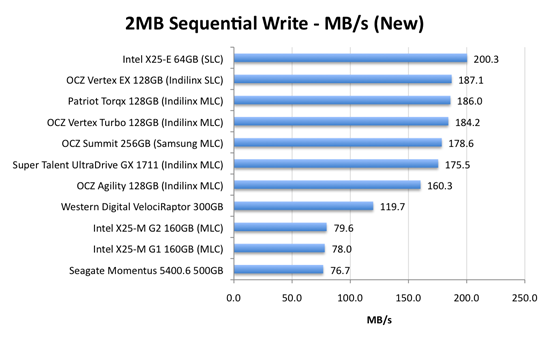
Write speed is the speed at which data can be written to a storage device. It also measures in megabytes per second (MB/s) but determines how quickly data can be saved on the drive. Write speed is a crucial factor that comes into play when transferring files from one drive to another. It also affects when copying files onto the device, installing software or applications, and saving files.

As an example, when creating a document, the write speed is what determines how quickly the application can save the changes to the file on the drive. The speed of the write process may slow down if the storage device is almost full, making it difficult to save more files.

Similar to read speeds, SSDs also have faster write speeds than HDDs. The average write speed for an SSD is between 200 MB/s and 500 MB/s, while that of an HDD varies between 50 MB/s and 120 MB/s.

Conclusion

Reading and writing speeds are critical to the performance of a storage device. In general, SSDs have faster read and write speeds than HDDs. However, the speed also varies depending on the type of device, the file size, and the available space on the drive. Before you purchase a new computer, storage drive, or other hardware, ensure you consider its read and write speeds to guarantee improved performance. Overall, fast read and write speeds make for a better user experience, so always aim for the fastest speed your budget can afford.


Previous Article

What Is a Power Amplifier and How ...

Next Article

How to Pick the Best Xbox One ...

Matthew Lynch

Related articles More from author

  • Digital & Mobile Technology

    Spotify vs. Apple Music: Which Is the Best Music Streaming Service?

    August 4, 2023
    By Matthew Lynch
  • Digital & Mobile Technology

    MYX II Review: This Peloton Alternative Keeps Us Coming Back for More

    June 23, 2023
    By Matthew Lynch
  • Digital & Mobile Technology

    What Is an XLAM File?

    June 11, 2023
    By Matthew Lynch
  • Digital & Mobile Technology

    How to Connect Bluetooth Headphones to PS4

    June 1, 2023
    By Matthew Lynch
  • Digital & Mobile Technology

    How Does Postmates Work?

    June 5, 2023
    By Matthew Lynch
  • Digital & Mobile Technology

    How to Tell If Your TV Is Worth Repairing

    May 29, 2023
    By Matthew Lynch

Search

Login & Registration

  • Register
  • Log in
  • Entries feed
  • Comments feed
  • WordPress.org

Newsletter

Signup for The Tech Edvocate Newsletter and have the latest in EdTech news and opinion delivered to your email address!

About Us

Since technology is not going anywhere and does more good than harm, adapting is the best course of action. That is where The Tech Edvocate comes in. We plan to cover the PreK-12 and Higher Education EdTech sectors and provide our readers with the latest news and opinion on the subject. From time to time, I will invite other voices to weigh in on important issues in EdTech. We hope to provide a well-rounded, multi-faceted look at the past, present, the future of EdTech in the US and internationally.

We started this journey back in June 2016, and we plan to continue it for many more years to come. I hope that you will join us in this discussion of the past, present and future of EdTech and lend your own insight to the issues that are discussed.

Newsletter

Signup for The Tech Edvocate Newsletter and have the latest in EdTech news and opinion delivered to your email address!

Contact Us

The Tech Edvocate
910 Goddin Street
Richmond, VA 23231
(601) 630-5238
[email protected]

Copyright © 2025 Matthew Lynch. All rights reserved.