The Tech Edvocate

Top Menu

  • Advertisement
  • Apps
  • Home Page
  • Home Page Five (No Sidebar)
  • Home Page Four
  • Home Page Three
  • Home Page Two
  • Home Tech2
  • Icons [No Sidebar]
  • Left Sidbear Page
  • Lynch Educational Consulting
  • My Account
  • My Speaking Page
  • Newsletter Sign Up Confirmation
  • Newsletter Unsubscription
  • Our Brands
  • Page Example
  • Privacy Policy
  • Protected Content
  • Register
  • Request a Product Review
  • Shop
  • Shortcodes Examples
  • Signup
  • Start Here
    • Governance
    • Careers
    • Contact Us
  • Terms and Conditions
  • The Edvocate
  • The Tech Edvocate Product Guide
  • Topics
  • Write For Us
  • Advertise

Main Menu

  • Start Here
    • Our Brands
    • Governance
      • Lynch Educational Consulting, LLC.
      • Dr. Lynch’s Personal Website
      • Careers
    • Write For Us
    • The Tech Edvocate Product Guide
    • Contact Us
    • Books
    • Edupedia
    • Post a Job
    • The Edvocate Podcast
    • Terms and Conditions
    • Privacy Policy
  • Topics
    • Assistive Technology
    • Child Development Tech
    • Early Childhood & K-12 EdTech
    • EdTech Futures
    • EdTech News
    • EdTech Policy & Reform
    • EdTech Startups & Businesses
    • Higher Education EdTech
    • Online Learning & eLearning
    • Parent & Family Tech
    • Personalized Learning
    • Product Reviews
  • Advertise
  • Tech Edvocate Awards
  • The Edvocate
  • Pedagogue
  • School Ratings

logo

The Tech Edvocate

  • Start Here
    • Our Brands
    • Governance
      • Lynch Educational Consulting, LLC.
      • Dr. Lynch’s Personal Website
        • My Speaking Page
      • Careers
    • Write For Us
    • The Tech Edvocate Product Guide
    • Contact Us
    • Books
    • Edupedia
    • Post a Job
    • The Edvocate Podcast
    • Terms and Conditions
    • Privacy Policy
  • Topics
    • Assistive Technology
    • Child Development Tech
    • Early Childhood & K-12 EdTech
    • EdTech Futures
    • EdTech News
    • EdTech Policy & Reform
    • EdTech Startups & Businesses
    • Higher Education EdTech
    • Online Learning & eLearning
    • Parent & Family Tech
    • Personalized Learning
    • Product Reviews
  • Advertise
  • Tech Edvocate Awards
  • The Edvocate
  • Pedagogue
  • School Ratings
  • Shocking: Mercury Skin Bleachers Still Flood Amazon, Temu, and TikTok Shop

  • Shocking: 195,000 Heated Blankets Recalled After Dozens Suffer Burns – Is Yours One of Them?

  • The $4 Billion Comeback: How Manus Defied Geopolitical Odds to Double Its Valuation

  • This Israeli Startup Accidentally Unleashed AI Cyberattacks on Real Companies

  • This PlayStation Exclusive Just Vanished Forever — And It’s a Warning to All Gamers

  • The Jaw-Dropping Truth Behind Marvel’s Wolverine AI Scare

  • The September 2026 AI Surge: Why Your Business Needs to Adapt Now

  • The Billion-Dollar AI Slowdown Lawsuit That Could Shatter Big Tech

  • The Brutal Truth: Why Your Student Loan Discharge Is Stuck in Limbo

  • 7 Critical Lessons From Russia’s Election Cyber Onslaught

Digital & Mobile Technology
Home›Digital & Mobile Technology›Alternate Reality vs. Augmented Reality Games: What’s the Difference?

Alternate Reality vs. Augmented Reality Games: What’s the Difference?
By Matthew Lynch
June 13, 2023
0
Spread the love

Alternate reality and Augmented reality are two gaming concepts that are quickly increasing in popularity. In a world where technology is advancing at an unprecedented pace, the line between the real world and virtual reality continues to blur. Both AR and AR games provide exciting and unique experiences, but each concept varies in its delivery, making each respective experience unique.

Augmented Reality (AR) Games

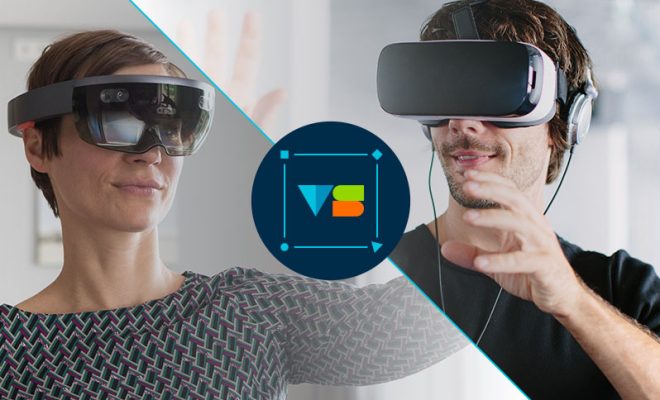
Augmented Reality games work by overlaying game elements on the real world environment, which can be viewed through a mobile device, tablet, or any other AR-compatible device like smart glasses. The user gets to play the game while interacting with real-world elements such as streets, buildings, people, and more.

One of the most famous examples was the wildly popular game, Pokémon Go. The game required the player to navigate through real-world settings to collect and capture virtual creatures. By using their smartphone’s camera, players could see the virtual creatures superimposed on top of their everyday surroundings.

AR games are used to enhance the real-world environment with additional game elements, but still, show the world as it is.

Alternate Reality (AR) Games

On the other hand, Alternate Reality (AR) games take a completely different approach. Rather than augmenting the real world environment, AR games create an entirely new world. These worlds are usually accessed through a portal combining a phone, computer, or gameplay on a dedicated console.

Alternate reality games often have their own unique storyline, and the gameplay immerses players in this new world completely. Players must solve complex puzzles and complete tasks to progress through the story. Some of the most famous Alternate Reality games include Ingress and ARGonauts.

The fundamental difference between AR and alternate reality games lies in the concept of immersion. AR engages the user by enhancing the real world’s elements, while AR games transport the player to a completely different reality.

Comparing Alternate Reality and Augmented Reality Games

Both types of games have different approaches and cater to different player preferences. One may prefer the thrill of a game that blurs the line between the physical and virtual world, while others prefer the experience of being entirely immersing in a new game world.

In terms of device usage, AR games are more compatible with mobile devices as you can superimpose the virtual world over the real world using the camera. In contrast, AR games require a dedicated console, a computer, or a phone, essentially a tool to enter the alternate reality.

The gaming experience also differs as AR games tend to be casual and focus on exploration, while Alternate Reality games tend to follow a more linear storyline, demanding players to immerse themselves in specific tasks.

In conclusion, the decision to play an AR or an alternate reality game boils down to the player’s preference. An AR game enhances the player’s environment and presents opportunities to experience the virtual world amongst the real world. In contrast, alternate reality games offer an entirely unique experience, transporting players to a different space and time. Both concepts have their unique benefits and chills, and the choice ultimately lies with the user.


Previous Article

The Best Wi-Fi 6E Routers for Blazing ...

Next Article

How to Fix a Blurry Webcam in ...

Matthew Lynch

Related articles More from author

  • Digital & Mobile Technology

    Linux vs. Windows vs. macOS: Which Is the Operating System for You?

    June 12, 2023
    By Matthew Lynch
  • Digital & Mobile Technology

    What Is the “Privacy Sandbox” in Google Chrome?

    May 13, 2023
    By Matthew Lynch
  • Digital & Mobile Technology

    How to Watch the Stanley Cup Livestream (2023)

    June 6, 2023
    By Matthew Lynch
  • Digital & Mobile Technology

    How to Type Copyright and Trademark Symbols on Mac

    June 8, 2023
    By Matthew Lynch
  • Digital & Mobile Technology

    Best Apps to Help You Find New Music

    June 23, 2023
    By Matthew Lynch
  • Digital & Mobile Technology

    How to Insert a Signature in Google Docs

    June 9, 2023
    By Matthew Lynch

Search

Login & Registration

  • Log in
  • Entries feed
  • Comments feed
  • WordPress.org

Newsletter

Signup for The Tech Edvocate Newsletter and have the latest in EdTech news and opinion delivered to your email address!

About Us

Since technology is not going anywhere and does more good than harm, adapting is the best course of action. That is where The Tech Edvocate comes in. We plan to cover the PreK-12 and Higher Education EdTech sectors and provide our readers with the latest news and opinion on the subject. From time to time, I will invite other voices to weigh in on important issues in EdTech. We hope to provide a well-rounded, multi-faceted look at the past, present, the future of EdTech in the US and internationally.

We started this journey back in June 2016, and we plan to continue it for many more years to come. I hope that you will join us in this discussion of the past, present and future of EdTech and lend your own insight to the issues that are discussed.

Newsletter

Signup for The Tech Edvocate Newsletter and have the latest in EdTech news and opinion delivered to your email address!

Contact Us

The Tech Edvocate
910 Goddin Street
Richmond, VA 23231
(601) 630-5238
[email protected]

Copyright © 2026 Matthew Lynch. All rights reserved.