The Tech Edvocate

Top Menu

  • Advertisement
  • Apps
  • Home Page
  • Home Page Five (No Sidebar)
  • Home Page Four
  • Home Page Three
  • Home Page Two
  • Home Tech2
  • Icons [No Sidebar]
  • Left Sidbear Page
  • Lynch Educational Consulting
  • My Account
  • My Speaking Page
  • Newsletter Sign Up Confirmation
  • Newsletter Unsubscription
  • Our Brands
  • Page Example
  • Privacy Policy
  • Protected Content
  • Register
  • Request a Product Review
  • Shop
  • Shortcodes Examples
  • Signup
  • Start Here
    • Governance
    • Careers
    • Contact Us
  • Terms and Conditions
  • The Edvocate
  • The Tech Edvocate Product Guide
  • Topics
  • Write For Us
  • Advertise

Main Menu

  • Start Here
    • Our Brands
    • Governance
      • Lynch Educational Consulting, LLC.
      • Dr. Lynch’s Personal Website
      • Careers
    • Write For Us
    • The Tech Edvocate Product Guide
    • Contact Us
    • Books
    • Edupedia
    • Post a Job
    • The Edvocate Podcast
    • Terms and Conditions
    • Privacy Policy
  • Topics
    • Assistive Technology
    • Child Development Tech
    • Early Childhood & K-12 EdTech
    • EdTech Futures
    • EdTech News
    • EdTech Policy & Reform
    • EdTech Startups & Businesses
    • Higher Education EdTech
    • Online Learning & eLearning
    • Parent & Family Tech
    • Personalized Learning
    • Product Reviews
  • Advertise
  • Tech Edvocate Awards
  • The Edvocate
  • Pedagogue
  • School Ratings

logo

The Tech Edvocate

  • Start Here
    • Our Brands
    • Governance
      • Lynch Educational Consulting, LLC.
      • Dr. Lynch’s Personal Website
        • My Speaking Page
      • Careers
    • Write For Us
    • The Tech Edvocate Product Guide
    • Contact Us
    • Books
    • Edupedia
    • Post a Job
    • The Edvocate Podcast
    • Terms and Conditions
    • Privacy Policy
  • Topics
    • Assistive Technology
    • Child Development Tech
    • Early Childhood & K-12 EdTech
    • EdTech Futures
    • EdTech News
    • EdTech Policy & Reform
    • EdTech Startups & Businesses
    • Higher Education EdTech
    • Online Learning & eLearning
    • Parent & Family Tech
    • Personalized Learning
    • Product Reviews
  • Advertise
  • Tech Edvocate Awards
  • The Edvocate
  • Pedagogue
  • School Ratings
  • Toxic Pills: This Supplement Scandal Puts Millions at Risk

  • Urgent Dog Supplement Recall: This Stealthy Threat Could Be Hiding in Your Pantry!

  • Staggering: Climate Tech Fundraising Collapses — Is AI to Blame?

  • Global AI stocks tumble as industry’s biggest names sound alarm – The Straits Times

  • Sony’s Controversial Move: Why the Last of Us Part II Multiplayer Mod Got Axed

  • Trump’s Wild AI Claims: Is There a ‘Sick Conspiracy’ Against Tech?

  • This One Thing Is Turning Classrooms Into Culture War Battlegrounds

  • Your AI Detector Is Useless: Why Universities Are Scrapping ‘Catch & Ban’ for This

  • Terrifying: AI Is About to Break Cybersecurity – And No One Is Ready

  • Volkswagen’s Staggering Miscalculation: 50,000 Jobs Vanish as EV Dream Sours

Digital & Mobile Technology
Home›Digital & Mobile Technology›AirPod Settings: What They Are and How to Use Them

AirPod Settings: What They Are and How to Use Them
By Matthew Lynch
June 10, 2023
0
Spread the love

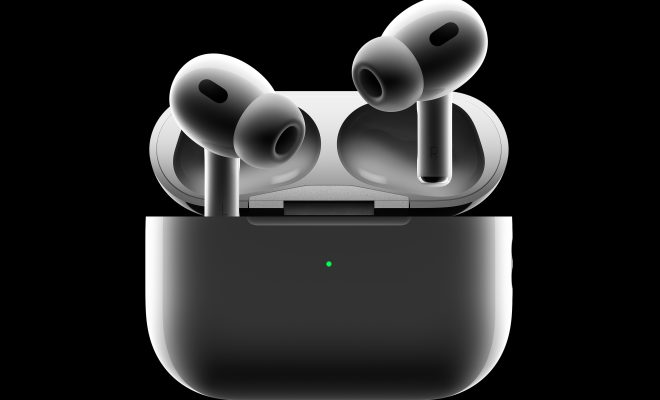
AirPods are a popular wireless earphone alternative for many Apple users. The earphones allow users to listen to music, make phone calls, and access Siri without the restriction of cables or wires. Apple has released multiple versions of AirPods since the first generation was introduced in 2016. However, regardless of the generation, AirPods come with settings that users can access to personalize their experience.

Some of the settings that AirPod users can access include controlling audio playback, customizing touch controls, adjusting microphone input volume, and locating lost earphones. AirPod settings are available on an iPhone, iPad, iPod touch, or Apple Watch after the earphones are paired with the device(s).

Here’s a closer look at each setting and how to use them:

1. Audio Playback Controls:

AirPods allow users to control audio playback through different methods. For instance, when the earphones are removed from the user’s ear, audio playback can automatically pause. Similarly, when the earphones are placed back into the user’s ear, audio playback can automatically resume. Users can also configure AirPods to receive audio content from a different source. To do this, users can click on the AirPlay icon on their iOS device and select AirPods from the list of options.

2. Customizing Touch Controls:

The touch controls on AirPods allow users to perform actions like playing or pausing music, skipping or repeating tracks, and accessing Siri. Users can customize the touch controls on each AirPod by accessing the Settings app on the paired iOS device. Under the Bluetooth heading, select your AirPods, and click on the “i” icon next to your AirPods’ name. From there, users can customize each AirPod’s functions independently.

3. Adjusting Microphone Input Volume:

AirPods come equipped with a microphone that allows users to make phone calls or record audio. However, users may find that the microphone volume needs to be adjusted to their liking. To do this, users can access AirPod settings on their iOS device and adjust the microphone volume slider under each individual earphone’s setting.

4. Locating Lost AirPods:

Losing AirPods can be stressful, but AirPod users have an advantage in this regard. Users can utilize Apple’s “Find My” app on their paired devices to track the lost AirPods’ location. The app can also play a sound on one or both AirPods to help users locate them quickly.

AirPod settings provide a personalized and enjoyable user experience for all Apple users. Users can customize their touch controls, adjust microphone input volume, and locate lost earphones. The settings are easy to access and allow users to get the most out of their AirPods.


Previous Article

Slack Themes: Customize Your Productivity

Next Article

How to Stitch on TikTok

Matthew Lynch

Related articles More from author

  • Digital & Mobile Technology

    How to Speed Up Your PlayStation 4’s Downloads

    May 9, 2023
    By Matthew Lynch
  • Digital & Mobile Technology

    How to Fix a Glitchy TV Screen

    June 1, 2023
    By Matthew Lynch
  • Digital & Mobile Technology

    How to Log Out of YouTube

    June 1, 2023
    By Matthew Lynch
  • Digital & Mobile Technology

    What Is the Nintendo DS?

    June 9, 2023
    By Matthew Lynch
  • Digital & Mobile Technology

    How to Fix It When You’re Not Receiving Texts on Android

    May 31, 2023
    By Matthew Lynch
  • Digital & Mobile Technology

    The Best Kids Movies on Disney Plus (April 2023)

    June 1, 2023
    By Matthew Lynch

Search

Login & Registration

  • Log in
  • Entries feed
  • Comments feed
  • WordPress.org

Newsletter

Signup for The Tech Edvocate Newsletter and have the latest in EdTech news and opinion delivered to your email address!

About Us

Since technology is not going anywhere and does more good than harm, adapting is the best course of action. That is where The Tech Edvocate comes in. We plan to cover the PreK-12 and Higher Education EdTech sectors and provide our readers with the latest news and opinion on the subject. From time to time, I will invite other voices to weigh in on important issues in EdTech. We hope to provide a well-rounded, multi-faceted look at the past, present, the future of EdTech in the US and internationally.

We started this journey back in June 2016, and we plan to continue it for many more years to come. I hope that you will join us in this discussion of the past, present and future of EdTech and lend your own insight to the issues that are discussed.

Newsletter

Signup for The Tech Edvocate Newsletter and have the latest in EdTech news and opinion delivered to your email address!

Contact Us

The Tech Edvocate
910 Goddin Street
Richmond, VA 23231
(601) 630-5238
[email protected]

Copyright © 2026 Matthew Lynch. All rights reserved.