European Fireball Event 2026: Scientists Unravel Celestial Mystery
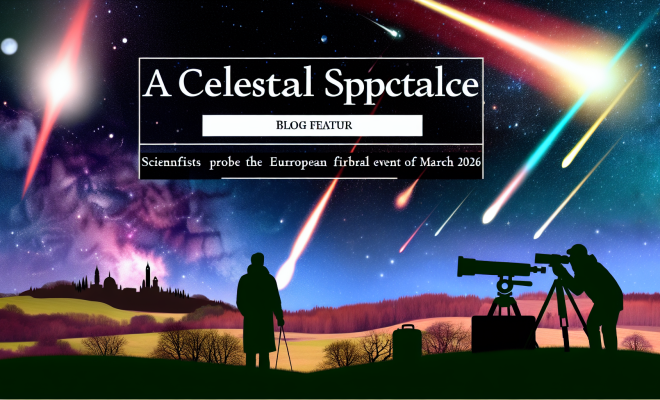
On March 8, 2026, the night skies of Europe were illuminated by a spectacular fireball that captured the attention of both the public and the scientific community. This extraordinary event, which was visible across multiple countries, has prompted an extensive investigation by scientists at the European Space Agency (ESA) to unravel the mysteries surrounding the object’s size, trajectory, and origin.
A Brilliant Streak Across Europe
The fireball streaked through the atmosphere, leaving a bright trail that was witnessed by many across various European nations. Eyewitness accounts flooded in as observers described the moment as both breathtaking and awe-inspiring. The bright light was not just a fleeting moment of beauty; it represented a significant opportunity for scientific research.
Scientific Analysis: A Deep Dive
Following the event, the ESA mobilized to analyze the fireball’s features. Scientists are currently focusing on several key aspects:
- Size: Determining the dimensions of the meteoroid that entered Earth’s atmosphere is crucial for understanding its potential impact and behavior.
- Trajectory: Mapping the path of the fireball as it descended through the sky helps scientists reconstruct its entry angle and speed.
- Origin: Identifying where the meteoroid came from can provide insights into its composition and the broader context of solar system bodies.
- Orbit: Understanding the object’s orbit around the sun before its entry helps in predicting similar events in the future.
These investigations not only provide a clearer picture of the specific fireball event but also contribute to a larger body of knowledge regarding meteoroid behavior in general.
Importance of the Event for Planetary Science
This fireball event holds significant implications for planetary scientists. The data gathered will enhance our understanding of:
- Meteoroid Behavior: Studying how meteoroids behave during their atmospheric entry will help scientists understand the physical processes involved, including fragmentation and mass loss.
- Mass Loss During Entry: Analyzing how much mass the object lost while entering the atmosphere can inform models of atmospheric entry for various celestial bodies.
- Asteroid Detection: The fireball’s approach from a hard-to-detect direction during twilight underscores the challenges of detecting objects that may pose a risk to Earth. This highlights the need for improved detection systems.
The insights gained from this event may inform future strategies for tracking and mitigating potential asteroid threats.
Challenges in Detection
One of the noteworthy aspects of this fireball was its trajectory, which came from a direction that is often challenging for detection systems. As it approached during twilight, the visibility of such objects can be significantly impaired. This incident emphasizes the need for enhanced monitoring systems capable of detecting incoming celestial objects from all angles.
Scientists are currently exploring ways to improve detection technology, which could include:
- Utilizing advanced algorithms for data analysis from observational networks.
- Collaborating with global observatories to create a comprehensive monitoring system.
- Incorporating artificial intelligence for predictive modeling of potential impacts.
These advancements could play a crucial role in planetary defense initiatives aimed at protecting Earth from potential asteroid collisions.
Public Fascination and Awareness
The fireball event has not only intrigued scientists but has also captivated the public’s imagination. Social media platforms were abuzz with videos and images shared by witnesses, sparking discussions about space, asteroids, and the importance of monitoring our cosmic neighborhood. Events like these serve as a reminder of the dynamic nature of our universe and the potential hazards that exist beyond our planet.
Moreover, they highlight the importance of public engagement in scientific endeavors. By fostering curiosity and interest in space exploration, we can encourage future generations to pursue careers in science, technology, engineering, and mathematics (STEM).
Conclusion: A Step Forward in Space Research
The fireball that illuminated the skies over Europe on March 8, 2026, is more than just a fleeting spectacle; it represents a significant opportunity for scientific research and advancement. As scientists at the European Space Agency continue their investigations, the data collected will enhance our understanding of meteoroids and improve our capabilities for asteroid detection.
As we look to the future, it is crucial to remain vigilant and proactive in our approach to planetary defense. The lessons learned from this event will undoubtedly shape the strategies that will protect our planet from cosmic threats in the years to come.