A Celestial Showcase: Witnessing Io’s Dance with Jupiter on March 14, 2026
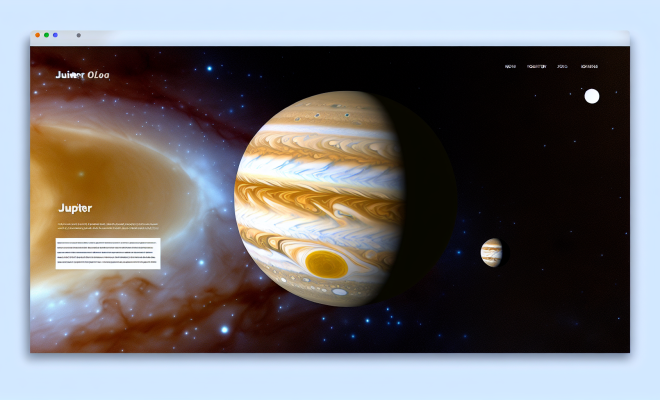
On March 14, 2026, astronomy enthusiasts across the United States are in for a treat as they can witness a spectacular celestial event involving Jupiter and its moon Io. This day promises two significant occurrences: a transit of Io across the disk of Jupiter and an occultation where Io will disappear behind the giant planet. These events present an excellent opportunity for both amateur and seasoned astronomers to observe the dynamics of one of the most fascinating celestial systems in our solar system.
The Transit of Io: A Close Encounter
The excitement begins in the early morning hours when Io begins its transit across Jupiter. Observers in the Pacific Time Zone will have the best view, as the transit is set to conclude shortly after 2:00 A.M. PDT. During this event, Io will appear as a small dot moving across Jupiter’s vibrant cloud bands. This phenomenon allows viewers to witness Io in motion, providing a unique perspective on its orbital dynamics.
Transits of Io are not only visually stunning but also serve as a reminder of the intricate dance between celestial bodies. Io, known for its volcanic activity and colorful surface, is one of the four largest moons of Jupiter, known collectively as the Galilean moons, which also include Europa, Ganymede, and Callisto. Observing Io during its transit offers insights into the moon’s position and its gravitational interactions with Jupiter.
Timing is Everything: When to Observe
For those eager to catch a glimpse of this astronomical display, the timing varies depending on the observer’s location:
- Pacific Time Zone: Transit ends at 2:00 A.M. PDT
- Mountain Time Zone: Transit ends at 3:00 A.M. MDT
- Central Time Zone: Transit ends at 4:00 A.M. CDT
- Eastern Time Zone: Transit ends at 5:00 A.M. EDT
After the transit, skywatchers should prepare for another thrilling event later in the evening. Around 12:10 A.M. EDT on March 15, Io will begin to pass behind Jupiter, marking the start of an occultation. This event is particularly exciting, as it allows observers to see Io disappear from view as it is obscured by the massive gas giant.
The Occultation: A Magical Moment
The occultation of Io presents a distinct viewing experience compared to the transit. During this event, Io will vanish behind Jupiter, which will be observable in real-time for those with the right equipment. The reappearance of Io, expected at 2:40 A.M. CDT on March 15, will also captivate observers as they witness the moon emerge from behind the planet.
Both the transit and the occultation are opportunities for astronomers to engage with the cosmos. With a good telescope or even strong binoculars, viewers can observe Io’s varying brightness and color, which are influenced by its volcanic activity. This provides a tangible connection to the dynamic processes occurring on this distant moon.
Visibility: Factors to Consider
While the events are exciting, visibility can vary based on several factors, including:
- Weather Conditions: Clear skies are essential for optimal viewing. Cloud cover or rain can obstruct the view.
- Light Pollution: Observers in urban areas may struggle to see fainter celestial objects due to artificial lighting.
- Equipment: A telescope or binoculars can enhance the viewing experience, allowing for better detail of Jupiter and its moons.
It’s advisable for observers to check local weather forecasts and consider traveling to darker locations away from city lights to fully appreciate these astronomical events.
Why Observing Io Matters
Observing Io and its interactions with Jupiter not only enriches our understanding of the moon itself but also enhances our knowledge of planetary systems. Io is the most volcanically active body in the solar system, with eruptions that can reach heights of 300 kilometers. Its interactions with Jupiter’s magnetic field and the gravitational pull of the giant planet contribute to its geological activity.
Moreover, the Galilean moons, including Io, have been instrumental in advancing our understanding of the formation and evolution of celestial bodies. By observing these events, amateur astronomers can contribute to the larger scientific community, gathering data that can be shared and analyzed.
In Conclusion: Mark Your Calendars
The celestial events on March 14, 2026, provide a unique opportunity for skywatchers across the U.S. to connect with the universe. Whether you are an experienced astronomer or a newbie to celestial observations, witnessing Io’s transit and occultation offers a chance to experience the wonder of our solar system firsthand. Be sure to mark your calendars, prepare your equipment, and find a dark spot to enjoy this astronomical spectacle.