The Tech Edvocate

Top Menu

  • Advertisement
  • Apps
  • Home Page
  • Home Page Five (No Sidebar)
  • Home Page Four
  • Home Page Three
  • Home Page Two
  • Home Tech2
  • Icons [No Sidebar]
  • Left Sidbear Page
  • Lynch Educational Consulting
  • My Account
  • My Speaking Page
  • Newsletter Sign Up Confirmation
  • Newsletter Unsubscription
  • Our Brands
  • Page Example
  • Privacy Policy
  • Protected Content
  • Register
  • Request a Product Review
  • Shop
  • Shortcodes Examples
  • Signup
  • Start Here
    • Governance
    • Careers
    • Contact Us
  • Terms and Conditions
  • The Edvocate
  • The Tech Edvocate Product Guide
  • Topics
  • Write For Us
  • Advertise

Main Menu

  • Start Here
    • Our Brands
    • Governance
      • Lynch Educational Consulting, LLC.
      • Dr. Lynch’s Personal Website
      • Careers
    • Write For Us
    • The Tech Edvocate Product Guide
    • Contact Us
    • Books
    • Edupedia
    • Post a Job
    • The Edvocate Podcast
    • Terms and Conditions
    • Privacy Policy
  • Topics
    • Assistive Technology
    • Child Development Tech
    • Early Childhood & K-12 EdTech
    • EdTech Futures
    • EdTech News
    • EdTech Policy & Reform
    • EdTech Startups & Businesses
    • Higher Education EdTech
    • Online Learning & eLearning
    • Parent & Family Tech
    • Personalized Learning
    • Product Reviews
  • Advertise
  • Tech Edvocate Awards
  • The Edvocate
  • Pedagogue
  • School Ratings

logo

The Tech Edvocate

  • Start Here
    • Our Brands
    • Governance
      • Lynch Educational Consulting, LLC.
      • Dr. Lynch’s Personal Website
        • My Speaking Page
      • Careers
    • Write For Us
    • The Tech Edvocate Product Guide
    • Contact Us
    • Books
    • Edupedia
    • Post a Job
    • The Edvocate Podcast
    • Terms and Conditions
    • Privacy Policy
  • Topics
    • Assistive Technology
    • Child Development Tech
    • Early Childhood & K-12 EdTech
    • EdTech Futures
    • EdTech News
    • EdTech Policy & Reform
    • EdTech Startups & Businesses
    • Higher Education EdTech
    • Online Learning & eLearning
    • Parent & Family Tech
    • Personalized Learning
    • Product Reviews
  • Advertise
  • Tech Edvocate Awards
  • The Edvocate
  • Pedagogue
  • School Ratings
  • US Battery as a Service Market Shifts Toward Fleet-Based Energy

  • The Startling Truth: Why Americans Distrust AI with Their Health

  • This Crucial Deadline for Banks Is Closer Than You Think

  • Baffling: CrowdStrike’s $500 Million AI Bet Reshapes Cybersecurity

  • This Crucial Autonomous Driving Rule Could Cost You Everything

  • Baffling: Microsoft AI CEO Demands Halt to Conscious AI Development

  • O seară în ritmul tău: atmosfera divertismentului de cazinou pe internet

  • Outrageous: AppLovin Hit With Lawsuit Over AI Claims — What Investors Need to Know

  • 9 Critical Ways AI Investment Fraud Is Quietly Draining Your Bank Account

  • Is the AI Bubble Bursting? OpenAI’s Funding Woes Revealed

Digital & Mobile Technology
Home›Digital & Mobile Technology›HDR vs. SDR: What’s the Difference?

HDR vs. SDR: What’s the Difference?
By Matthew Lynch
June 15, 2023
0
Spread the love

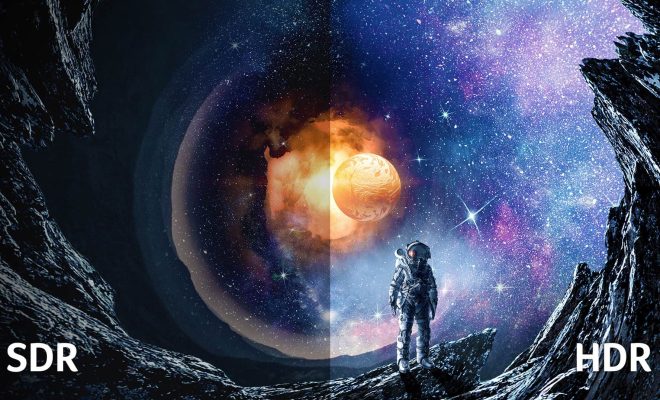
As technology advances, we are being presented with numerous options for enhancing our viewing experience. One such option is High Dynamic Range (HDR), a technology that offers improved color accuracy and brightness. However, traditional Standard Dynamic Range (SDR) is still widely used in many everyday applications. So, what’s the difference between the two?

SDR is what most of us are used to seeing. It’s the technology that has been around for years and is commonly used in most TVs, computers, and even mobile devices. SDR displays use a limited range of color and brightness. Typically, an SDR TV will display color in 8 bits, which translates to around 16.7 million colors. SDR also has a brightness range of 100 nits to 500 nits.

HDR, on the other hand, delivers significantly improved color accuracy and brightness. For example, an HDR TV can display as many as 10 bits of color, equaling 1,073 million colors, giving viewers a more lifelike and natural range of colors. Additionally, HDR can go up to a brightness range of 1000 nits to 10,000 nits. The increased brightness range offers a higher contrast between the light and dark parts of an image, which improves the overall viewing experience.

The difference between HDR and SDR graphics is best seen when viewing content that is encoded with HDR. HDR content has a more extensive color range and is more vibrant, creating a more engaging and realistic viewing experience. With more streaming services providing HDR content, many people are investing in new TVs to take advantage of the technology.

It’s important to note that for viewers to take full advantage of the HDR technology, the video, and the screen must be compatible with each other. All HDR displays can still display SDR content, but the results won’t be as vivid as they would be with a suitable HDR video and an HDR-enabled display.


Previous Article

How to Use the Flashlight on Your ...

Next Article

How to Install Adobe Photoshop on Linux

Matthew Lynch

Related articles More from author

  • Digital & Mobile Technology

    Big TV vs. projector: Pros and cons of huge home theater screens

    April 3, 2023
    By Matthew Lynch
  • Digital & Mobile Technology

    What is a Straight-Through Cable?

    April 23, 2023
    By Matthew Lynch
  • Digital & Mobile Technology

    VTube Streamer Cimrai Brings Virtual Authenticity to Twitch

    June 14, 2023
    By Matthew Lynch
  • Digital & Mobile Technology

    Google DNS vs. Cloudflare DNS: What’s the Fastest DNS?

    August 5, 2023
    By Matthew Lynch
  • Digital & Mobile Technology

    Samsung Galaxy Watch 5: Price, Release Date, Specs, and News

    June 12, 2023
    By Matthew Lynch
  • Digital & Mobile Technology

    Best 144Hz Laptops for Every Budget

    June 6, 2023
    By Matthew Lynch

Search

Login & Registration

  • Log in
  • Entries feed
  • Comments feed
  • WordPress.org

Newsletter

Signup for The Tech Edvocate Newsletter and have the latest in EdTech news and opinion delivered to your email address!

About Us

Since technology is not going anywhere and does more good than harm, adapting is the best course of action. That is where The Tech Edvocate comes in. We plan to cover the PreK-12 and Higher Education EdTech sectors and provide our readers with the latest news and opinion on the subject. From time to time, I will invite other voices to weigh in on important issues in EdTech. We hope to provide a well-rounded, multi-faceted look at the past, present, the future of EdTech in the US and internationally.

We started this journey back in June 2016, and we plan to continue it for many more years to come. I hope that you will join us in this discussion of the past, present and future of EdTech and lend your own insight to the issues that are discussed.

Newsletter

Signup for The Tech Edvocate Newsletter and have the latest in EdTech news and opinion delivered to your email address!

Contact Us

The Tech Edvocate
910 Goddin Street
Richmond, VA 23231
(601) 630-5238
[email protected]

Copyright © 2026 Matthew Lynch. All rights reserved.