The Tech Edvocate

Top Menu

  • Advertisement
  • Apps
  • Home Page
  • Home Page Five (No Sidebar)
  • Home Page Four
  • Home Page Three
  • Home Page Two
  • Home Tech2
  • Icons [No Sidebar]
  • Left Sidbear Page
  • Lynch Educational Consulting
  • My Account
  • My Speaking Page
  • Newsletter Sign Up Confirmation
  • Newsletter Unsubscription
  • Our Brands
  • Page Example
  • Privacy Policy
  • Protected Content
  • Register
  • Request a Product Review
  • Shop
  • Shortcodes Examples
  • Signup
  • Start Here
    • Governance
    • Careers
    • Contact Us
  • Terms and Conditions
  • The Edvocate
  • The Tech Edvocate Product Guide
  • Topics
  • Write For Us
  • Advertise

Main Menu

  • Start Here
    • Our Brands
    • Governance
      • Lynch Educational Consulting, LLC.
      • Dr. Lynch’s Personal Website
      • Careers
    • Write For Us
    • The Tech Edvocate Product Guide
    • Contact Us
    • Books
    • Edupedia
    • Post a Job
    • The Edvocate Podcast
    • Terms and Conditions
    • Privacy Policy
  • Topics
    • Assistive Technology
    • Child Development Tech
    • Early Childhood & K-12 EdTech
    • EdTech Futures
    • EdTech News
    • EdTech Policy & Reform
    • EdTech Startups & Businesses
    • Higher Education EdTech
    • Online Learning & eLearning
    • Parent & Family Tech
    • Personalized Learning
    • Product Reviews
  • Advertise
  • Tech Edvocate Awards
  • The Edvocate
  • Pedagogue
  • School Ratings

logo

The Tech Edvocate

  • Start Here
    • Our Brands
    • Governance
      • Lynch Educational Consulting, LLC.
      • Dr. Lynch’s Personal Website
        • My Speaking Page
      • Careers
    • Write For Us
    • The Tech Edvocate Product Guide
    • Contact Us
    • Books
    • Edupedia
    • Post a Job
    • The Edvocate Podcast
    • Terms and Conditions
    • Privacy Policy
  • Topics
    • Assistive Technology
    • Child Development Tech
    • Early Childhood & K-12 EdTech
    • EdTech Futures
    • EdTech News
    • EdTech Policy & Reform
    • EdTech Startups & Businesses
    • Higher Education EdTech
    • Online Learning & eLearning
    • Parent & Family Tech
    • Personalized Learning
    • Product Reviews
  • Advertise
  • Tech Edvocate Awards
  • The Edvocate
  • Pedagogue
  • School Ratings
  • The Astonishing Truth About Student Loan Refinance Rates: What You Need to Know Now

  • Devastating: AI Agents Just Found a Zero-Day in Medical Software in 11 Minutes

  • The AI Education Revolution: 10 Urgent Questions Universities Must Answer Now

  • Explosive Zero-Day Vulnerability: 15 Million Websites Under Siege – Is Yours Next?

  • The Ultimate Kuru Footwear Trio: A Comfort Revolution for Every Adventure

  • Why Your Mortgage Could Be Denied by Biased AI – And What the Fed Is Doing About It

  • Unprecedented: Lawsuit Demands Total AI Shutdown Amid Rising Global Panic

  • The Astonishing Truth: Microcredentials Now Trump MBAs for Data Science Jobs

  • The Astonishing Twist: AI Cuts Your Job, Then Helps You Sue Your Boss

  • The Staggering Truth About Palo Alto’s $4.5 Billion AI Bet

Digital & Mobile Technology
Home›Digital & Mobile Technology›Canva vs. Figma: What’s the Best Program for Designers?

Canva vs. Figma: What’s the Best Program for Designers?
By Matthew Lynch
June 12, 2023
0
Spread the love

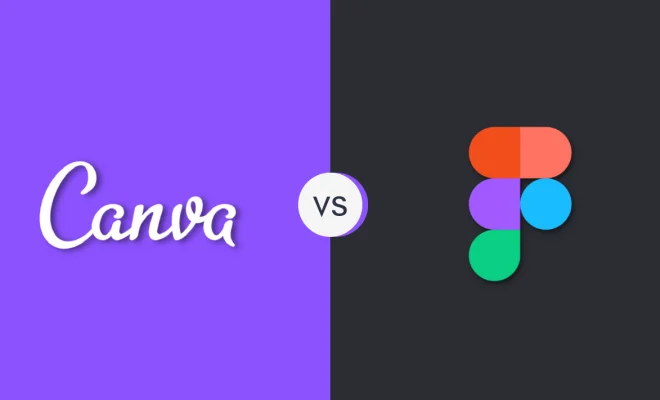
When it comes to graphic design, two tools that have been gaining popularity are Canva and Figma. Both offer features that designers find exceptionally helpful. However, there are differences between the two, and choosing between them can be challenging.

Canva is an online design tool that enables users to create graphics, posters, and even videos using pre-built templates combined with a drag-and-drop interface. In comparison, Figma is a more advanced design tool, designed for web and app development. It allows designers to create and edit vector designs, collaborate in real-time, and test their designs on various devices.

One important factor that sets the two apart is their usability. Canva’s user interface is straightforward and intuitive — making it beginner-friendly — whereas Figma’s interface is more complex, with a steeper learning curve. The latter, however, is known to have more robust tools, making it an ideal option for professional designers.

Canva’s ease of use and focus on template-based designs make it a fantastic choice for social media posts, resumes, or business cards. It’s an excellent program for novice designers who want to create quick design collaterals for their personal use or small business. Figma, on the other hand, is designed to optimize group design work. Its focus is more on web design, user interface design, and software development, making it a better choice for larger, more complex projects.

Apart from usability, another important factor that sets the two apart is access to features. Canva’s free version is relatively limited, and users may have to pay for premium features such as custom fonts, illustrations, and animations. In contrast, Figma offers the majority of its features for free, although some advanced features require a paid subscription.

Lastly, it’s worth noting that collaboration features make Figma an excellent tool for designers working in teams. It allows multiple team members to work on a design simultaneously, with changes seen in real-time. Canva, however, supports teamwork in a slightly different way by allowing multiple people to work on a design at once — it is not as seamless as Figma though.

In conclusion, Canva and Figma are both powerful tools for designers with different target uses. Canva is excellent for designs with lower complexity, while Figma works best for larger and more complex projects. If you’re a novice designer, Canva may be the best option for you. But, if you’re a seasoned designer, with a team working on a project or project of high-level complexity, Figma would be the best choice

Previous Article

Top Remote Access Software to Control Your ...

Next Article

How to Find Songs in Deezer by ...

Matthew Lynch

Related articles More from author

  • Digital & Mobile Technology

    How to Turn Your PC Into a Router

    June 10, 2023
    By Matthew Lynch
  • Digital & Mobile Technology

    How to Recover Deleted Photos on Android

    June 4, 2023
    By Matthew Lynch
  • Digital & Mobile Technology

    Free Tools to Check If Your Browser Is Safe and Private

    June 21, 2023
    By Matthew Lynch
  • Digital & Mobile Technology

    How to Integrate Your iPhone with a Windows PC or Chromebook

    April 27, 2023
    By Matthew Lynch
  • Digital & Mobile Technology

    Top Ways to Fix Facebook Messenger Not Sending Pictures

    April 13, 2023
    By Matthew Lynch
  • Digital & Mobile Technology

    How to Redeem a Code to Your Epic Games Account

    June 12, 2023
    By Matthew Lynch

Search

Login & Registration

  • Log in
  • Entries feed
  • Comments feed
  • WordPress.org

Newsletter

Signup for The Tech Edvocate Newsletter and have the latest in EdTech news and opinion delivered to your email address!

About Us

Since technology is not going anywhere and does more good than harm, adapting is the best course of action. That is where The Tech Edvocate comes in. We plan to cover the PreK-12 and Higher Education EdTech sectors and provide our readers with the latest news and opinion on the subject. From time to time, I will invite other voices to weigh in on important issues in EdTech. We hope to provide a well-rounded, multi-faceted look at the past, present, the future of EdTech in the US and internationally.

We started this journey back in June 2016, and we plan to continue it for many more years to come. I hope that you will join us in this discussion of the past, present and future of EdTech and lend your own insight to the issues that are discussed.

Newsletter

Signup for The Tech Edvocate Newsletter and have the latest in EdTech news and opinion delivered to your email address!

Contact Us

The Tech Edvocate
910 Goddin Street
Richmond, VA 23231
(601) 630-5238
[email protected]

Copyright © 2026 Matthew Lynch. All rights reserved.