The Tech Edvocate

Top Menu

  • Advertisement
  • Apps
  • Home Page
  • Home Page Five (No Sidebar)
  • Home Page Four
  • Home Page Three
  • Home Page Two
  • Home Tech2
  • Icons [No Sidebar]
  • Left Sidbear Page
  • Lynch Educational Consulting
  • My Account
  • My Speaking Page
  • Newsletter Sign Up Confirmation
  • Newsletter Unsubscription
  • Our Brands
  • Page Example
  • Privacy Policy
  • Protected Content
  • Register
  • Request a Product Review
  • Shop
  • Shortcodes Examples
  • Signup
  • Start Here
    • Governance
    • Careers
    • Contact Us
  • Terms and Conditions
  • The Edvocate
  • The Tech Edvocate Product Guide
  • Topics
  • Write For Us
  • Advertise

Main Menu

  • Start Here
    • Our Brands
    • Governance
      • Lynch Educational Consulting, LLC.
      • Dr. Lynch’s Personal Website
      • Careers
    • Write For Us
    • The Tech Edvocate Product Guide
    • Contact Us
    • Books
    • Edupedia
    • Post a Job
    • The Edvocate Podcast
    • Terms and Conditions
    • Privacy Policy
  • Topics
    • Assistive Technology
    • Child Development Tech
    • Early Childhood & K-12 EdTech
    • EdTech Futures
    • EdTech News
    • EdTech Policy & Reform
    • EdTech Startups & Businesses
    • Higher Education EdTech
    • Online Learning & eLearning
    • Parent & Family Tech
    • Personalized Learning
    • Product Reviews
  • Advertise
  • Tech Edvocate Awards
  • The Edvocate
  • Pedagogue
  • School Ratings

logo

The Tech Edvocate

  • Start Here
    • Our Brands
    • Governance
      • Lynch Educational Consulting, LLC.
      • Dr. Lynch’s Personal Website
        • My Speaking Page
      • Careers
    • Write For Us
    • The Tech Edvocate Product Guide
    • Contact Us
    • Books
    • Edupedia
    • Post a Job
    • The Edvocate Podcast
    • Terms and Conditions
    • Privacy Policy
  • Topics
    • Assistive Technology
    • Child Development Tech
    • Early Childhood & K-12 EdTech
    • EdTech Futures
    • EdTech News
    • EdTech Policy & Reform
    • EdTech Startups & Businesses
    • Higher Education EdTech
    • Online Learning & eLearning
    • Parent & Family Tech
    • Personalized Learning
    • Product Reviews
  • Advertise
  • Tech Edvocate Awards
  • The Edvocate
  • Pedagogue
  • School Ratings
  • Baffling: CrowdStrike’s $500 Million AI Bet Reshapes Cybersecurity

  • This Crucial Autonomous Driving Rule Could Cost You Everything

  • Baffling: Microsoft AI CEO Demands Halt to Conscious AI Development

  • O seară în ritmul tău: atmosfera divertismentului de cazinou pe internet

  • Outrageous: AppLovin Hit With Lawsuit Over AI Claims — What Investors Need to Know

  • 9 Critical Ways AI Investment Fraud Is Quietly Draining Your Bank Account

  • Is the AI Bubble Bursting? OpenAI’s Funding Woes Revealed

  • Why Millions Are Skipping College for These 7 Online Courses Right Now

  • The Astonishing Truth About PS5 Pro vs Xbox Ally X Financing

  • The Urgent Truth About 2026 Privacy Laws: Why Your Business Could Face Catastrophic Fines

Digital & Mobile Technology
Home›Digital & Mobile Technology›How Does the Nintendo 3DS Project 3D Images?

How Does the Nintendo 3DS Project 3D Images?
By Matthew Lynch
June 10, 2023
0
Spread the love

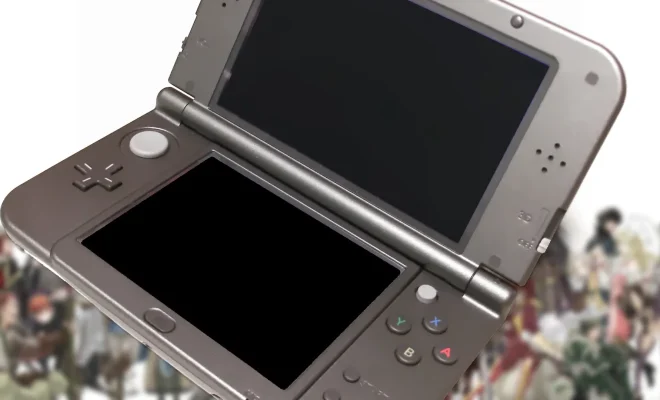
The Nintendo 3DS is a handheld gaming console that has been evolutionary in many ways. One such feature that sets it apart from the others is the ability to produce 3D images without the need for any additional equipment. The question, however, remains: how is it possible for the Nintendo 3DS to project 3D images?

The 3DS utilizes a method called autostereoscopy to project the 3D images. According to this method, the device produces two different images of the same object at slightly different angles. The images are then brought together and projected on the screen in a way that they overlap each other, forming a single 3D image that can be seen without the need for any special 3D glasses.

To achieve this effect, the 3DS employs a combination of hardware and software technologies. One of the primary components that make this feature possible is the dual-screen technology. The upper screen of the device is capable of projecting these two overlapping images at different angles with the help of a parallax barrier, which is a thin layer of material that divides the screen into two sections that are visible only from specific angles.

Another essential hardware component that makes this possible is the camera system. The 3DS has two cameras that work together to capture the separate images required to create the 3D effect. These cameras also enable the user to capture their images and videos in 3D mode.

Software wise, the 3DS uses a form of graphics processing that is optimized for displaying 3D visuals. This processing is capable of creating the two separate images required for the 3D effect and of rendering them in such a way that they appear perfectly aligned when viewed on the screen.

In conclusion, the Nintendo 3DS utilizes a combination of hardware and software technologies to create the immersive 3D experience that it provides. The device’s dual-screen technology, camera system, and specialized graphics processing work together to produce images that appear to pop out of the screen, bringing gaming and entertainment to a new level of realism. While the technology may not be perfect, it certainly represents a significant advancement in the field of handheld gaming and entertainment, adding a new dimension to the experience. 

Previous Article

Opera GX Browser Rolls Out Beta for ...

Next Article

Reasons to Dump Windows XP for Windows ...

Matthew Lynch

Related articles More from author

  • Digital & Mobile Technology

    Norton vs. Bitdefender: Which Security Suite Will Protect Your PC Best?

    July 31, 2023
    By Matthew Lynch
  • Digital & Mobile Technology

    Slide Layouts in PowerPoint

    June 12, 2023
    By Matthew Lynch
  • Digital & Mobile Technology

    Spotify Might Not Be the Best Place For Audio Books Right Now—Here’s Why

    June 14, 2023
    By Matthew Lynch
  • Digital & Mobile Technology

    How to Install Apps from Unknown Sources on Android

    April 27, 2023
    By Matthew Lynch
  • Digital & Mobile Technology

    Best Proxy Sites to Try for Safer Browsing

    August 5, 2023
    By Matthew Lynch
  • Digital & Mobile Technology

    Best Websites to Buy Second-Hand Books

    June 6, 2023
    By Matthew Lynch

Search

Login & Registration

  • Log in
  • Entries feed
  • Comments feed
  • WordPress.org

Newsletter

Signup for The Tech Edvocate Newsletter and have the latest in EdTech news and opinion delivered to your email address!

About Us

Since technology is not going anywhere and does more good than harm, adapting is the best course of action. That is where The Tech Edvocate comes in. We plan to cover the PreK-12 and Higher Education EdTech sectors and provide our readers with the latest news and opinion on the subject. From time to time, I will invite other voices to weigh in on important issues in EdTech. We hope to provide a well-rounded, multi-faceted look at the past, present, the future of EdTech in the US and internationally.

We started this journey back in June 2016, and we plan to continue it for many more years to come. I hope that you will join us in this discussion of the past, present and future of EdTech and lend your own insight to the issues that are discussed.

Newsletter

Signup for The Tech Edvocate Newsletter and have the latest in EdTech news and opinion delivered to your email address!

Contact Us

The Tech Edvocate
910 Goddin Street
Richmond, VA 23231
(601) 630-5238
[email protected]

Copyright © 2026 Matthew Lynch. All rights reserved.