The Tech Edvocate

Top Menu

  • Advertisement
  • Apps
  • Home Page
  • Home Page Five (No Sidebar)
  • Home Page Four
  • Home Page Three
  • Home Page Two
  • Home Tech2
  • Icons [No Sidebar]
  • Left Sidbear Page
  • Lynch Educational Consulting
  • My Account
  • My Speaking Page
  • Newsletter Sign Up Confirmation
  • Newsletter Unsubscription
  • Our Brands
  • Page Example
  • Privacy Policy
  • Protected Content
  • Register
  • Request a Product Review
  • Shop
  • Shortcodes Examples
  • Signup
  • Start Here
    • Governance
    • Careers
    • Contact Us
  • Terms and Conditions
  • The Edvocate
  • The Tech Edvocate Product Guide
  • Topics
  • Write For Us
  • Advertise

Main Menu

  • Start Here
    • Our Brands
    • Governance
      • Lynch Educational Consulting, LLC.
      • Dr. Lynch’s Personal Website
      • Careers
    • Write For Us
    • The Tech Edvocate Product Guide
    • Contact Us
    • Books
    • Edupedia
    • Post a Job
    • The Edvocate Podcast
    • Terms and Conditions
    • Privacy Policy
  • Topics
    • Assistive Technology
    • Child Development Tech
    • Early Childhood & K-12 EdTech
    • EdTech Futures
    • EdTech News
    • EdTech Policy & Reform
    • EdTech Startups & Businesses
    • Higher Education EdTech
    • Online Learning & eLearning
    • Parent & Family Tech
    • Personalized Learning
    • Product Reviews
  • Advertise
  • Tech Edvocate Awards
  • The Edvocate
  • Pedagogue
  • School Ratings

logo

The Tech Edvocate

  • Start Here
    • Our Brands
    • Governance
      • Lynch Educational Consulting, LLC.
      • Dr. Lynch’s Personal Website
        • My Speaking Page
      • Careers
    • Write For Us
    • The Tech Edvocate Product Guide
    • Contact Us
    • Books
    • Edupedia
    • Post a Job
    • The Edvocate Podcast
    • Terms and Conditions
    • Privacy Policy
  • Topics
    • Assistive Technology
    • Child Development Tech
    • Early Childhood & K-12 EdTech
    • EdTech Futures
    • EdTech News
    • EdTech Policy & Reform
    • EdTech Startups & Businesses
    • Higher Education EdTech
    • Online Learning & eLearning
    • Parent & Family Tech
    • Personalized Learning
    • Product Reviews
  • Advertise
  • Tech Edvocate Awards
  • The Edvocate
  • Pedagogue
  • School Ratings
  • US Battery as a Service Market Shifts Toward Fleet-Based Energy

  • The Startling Truth: Why Americans Distrust AI with Their Health

  • This Crucial Deadline for Banks Is Closer Than You Think

  • Baffling: CrowdStrike’s $500 Million AI Bet Reshapes Cybersecurity

  • This Crucial Autonomous Driving Rule Could Cost You Everything

  • Baffling: Microsoft AI CEO Demands Halt to Conscious AI Development

  • O seară în ritmul tău: atmosfera divertismentului de cazinou pe internet

  • Outrageous: AppLovin Hit With Lawsuit Over AI Claims — What Investors Need to Know

  • 9 Critical Ways AI Investment Fraud Is Quietly Draining Your Bank Account

  • Is the AI Bubble Bursting? OpenAI’s Funding Woes Revealed

Digital & Mobile Technology
Home›Digital & Mobile Technology›What Is a Hard Disk Drive?

What Is a Hard Disk Drive?
By Matthew Lynch
June 8, 2023
0
Spread the love

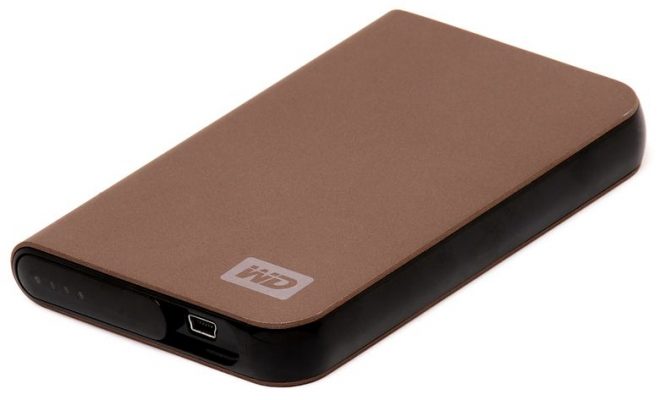
A hard disk drive, commonly known as a hard drive, is an essential component of modern computing. It is the primary storage device of a computer system, responsible for holding and retrieving data. The hard drive has been a crucial component of computer systems for several decades, and its role in retaining information has only increased over time as the size of the data becomes larger and larger.

A hard disk drive consists of several spinning disks, coated with magnetic material, that store data. The disks are mounted on a spindle that rotates at a high speed, typically between 5,400 and 7,200 revolutions per minute (RPM), and the data is read and written by a read-write head. The head moves back and forth across the spinning disks to read and write data, which is stored in blocks of magnetically aligned data.

One of the main benefits of hard disk drives is their ability to store a large amount of data. A typical desktop computer hard drive can store anywhere from several hundred gigabytes (GB) to several terabytes (TB) of data. The size of hard disk drives has increased dramatically over the years, with the first hard disk drive, created in 1956, storing just 5 megabytes of data compared to modern drives that can store up to several terabytes.

Another benefit of hard disk drives is their durability. Compared to alternative storage devices, such as solid-state drives, hard drives are less prone to damage from physical impacts or exposure to heat or moisture. They can also be easily replaced if they fail, making them a popular choice for hard disk drive replacement.

In addition to their large storage capacity and durability, hard disk drives also have a higher data transfer rate than alternative storage devices. They are able to read and write data faster than most other types of storage, making them suitable for tasks such as storing and playing digital media, editing large files, and running games.

One drawback of hard disk drives is that they are relatively slow compared to solid-state drives, which use flash memory to store data. Because hard disk drives have spinning disks and read-write heads, there is a delay in accessing data compared to solid-state drives, which can access data instantaneously. This delay is known as the latency of the hard disk drive.

In conclusion, a hard disk drive is a critical component of modern computing, responsible for storing and retrieving data on a computer system. Although they may not be as fast as other storage devices, they are durable and offer large storage capacities, making them an ideal choice for most people. As technology advances, it is possible that newer, faster, and more efficient storage devices will be developed, but the hard disk drive will remain a core component of most computer systems for the foreseeable future.

Previous Article

How to Connect Your PC to Your ...

Next Article

How to Know If You’ve Been Blocked ...

Matthew Lynch

Related articles More from author

  • Digital & Mobile Technology

    How to Answer (or Reject) Phone Calls on AirPods

    June 9, 2023
    By Matthew Lynch
  • Digital & Mobile Technology

    An Explanation of Read and Write Speeds

    June 10, 2023
    By Matthew Lynch
  • Digital & Mobile Technology

    What Is the Cheapest Food Delivery App?

    August 5, 2023
    By Matthew Lynch
  • Digital & Mobile Technology

    Best Sites With Free Action Movies

    June 8, 2023
    By Matthew Lynch
  • Digital & Mobile Technology

    How to Fix the “IPv4/IPv6 No Internet Access” Error on Windows

    August 5, 2023
    By Matthew Lynch
  • Digital & Mobile Technology

    How to Get Verified on TikTok

    July 26, 2023
    By Matthew Lynch

Search

Login & Registration

  • Log in
  • Entries feed
  • Comments feed
  • WordPress.org

Newsletter

Signup for The Tech Edvocate Newsletter and have the latest in EdTech news and opinion delivered to your email address!

About Us

Since technology is not going anywhere and does more good than harm, adapting is the best course of action. That is where The Tech Edvocate comes in. We plan to cover the PreK-12 and Higher Education EdTech sectors and provide our readers with the latest news and opinion on the subject. From time to time, I will invite other voices to weigh in on important issues in EdTech. We hope to provide a well-rounded, multi-faceted look at the past, present, the future of EdTech in the US and internationally.

We started this journey back in June 2016, and we plan to continue it for many more years to come. I hope that you will join us in this discussion of the past, present and future of EdTech and lend your own insight to the issues that are discussed.

Newsletter

Signup for The Tech Edvocate Newsletter and have the latest in EdTech news and opinion delivered to your email address!

Contact Us

The Tech Edvocate
910 Goddin Street
Richmond, VA 23231
(601) 630-5238
[email protected]

Copyright © 2026 Matthew Lynch. All rights reserved.