The Tech Edvocate

Top Menu

  • Advertisement
  • Apps
  • Home Page
  • Home Page Five (No Sidebar)
  • Home Page Four
  • Home Page Three
  • Home Page Two
  • Home Tech2
  • Icons [No Sidebar]
  • Left Sidbear Page
  • Lynch Educational Consulting
  • My Account
  • My Speaking Page
  • Newsletter Sign Up Confirmation
  • Newsletter Unsubscription
  • Our Brands
  • Page Example
  • Privacy Policy
  • Protected Content
  • Register
  • Request a Product Review
  • Shop
  • Shortcodes Examples
  • Signup
  • Start Here
    • Governance
    • Careers
    • Contact Us
  • Terms and Conditions
  • The Edvocate
  • The Tech Edvocate Product Guide
  • Topics
  • Write For Us
  • Advertise

Main Menu

  • Start Here
    • Our Brands
    • Governance
      • Lynch Educational Consulting, LLC.
      • Dr. Lynch’s Personal Website
      • Careers
    • Write For Us
    • The Tech Edvocate Product Guide
    • Contact Us
    • Books
    • Edupedia
    • Post a Job
    • The Edvocate Podcast
    • Terms and Conditions
    • Privacy Policy
  • Topics
    • Assistive Technology
    • Child Development Tech
    • Early Childhood & K-12 EdTech
    • EdTech Futures
    • EdTech News
    • EdTech Policy & Reform
    • EdTech Startups & Businesses
    • Higher Education EdTech
    • Online Learning & eLearning
    • Parent & Family Tech
    • Personalized Learning
    • Product Reviews
  • Advertise
  • Tech Edvocate Awards
  • The Edvocate
  • Pedagogue
  • School Ratings

logo

The Tech Edvocate

  • Start Here
    • Our Brands
    • Governance
      • Lynch Educational Consulting, LLC.
      • Dr. Lynch’s Personal Website
        • My Speaking Page
      • Careers
    • Write For Us
    • The Tech Edvocate Product Guide
    • Contact Us
    • Books
    • Edupedia
    • Post a Job
    • The Edvocate Podcast
    • Terms and Conditions
    • Privacy Policy
  • Topics
    • Assistive Technology
    • Child Development Tech
    • Early Childhood & K-12 EdTech
    • EdTech Futures
    • EdTech News
    • EdTech Policy & Reform
    • EdTech Startups & Businesses
    • Higher Education EdTech
    • Online Learning & eLearning
    • Parent & Family Tech
    • Personalized Learning
    • Product Reviews
  • Advertise
  • Tech Edvocate Awards
  • The Edvocate
  • Pedagogue
  • School Ratings
  • 100 Best Apps for Business Process Automation

  • 100 Best Apps for Operational Efficiency

  • 100 Best Apps for Improving Processes

  • 100 Best Apps for Scaling Operations

  • 100 Best Apps for Community-Led Growth

  • 100 Best Apps for Product-Led Growth

  • 100 Best Apps for User Activation

  • 100 Best Apps for Acquiring Customers

  • 100 Best Apps for 1-on-1 Meetings

  • 100 Best Apps for Eliminating Bottlenecks

Digital & Mobile Technology
Home›Digital & Mobile Technology›What is Read-Only Memory (ROM)?

What is Read-Only Memory (ROM)?
By Matthew Lynch
May 10, 2023
0
Spread the love

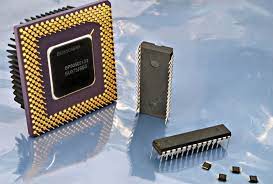
Read-only memory (ROM) is a type of computer memory that is used to permanently store data that cannot be modified or changed. The contents of ROM are set during manufacturing and cannot be altered by the user. ROM is an essential component of all computers, phones, and other electronic devices and is used to store critical system information that is necessary for the proper functioning of the device.

Types of ROM:

There are many different types of ROM, but the most common types include:

  1. PROM (Programmable Read-Only Memory): A type of ROM that is programmed by the user after assembly. Once programmed, the contents of PROM cannot be modified.
  2. EPROM (Erasable Programmable Read-Only Memory): A type of ROM that can be erased and reprogrammed using special hardware. This process can be repeated multiple times, making it an ideal choice for development.
  3. EEPROM (Electrically Erasable Programmable Read-Only Memory): A type of ROM that can be erased and reprogrammed electronically, without requiring special hardware. This makes EEPROM useful for implementing firmware updates and other system modifications.
  4. Flash Memory: A type of ROM that can be electrically erased and reprogrammed, like EEPROM. Flash memory is commonly used in digital cameras, USB drives, and other portable devices.

Why is ROM important?

ROM plays a critical role in the functioning of all electronic devices. It stores the firmware and bootloader, which are essential for the device to start up and function properly. ROM also stores the BIOS (Basic Input/Output System) which is responsible for initializing and configuring hardware on the computer. ROM is also used to store the operating system, device drivers, and other essential software components.

How does it work?

ROM is a non-volatile memory type, which means it retains its contents even when power is removed. When power is applied to the device, the CPU reads the contents of the ROM and loads the firmware, bootloader, and other essential components. Since ROM is read-only, the CPU cannot modify its contents, ensuring the integrity of the stored data.

Some applications of ROM:

ROM is used in a wide range of electronic devices, including computers, mobile phones, tablets, gaming consoles, and many others. Some common uses of ROM include storing firmware, bootloader, BIOS, and operating systems, device drivers, and other critical software components. ROM is also used in embedded systems, medical devices, and other specialized applications.

Previous Article

What is Reactive Power?

Next Article

What is Real-Time Data Processing?

Matthew Lynch

Related articles More from author

  • Digital & Mobile Technology

    Do You Need Car Audio Crossovers?

    June 4, 2023
    By Matthew Lynch
  • Digital & Mobile Technology

    The iPad 3 vs. the iPad 4: Which One Should You Choose?

    July 14, 2023
    By Matthew Lynch
  • Digital & Mobile Technology

    Google Meet Screen Sharing Not Working? How to Fix the Problem

    June 6, 2023
    By Matthew Lynch
  • Digital & Mobile Technology

    Yes, AirPods Work With Android: But Here’s the Catch!

    July 4, 2023
    By Matthew Lynch
  • Digital & Mobile Technology

    How to Take a Screenshot on Xbox One

    June 26, 2023
    By Matthew Lynch
  • Digital & Mobile Technology

    The Most Common Wi-Fi Standards and Types, Explained

    September 8, 2023
    By Matthew Lynch

Search

Login & Registration

  • Log in
  • Entries feed
  • Comments feed
  • WordPress.org

Newsletter

Signup for The Tech Edvocate Newsletter and have the latest in EdTech news and opinion delivered to your email address!

About Us

Since technology is not going anywhere and does more good than harm, adapting is the best course of action. That is where The Tech Edvocate comes in. We plan to cover the PreK-12 and Higher Education EdTech sectors and provide our readers with the latest news and opinion on the subject. From time to time, I will invite other voices to weigh in on important issues in EdTech. We hope to provide a well-rounded, multi-faceted look at the past, present, the future of EdTech in the US and internationally.

We started this journey back in June 2016, and we plan to continue it for many more years to come. I hope that you will join us in this discussion of the past, present and future of EdTech and lend your own insight to the issues that are discussed.

Newsletter

Signup for The Tech Edvocate Newsletter and have the latest in EdTech news and opinion delivered to your email address!

Contact Us

The Tech Edvocate
910 Goddin Street
Richmond, VA 23231
(601) 630-5238
[email protected]

Copyright © 2026 Matthew Lynch. All rights reserved.