Shocking Car Payment Trends: Over 1 in 5 New Buyers Hit $1,000 Monthly — Here’s Why
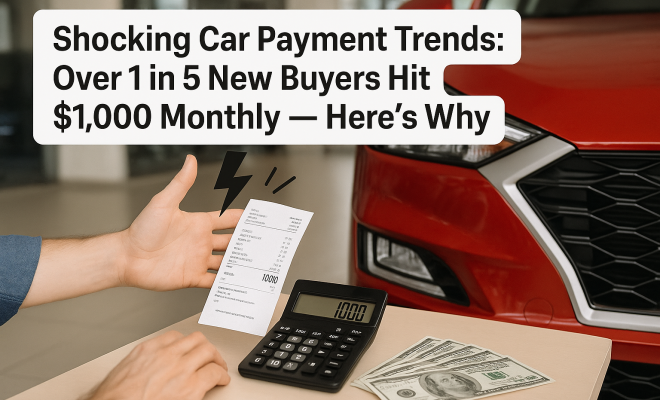
When you sit down to crunch the numbers for a new car, what’s your absolute ceiling for a monthly payment? For a growing number of Americans, that figure is now hitting a staggering $1,000 or more. And it’s not just for luxury vehicles anymore. I had to double-check the figures myself, but the data from Edmunds is clear: a record 21.2% of new car buyers who financed their purchase in the third quarter are now forking over a grand or more every single month. That’s a massive jump, and it paints a pretty stark picture of the current car payment trends.
Think about that for a moment. More than one in five people are committing to a four-figure car payment. It wasn’t that long ago that a $500 monthly payment felt substantial, and a $700 payment was reserved for premium models or those with challenging credit. Now, we’re regularly seeing payments that rival or even exceed many mortgage payments, especially for first-time homebuyers in less expensive markets. This isn’t just an interesting statistic; it’s a profound shift in personal finance for millions of households, and it’s driven by a confluence of factors that are squeezing consumers from multiple angles.
This isn’t just about the sticker price of a car; it’s a complicated ecosystem involving interest rates, insurance costs, and even legislative debates about privacy. Understanding these car payment trends means looking beyond just the loan itself to the broader economic forces at play. We’re going to dive deep into what’s driving these record-high payments, what it means for your wallet, and some of the surprising legislative responses emerging to tackle the issue of rising auto costs.
1. The Soaring Sticker Price of New Vehicles: An Uncomfortable Reality
Let’s start with the most obvious culprit: new car prices have gone through the roof. It feels like just yesterday you could walk onto a lot and find a perfectly capable sedan for under $25,000. Today? Good luck. The average transaction price for a new vehicle has been climbing steadily for years, exacerbated by supply chain disruptions, increased demand, and a general shift towards more expensive trucks and SUVs loaded with technology.
Manufacturers have also been adding more advanced safety features, infotainment systems, and luxury amenities across their lineups, which, while beneficial in many ways, inevitably drives up the cost. This isn’t just inflation at work; it’s a fundamental recalibration of what a new car costs. When the base price of a vehicle starts in the high $30,000s or even $40,000s, it naturally pushes monthly payments higher, even with favorable interest rates and longer loan terms. Consumers are finding themselves in a situation where the entry point for a new vehicle is significantly steeper than it was a decade ago.
To put some numbers to this, consider that the average new vehicle transaction price in the U.S. surpassed $48,000 in early 2023, according to Kelley Blue Book. That’s a jump of over 20% in just a few years. This isn’t merely about inflation; it’s also about a market pivot. Automakers have, in many cases, trimmed their entry-level sedan offerings, choosing to focus production on higher-margin trucks and SUVs. This means fewer affordable options are even available, forcing buyers who might have previously opted for a compact sedan into a more expensive segment. The chip shortage during the pandemic also played a huge role, limiting inventory and allowing dealers to charge over MSRP, a practice that, while somewhat diminished, still lingers in certain segments and brands.
2. Rising Interest Rates: Adding Fuel to the Fire of Car Payment Trends
If higher vehicle prices were one punch to the wallet, rising interest rates are the knockout blow. The Federal Reserve’s aggressive rate hikes over the past year or so, aimed at taming inflation, have had a direct and substantial impact on auto loan rates. Edmunds reports that the average new car loan interest rate is now hovering around 7%. Think about how that stacks up against rates from even a couple of years ago, when 2-3% APR was common for well-qualified buyers.
A few percentage points might not sound like much, but on a large loan, it translates into hundreds, if not thousands, of dollars in additional interest paid over the life of the loan. For example, on a $40,000 loan, even a 2% difference in interest rate can add $40-50 to your monthly payment, depending on the loan term. When you combine these elevated rates with the already higher vehicle prices, it’s easy to see how those $1,000+ monthly payments become increasingly common. It’s a double whammy for buyers, making affordability a real challenge and fundamentally reshaping car payment trends. This builds on impact of interest rates.
It’s worth noting that the average rate of 7% is just that—an average. Many consumers, especially those with less-than-perfect credit, are facing much higher rates, sometimes into the double digits. This creates a significant disparity in access to affordable financing. While prime borrowers might still snag a decent rate, subprime borrowers are effectively priced out of the new car market or forced into extremely long terms with exorbitant interest, making their total cost of ownership astronomical. This widening gap in borrowing costs exacerbates the overall affordability crisis, making the dream of a new car increasingly out of reach for a broader segment of the population.
3. Longer Loan Terms: The Illusion of Affordability
To combat the rising prices and interest rates, lenders and buyers have increasingly turned to longer loan terms. It’s a common strategy: stretch out the payments over 72, 84, or even 96 months, and suddenly that daunting monthly payment looks a little more manageable. While this can indeed lower your monthly outlay, it comes with significant drawbacks. (See: impact of transportation on health.)
First, you’ll pay substantially more in interest over the life of the loan. Those extra months mean more time for interest to accrue, often making the overall cost of the vehicle much higher. Second, you run a greater risk of being ‘upside down’ on your loan, meaning you owe more than the car is worth. Cars depreciate quickly, especially in the first few years. If you have an 84-month loan and need to sell or trade in your car after three or four years, you might find yourself in negative equity, making your next car purchase even harder. This tactic, while offering temporary relief, often compounds financial strain in the long run.
The prevalence of these extended loan terms is staggering. Data shows that 72-month loans have become the norm, with 84-month terms making up a significant portion of new car financing. We’re even seeing the emergence of 96-month (8-year) loans, which were practically unheard of a decade ago. While a longer term might reduce the monthly payment by $50 or $100, the total interest paid can easily be thousands more. For example, on a $40,000 loan at 7% interest, extending the term from 60 months to 84 months might reduce your monthly payment by about $120, but you’ll pay an additional $3,000 in interest over the life of the loan. This trade-off is often not fully understood by consumers caught in the pressure of high monthly payments.
4. The Burden of Auto Insurance Rates: An Often Overlooked Cost
It’s not just the car payment itself that’s stretching budgets; auto insurance rates are also on a relentless upward trajectory. This is a critical piece of the puzzle that many consumers don’t fully factor into their car-buying budget until it’s too late. When you’re looking at a $1,000 car payment, adding another $200, $300, or even $400+ for insurance can make the total monthly cost of vehicle ownership truly prohibitive. And these rates aren’t projected to slow down anytime soon.
Several factors are contributing to this surge: the increasing cost of vehicle repairs (due to complex technology and expensive parts), more frequent and severe weather events leading to claims, and a rise in accident severity. Insurance companies are simply passing these increased costs on to consumers, leading to higher premiums across the board. For many, the monthly insurance bill is becoming as significant a financial burden as the loan payment, making the overall car payment trends even more concerning.
The complexity of modern vehicles, particularly those with advanced driver-assistance systems (ADAS), contributes significantly to repair costs. A simple bumper ding in an older car might be a few hundred dollars; in a newer car with embedded sensors, cameras, and radar for ADAS features, that same bumper can cost thousands to repair and recalibrate. Labor costs for skilled technicians trained in these systems are also higher. Additionally, climate change is bringing more intense and frequent natural disasters, from floods to wildfires, leading to a surge in comprehensive claims. This perfect storm of factors means insurance premiums are likely to remain elevated, adding another layer of financial pressure on car owners.
5. California’s Unique Insurance Landscape and AB 311: A Privacy Conundrum
Speaking of auto insurance, California finds itself in a particularly interesting and controversial position. The state has long had unique regulations governing how auto insurers can set rates, often prioritizing factors like driving record and mileage over credit scores or other demographic data. However, the rising costs of insurance have sparked a fierce debate, leading to the introduction of Assembly Bill 311.
AB 311 is a proposed piece of legislation that would allow auto insurers in California to use telematics data — essentially, driver tracking data from devices installed in your car or via a smartphone app — for rate setting. This practice is already common in many other states, offering potential discounts for drivers who demonstrate safe habits. But in California, it’s a radical departure from current law and has ignited a heated discussion about privacy, fairness, and the future of auto insurance.
6. The Promise of Telematics: Discounts and Safety?
Proponents of AB 311 argue that telematics offers a pathway to more personalized and potentially lower insurance rates. If you’re a safe driver who rarely speeds, brakes gently, and avoids late-night excursions, a telematics program could, in theory, reward you with a discount. This ‘pay-as-you-drive’ or ‘pay-how-you-drive’ model could incentivize safer driving, potentially leading to fewer accidents and, ultimately, lower costs for everyone.
For insurers, it provides a much more granular understanding of individual risk than traditional rating factors. They can move beyond broad actuarial tables to assess actual driving behavior. This data-driven approach, advocates suggest, is a fairer way to price insurance, ensuring that good drivers aren’t subsidizing the riskier ones. It also aligns with a growing trend towards personalized services and data utilization in many other industries, from health to retail. The argument is that this could be a ‘win-win’ for consumers seeking savings and insurers looking for more accurate risk assessment, potentially alleviating some of the pressure from current car payment trends.
7. Consumer and Privacy Concerns: The Dark Side of Driver Tracking
However, AB 311 is far from universally popular. Consumer and privacy advocates are raising significant alarms. Their concerns are multifaceted. First, there’s the obvious privacy issue: do you really want your insurance company knowing where you drive, how fast you accelerate, and how hard you brake? This data could paint a very intimate picture of your daily life, and the potential for misuse or data breaches is a serious worry.
Beyond privacy, there are concerns about algorithmic bias. What if the algorithms used to assess driving behavior unfairly penalize certain groups of drivers, perhaps those who live in urban areas with more stop-and-go traffic, or those whose jobs require frequent driving? There’s also the fear that while telematics might offer discounts for some, it could lead to higher rates for others who are deemed ‘riskier’ by the algorithm, even if they haven’t had an accident. The fine print of these programs can be complex, and ensuring transparency and fairness in their application is a major challenge. It’s a classic battle between potential savings and fundamental rights.
8. The Broader Implications for Your Wallet and Future Car Payment Trends
The confluence of these factors — record-high car prices, surging interest rates, longer loan terms, and escalating insurance costs — is creating an unprecedented financial squeeze for car buyers. The fact that over one in five new car payments now exceed $1,000 isn’t just a statistical anomaly; it’s a symptom of deeper economic shifts and affordability crises. (See: rising car loan debt trends.)
For individual consumers, this means you need to be more diligent than ever when budgeting for a new vehicle. Look beyond the monthly payment to the total cost of ownership, including interest paid, insurance premiums, and potential maintenance. Consider alternatives like buying used (though those prices are also elevated) or holding onto your current vehicle longer. These car payment trends suggest that the era of easily affordable new cars, at least for a significant portion of the population, might be fading into the rearview mirror. The debate over telematics in California is just one example of how states are grappling with the fallout, trying to balance consumer relief with technological advancements and privacy concerns.
9. Navigating the New Reality of Auto Ownership: What You Can Do
So, what’s a savvy consumer to do in this challenging environment? First, don’t rush into a purchase. Do your homework thoroughly. Understand not just the sticker price, but the total cost of the loan, including interest over the full term. Use online calculators to compare different loan terms and see how much extra you’ll pay by stretching out your payments.
Second, shop around for insurance vigorously. Rates can vary wildly between providers for the exact same coverage, and these differences become even more significant when premiums are high. Get multiple quotes before you commit to a vehicle, as the make and model can dramatically impact your insurance costs. Finally, consider whether a brand-new car is truly necessary. A well-maintained used vehicle, even one a few years old, can offer significant savings on both the purchase price and depreciation, making it a much more financially prudent choice in a market defined by these aggressive car payment trends. For more on this, see rising mortgage costs explained.
The landscape of auto ownership is clearly shifting. With more than 21% of new car buyers staring down a $1,000+ monthly payment, it’s clear we’re in uncharted territory. Whether legislative efforts like AB 311 ultimately provide relief or create new headaches remains to be seen, but one thing is certain: careful planning and a critical eye are more essential than ever for anyone considering a new vehicle purchase today.
10. The Used Car Market’s Influence on New Car Payment Trends
It’s impossible to discuss new car payment trends without acknowledging the ripple effect from the used car market. For a long time, buying a used car was the go-to strategy for affordability. However, the dynamics of the past few years have blurred those lines significantly. Supply chain issues for new vehicles meant fewer new cars were sold, which in turn meant fewer trade-ins. This created a scarcity in the used car market, driving prices up dramatically. At one point, some used cars were selling for more than their new equivalents, a truly bizarre economic anomaly.
While used car prices have begun to cool from their absolute peak, they still remain elevated compared to pre-pandemic levels. This means the traditional “escape hatch” of buying used for significant savings isn’t as wide open as it once was. If a slightly used car still costs you $30,000-$35,000, and interest rates for used car loans are often higher than for new, your monthly payment might not be substantially lower than for a new car. This lack of a clear, affordable alternative in the used market pushes some buyers towards new cars, even with the steep payments, simply because the relative value proposition has shifted. It also means that for many, their trade-in value is higher, which can offset some of the new car’s cost, but it doesn’t solve the underlying issue of overall market inflation.
11. The Impact of Technology and Features on Cost
Modern vehicles are marvels of engineering and technology, but this sophistication comes at a price. We touched on advanced safety features earlier, but it’s worth expanding on how ubiquitous technology affects car payment trends. Every new generation of car brings more screens, more sensors, more connectivity, and more processing power. Features that were once exclusive to luxury brands—like adaptive cruise control, lane-keeping assist, panoramic sunroofs, and elaborate infotainment systems—are now standard or widely available on mainstream models.
While these features enhance safety, convenience, and the driving experience, they are expensive to develop, manufacture, and repair. The bill for all this innovation is passed directly to the consumer. For instance, a vehicle with a large touchscreen infotainment system that fails out of warranty can be an incredibly costly repair. The increasing complexity also demands specialized tools and training for mechanics, which translates to higher labor rates for maintenance. Buyers are essentially paying a premium for a rolling computer, and while many appreciate the benefits, it’s undeniably a major contributor to the soaring sticker prices we’re seeing.
12. Leasing vs. Buying: A Shifting Landscape
With high purchase prices and interest rates, some consumers are taking a fresh look at leasing as an alternative, especially when considering car payment trends. Leasing typically offers lower monthly payments because you’re only paying for the depreciation of the vehicle over a set period (usually 2-4 years), rather than its full purchase price. This can be appealing for those who want to drive a new car every few years without the long-term commitment or the risk of being upside down on a loan. BlackRock's forecast on rates offers useful background here.
However, leasing isn’t a silver bullet. You don’t own the car at the end of the term, and there are often mileage restrictions and wear-and-tear penalties. While monthly payments might be lower, the overall cost of continually leasing can sometimes exceed the cost of buying and holding a vehicle for a longer period. The attractiveness of leasing also fluctuates with interest rates and residual values (what the car is projected to be worth at the end of the lease). In a market where new car values are high, residuals can be stronger, making leases more competitive. But it’s a financial decision that requires careful calculation and understanding of your driving habits and long-term needs. For some, it offers a way to manage the monthly payment squeeze, but it’s not without its own set of considerations.
Frequently Asked Questions About Car Payment Trends
Q1: Why are car payments so high right now?
Car payments are high due to a combination of factors: soaring new car prices (driven by demand, supply chain issues, and more technology), significantly higher interest rates from Federal Reserve hikes, and the increased use of longer loan terms that accrue more interest over time. Additionally, rising auto insurance premiums add to the total monthly cost of vehicle ownership, making the overall burden heavier.
Q2: What is the average new car payment in the U.S.?
While specific figures fluctuate, data from sources like Edmunds and Experian consistently show the average new car payment exceeding $700 per month. A growing percentage, now over 21%, are even seeing payments of $1,000 or more, reflecting the pressures from high prices and interest rates.
Q3: Are longer car loan terms (72, 84, 96 months) a good idea to lower my monthly payment?
While longer loan terms will reduce your monthly payment, they come with significant drawbacks. You’ll pay substantially more in interest over the life of the loan, making the total cost of the vehicle much higher. You also increase your risk of being “upside down” on the loan, meaning you owe more than the car is worth, especially as cars depreciate quickly in the first few years. It’s often a short-term fix that creates long-term financial strain.
Q4: How do rising interest rates affect my car payment?
Rising interest rates directly increase the amount of interest you pay on a car loan. Even a few percentage points can add tens or hundreds of dollars to your monthly payment, and thousands over the life of the loan. This means that for the same car price, your monthly payment will be higher when interest rates are elevated compared to periods with lower rates.
Q5: Why is auto insurance so expensive, and how does it relate to car payment trends?
Auto insurance is expensive due to several factors: the rising cost of vehicle repairs (modern cars have complex, expensive parts and technology), an increase in accident severity, and more frequent and severe weather-related claims. While not part of your car loan, high insurance premiums are a mandatory cost of ownership that significantly impacts your overall monthly budget for a vehicle, making the total cost of having a car much higher alongside your loan payment.
Q6: What is telematics in auto insurance, and why is it controversial in places like California?
Telematics in auto insurance involves using data from devices in your car or a smartphone app to track your driving behavior (like speed, braking, mileage) to set insurance rates. Proponents argue it offers personalized rates and potential discounts for safe drivers. However, it’s controversial due to privacy concerns (insurers collecting detailed driving data) and fears of algorithmic bias that could unfairly penalize certain drivers, raising questions about fairness and consumer rights.
Q7: What can I do to get a more affordable car payment?
To get a more affordable car payment, consider these steps: thoroughly research and compare prices, shop around aggressively for auto loan rates, get multiple insurance quotes before buying, consider buying a well-maintained used car instead of new, and save for a larger down payment. Also, carefully evaluate if you truly need a new car or if keeping your current vehicle longer is a more financially prudent option.
Trending Now
Frequently Asked Questions
Why are car payments so high right now?
Car payments are soaring due to a combination of rising new vehicle prices, increased interest rates, and higher insurance costs. These factors have created a financial landscape where many buyers are now committing to monthly payments of $1,000 or more, which was once considered rare.
What percentage of new car buyers are paying $1,000 a month?
As of the third quarter, a record 21.2% of new car buyers who financed their purchase are paying $1,000 or more each month. This marks a significant increase and highlights a troubling trend in car affordability.
How have car prices changed over the years?
Car prices have dramatically increased, with the average transaction price for new vehicles now far exceeding what it was just a few years ago. Many buyers find it challenging to locate decent sedans under $25,000, which contributes to higher monthly payments.
What factors are driving the increase in car payment trends?
The increase in car payment trends is driven by several factors, including soaring sticker prices of new vehicles, rising interest rates, and escalating insurance costs. These elements create a challenging environment for consumers when financing a new car.
What are the implications of high car payments for consumers?
High car payments can strain household budgets, diverting funds away from savings or essential expenses. This trend indicates a significant shift in personal finance for many families, as they now face car payments that rival mortgage costs.
What did we miss? Let us know in the comments and join the conversation.