Honda’s Secret Plan for Autonomous Space Labs — It’s Mind-Blowing
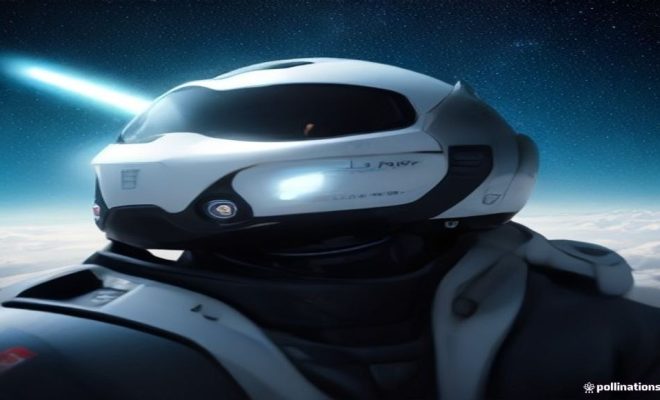
For decades, the image of an astronaut has been one of a highly trained individual, meticulously performing complex experiments in the microgravity environment of space. We’ve seen them on the International Space Station (ISS), carefully manipulating samples, adjusting equipment, and recording data, all while tethered to a wall or floating gracefully through modules. But what if much of that painstaking, repetitive work could be handled by a sophisticated robotic assistant? What if the future of orbital research wasn’t about more astronauts, but smarter automation?
That future might be arriving sooner than you think, and it’s being spearheaded by an unexpected player: Honda. Yes, the same company that brings us reliable cars and powerful motorcycles is now setting its sights on the stars, specifically on developing advanced robotics to support research aboard future commercial space stations. This isn’t just about a fancy robotic arm; it’s about a fundamental shift in how we conduct science off-world, promising to revolutionize everything from drug discovery to materials science in space.
The implications are profound. Imagine astronauts freed from the drudgery of routine lab tasks, able to focus their invaluable time and expertise on higher-level problem-solving, analysis, and unexpected discoveries. This collaboration between Honda and Redwire isn’t just a technological leap; it’s an economic one, too. By automating experiments and laboratory operations, we’re talking about significantly increasing research capacity while simultaneously driving down the exorbitant operational costs of maintaining a human presence in orbit. This is where Honda robotics space stations come into play, potentially transforming the economics of space exploration.
The Dawn of Commercial Space Stations and the Automation Imperative
The space industry is undergoing a monumental transition. For over two decades, the International Space Station has been humanity’s primary outpost in low Earth orbit, a beacon of international collaboration and scientific discovery. But the ISS has a finite lifespan, with its retirement anticipated around 2030. NASA, recognizing the need for continued access to microgravity research platforms, is pivoting towards a new model: privately owned and operated commercial space stations.
This shift isn’t just about who owns the hardware; it’s about a fundamental change in operational philosophy. Commercial space stations will likely operate with much smaller permanent crews, if any, and often host transient visitors rather than long-term residents. Think of it more like a high-tech orbital research park or even a space hotel, where research ‘tenants’ come and go. In this environment, every minute of an astronaut’s time is incredibly precious and expensive. You can’t afford to have highly trained individuals spending hours pipetting liquids or loading samples into centrifuges. This is precisely why automation isn’t just a nice-to-have; it’s a necessity, an operational imperative that will dictate the viability and efficiency of these new orbital platforms.
The collaboration between Honda and Redwire is perfectly timed to address this evolving landscape. They’re not just building a robot; they’re building a solution to a critical problem in the next era of space exploration. Without robust automation, the promise of expanded, affordable space research on commercial stations might simply remain out of reach. Honda robotics space stations are positioned to be a core enabler of this future.
Honda’s Unexpected Journey to Orbital Robotics
When you hear “Honda,” your mind probably goes straight to cars like the Civic or CR-V, or maybe their legendary motorcycles. You might even think of ASIMO, their famous humanoid robot that could walk, run, and even climb stairs. But space? It might seem like a dramatic departure, yet it’s a logical extension of Honda’s long-standing commitment to advanced robotics and human-machine interaction.
Honda has been investing in robotics research for decades, driven by a philosophy of creating technologies that enhance human capabilities and solve real-world problems. ASIMO, while impressive, was just one visible manifestation of a much broader internal effort. The company has developed sophisticated robotic arms for manufacturing, advanced AI for autonomous driving, and even assistive devices for people with mobility challenges. Their expertise lies not just in building motors and mechanisms, but in developing complex control systems, sensor integration, and user-friendly interfaces.
The multi-fingered robotic hand that Honda is contributing to this space initiative is a testament to this deep expertise. Unlike simple grippers, a multi-fingered hand offers dexterity and manipulation capabilities closer to that of a human hand. This is crucial for handling delicate scientific instruments, intricate experimental setups, and a variety of sample containers in a microgravity environment. It’s a far cry from a robot assembling a car engine; it’s about replicating the nuanced movements and precision required for scientific discovery.
Redwire: The Space Infrastructure Powerhouse
While Honda brings the terrestrial robotics prowess, Redwire Corporation is the seasoned veteran of the space domain. You might not know their name, but if you’ve followed space exploration, you’ve almost certainly seen their technology in action. Redwire is a leading provider of space infrastructure, boasting a diverse portfolio that includes everything from advanced materials manufacturing in orbit to specialized sensors and deployable structures.
Their contributions to this partnership are equally critical. Redwire is bringing its STAARK robotic arm and its proven experiment locker technology to the table. The STAARK arm isn’t just any robotic arm; it’s designed for the rigors of space, with a heritage rooted in decades of in-orbit operations. It provides the reach, strength, and stability needed to position the Honda robotic hand accurately within the confined spaces of a laboratory module. (See: NASA's robotics in space research.)
Even more important is Redwire’s expertise in experiment lockers. These are essentially self-contained, standardized modules that house various scientific experiments. They provide power, data interfaces, thermal control, and often microgravity isolation. The genius of integrating the Honda robotic hand with Redwire’s STAARK arm and experiment locker technology is that it creates a truly integrated, end-to-end system for in-orbit research. It’s not just a robot; it’s an automated lab assistant capable of operating within existing and future space station infrastructure. This synergy is what makes the Honda robotics space stations initiative so compelling.
The Integrated System: A Symphony of Precision and Automation
So, what exactly does this integrated system look like in action? Imagine a researcher on Earth designing an experiment to test a new drug compound’s crystal growth in microgravity. Instead of painstakingly training an astronaut for weeks or months to perform the task, they can upload the experimental protocol to the commercial space station’s automated lab. For more context, see Honda's Astonishing Breakthrough in Technology.
The Redwire STAARK robotic arm would extend, its multi-jointed structure precisely positioning the Honda multi-fingered hand. The hand, with its human-like dexterity, would then carefully retrieve the necessary reagents and equipment from a Redwire experiment locker. It might open a vial, pipette a precise volume of liquid into a reaction chamber, or insert a sample into a microscope. All of this would be done with a level of precision and repeatability that even the most skilled human astronaut might struggle to maintain over long durations, especially under the stresses of orbital life.
Once the experiment is initiated, the system would monitor parameters, collect data, and even perform subsequent steps like sample analysis or preparation for return to Earth. This means an entire sequence of complex scientific procedures could be carried out autonomously, around the clock, without direct human intervention. This continuous operation could drastically accelerate research timelines and maximize the utilization of valuable orbital resources. The integrated system promises a future where Honda robotics space stations aren’t just a concept, but a fully operational reality, enabling unprecedented scientific output.
Maximizing Astronaut Time and Research Capacity
One of the most significant benefits of this type of automation is the liberation of astronaut time. Astronauts are the ultimate multi-tool, capable of performing everything from complex repairs to intricate scientific work. But their time in orbit is incredibly expensive – estimates for astronaut time on the ISS can run into the tens of thousands of dollars per hour, if not more, considering all the support infrastructure. Every minute they spend on routine, repetitive tasks is a minute lost for more critical activities.
By offloading mundane laboratory operations to robotic systems, astronauts can redirect their focus. They can spend more time on complex troubleshooting, interpreting unexpected results, performing nuanced observations that robots can’t yet replicate, or even engaging in critical maintenance and operational tasks for the station itself. This doesn’t just make their lives easier; it makes the entire space mission more productive and cost-effective.
Furthermore, automation significantly increases research capacity. A human crew can only perform so many experiments within a given timeframe. Robots, however, can work tirelessly, 24/7, without needing sleep, food, or breaks. This means more experiments can be run concurrently, more data can be collected, and the overall throughput of scientific discovery can be dramatically amplified. Imagine the implications for pharmaceutical research, where rapidly testing thousands of compounds in microgravity could lead to breakthroughs in drug development far faster than current methods allow. The impact of Honda robotics space stations on scientific throughput is truly staggering.
Economic Implications: Lowering the Cost of Orbital Science
Space is expensive. There’s no getting around that. Launching anything into orbit costs thousands of dollars per pound, and maintaining a human presence in space involves a vast logistical and life-support infrastructure. Historically, these costs have been a major barrier to entry for many researchers and commercial entities who could benefit from microgravity environments.
The Honda-Redwire collaboration offers a compelling pathway to significantly reduce operational costs. If fewer astronauts are needed for routine tasks, the overall crew size on a commercial space station can be smaller, which directly translates to lower life support, consumables, and transportation costs. Moreover, the ability to run experiments continuously and autonomously means that researchers are getting more value for their investment in orbital access. A single robot working around the clock can potentially achieve the output of several human-hours of labor, but at a fraction of the cost once the initial capital expenditure is amortized.
This economic efficiency is crucial for attracting a broader range of commercial customers to future space stations. Smaller businesses, academic institutions, and even individual entrepreneurs who previously found space research prohibitively expensive might now find it within reach. This democratization of space access, fueled by intelligent automation, could unlock an entirely new ecosystem of innovation and economic activity in low Earth orbit. The economic benefits of Honda robotics space stations are poised to be transformative for the entire space industry.
Beyond the Lab: Future Applications of Honda Robotics in Space
While the initial focus is on automating laboratory tasks within commercial space stations, the technology developed through this Honda-Redwire partnership has far broader implications for future space exploration. Think about what a dexterous, human-like robotic hand combined with a robust space-rated arm could accomplish:
- In-orbit Servicing and Assembly: Robots could repair satellites, refuel spacecraft, or even assemble large structures in space, reducing the need for risky and expensive spacewalks by astronauts.
- Lunar and Martian Surface Operations: Imagine these robots deploying scientific instruments, collecting geological samples, or maintaining habitats on the Moon or Mars, acting as tireless pioneers ahead of human explorers, or as invaluable assistants alongside them.
- Disaster Response and Inspection: Autonomous robots could inspect damaged spacecraft, assess hazardous situations, or perform search and rescue operations in the event of an anomaly, where human intervention might be too dangerous.
- Manufacturing in Space: Precision manipulation is key for advanced manufacturing processes in microgravity, from 3D printing complex components to growing specialized materials. These robots could be the factory workers of orbital industries.
The capabilities being honed for laboratory automation are foundational for these and many other applications. Honda’s long-term vision in robotics, combined with Redwire’s deep space heritage, suggests that this is just the beginning of their orbital journey. The development of Honda robotics space stations is a stepping stone to a much larger robotic presence in space.
The Competitive Landscape and Broader Impact
Honda and Redwire aren’t the only players in the burgeoning field of space robotics. Companies like Intuitive Machines, Maxar Technologies, and even agencies like NASA and ESA are heavily invested in developing robotic systems for various space applications. However, the specific focus on highly dexterous, human-like manipulation for in-orbit laboratory automation, coupled with the brand recognition and terrestrial robotics expertise of Honda, gives this partnership a unique edge. (See: Scientific advancements in space automation.)
This initiative also highlights a broader trend: the increasing convergence of terrestrial and space technologies. Innovations developed for automotive manufacturing or medical robotics on Earth are finding new applications in the harsh environment of space, and vice-versa. This cross-pollination of ideas and technologies accelerates progress across multiple sectors. Furthermore, the success of autonomous labs in space could have a ripple effect on terrestrial research, pushing the boundaries of automation and AI in labs here on Earth.
The impact extends to investment opportunities as well. Companies like Redwire, at the forefront of this space infrastructure development, become attractive targets for investors looking to capitalize on the growth of the commercial space economy. And for Honda, it’s a bold move that cements their reputation as a forward-thinking technology company, not just an automaker, opening new revenue streams and reinforcing their innovation legacy. For more context, see Minneapolis Mayor Vetoes Human-Monitor Requirement for Robotaxis.
The Human Element: What Does This Mean for Astronauts?
It’s natural to wonder if advanced robotics might eventually diminish the role of human astronauts. Will commercial space stations become fully automated, robot-run facilities? While the idea of completely autonomous orbital outposts might appeal to some for cost reasons, the reality is far more nuanced, at least for the foreseeable future.
Robots excel at repetitive, predictable tasks. They can perform them with tireless precision and repeatability. But humans bring something irreplaceable to the equation: adaptability, intuition, critical thinking, and the ability to handle unexpected anomalies. When an experiment yields an unforeseen result, or a piece of equipment malfunctions in a novel way, a human astronaut’s ability to observe, diagnose, and improvise is invaluable. They can spot the “aha!” moment that a robot, following pre-programmed instructions, might miss.
Instead of replacing astronauts, these Honda robotics space stations solutions are designed to augment them. They free up astronauts to be more like lead scientists or mission commanders, overseeing the robotic workforce, focusing on the higher-level intellectual challenges, and intervening only when truly necessary. This symbiotic relationship, where humans and robots collaborate, represents the most effective and efficient path forward for long-duration space exploration and research. It allows us to leverage the strengths of both, pushing the boundaries of what’s possible in the final frontier.
The Regulatory and Ethical Considerations of Advanced Space Robotics
As we see increasingly capable robots operating in space, it’s important to think about the rules and ethical frameworks that need to keep pace. Who is responsible if a robotic arm malfunctions and damages expensive equipment or, worse, injures an astronaut? What are the protocols for cybersecurity to protect these autonomous systems from malicious interference? These aren’t just theoretical questions; they’re practical challenges that need addressing as Honda robotics space stations become a reality.
International space law, primarily based on the Outer Space Treaty of 1967, assigns liability for space activities to the launching state. But with commercial entities, complex partnerships like Honda and Redwire, and potentially multiple nations involved in commercial space stations, the lines can get blurry. Clear contracts and international agreements will be essential to define responsibilities for development, operation, and any potential mishaps. We’ll likely see new regulatory bodies or amendments to existing ones to specifically address the unique challenges of highly autonomous, multi-national robotic operations in orbit.
Then there’s the ethical side. While these robots are tools, they are sophisticated ones. Ensuring their design prioritizes safety, transparency, and accountability is paramount. For example, systems need robust safeguards to prevent unintended movements or actions. There also needs to be a clear “human in the loop” or “human on the loop” philosophy, meaning humans retain ultimate oversight and the ability to intervene or override autonomous actions. This ensures that even the most advanced Honda robotics space stations remain servants to human exploration, not masters.
Challenges and the Road Ahead for Honda Robotics in Space
While the vision for Honda robotics space stations is exciting, the journey isn’t without its hurdles. The space environment itself presents immense engineering challenges. Radiation, extreme temperature fluctuations, and the vacuum of space demand materials and components that can withstand these harsh conditions for extended periods without degradation. Miniaturization and power efficiency are also critical, as every gram and every watt launched into orbit is precious.
Another challenge is the development of truly robust artificial intelligence and machine learning algorithms that can operate autonomously for long durations without constant human oversight. These systems need to be capable of self-diagnosis, fault tolerance, and even a degree of self-repair or adaptive behavior when encountering unforeseen circumstances. Training these AI models with sufficient data from microgravity environments is a new frontier in itself.
Finally, there’s the economic hurdle of initial investment. Developing and launching these advanced robotic systems is expensive. While the long-term cost savings are clear, securing the initial funding and demonstrating a viable return on investment for commercial space station operators will be crucial for widespread adoption. The collaboration with Redwire helps mitigate some of these risks by combining established space infrastructure with Honda’s robotics R&D budget, but continued investment will be key to making Honda robotics space stations ubiquitous. (See: BBC coverage on space exploration technology.)
FAQ: Honda Robotics and Space Stations
Q1: What exactly is Honda contributing to space stations?
Honda is primarily contributing its expertise in advanced robotics, specifically developing a highly dexterous, multi-fingered robotic hand. This hand is designed to replicate the fine manipulation capabilities of a human hand, allowing it to perform intricate scientific tasks within a microgravity lab environment.
Q2: How does Redwire fit into this partnership?
Redwire brings its extensive experience in space infrastructure. They are providing their STAARK robotic arm, which is robust and space-rated, to serve as the primary manipulator for the Honda hand. Redwire also integrates this system with their proven experiment locker technology, creating a complete automated laboratory solution.
Q3: Will robots replace astronauts on commercial space stations?
No, not entirely. The goal is not to replace astronauts but to augment them. Robots will handle routine, repetitive, and time-consuming tasks, freeing up astronauts to focus on higher-level scientific analysis, troubleshooting, critical decision-making, and tasks that require human intuition and adaptability.
Q4: What kind of research will these Honda robotics space stations enable?
These automated labs will dramatically increase the capacity for microgravity research across various fields. This includes drug discovery (e.g., crystal growth of proteins), advanced materials science, fluid dynamics, and biological experiments, all conducted with higher precision and continuity than current methods.
Q5: What are the main benefits of using robotics for space station operations?
The key benefits include significant cost reduction by minimizing the need for constant human presence for routine tasks, increased research capacity through continuous 24/7 operation, enhanced precision and repeatability of experiments, and freeing up invaluable astronaut time for more complex, high-value activities.
Q6: Are there any ethical or regulatory concerns with advanced space robotics?
Yes, absolutely. As these robots become more autonomous, questions arise regarding liability in case of malfunctions, cybersecurity to prevent hacking, and ensuring clear ethical guidelines for their operation. New international agreements and regulations will likely be needed to address these complexities.
Q7: What’s next for Honda’s involvement in space robotics?
While the initial focus is on in-orbit laboratory automation, the underlying technology has broader applications. Future possibilities include robotic assistance for in-orbit servicing and assembly of spacecraft, exploration and maintenance on lunar and Martian surfaces, and even advanced manufacturing processes in space. This partnership is just the beginning.
The future of space exploration is undoubtedly robotic, but it’s also deeply human. Honda’s bold move into orbital robotics with Redwire isn’t just about building a better robot; it’s about building a better future for science in space, one where human ingenuity is amplified by tireless, intelligent machines, paving the way for discoveries we can only begin to imagine.
Trending Now
Frequently Asked Questions
What is Honda's plan for autonomous space labs?
Honda is developing advanced robotics to support research aboard future commercial space stations. This initiative aims to automate routine laboratory tasks, allowing astronauts to focus on higher-level scientific problem-solving and discoveries.
How will automation change space research?
Automation in space research will significantly increase research capacity and reduce operational costs. By using robotic assistants, astronauts can delegate repetitive tasks, leading to more efficient and effective scientific exploration in microgravity environments.
What role does Redwire play in Honda's space initiative?
Redwire is collaborating with Honda in the development of robotic systems for commercial space stations. This partnership aims to enhance the capabilities of space research by integrating advanced automation technologies.
What are the benefits of using robotics in space exploration?
Using robotics in space exploration can free astronauts from mundane tasks, enhance research efficiency, and lower the costs associated with maintaining human presence in orbit, ultimately revolutionizing the economics of space science.
Why is Honda entering the space industry?
Honda is entering the space industry to leverage its expertise in robotics and automation. The company aims to transform how scientific research is conducted in space, focusing on improving efficiency and reducing costs while supporting future commercial space endeavors.
Have you experienced this yourself? We'd love to hear your story in the comments.