Aignosis’ Rs 4 Crore Seed Funding: Why This Startup Could Revolutionize Autism Diagnosis
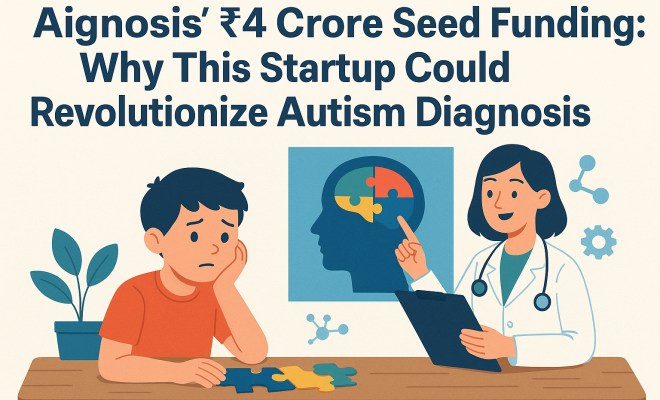
The landscape of healthcare innovation is perpetually shifting, but every now and then, a development emerges that truly captures attention – not just for its technological prowess, but for its profound human impact. Such is the case with Aignosis, a Jaipur-based healthtech startup that recently secured a significant Rs 4 crore in a seed funding round. This isn’t just another funding announcement; it’s a beacon of hope for countless families grappling with the complex journey of autism diagnosis. The investment, backed by notable names like Antler, Nikhil Kamath, and a syndicate of angel investors, marks a pivotal moment for Aignosis as it aims to scale its AI-assisted autism screening technology across India. The news, breaking on October 1, 2026, has already ignited considerable discussion, and for good reason: applying artificial intelligence to such a sensitive and emotionally charged area like autism diagnosis is both a bold stride forward and a potent catalyst for debate.
It’s easy to get lost in the numbers of a funding round, but with Aignosis, the real story lies in the ‘what’ and ‘why.’ The ‘what’ is an AI-powered tool designed to screen for autism. The ‘why’ is a deeply personal and often agonizing struggle faced by families worldwide: the long wait times, the subjective nature of traditional diagnostic methods, and the critical importance of early intervention. This isn’t just about streamlining a process; it’s about potentially reshaping lives by offering earlier clarity and opening doors to timely support. The very notion of AI stepping into pediatric health, particularly for a developmental condition like autism, raises fascinating questions about accuracy, accessibility, and, inevitably, the ethical considerations that accompany such powerful technology. Understanding the implications of this Aignosis seed funding means looking beyond the financial transaction and into the heart of healthcare’s future.
The Critical Need for Early Autism Screening
To truly appreciate the potential impact of Aignosis’s technology, we need to understand the current reality of autism diagnosis. Autism Spectrum Disorder (ASD) is a complex neurodevelopmental condition that manifests differently in each individual. Its signs can appear as early as 18-24 months of age, yet the average age of diagnosis often hovers around four years old, and sometimes much later. This delay is not merely inconvenient; it’s a significant barrier to effective intervention. Research consistently shows that early intervention, particularly before the age of three, can dramatically improve outcomes for children with ASD, enhancing their communication, social skills, and overall quality of life. The brain is most plastic during these formative years, making it a critical window for therapeutic input.
The reasons for these diagnostic delays are multifaceted. They include a lack of awareness among parents and primary care physicians, the subjective nature of current screening tools, and, crucially, a severe shortage of trained specialists. Many regions, especially in countries like India, have limited access to developmental pediatricians, child psychologists, and speech therapists who are equipped to conduct comprehensive autism evaluations. This bottleneck means families often face months, even years, on waiting lists, enduring a period of uncertainty that is incredibly stressful. Imagine being a parent, noticing something different in your child, and then having to wait indefinitely for answers. It’s a heartbreaking situation, and it underscores the profound need for innovative solutions that can bridge this gap and provide earlier, more accessible screening options.
Aignosis’s AI-Assisted Approach: How it Works
So, what exactly is Aignosis bringing to the table? While specific technical details are often proprietary, the core idea revolves around leveraging artificial intelligence to analyze various indicators that might suggest the presence of ASD. Traditional screening involves behavioral observations, parent questionnaires, and developmental assessments. Aignosis’s AI likely processes a wealth of data points, potentially including analysis of a child’s eye gaze patterns, vocalizations, movements, and responses to specific stimuli. Think of it as a highly sophisticated pattern recognition system, trained on vast datasets of both neurotypical and autistic children, learning to identify subtle cues that human observers might miss or that require extensive training to detect reliably.
The beauty of an AI system lies in its ability to process information rapidly and consistently, removing some of the inherent variability that can occur with human observation. It’s not about replacing specialists entirely, but rather augmenting their capabilities and providing a powerful pre-screening tool. This technology could allow for earlier identification of children who warrant further, more comprehensive evaluation by an expert. By flagging potential cases earlier, Aignosis aims to significantly shorten the diagnostic journey, allowing families to move from suspicion to confirmed diagnosis and, most importantly, to intervention much faster. This accelerated pathway could be a game-changer for families in underserved areas where specialist access is a luxury.
The Players Behind the Aignosis Seed Funding Round
The success of any startup often hinges on the quality of its early backers, and the Aignosis seed funding round features some significant names. Antler, a global early-stage VC firm, is known for identifying and investing in promising founders and disruptive technologies. Their involvement suggests a strong belief in Aignosis’s vision and its potential to scale. Antler’s model often includes active involvement in portfolio companies, providing not just capital but also strategic guidance and access to a global network. This kind of institutional backing is crucial for a healthtech startup navigating complex regulatory landscapes and seeking to integrate into established healthcare systems.
Then there’s Nikhil Kamath, a prominent figure in India’s startup ecosystem, known for his keen eye for innovative ventures. His personal investment, alongside other angel investors, adds another layer of validation. Angel investors often bring more than just capital; they bring entrepreneurial experience, mentorship, and connections that can be invaluable in the nascent stages of a company. The combination of institutional VC and strategic angel investment provides a robust financial and advisory foundation for Aignosis, giving them the runway and expertise needed to develop and deploy their technology effectively across India’s diverse healthcare ecosystem. Their faith in Aignosis speaks volumes about the perceived market opportunity and the viability of their AI solution.
Expanding Across India’s Healthcare Ecosystem
The immediate goal for Aignosis, following this successful Rs 4 crore seed funding, is to expand its presence across India’s vast and varied healthcare ecosystem. This isn’t a small feat. India presents a unique set of challenges and opportunities: a massive population, significant disparities in healthcare access between urban and rural areas, and a healthcare system that is a mix of public and private providers. For Aignosis, expansion means more than just distributing software; it means integrating their AI tool into existing clinical workflows, training healthcare professionals, and building trust within medical communities.
One key strategy will likely involve partnerships with pediatric clinics, hospitals, and community health centers. By demonstrating the efficacy and ease of use of their screening technology, Aignosis can gradually build a network that extends its reach. The company’s focus on India is particularly poignant, given the immense burden of undiagnosed and undertreated developmental conditions in the country. If Aignosis can successfully implement its solution on a wide scale, it has the potential to become a cornerstone of early childhood development screening, moving India closer to a future where every child has the opportunity for timely diagnosis and intervention, regardless of their geographical location or socioeconomic status. (See: World Health Organization on autism spectrum disorders.)
The Surprising and Controversial Nature of AI in Autism Diagnosis
The application of AI in autism screening is, without a doubt, a surprising development for many, and it naturally sparks a degree of controversy. On one hand, the promise is immense: objective, rapid, and scalable screening that could dramatically reduce diagnostic delays. On the other hand, the very idea of an algorithm making initial judgments about a child’s developmental trajectory can feel unsettling. Autism is not a simple condition with a clear-cut biomarker; it’s a spectrum defined by behavioral patterns and developmental differences. Can an AI truly capture the nuances?
Critics often raise concerns about accuracy, false positives, and false negatives. A misdiagnosis, whether positive or negative, can have profound emotional and practical consequences for families. There are also ethical questions: Who is ultimately responsible if an AI makes an error? How do we ensure algorithmic bias doesn’t creep in, potentially disadvantaging certain demographics? These aren’t trivial concerns. They highlight the necessity for rigorous validation, transparency in AI models, and, crucially, the understanding that AI should serve as a tool to assist human experts, not replace them. The discussions sparked by Aignosis’s approach are vital for shaping the responsible development and deployment of such powerful technologies in healthcare. For more context, see AI-assisted technology in healthcare.
Addressing Accuracy and Accessibility Concerns
The core of the debate around AI in autism screening often boils down to accuracy and accessibility. For Aignosis to gain widespread acceptance, its technology must demonstrate extremely high levels of sensitivity (correctly identifying those with autism) and specificity (correctly identifying those without autism). The source material notes ‘successful development and validation,’ which is a positive sign, but ongoing, real-world studies will be crucial. This isn’t a one-time validation; it’s a continuous process of refinement and verification as the AI encounters more diverse populations and varied presentations of ASD.
Accessibility is another critical factor. While AI promises to democratize screening, its implementation requires infrastructure. Will the technology be affordable for clinics in rural areas? How will connectivity issues be addressed? Will the interfaces be user-friendly for healthcare workers with varying levels of tech literacy? Aignosis will need to develop a robust deployment strategy that considers these practical challenges. This could involve cloud-based solutions, simplified hardware requirements, and comprehensive training programs. The true test of their innovation will be its ability to reach and benefit the most vulnerable populations, those who currently lack access to specialized diagnostic services.
The Broader Implications for Pediatric Health and AI Ethics
The implications of Aignosis’s work extend far beyond autism screening. This startup is at the forefront of a larger movement to integrate AI into pediatric health, a field ripe for innovation. Imagine AI-assisted tools for screening other developmental delays, learning disabilities, or even early signs of chronic conditions. The potential is vast. However, with this potential comes a heightened responsibility to consider the ethical frameworks that must guide such advancements. We’re talking about children, a particularly vulnerable population, and decisions that can shape their entire lives.
Ethical considerations must include data privacy and security – how will Aignosis protect sensitive patient information? There’s also the question of informed consent, especially when dealing with minors. Beyond that, what are the psychological impacts of an AI-driven diagnosis on parents and children? It’s not just about the cold data; it’s about the human experience surrounding a diagnosis. As AI becomes more sophisticated, these ethical discussions will only grow in importance, demanding collaboration between technologists, clinicians, ethicists, and policymakers to ensure that innovation serves humanity responsibly.
Commercial Opportunities and Affiliate Potential
From a business perspective, the realm of autism diagnosis and intervention is a high-CPC (Cost Per Click) niche, making it incredibly attractive for investors and affiliate marketers alike. Searches for terms like ‘autism screening cost,’ ‘AI in pediatric health reviews,’ and ‘insurance for autism diagnosis’ indicate a strong commercial intent. Families seeking diagnosis are often simultaneously looking for financial support, treatment options, and educational resources. This creates a rich ecosystem for affiliate marketing, where diagnostic tools, therapy services, educational programs, and even legal services related to securing support can be promoted.
Aignosis, while primarily a B2B play selling its screening technology to healthcare providers, indirectly fuels this commercial activity. By increasing the rate of early diagnosis, they expand the market for downstream services. This also means that as Aignosis scales, it will attract further attention from companies in related sectors, potentially leading to strategic partnerships or even acquisitions down the line. The intersection of a critical healthcare need, innovative technology, and significant commercial interest positions Aignosis, and the broader field of AI in pediatric health, as a compelling space for continued investment and entrepreneurial activity.
The Path Forward for Aignosis and the Future of Early Intervention
The Rs 4 crore Aignosis seed funding is a strong start, but it’s just that: a start. The path forward will require continued innovation, rigorous testing, and strategic partnerships. Aignosis will need to navigate regulatory approvals, educate the medical community, and, most importantly, continuously refine its AI models to ensure the highest levels of accuracy and reliability. Their success will not just be measured in financial returns, but in the number of children who receive earlier diagnoses and, consequently, earlier access to life-changing interventions.
Looking ahead, the work of companies like Aignosis could fundamentally alter the landscape of early intervention for developmental conditions. Imagine a world where screening for autism and other conditions is as routine and accessible as vision or hearing tests. Where families no longer face agonizing waits, and every child has the opportunity to unlock their full potential. It’s an ambitious vision, but one that AI, responsibly developed and deployed, has the power to bring closer to reality. Aignosis is not just building a product; they are contributing to a future where technology empowers better health outcomes for the youngest and most vulnerable among us.
Expert Perspectives on AI in Early Childhood Development
To truly grasp the significance of Aignosis’s venture, it’s helpful to consider the views of experts in both AI and pediatric development. Dr. Anya Sharma, a leading developmental pediatrician, often emphasizes that “AI isn’t here to replace the human touch; it’s here to extend its reach.” She points out that the sheer volume of children needing assessment far outstrips the number of available specialists, especially in developing nations. Tools like Aignosis’s AI can act as a crucial first filter, allowing specialists to dedicate their precious time to complex cases and comprehensive evaluations, rather than initial screenings. This efficiency gain isn’t just administrative; it’s about getting more children into the diagnostic pipeline faster. (See: CDC resources on autism diagnosis.)
On the AI front, Dr. Vikram Singh, an AI ethics researcher, highlights the importance of transparent and explainable AI in sensitive fields like healthcare. “For an AI tool in autism screening, we need to understand not just ‘what’ it predicts, but ‘why’ it predicts it,” he states. This means Aignosis will likely need to provide clinicians with insights into the AI’s reasoning, rather than just a binary “yes/no” output. This level of transparency builds trust, allows clinicians to critically evaluate the AI’s suggestions, and helps identify potential biases in the training data. The collaborative model, where AI assists human experts, is widely considered the most responsible and effective approach for such applications.
Global Context: India’s Unique Challenges and Opportunities
While the need for early autism screening is universal, India presents a particularly compelling case for Aignosis’s technology. India’s population of over 1.4 billion people means a substantial number of children are born each year, and a certain percentage will be on the autism spectrum. Statistics from the Indian Council of Medical Research suggest that the prevalence of ASD in India is around 1 in 100 children, potentially impacting millions of families. However, diagnostic infrastructure is severely lacking, particularly outside major metropolitan areas. Many rural communities have virtually no access to developmental specialists. For more context, see AI upskilling and its impact on industries.
This geographical disparity, coupled with social stigma and a general lack of awareness, often leads to diagnoses occurring much later in India compared to Western countries. Aignosis’s ability to offer a scalable, potentially lower-cost screening solution could dramatically shift this paradigm. By leveraging existing primary healthcare networks and possibly even mobile health units, their AI could reach communities that have historically been underserved. The government’s push for digital healthcare initiatives also provides a fertile ground for Aignosis to integrate its technology into national health programs, amplifying its potential impact exponentially across the subcontinent.
The Evolution of AI in Healthcare: Beyond Screening
The Aignosis seed funding and its focus on screening is a fantastic starting point, but it’s important to recognize that AI’s role in autism and pediatric health is rapidly evolving beyond just initial identification. We’re seeing research into AI for personalized therapy recommendations, where algorithms analyze a child’s unique responses to different interventions to suggest the most effective approach. Imagine an AI that could help tailor a child’s educational plan based on their specific learning style and sensory sensitivities, or even predict which therapies might yield the best results for a particular individual.
Furthermore, AI is being explored for monitoring progress during intervention, providing objective data on a child’s development over time. This could involve tracking eye gaze, speech patterns, or motor skills to quantify improvements that might be subtle to human observation. The goal isn’t to replace therapists or educators, but to equip them with more precise, data-driven insights, allowing for more adaptive and effective interventions. Aignosis, by establishing itself as a leader in AI-assisted screening, could be perfectly positioned to expand into these adjacent areas as its technology matures and gains wider acceptance.
Addressing Data Privacy and Security in Pediatric AI
A critical consideration for any healthtech company, especially one dealing with sensitive pediatric data, is data privacy and security. The trust of parents and healthcare providers hinges on the assurance that their children’s information is protected. For Aignosis, this means adhering to stringent data protection regulations, both domestic (like India’s upcoming Personal Data Protection Bill) and international standards. Implementing robust encryption protocols, secure data storage, and strict access controls will be paramount.
Beyond technical measures, Aignosis will need to be transparent about its data handling policies. This includes clearly communicating how data is collected, stored, used for AI model training, and anonymized. Parents need to understand that while their child’s data contributes to improving the AI’s accuracy for future generations, their individual information remains confidential and secure. Building this trust is a long-term endeavor, requiring consistent communication, adherence to best practices, and a proactive approach to potential cybersecurity threats. Any misstep here could severely undermine public confidence and hinder adoption, regardless of the technology’s effectiveness.
Frequently Asked Questions about Aignosis and AI in Autism Screening
What is Aignosis?
Aignosis is a healthtech startup based in Jaipur, India, that is developing AI-assisted technology for early autism screening. Their goal is to significantly reduce the diagnostic delays for Autism Spectrum Disorder (ASD) by providing a more accessible and efficient pre-screening tool.
What does the Rs 4 crore seed funding mean for Aignosis?
This significant seed funding, backed by investors like Antler and Nikhil Kamath, provides Aignosis with the capital needed to scale its AI-powered screening technology across India. It allows them to further develop their product, expand their team, navigate regulatory processes, and establish partnerships with healthcare providers.
How does Aignosis’s AI-assisted screening work?
While specific technical details are proprietary, Aignosis’s AI likely analyzes various data points from a child, such as eye gaze patterns, vocalizations, movements, and responses to stimuli. It’s trained on vast datasets to identify subtle behavioral cues that may indicate the presence of ASD, acting as a sophisticated pattern recognition system. For more context, see future-proof careers in the age of AI. (See: NIH information on autism diagnosis.)
Will Aignosis’s technology replace human specialists for autism diagnosis?
No, the technology is designed to assist and augment human specialists, not replace them. It serves as a powerful pre-screening tool to identify children who would benefit from a comprehensive evaluation by a developmental pediatrician, child psychologist, or other qualified expert. The final diagnosis will still be made by a human clinician.
Why is early autism screening so important?
Early intervention, especially before the age of three, has been shown to dramatically improve outcomes for children with ASD. It can enhance communication, social skills, and overall quality of life by leveraging the brain’s plasticity during formative years. Delays in diagnosis mean delays in accessing these critical interventions. This builds on assistive tech for autism.
What are the main challenges for Aignosis in expanding across India?
Aignosis faces challenges such as navigating India’s diverse healthcare ecosystem, bridging the gap between urban and rural healthcare access, ensuring the technology is affordable and user-friendly, and building trust within medical communities regarding AI’s role in diagnosis. Regulatory approvals and continuous refinement of their AI models are also key considerations.
What are the ethical concerns surrounding AI in autism diagnosis?
Ethical concerns include ensuring the AI’s accuracy to avoid false positives or negatives, addressing potential algorithmic bias against certain demographics, ensuring data privacy and security for sensitive pediatric information, obtaining informed consent, and understanding the psychological impact of AI-driven initial assessments on families.
Who are the key investors in the Aignosis seed funding round?
The seed funding round saw investment from Antler, a global early-stage VC firm, and Nikhil Kamath, a prominent Indian investor, alongside a syndicate of other angel investors.
How will Aignosis address accuracy and accessibility?
Accuracy will be addressed through rigorous validation, ongoing real-world studies, and continuous refinement of their AI models. Accessibility will involve developing affordable solutions, simplifying hardware requirements, potentially using cloud-based systems, and implementing comprehensive training programs for healthcare workers, especially in underserved regions.
What are the broader implications of Aignosis’s work for pediatric health?
Aignosis is at the forefront of integrating AI into pediatric health, opening doors for similar AI-assisted tools for screening other developmental delays, learning disabilities, or early signs of chronic conditions. Their success could pave the way for a future where early childhood development screening is routine and universally accessible, improving health outcomes for many children.
Trending Now
- our breakdown of 100 best monday.com integrations
- this guide on 100 best github actions
- The Astonishing Truth: Why You Need to Rethink How Teens Invest
- our breakdown of this is how kids are quietly becoming investing geniuses
- this guide on 7 incredible investing apps for kids that could make your child a future millionaire
Frequently Asked Questions
What is Aignosis and what do they do?
Aignosis is a Jaipur-based healthtech startup focused on revolutionizing autism diagnosis through an AI-powered screening tool. They recently secured Rs 4 crore in seed funding to scale their technology across India, aiming to provide early and accurate autism assessments for families.
How does AI assist in autism diagnosis?
AI assists in autism diagnosis by analyzing data to identify patterns and indicators of autism more efficiently than traditional methods. This technology aims to reduce wait times and improve the accuracy of screenings, helping families receive timely interventions.
Why is early autism screening important?
Early autism screening is crucial as it allows for timely intervention, which can significantly improve developmental outcomes for children. Identifying autism early helps families access support services sooner, facilitating better management of the condition.
Who funded Aignosis and why is it significant?
Aignosis received Rs 4 crore in seed funding from notable investors including Antler and Nikhil Kamath. This funding is significant as it enables the startup to enhance its AI technology and expand its impact on autism diagnosis across India.
What are the ethical considerations of using AI in healthcare?
The use of AI in healthcare raises ethical considerations such as data privacy, accuracy of diagnostics, and the potential for bias in algorithms. It's essential to ensure that AI tools are developed responsibly to maintain trust and effectiveness in sensitive areas like autism diagnosis.
What's your take on this? Share your thoughts in the comments below — we read every one.