The AI Lawyer Debate: Is LexiBot AI a Game-Changer or a Dangerous Gamble?
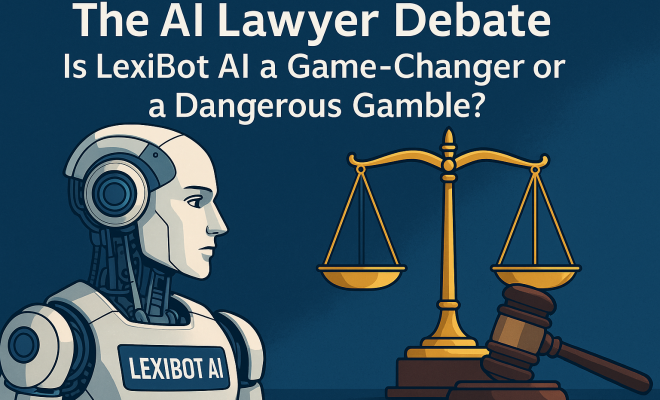
When you’re staring down a small claims dispute, the thought of legal fees can be as daunting as the dispute itself. We’ve all been there, right? That feeling of being caught between a rock and a hard place, knowing you probably have a case but also knowing the traditional legal route might cost more than you stand to gain. This is exactly the gap that LexiBot AI, a new startup, aims to fill, promising affordable, instant legal advice for common issues like contract review and, crucially, small claims. CEO Dr. Anya Sharma even touts an impressive 95% accuracy rate in initial trials, which, if true, could fundamentally change how we approach minor legal skirmishes. But, as you might expect when AI starts stepping into such sensitive territory, the legal community isn’t exactly rolling out the red carpet. Professor David Chen of the National Bar Association’s ethics committee, for one, has ignited a fierce debate over everything from algorithmic transparency to the potential for misinterpretation in complex matters. It’s a classic disruptor-vs-incumbent battle, and it’s going viral for good reason. So, if you’re curious about how to use LexiBot AI for small claims legal advice, and whether it’s truly a viable option, let’s dive into what this platform offers and the controversies swirling around it.
The allure of LexiBot AI is undeniable, especially for those who’ve felt priced out of justice. Imagine getting actionable legal guidance without the hourly rates, the scheduling headaches, or the often-intimidating formality of a law office. For many, this sounds like a dream come true, a democratization of legal access. But, as with any powerful new technology, there’s a flip side. The debate isn’t just about jobs, though that’s certainly a part of it. It’s about the very nature of legal advice, the nuances only a human can grasp, and the ethical responsibilities that come with guiding someone through a legal challenge. Whether LexiBot AI proves to be a revolutionary tool or a cautionary tale remains to be seen, but understanding its capabilities and limitations is key to making an informed decision about its use.
1. Understanding LexiBot AI’s Core Promise: Accessibility and Affordability
At its heart, LexiBot AI is built on the promise of making legal advice accessible and affordable, particularly for common, often straightforward legal issues. Dr. Anya Sharma, the CEO, has been quite vocal about the platform’s mission: to democratize legal services. Think about it – how many times have you or someone you know faced a minor dispute, like a landlord-tenant issue over a security deposit, a disagreement with a contractor, or a claim for damaged property, and simply given up because hiring a lawyer seemed too expensive or complicated? LexiBot AI aims to eliminate that barrier.
The platform’s design seems to prioritize ease of use, allowing individuals without any legal background to input their situation and receive guidance. This isn’t about replacing lawyers entirely, at least not yet. Instead, it’s positioned as a first line of defense, a way to understand your basic rights and options before potentially escalating to more traditional legal channels. The appeal here is massive, especially for small businesses and individuals who operate on tight budgets and can’t afford to consult a lawyer for every minor legal hiccup.
2. Getting Started: Account Creation and Initial Setup
To begin your journey with LexiBot AI, you’ll first need to create an account. This is typically a straightforward process, much like signing up for any other online service. You’ll likely provide an email address, create a password, and agree to the platform’s terms of service and privacy policy. It’s crucial here to actually read those terms, especially concerning data privacy and the limitations of the AI’s advice. Remember, you’re entrusting a machine with potentially sensitive information.
Once your account is active, the platform will guide you through an initial setup. This might involve selecting the type of legal issue you’re facing – in our case, small claims – and perhaps answering a few preliminary questions to help the AI categorize your needs. This initial phase is designed to tailor your experience and ensure the advice you receive is relevant to your specific situation. Don’t rush this part; accurate input at the beginning can significantly impact the quality of the advice you get.
3. Navigating the Small Claims Module: How to Use LexiBot AI for Small Claims Legal Advice
The core of using LexiBot AI for small claims legal advice lies within its dedicated small claims module. Once you select this option, you’ll be prompted to provide details about your dispute. Think of it as an interactive questionnaire, but with an AI on the other end. You’ll need to articulate who the parties involved are, what the dispute is about, the amount of money or property at stake, and a timeline of events.
The platform’s user interface is designed to be intuitive, guiding you step-by-step. You’ll likely encounter fields for specific information, drop-down menus for common scenarios, and perhaps even options to upload supporting documents like contracts, emails, or photographs. The more precise and comprehensive your input, the better the AI can analyze your situation. Remember, the AI can only work with the information you provide, so holding back details or being vague will only lead to less effective advice.
4. Inputting Your Case Details: The Art of Specificity
This is where the rubber meets the road. When inputting your case details, specificity is your best friend. Don’t just say, “My landlord kept my deposit.” Instead, provide the exact date you moved out, the amount of the deposit, the date you requested its return, and any correspondence you’ve had with your landlord. Detail any damages claimed by the landlord and whether you dispute them.
Think like a lawyer building a case: what are the facts? What evidence do you have? Who said what, when, and where? LexiBot AI’s algorithms are built to process structured data, so breaking down your narrative into discrete, factual points will yield much better results. If there are ambiguities, the platform might ask clarifying questions, but it’s always better to be proactive in providing a clear, concise, and complete picture of your small claims dispute. (See: AI in the legal profession.)
5. Interpreting LexiBot’s Advice: Critical Thinking is Key
After processing your information, LexiBot AI will generate legal advice tailored to your input. This advice might include an assessment of the strength of your case, potential legal strategies, relevant laws or regulations, and steps you can take, such as sending a demand letter or filing a claim in small claims court. The key here is not to treat this advice as infallible scripture. Remember Professor David Chen’s concerns about potential misinterpretation? He’s got a point. For more context, see AI in legal advice.
You need to engage in critical thinking. Does the advice make sense given everything you know? Does it align with common sense? If the advice seems too good to be true, or if it contradicts something you strongly believe to be true, it’s worth a second look. The 95% accuracy rate Dr. Sharma claims is impressive, but that still leaves 5% where it might be off. In legal matters, even a small error can have significant consequences. Use the advice as a starting point, a well-informed guide, but not as the final word on your legal strategy.
6. Understanding the Limitations of AI Legal Guidance
This is perhaps the most crucial point in our discussion about how to use LexiBot AI for small claims legal advice. While LexiBot AI can be incredibly helpful for straightforward cases, it has inherent limitations. AI lacks the human empathy, intuition, and ability to read between the lines that a seasoned lawyer possesses. It can’t assess the credibility of witnesses in the same way, nor can it truly understand the emotional toll a dispute might be taking on you.
Complex legal matters, those with intricate factual patterns, multiple jurisdictions, or significant sums of money, often require the nuanced judgment of a human professional. AI also can’t represent you in court, negotiate on your behalf, or adapt to unforeseen circumstances during a hearing. It’s a tool for information and strategy, not a replacement for full legal representation. Be acutely aware of these boundaries, and don’t push the AI beyond its capabilities.
7. Algorithmic Transparency and Ethical Concerns
The debate surrounding LexiBot AI’s algorithmic transparency is not just academic; it has real-world implications for users. Professor David Chen and the National Bar Association’s ethics committee have rightly highlighted that if we don’t understand how the AI arrives at its conclusions, it’s difficult to trust its advice completely. What data is it trained on? Are there biases in that data? How does it weigh different factors?
These aren’t trivial questions. Imagine if the algorithm has an inherent bias that subtly disadvantages certain types of claims or claimants. Without transparency, such biases could go unnoticed, leading to unfair outcomes. The ethical concerns also extend to the potential for misinterpretation. Legal language is notoriously complex, and an AI’s output, even if technically correct, might be misunderstood by a layperson, leading them down the wrong path. This is why critical interpretation, as discussed earlier, is so vital.
8. When to Consider Human Counsel: The Hybrid Approach
Even with advanced AI tools like LexiBot, there are undeniable situations where human legal counsel becomes not just advisable, but essential. Think of LexiBot as a powerful diagnostic tool, giving you a strong initial assessment. But what if that assessment reveals complexities you hadn’t anticipated? What if the stakes are higher than a simple small claims court maximum allows? What if the other party has retained aggressive counsel?
A smart approach is often a hybrid one. Use LexiBot AI to get a foundational understanding of your case, to draft initial demand letters, or to prepare for basic court procedures. However, if the case involves significant emotional distress, if it’s escalating beyond simple property damage or debt recovery, or if you simply feel overwhelmed, that’s your cue to consult a human lawyer. They can offer personalized strategy, negotiation skills, and courtroom representation that no AI, at least for now, can replicate. Don’t be afraid to bridge the gap between AI efficiency and human expertise.
9. The Future of Legal Tech: AI vs. Human Lawyer Cost
The rise of platforms like LexiBot AI inevitably sparks conversations about the future of the legal profession, particularly regarding cost. The “AI vs. Human Lawyer Cost” debate isn’t just about saving money; it’s about reshaping access to justice. Traditional legal services, while invaluable, often come with hefty price tags, making them inaccessible to a significant portion of the population for minor issues.
LexiBot AI offers a compelling alternative: a fraction of the cost for what could be 95% of the necessary guidance in simple cases. This doesn’t mean lawyers are going extinct. Instead, it suggests a shift where AI handles the routine, data-intensive tasks, freeing up human lawyers to focus on the truly complex, high-stakes, and human-centric aspects of law. It’s a redefinition of roles, potentially leading to a more stratified legal services market where different tiers of service are available at different price points, benefiting everyone from the individual with a minor small claims issue to the corporation facing intricate litigation. (See: Technology and its implications.)
10. Staying Informed and Adapting to the Landscape
The legal tech landscape, much like AI itself, is evolving at a breakneck pace. What LexiBot AI offers today might be significantly enhanced or even surpassed by new technologies tomorrow. For users, this means staying informed isn’t just a good idea; it’s a necessity. Keep an eye on updates from LexiBot AI, read reviews, and pay attention to ongoing debates within the legal community, especially those spearheaded by figures like Professor David Chen.
Your ability to effectively use LexiBot AI for small claims legal advice, or any similar platform, hinges on your willingness to adapt and critically evaluate the tools at your disposal. This isn’t a static field; it’s a dynamic one. Embrace the advancements, but always temper that enthusiasm with a healthy dose of skepticism and a clear understanding of the technology’s inherent limitations. The goal isn’t just to get *any* advice, but to get *sound* advice that genuinely helps you navigate your legal challenges. For more context, see AI cybersecurity flaws.
11. Leveraging LexiBot for Document Preparation
Beyond just giving advice, LexiBot AI can be incredibly useful in preparing essential legal documents. For small claims, this often means drafting a demand letter, which is usually the first formal step in trying to resolve a dispute outside of court. A well-crafted demand letter can often prompt the other party to take your claim seriously and negotiate a settlement. LexiBot can help you structure this letter, ensuring it includes all the necessary legal elements: a clear statement of your claim, the amount you’re seeking, a deadline for response, and a warning of potential legal action if ignored. It can even suggest specific phrasing based on common legal precedents, saving you from staring at a blank page.
Similarly, when it comes time to actually file your small claims action, LexiBot might assist in filling out the initial court forms. While it won’t file them for you (that typically requires an attorney or you doing it yourself), it can guide you through the process of accurately completing the necessary paperwork. This includes identifying the correct court, naming the parties, calculating the claim amount, and summarizing the facts of your case in the format required by the court. This feature alone can save countless hours of research and reduce the anxiety of ensuring every box is ticked correctly.
12. LexiBot’s Role in Evidence Organization and Presentation
A strong small claims case hinges on well-organized evidence. LexiBot AI can become your virtual paralegal in this regard. As you upload documents—contracts, emails, text messages, photos, repair estimates, witness statements—the AI can help you categorize and even highlight key sections. Imagine uploading a lengthy email chain and having LexiBot quickly identify the specific sentences that confirm a breach of contract or an agreement. This capability can drastically reduce the time you spend sifting through paperwork.
Furthermore, some advanced versions of legal AI tools can even suggest how best to present your evidence in court. While LexiBot won’t stand beside you, it might offer advice on creating a chronological timeline of events, preparing an exhibit list, or even what points to emphasize during your testimony based on the evidence you’ve provided. This structured approach to evidence can make your case much clearer and more persuasive to a judge, who often has limited time to review each small claims matter.
13. Understanding Jurisdictional Differences with LexiBot AI
Small claims laws can vary significantly from state to state, and sometimes even county to county. This is a critical area where LexiBot AI’s sophisticated algorithms can be particularly beneficial. When you set up your account or input your case details, you’ll specify your jurisdiction. LexiBot then tailors its advice to the specific laws, rules, and procedures applicable in your area. For instance, the maximum amount you can sue for in small claims court differs widely—from a few thousand dollars in some states to tens of thousands in others.
The AI can also inform you about specific local requirements, such as how to properly serve the defendant, what types of documents are admissible as evidence, and any mandatory mediation programs you might need to attend before your court date. This localized guidance is a huge advantage, as navigating these jurisdictional nuances manually can be incredibly time-consuming and confusing for someone without legal training. It helps ensure that the advice you’re getting is not just generally correct, but specifically applicable to your situation.
14. Expert Perspectives: Legal Professionals Weigh In
While Professor David Chen represents a cautious viewpoint from the ethics committee, other legal professionals see significant potential in tools like LexiBot AI. Sarah Jenkins, a solo practitioner specializing in consumer law, shares, “For simple matters, an AI can be a fantastic resource. I often tell potential clients with small claims issues to explore these platforms first. If they can get a resolution without my hourly rate, that’s a win for them and helps clear my docket for more complex cases. It’s about triage, really.” (See: Harvard University research on AI ethics.)
However, Mark Harrison, a veteran litigator, offers a balanced view: “The danger lies in over-reliance. An AI can’t read a judge’s demeanor, negotiate a nuanced settlement face-to-face, or adapt on the fly when new evidence is presented unexpectedly in court. It’s a powerful tool, but it’s not a substitute for human judgment in adversarial situations. My concern is that people might mistake a good initial assessment for comprehensive legal strategy.” These diverse perspectives highlight the ongoing evolution of legal tech and the careful consideration required when integrating it into the justice system.
Frequently Asked Questions About Using LexiBot AI for Small Claims Legal Advice
Q1: Is LexiBot AI a lawyer? Can it represent me in court?
No, LexiBot AI is not a lawyer, nor can it provide legal representation in court. It’s an artificial intelligence platform designed to offer legal information, guidance, and strategic advice based on the data you provide. It acts as a sophisticated legal assistant, helping you understand your rights and options, and prepare documents, but it cannot appear in court on your behalf or act as your legal counsel.
Q2: How accurate is LexiBot AI’s advice?
Dr. Anya Sharma, LexiBot’s CEO, claims an impressive 95% accuracy rate in initial trials for common legal issues. While this is high, it’s crucial to remember that AI operates based on algorithms and data. Complex cases, ambiguous details, or information not fully understood by the AI could lead to less accurate advice. Always use critical thinking and, for high-stakes matters, consider consulting a human attorney.
Q3: What kind of small claims issues can LexiBot AI help with?
LexiBot AI is best suited for common, straightforward small claims issues. This includes disputes over security deposits, minor property damage, unpaid debts, breach of simple contracts (like a service agreement with a contractor), consumer disputes, and issues with faulty goods. It excels where facts are relatively clear and legal principles are well-established.
Q4: Is my personal and case information safe with LexiBot AI?
Data privacy is a significant concern for any legal tech platform. LexiBot AI, like other reputable services, should outline its data encryption, storage, and privacy policies in its Terms of Service and Privacy Policy. It’s essential to read these documents carefully to understand how your information is protected, who has access to it, and whether it’s used for training purposes. Only use platforms that clearly commit to protecting your sensitive data.
Q5: When should I stop using LexiBot AI and hire a human lawyer?
You should consider hiring a human lawyer if your case becomes complex, involves significant sums beyond small claims limits, or if the other party retains legal counsel. Other triggers include situations with high emotional distress, the need for negotiation, or if you simply feel overwhelmed or unsure about proceeding. LexiBot AI is a great starting point, but a human lawyer offers personalized strategy, advocacy, and courtroom representation that AI currently cannot.
Ultimately, LexiBot AI represents a fascinating, and somewhat contentious, step forward in making legal advice more accessible. While Dr. Sharma’s claims of high accuracy are promising, the ethical questions raised by Professor Chen remind us that no technology is a silver bullet. For small claims disputes, LexiBot AI can be a powerful ally, offering a cost-effective starting point. But always remember to use your own judgment, scrutinize the advice, and know when it’s time to bring in the invaluable human element of legal expertise. The future of justice might very well be a blend of both.
Trending Now
Frequently Asked Questions
What is LexiBot AI and how does it work?
LexiBot AI is a startup offering affordable, instant legal advice, particularly for small claims disputes. It uses advanced algorithms to provide guidance on common legal issues like contract review. The platform aims to make legal access more democratic by eliminating high fees and formalities associated with traditional legal services.
Is LexiBot AI reliable for legal advice?
LexiBot AI claims a 95% accuracy rate in initial trials for providing legal advice. However, experts raise concerns about algorithmic transparency and the potential for misinterpretation in complex legal matters, suggesting users should exercise caution when relying solely on AI for legal guidance.
What are the criticisms of AI in the legal field?
Critics, including legal professionals, express concerns about the use of AI like LexiBot in delivering legal advice. They highlight issues such as the lack of human nuance in understanding legal complexities, ethical responsibilities, and the risks of misinterpretation that could affect outcomes for users.
Can LexiBot AI help with small claims disputes?
Yes, LexiBot AI is specifically designed to assist with small claims disputes by providing instant legal advice. Its goal is to help individuals navigate the legal process without the burden of high costs typically associated with hiring a lawyer, making justice more accessible.
What are the benefits of using LexiBot AI?
The primary benefits of using LexiBot AI include affordable legal advice, instant access to information, and the elimination of traditional legal fees and formalities. This platform aims to democratize legal access, especially for individuals who may feel overwhelmed by the conventional legal system.
Agree or disagree? Drop a comment and tell us what you think.