Your Self-Driving Car Just Got a Ticket – But Who Pays?
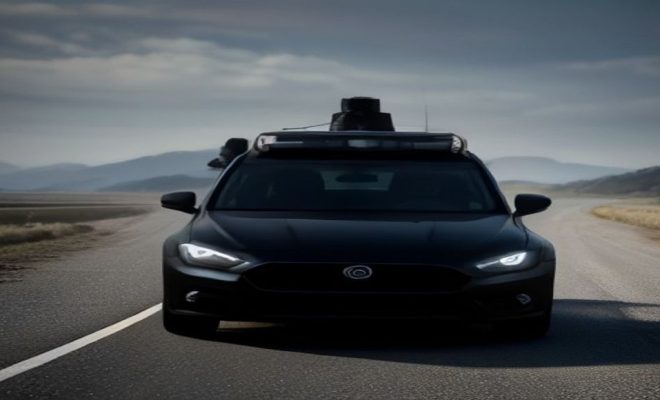
Imagine this: You’re cruising down the highway, hands off the wheel, eyes maybe on your phone, as your sleek, autonomous vehicle navigates the complexities of modern traffic. Suddenly, flashing lights in your rearview mirror. A police officer pulls you over, not for speeding, not for an expired tag, but because your car, the self-driving marvel, committed a traffic violation. The officer approaches, not with a ticket for you, but a ‘Notice of Autonomous Vehicle Noncompliance’ addressed directly to the manufacturer. Sound like science fiction? Well, it’s quickly becoming reality, and it’s completely upending the traditional understanding of self-driving car accident liability.
This isn’t just a quirky anecdote; it’s a profound shift in how we assign blame and responsibility in the age of automation. For decades, the legal framework around car accidents has been relatively straightforward: a human driver makes a mistake, they’re negligent, and their insurance pays. But what happens when the ‘driver’ is an algorithm, a complex network of sensors, and a whole lot of code? The lines blur, the stakes get higher, and the legal landscape transforms into something far more intricate than we’ve ever seen. This evolution isn’t happening in a vacuum; it’s being driven by real-world incidents, new legislation, and a growing public debate about safety and accountability.
The implications are immense, not just for manufacturers and legal eagles, but for every single one of us who might one day share the road with these sophisticated machines. It challenges our notions of control, trust, and even what it means to be a ‘driver.’ And as these vehicles become more commonplace, understanding who shoulders the burden when things go wrong becomes not just a legal curiosity, but a critical public safety issue.
California’s Bold Move: Shifting Blame to the Makers
California, often a trendsetter in technological and legal innovation, has fired a significant shot across the bow with Assembly Bill 1777 (AB 1777). This landmark legislation, set to take effect on July 1, 2026, marks a pivotal moment in the ongoing discussion about self-driving car accident liability. For the first time, it explicitly empowers law enforcement to issue ‘Notices of Autonomous Vehicle Noncompliance’ directly to the manufacturers of these vehicles for traffic violations. Think about that for a moment: your car gets a ticket, but Tesla or Waymo or Cruise is the one on the hook.
This isn’t merely a procedural tweak; it’s a philosophical reorientation. Traditionally, traffic tickets and accident liability have been predicated on the idea of human agency and negligence. If you run a red light, it’s your fault. If you swerve and cause a collision, it’s your negligence. But when an autonomous vehicle (AV) commits a similar infraction, AB 1777 says, in essence, that the fault lies with the entity that designed, programmed, and deployed the vehicle. This moves the legal focus squarely from individual driver error to product liability – a domain where manufacturers are held responsible for defects in their products.
The ramifications of this law are far-reaching. It places an unprecedented burden on AV manufacturers to ensure their vehicles not only operate safely but also comply with every intricate traffic regulation. It forces them to consider every edge case, every unexpected scenario, and every potential interaction with human drivers and infrastructure. This legislative shift is a clear signal that as automation advances, so too must the accountability of those who create and deploy it. It’s a recognition that the ‘driver’ in these scenarios is no longer a person, but a complex system, and that system’s creators must bear the ultimate responsibility. emergency response laws offers useful background here.
The NHTSA’s Troubling Warning: AVs and First Responders
Adding another layer of urgency and controversy to the self-driving car accident liability debate is a stark warning issued by the National Highway Traffic Safety Administration (NHTSA). On July 8, 2026, the NHTSA highlighted a ‘clear pattern’ of driverless autonomous vehicles interfering with law enforcement and first responders. This isn’t just about minor traffic infractions; it’s about situations that could have life-or-death consequences, directly impacting public safety and emergency response capabilities.
Imagine a fire truck trying to get to a burning building, or an ambulance rushing to a critical incident, only to find its path blocked or complicated by a confused AV. We’ve already seen anecdotal evidence and news reports of autonomous taxis stopping unexpectedly in intersections, blocking emergency vehicles, or failing to move out of the way for police. The NHTSA’s warning elevates these isolated incidents to a systemic concern, suggesting a fundamental flaw in how some AVs are programmed to interact with emergency situations and human authority.
This issue is particularly emotionally charged. The public expects emergency services to operate unimpeded, and any technology that hinders them is likely to face intense scrutiny and backlash. For manufacturers, this warning isn’t just a technical challenge; it’s a reputational one. It underscores the immense complexity of truly integrating AVs into our existing infrastructure and societal norms. It also raises critical questions about whether current AV testing and deployment protocols are adequately addressing these high-stakes scenarios. The ability of an AV to correctly interpret and respond to flashing lights, sirens, and human commands from first responders is not just a ‘nice-to-have’; it’s a non-negotiable requirement for widespread public acceptance and safe operation.
Untangling the Web: Product Liability vs. Negligence
The core of the self-driving car accident liability debate lies in the distinction between traditional negligence claims and product liability. When a human driver causes an accident, the legal argument typically centers on whether they acted negligently – did they fail to exercise reasonable care? Were they distracted, speeding, or driving under the influence? If so, their negligence led to the accident, and they are held responsible.
However, when a self-driving car is involved, the focus shifts dramatically. If the car is operating autonomously, and an accident occurs, the question isn’t about the human occupant’s driving skills (or lack thereof). Instead, it becomes a question of product defect. Was there a flaw in the vehicle’s design? Was the software poorly coded or did it contain a bug? Was there a manufacturing defect in one of its sensors or hardware components? These are the hallmarks of product liability law, where the manufacturer is held strictly liable for injuries caused by a defective product, regardless of their intent or direct negligence. (See: self-driving cars legal liability.)
This distinction introduces a host of new complexities. Proving a product defect in a highly intricate, software-driven system is far more challenging than proving a human driver ran a red light. It requires expert analysis of code, sensor data, black box recordings, and complex simulations. This shift means that accident reconstructionists will need to become software forensics experts, and legal teams will require deep technical knowledge. It also means that the legal battles will likely be fought against well-resourced manufacturers, potentially making litigation more protracted and expensive. The move to product liability fundamentally redefines who the ‘defendant’ is and what needs to be proven in court.
The Many Hands in the Autonomous Pie: Manufacturers, Software, and Operators
One of the biggest challenges in determining self-driving car accident liability is the sheer number of entities involved in bringing an autonomous vehicle to market. It’s not just one company; it’s a complex ecosystem of innovation. You have the traditional car manufacturer (e.g., General Motors, Mercedes-Benz), but then you have specialized autonomous technology companies (e.g., Waymo, Cruise, Mobileye) developing the self-driving software and hardware. Beyond that, there are often third-party sensor manufacturers, mapping data providers, and even fleet operators who manage and maintain large numbers of AVs for ride-sharing or delivery services.
So, if an AV has a sensor malfunction that leads to an accident, is the car manufacturer responsible? Or the sensor manufacturer? What if the software misinterprets the sensor data? Then is the software developer at fault? Or what if the fleet operator failed to properly maintain the vehicle or update its software? Each of these players contributes a crucial piece to the autonomous puzzle, and each could potentially be deemed liable depending on where the failure originated.
This creates what legal experts call a ‘blame game’ scenario. In the aftermath of an accident, each entity will naturally try to shift responsibility to another. The car manufacturer might argue the software was faulty; the software company might claim the hardware provided incorrect data. This intricate web of potential defendants means that victims of AV accidents could face an uphill battle identifying and successfully suing the responsible party. It highlights the urgent need for clearer contractual agreements between these entities and, potentially, new legal frameworks that streamline the process of assigning responsibility in such multi-faceted systems.
The Human Element: Override and ‘Handover Problem’
Even in highly autonomous vehicles, the human element isn’t entirely removed, and this creates another layer of complexity for self-driving car accident liability. Many current AVs operate at Level 2 or 3 autonomy, meaning a human driver is still expected to monitor the road and be ready to take over. This introduces the infamous ‘handover problem’: the critical moment when the autonomous system disengages and expects the human driver to resume control. Studies have shown that humans are notoriously bad at quickly re-engaging and reacting effectively after periods of disengagement, leading to potential delays and errors.
If an accident occurs during or immediately after a handover, who is at fault? Was the AV system’s request for handover made at an appropriate time? Was the human driver given enough warning? Did the human driver respond promptly and correctly? The answers to these questions can be incredibly difficult to ascertain, especially in high-stress situations. The car’s internal data logs will be crucial here, recording when the system disengaged, when the driver took control, and what actions were taken.
Then there’s the question of intentional human override. What if the human driver, despite the car operating autonomously, decides to intervene and makes a mistake that leads to an accident? Or what if they ignore warnings from the system to take control? In these scenarios, the liability might shift back, at least partially, to the human occupant. The interplay between human decision-making and autonomous system behavior is a fertile ground for legal disputes, highlighting the need for clear guidelines on driver responsibilities even when the car is doing most of the work.
Insurance in the Age of Autonomy: A New Paradigm
The traditional automotive insurance model is built on assessing risk associated with human drivers. Factors like driving history, age, type of car, and even geographic location all feed into premium calculations. But how does this model adapt to self-driving car accident liability, where the primary risk factor might be software rather than a person? Insurance providers are grappling with a fundamental shift.
We’re likely to see a bifurcation of insurance policies. There will still be personal liability insurance for the human occupant, covering scenarios where they were in control, or where their negligence contributed to an accident. However, there will also need to be a new form of product liability insurance, likely carried by the manufacturers and fleet operators, to cover incidents where the autonomous system is at fault. This could mean higher premiums for manufacturers, which would then be factored into the cost of AVs, potentially increasing their price for consumers.
Some experts even predict a future where individual car insurance as we know it largely disappears, replaced by a comprehensive, manufacturer-backed liability system. If an AV is truly fault-free (or at least, the human occupant is), then the traditional rationale for individual insurance diminishes. This would be a seismic shift for the multi-billion-dollar insurance industry, requiring new risk assessment models, new types of coverage, and a complete re-evaluation of actuarial science. The transition will be messy, complex, and will undoubtedly involve significant lobbying and regulatory battles.
The Data Deluge: Black Boxes and Forensics
In the aftermath of a self-driving car accident, data will be king. Just as airplanes have black boxes, autonomous vehicles are essentially moving data centers, constantly recording an immense amount of information. This includes sensor data (Lidar, radar, cameras), GPS coordinates, vehicle speed, steering inputs, braking force, accelerator position, system engagement status (autonomous vs. manual), and even internal communications between various vehicle modules.
This data will be absolutely critical for accident reconstruction and determining liability. It can answer questions like: Was the car in autonomous mode? What was it ‘seeing’ at the moment of impact? Did it attempt to brake or swerve? Was the human driver attempting to intervene? Access to and interpretation of this data will become a battleground. Who owns this data? How is its integrity ensured? What standards will govern its collection and analysis in legal proceedings? (See: automated vehicles safety.)
The complexity of AV data forensics means that specialized experts will be essential for both plaintiffs and defendants. These experts will need to understand not only accident dynamics but also software engineering, artificial intelligence, and cybersecurity to properly analyze and present the evidence. The sheer volume and technical nature of this data will add significant time and cost to accident investigations, making the already complex legal process even more demanding.
Ethical Dilemmas: The Trolley Problem on Wheels
Beyond the legal and technical challenges, self-driving car accident liability also forces us to confront deep ethical dilemmas. The most famous of these is the “trolley problem,” adapted for autonomous vehicles: in an unavoidable accident scenario, how should an AV be programmed to minimize harm? Should it prioritize the occupants of the AV, pedestrians, or occupants of other vehicles? Should it value the lives of children over adults, or multiple lives over fewer?
These are not hypothetical questions for philosophers anymore; they are real-world programming decisions being made by engineers right now. The choices made about an AV’s ethical algorithms will directly impact liability. If a car is programmed to swerve to save its occupants, but in doing so, hits and injures pedestrians, who is responsible for that outcome? The programmer? The manufacturer? The owner who accepted those ethical parameters?
Different societies might even have different preferences for these ethical trade-offs, leading to a patchwork of regulations across countries. This could create significant challenges for global manufacturers and for the uniform deployment of AV technology. The ethical programming of AVs isn’t just about reducing accidents; it’s about codifying societal values into machines, and the liability implications of those values are immense and largely unexplored.
Global Perspectives: How Other Nations are Responding
While California’s AB 1777 is a significant step, it’s worth noting that the United States isn’t alone in grappling with self-driving car accident liability. Other nations are also developing their own frameworks, often with different approaches. For example, Germany passed a law in 2017 stating that the vehicle’s owner is responsible if they override the autonomous system, but the manufacturer is liable if the system causes the accident in autonomous mode. This clearly delineates responsibility based on the vehicle’s operational status.
The United Kingdom has also been active, proposing a “single insurer” model where one insurer would pay out claims from AV accidents, then seek reimbursement from the responsible party (manufacturer, software provider, etc.). This aims to simplify the claims process for victims, avoiding the blame game between multiple corporate entities. Japan and South Korea are also investing heavily in AV technology and are concurrently working on legal and regulatory frameworks to address liability, focusing on data recording and manufacturer accountability.
The varied international responses highlight the complexity of the issue and the lack of a universal consensus. This fragmented regulatory landscape could pose challenges for manufacturers operating globally, potentially requiring different vehicle configurations or software versions for different markets based on local liability laws. Harmonization of these laws would certainly benefit the industry and consumers, but it’s a long way off.
The Role of Cybersecurity in AV Liability
An often-overlooked aspect of self-driving car accident liability is cybersecurity. Autonomous vehicles are essentially computers on wheels, connected to networks, receiving over-the-air updates, and processing vast amounts of data. This connectivity makes them vulnerable to cyberattacks. What if an accident occurs because an AV’s sensors were spoofed, its software was hacked, or its communication systems were jammed?
In such a scenario, determining liability becomes incredibly complex. Is it the manufacturer’s fault for not adequately securing the vehicle? Is it the fault of the hacker? Could the owner be deemed negligent for failing to install security updates? The legal system is still developing ways to assign fault in cyber-related incidents, and applying these to physical accidents caused by cyber breaches in AVs adds another layer of difficulty. Manufacturers will face immense pressure to build ‘security by design’ into their vehicles, and any failure to do so could open them up to significant liability. This intertwining of digital security and physical safety is a new frontier for accident law.
Looking Ahead: A Future Defined by Algorithm and Law
The journey into widespread autonomous vehicle adoption is clearly not just an engineering challenge; it’s a profound legal, ethical, and societal one. The emergence of laws like California’s AB 1777 and the NHTSA’s warnings serve as stark reminders that the technology is advancing faster than our existing frameworks can comfortably accommodate. The debate over self-driving car accident liability is more than just a niche legal issue; it’s a bellwether for how we, as a society, will adapt to and govern intelligent machines. (See: impact of autonomous vehicles.)
We’re moving into an era where the lines between product and driver are blurring, where algorithms make life-or-death decisions, and where traditional notions of fault and responsibility are being fundamentally re-evaluated. The emotional intensity of these discussions is palpable because it touches on our most primal fears of control and safety. As autonomous vehicles become increasingly prevalent, the legal system will be forced to evolve at an unprecedented pace, crafting new statutes, setting new precedents, and ultimately shaping a future where the rule of law must account for the intelligence of machines.
This isn’t just about who pays for a fender bender; it’s about defining the very nature of accountability in a world increasingly driven by artificial intelligence. The answers we arrive at today will set the stage for how we interact with all autonomous technologies tomorrow, from delivery robots to industrial automation. It’s a fascinating, complex, and absolutely critical challenge that demands our full attention. We covered new tech liability insights in more detail.
Frequently Asked Questions About Self-Driving Car Accident Liability
Q1: Who is generally liable in a self-driving car accident?
Generally, if a self-driving car is operating in autonomous mode and causes an accident due to a system failure or design flaw, the manufacturer or the company responsible for the autonomous driving software is likely to be held liable under product liability laws. If a human driver was in control or negligently intervened, liability could shift to that individual.
Q2: What is the “handover problem” and how does it affect liability?
The “handover problem” refers to the difficulty humans have in quickly and safely taking control of a vehicle after a period of autonomous driving. If an accident occurs during or immediately after a handover, liability can be complex. It might depend on whether the AV system initiated the handover appropriately, provided sufficient warning, and whether the human driver responded reasonably.
Q3: Will my personal car insurance cover an accident in a self-driving car?
For now, most personal car insurance policies are still designed around human drivers. As AVs become more common, insurance models are evolving. You might still need personal liability coverage for scenarios where you are in control or intervene. However, a separate form of product liability insurance, likely carried by manufacturers, will become crucial for covering accidents caused by the autonomous system itself.
Q4: How will accident investigations change with self-driving cars?
Accident investigations will rely heavily on the vast amounts of data recorded by AVs, including sensor data, GPS, speed, and system engagement status. This “black box” data will be critical for determining whether the car was in autonomous mode, what it perceived, and what actions it took. Forensic experts with specialized knowledge in software and AI will be essential for analyzing this complex data.
Q5: What role does cybersecurity play in self-driving car accident liability?
Cybersecurity is a growing concern. If a self-driving car accident is caused by a cyberattack that compromises the vehicle’s systems, determining liability becomes incredibly complicated. Questions arise about the manufacturer’s security measures, the source of the attack, and any potential negligence by the owner. Robust cybersecurity protocols are essential for manufacturers to mitigate this risk.
Q6: Are there international laws for self-driving car accident liability?
Currently, there isn’t a single, universal international law. Different countries are developing their own legal frameworks. For example, Germany distinguishes liability based on whether the human or the system was in control, while the UK is exploring a “single insurer” model. This patchwork of regulations means manufacturers operating globally may face different liability standards in various markets.
Trending Now
Frequently Asked Questions
Who is responsible for a self-driving car accident?
In the case of a self-driving car accident, responsibility may shift from the human driver to the vehicle manufacturer. This change reflects a growing legal framework that considers the technology and algorithms driving the car, rather than traditional notions of driver negligence.
What happens if a self-driving car gets a ticket?
If a self-driving car receives a ticket, it may be addressed directly to the manufacturer rather than the vehicle's occupant. This reflects a new approach to traffic violations involving autonomous vehicles, where the accountability may fall on the technology provider.
How are self-driving cars changing traffic laws?
Self-driving cars are prompting significant changes in traffic laws as legal frameworks adapt to assign liability to manufacturers instead of human drivers. This evolution is driven by the complexities of automation and the need for new regulations to ensure public safety.
What is the legal status of self-driving cars?
The legal status of self-driving cars is evolving, with many jurisdictions exploring new regulations that address the unique challenges posed by autonomous vehicles. These include liability issues, compliance standards, and the responsibilities of manufacturers in the event of a violation.
Will insurance change with self-driving cars?
Yes, insurance models are expected to change significantly with the rise of self-driving cars. As liability shifts from drivers to manufacturers, insurance policies may need to adapt to cover technological failures and the complexities of automated driving systems.
Have you experienced this yourself? We'd love to hear your story in the comments.