Automakers’ Subscription Trap: Are You Renting Your Car’s Features?
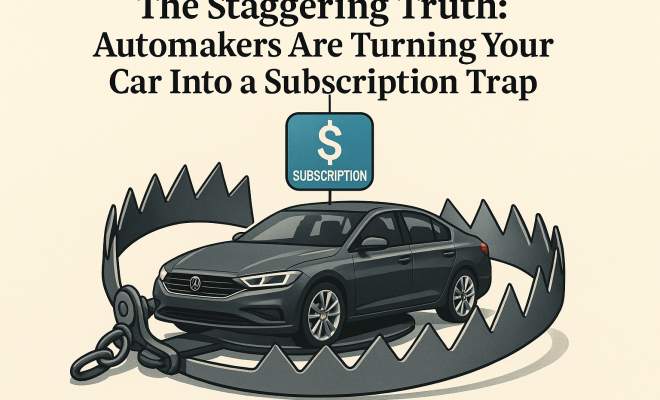
Remember when you bought a car, and once the papers were signed and the keys were in your hand, that car—and everything in it—was unequivocally yours? That feeling of outright ownership, of knowing you had full access to every knob, button, and feature you paid for upfront, is rapidly becoming a relic of the past. Today, a quiet but profound transformation is sweeping through the automotive industry, and it’s leaving many drivers feeling like they’ve bought a vehicle only to find they’re merely renting parts of it. We’re talking about the rise of car subscription services, a business model that’s increasingly locking fundamental vehicle features behind recurring monthly fees.
This isn’t some dystopian future scenario; it’s happening right now, and it’s sparking considerable outrage and debate across social media and in garages worldwide. Features that were once standard, or at least a one-time upgrade, are now being presented as ongoing services. Think heated seats, remote start, even advanced driver assistance systems (ADAS)—all potentially requiring an extra monthly payment to use. It’s a move by automakers designed to secure a steady stream of recurring revenue, but for consumers, it feels less like innovation and more like exploitation, a blatant erosion of what ownership traditionally means. The conversation around these car subscription services is intense, fueled by a sense of betrayal and the shocking realization that the vehicle you ‘own’ might not truly be yours to command.
The Shocking Shift: From Ownership to Access
For decades, the automotive transaction was straightforward: you chose a car, paid for it (either in full or through financing), and then you owned it. Every feature, every component, from the engine to the infotainment system, was part of that initial purchase. Sure, you might pay for maintenance, insurance, or fuel, but the functionality of the vehicle itself was yours, locked and loaded. This fundamental understanding is now being challenged by car subscription services.
Automakers, facing increasingly tight margins in traditional vehicle sales and the monumental costs of developing electric and autonomous technologies, are desperately seeking new revenue streams. The subscription model, so successful in software, entertainment, and even food delivery, looks like a golden ticket. Why sell a heated seat once when you can charge for it every month, year after year? It sounds like a fantastic proposition for the manufacturer, offering predictable, ongoing income. But for the person in the driver’s seat, it’s a bitter pill to swallow. You’ve already paid for the hardware—the heating elements, the wiring, the control modules—when you bought the car. To then be asked to pay again, perpetually, just to activate those physical components, feels inherently unfair. It’s a fundamental shift from a product-based economy to a service-based one, blurring the lines of what it means to truly own a car.
Heated Seats and Remote Start: The Unlikely Battlegrounds
When we talk about features being locked behind car subscription services, it’s not always about the most cutting-edge, complex technologies. Sometimes, it’s the seemingly mundane comforts that ignite the most passionate responses. Take heated seats, for example. For many, especially those in colder climates, they’re not a luxury but a necessity, a simple comfort that enhances daily commuting. To discover that the heated seats physically present in your car, installed and ready, require an ongoing monthly fee to activate feels particularly egregious. It’s not just about the money; it’s about the principle. You purchased a car with these physical components, and now their functionality is being held hostage.
Remote start is another prime example. The convenience of starting your car from your phone on a freezing morning or a sweltering afternoon is undeniable. Yet, this feature, too, has found its way onto the subscription ledger for several manufacturers. The hardware for remote start is integrated into the vehicle’s electrical system, often tied to existing key fob technology or an app. Charging a recurring fee for something that, once installed, requires no additional physical input or resource expenditure from the manufacturer, strikes many as an opportunistic cash grab. These aren’t cloud services requiring constant server maintenance; they’re features built into the vehicle at the point of manufacture, making the subscription feel less like a service and more like a ransom.
The Broader Implications for Advanced Driver Assistance Systems (ADAS)
While heated seats and remote start might be the emotional flashpoints, the implications of car subscription services extend to much more critical technologies, particularly Advanced Driver Assistance Systems (ADAS). Features like adaptive cruise control, lane-keeping assist, automated parking, and even semi-autonomous driving capabilities are increasingly sophisticated and costly to develop. Automakers see these as prime candidates for subscription models, arguing that they require ongoing software updates, mapping data, and potentially even cloud processing to function optimally and safely.
The argument for subscriptions on ADAS features is slightly more nuanced than for heated seats. Software updates are genuinely important for safety and performance, and the underlying algorithms might indeed evolve. However, the core hardware—the sensors, cameras, radar units, and processing chips—are still installed in the vehicle from day one. The concern is that consumers might purchase a vehicle with a full suite of ADAS hardware, only to find that certain functionalities are disabled unless they pay a monthly premium. This creates a two-tiered ownership experience: one where you have the physical capability, and another where you have the activated capability. It raises questions about safety, access to critical features, and whether drivers might be pressured into paying for subscriptions to unlock features that could genuinely prevent accidents.
Ford’s Account-Based Approach: A Glimmer of Flexibility?
Amidst the backlash, some automakers are trying to find solutions that might alleviate consumer frustration while still securing recurring revenue. Ford, for instance, recently patented an interesting concept that could represent a slight pivot. Instead of tying subscriptions directly to a single vehicle, their idea is an account-based subscription model. Imagine you have a ‘Ford Account’ that holds all your purchased features and subscriptions. If you trade in your old F-150 for a new Bronco, your heated seat subscription or advanced towing package subscription could theoretically transfer with you to the new vehicle, activating those features there, assuming the new vehicle has the requisite hardware. (See: automakers subscription services.)
This approach has some merit. It acknowledges the consumer’s desire for continuity and flexibility, suggesting that you’re paying for access to a service rather than just unlocking a specific piece of hardware in one car. It could be particularly appealing to multi-car households or those who frequently upgrade their vehicles. While it doesn’t solve the core issue of paying for already-installed hardware, it at least offers a more palatable user experience, potentially softening some of the criticism. It recognizes that car ownership isn’t always static and that loyalty to a brand might be rewarded with transferable benefits. Still, the fundamental question remains: should you have to subscribe to use features that are physically present in a product you’ve purchased outright?
The Consumer Backlash: Why Drivers Feel Betrayed
The pushback against car subscription services hasn’t been subtle. Social media platforms are awash with frustrated drivers, memes satirizing the concept, and articles detailing specific instances of locked features. The emotional core of this backlash is a feeling of betrayal and a perceived erosion of ownership. For generations, buying a car has been a significant investment, a symbol of freedom and independence. The idea that after shelling out tens of thousands of dollars, you still don’t have full control over the vehicle’s capabilities is deeply unsettling.
Many consumers view these subscriptions as a cynical move, an attempt to extract more money for something they believe they’ve already paid for. It feels like a bait-and-switch. You see a car advertised with certain features, buy it, and then discover those features are paywalled. This generates a profound sense of distrust towards automakers. The argument that these are ‘services’ requiring ongoing maintenance often falls flat when it comes to simple hardware activations. It’s hard to convince someone that their heated seat requires constant software updates equivalent to streaming a movie, especially when the hardware is already there, ready to go.
The Economics Behind the Shift: Why Automakers Are Pushing Subscriptions
From the automakers’ perspective, the move to car subscription services is not just about greed; it’s a strategic imperative born out of significant financial pressures. Developing new vehicles, especially electric vehicles (EVs) and those with advanced autonomous capabilities, involves colossal research and development costs. The traditional model of selling a car once and then relying on parts and service for aftermarket revenue isn’t generating enough to sustain these investments and meet shareholder expectations. Recurring revenue streams are seen as the holy grail, offering stability and predictability in a highly cyclical industry.
Consider the lifecycle of a car. A conventional sale brings in revenue once. A subscription, however, promises a steady income stream for the entire life of the vehicle, potentially even across multiple owners. This predictable revenue can be reinvested into further R&D, used to develop more sophisticated software, or simply contribute to healthier profit margins. Moreover, in an increasingly competitive global market, automakers are constantly looking for ways to differentiate themselves and capture a larger share of consumer spending beyond the initial purchase. The subscription model, for all its controversy, offers a compelling solution to these economic challenges, at least on paper.
The Legal and Ethical Quandaries of Digital Ownership
This new paradigm of car subscription services isn’t just a business model shift; it’s also raising significant legal and ethical questions about digital ownership and consumer rights. If you buy a car with physically installed features, but their activation is controlled remotely by the manufacturer, do you truly own those features? What happens if you stop paying the subscription? Does the car suddenly lose functionality you believed you purchased? This is uncharted territory for consumer law.
The ‘right to repair’ movement, which advocates for consumers’ ability to fix their own products, is also deeply concerned. If diagnostic tools, software updates, or even basic feature activations are locked behind manufacturer paywalls, it severely limits independent repair shops and individual owners from maintaining their vehicles. Furthermore, there are ethical considerations about essential safety features. Should ADAS functionalities that could prevent accidents be locked behind a subscription, potentially creating a two-tiered safety system based on who can afford the monthly fee? These are complex questions that will likely require legislative intervention or significant legal precedent to resolve, as our current frameworks struggle to define ownership in an age of digitally controlled physical goods.
The Global Landscape: How Different Regions are Responding
It’s interesting to see how different parts of the world are reacting to these car subscription services. In some Asian markets, particularly in China, there seems to be a higher level of acceptance for subscription-based features, perhaps due to a younger demographic more accustomed to digital services and less ingrained notions of traditional car ownership. Automakers like BMW have even rolled out heated seat subscriptions in countries like South Korea, often citing the convenience of on-demand activation without a large upfront cost. This suggests that cultural attitudes towards ownership and technology play a significant role in how these models are perceived.
Conversely, in Europe and North America, the resistance has been more pronounced. Consumer advocacy groups are actively campaigning against these practices, and there’s a stronger emphasis on consumer rights regarding purchased goods. Regulators are starting to take notice as well. For example, some European consumer protection agencies are examining whether these subscription models constitute unfair commercial practices. This divergence highlights that a one-size-fits-all approach to car subscriptions might not work globally, and automakers may need to tailor their strategies to local legal frameworks and consumer expectations. (See: ergonomics in automotive design.)
The Impact on Resale Value and the Used Car Market
One critical, often overlooked, aspect of car subscription services is their potential impact on resale value and the used car market. Imagine buying a used car that was originally equipped with advanced features, only to find that those features are deactivated unless you, the second owner, start paying a monthly fee. This could significantly complicate the valuation of used vehicles.
Traditionally, a car’s features contribute to its resale value. A car with navigation, premium audio, or a comprehensive ADAS suite commands a higher price. But if those features become merely temporary access points, tied to an ongoing subscription rather than permanent additions, their value proposition in the used market diminishes. Will buyers be willing to pay a premium for a car with dormant features, knowing they’ll immediately incur additional recurring costs? This could lead to a depreciation in value for cars heavily reliant on subscription services, making them less attractive to subsequent owners. It also creates a confusing scenario for dealerships and private sellers who will have to clearly communicate which features are truly “owned” and which require ongoing payments, potentially deterring buyers seeking a straightforward purchase.
Subscription Fatigue: Are Consumers Reaching Their Limit?
The rise of car subscription services isn’t happening in a vacuum. Consumers are already bombarded with subscriptions for everything from streaming entertainment and music to productivity software, meal kits, and even pet food. There’s a growing phenomenon known as “subscription fatigue,” where people feel overwhelmed by the sheer number of recurring payments and the effort required to manage them.
Introducing yet another set of monthly fees for something as fundamental as a car’s features could push many consumers past their breaking point. People might start to actively avoid vehicles that come with extensive subscription requirements, opting for simpler models or brands that stick to a more traditional ownership model. Automakers need to be very careful not to underestimate this fatigue. While recurring revenue is attractive, alienating a significant portion of their customer base by over-subscribing their products could be a costly mistake. The balance between maximizing revenue and maintaining customer goodwill is a delicate one, and the industry might be nearing a tipping point where consumers simply say “no more.”
What Does This Mean for the Future of Car Ownership?
The trajectory towards car subscription services seems inevitable for many automakers, despite the current backlash. However, the exact form it takes will largely depend on consumer acceptance and regulatory response. Will we eventually see a tiered system where basic functionality is included, but advanced features are optional subscriptions? Or will it evolve into a more flexible model, like Ford’s patent suggests, where subscriptions are portable?
One potential future involves a blurring of the lines between car ownership and long-term leasing or mobility services. If you’re constantly paying a subscription for various features, how different is that from a comprehensive lease that bundles many services? This could accelerate the shift away from outright ownership for many, particularly in urban areas where personal car ownership is already becoming less appealing. The market might also see a segmentation, with some manufacturers sticking to a more traditional ownership model for certain trims, while others embrace the subscription-heavy approach, forcing consumers to choose not just a car, but a philosophy of ownership.
Navigating the New Automotive Landscape: Advice for Consumers
For you, the consumer, navigating this evolving automotive landscape means exercising a new level of scrutiny when buying a car. Here’s what you need to consider:
- Read the Fine Print Carefully: Before you sign any purchase agreement or lease, understand exactly which features are included as standard, which are one-time upgrades, and which require ongoing car subscription services. Don’t assume anything.
- Ask Direct Questions: Don’t be shy. Ask your salesperson explicitly about subscription requirements for features like remote start, heated seats, navigation, and any advanced driver assistance systems. Get it in writing if possible.
- Factor in Long-Term Costs: If a car has desirable features locked behind a subscription, calculate the annual and multi-year costs. This might significantly alter the true ‘price’ of the vehicle over its lifespan.
- Consider Your Usage: Do you truly need that specific feature every day, or is it a ‘nice to have’ that you could live without if it comes with a recurring fee?
- Explore Aftermarket Solutions: For some simpler features like remote start, aftermarket solutions might exist that offer a one-time purchase, though these can sometimes void warranties. Research thoroughly.
- Voice Your Opinion: Engage in discussions, provide feedback to manufacturers, and support consumer advocacy groups. Collective consumer pressure can influence how these models evolve.
Frequently Asked Questions About Car Subscription Services
Q1: What exactly are car subscription services for features?
These are recurring monthly or annual fees that automakers charge to activate or maintain certain features in your car, even if the necessary hardware is already installed. Think of it like paying a monthly fee to use heated seats, remote start, or advanced navigation, rather than having them included in the initial purchase price or as a one-time upgrade. (See: business trends in automotive industry.)
Q2: Why are automakers implementing these subscription models?
Automakers are looking for new, stable revenue streams. Developing complex technologies like electric powertrains and advanced driver assistance systems (ADAS) is incredibly expensive. Subscriptions offer predictable, ongoing income that can help offset these costs and boost profit margins beyond the initial car sale.
Q3: Which car features are typically offered as subscriptions?
Common examples include heated seats, heated steering wheels, remote start via a mobile app, enhanced navigation services, Wi-Fi hotspots, specific ADAS functionalities (like advanced cruise control or automated parking), and performance upgrades. The list varies by manufacturer and model.
Q4: Is it legal for car companies to charge subscriptions for features already in my car?
This is a complex and evolving legal area. While the hardware is physically present, automakers often argue that the “service” of activating, updating, and maintaining the software that runs these features justifies a recurring fee. Consumer protection laws are still catching up to define digital ownership rights in this context, and legal challenges are likely.
Q5: How do car subscriptions affect the resale value of my vehicle?
It could negatively impact resale value. If a car’s desirable features require ongoing subscriptions, a second owner might be less willing to pay a premium for a car that comes with additional recurring costs. This could make used cars with dormant, paywalled features less attractive than those where all features are permanently activated.
Q6: What should I do before buying a car to understand its subscription features?
Always read the purchase agreement and feature list very carefully. Ask your salesperson direct questions about which features require ongoing subscriptions, their costs, and if they can be purchased outright. Get all this information in writing before you commit to a purchase. It’s crucial to understand the total cost of ownership, not just the sticker price.
The world of car ownership is undeniably changing, and car subscription services are at the forefront of this shift. It’s a contentious topic, fueled by the natural human desire for true ownership versus the economic pressures faced by manufacturers. As consumers, our vigilance and informed choices will play a crucial role in shaping what kind of future we drive into.
Trending Now
Frequently Asked Questions
Are car manufacturers turning to subscription models?
Yes, many car manufacturers are increasingly adopting subscription models, locking essential vehicle features behind recurring monthly fees. This shift allows automakers to secure ongoing revenue, but it raises concerns among consumers about the erosion of traditional vehicle ownership.
What features are being offered as subscriptions in cars?
Features such as heated seats, remote start, and advanced driver assistance systems (ADAS) are now often being offered as subscription services, requiring drivers to pay monthly fees to access functionalities that were once part of the vehicle purchase.
How does the subscription model affect car ownership?
The subscription model fundamentally changes the concept of car ownership. Instead of outright ownership, drivers may feel like they are merely renting certain features, leading to a sense of betrayal and frustration over what they believed they had purchased.
Is the rise of car subscription services controversial?
Yes, the rise of car subscription services has sparked considerable outrage and debate among consumers. Many feel that this trend represents exploitation and a significant departure from the traditional understanding of vehicle ownership.
What are the implications of subscription services for consumers?
For consumers, subscription services imply ongoing costs for features they once owned outright. This can lead to frustration as drivers may find themselves paying extra for functionalities they expected to have access to without additional fees.
What's your take on this? Share your thoughts in the comments below — we read every one.