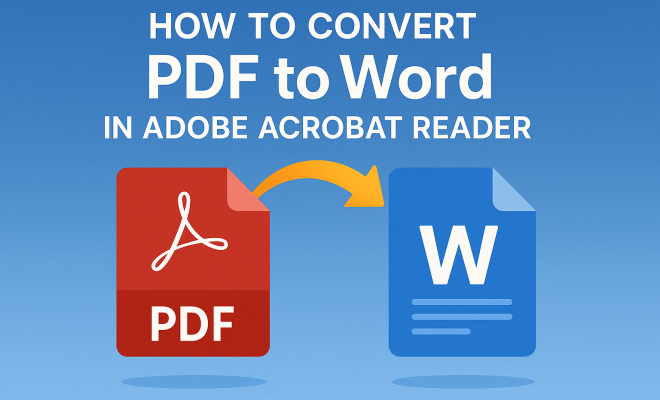
How to convert PDF to Word in Adobe Acrobat Reader
“`html
In the world of digital documents, PDFs have long been the industry standard for sharing and preserving the formatting of files. However, there comes a time when you might need to convert PDF to Word for editing or repurposing content. Adobe Acrobat Reader, one of the most popular tools for handling PDF files, offers features that allow users to easily achieve this. In this article, we’ll explore the steps to convert PDF to Word in Adobe Acrobat Reader, discuss its advantages, and provide tips to enhance your experience, ensuring that you make the most of this powerful software.
1. Understanding the Basics of PDF and Word Formats
Before diving into the conversion process, it’s essential to understand what PDF and Word formats represent. PDF, or Portable Document Format, is a file format created by Adobe in 1993 for document exchange. It maintains the original layout of a document, making it universally accessible and secure. However, its read-only nature can be a limitation when you want to edit or manipulate text.
On the other hand, Microsoft Word files (.doc or .docx) are designed for creating and editing documents. They allow for easy text manipulation, formatting alterations, and collaboration features. With both formats serving distinct purposes, knowing when and how to convert PDF to Word can be incredibly beneficial, particularly for professionals.
2. Why You Might Need to Convert PDF to Word
There are several reasons why converting a PDF to a Word document might be necessary. For instance, if you need to update a report, make edits to a contract, or extract specific information from a PDF, having the content in a Word format can streamline these tasks. Instead of retyping or copying text manually, conversion tools save time and enhance productivity.
Additionally, if you’re collaborating with others who prefer working in Word, converting your PDF can facilitate smoother communication. With Word’s extensive editing capabilities, you can incorporate feedback and suggestions more efficiently than you might with a static PDF.
3. Getting Started with Adobe Acrobat Reader
Adobe Acrobat Reader is a free solution for viewing and printing PDF files. However, its capabilities for conversion are often linked to its premium version, Adobe Acrobat Pro. If you’re using the free version, you may only have limited options regarding file conversion. Regardless, many users may find the features sufficient for their needs. This builds on top schools for writing.
To start, ensure you have Adobe Acrobat Reader installed on your device. If you haven’t already, you can download it from Adobe’s official website. Make sure your software is up to date to access all available features. Once you’ve opened the program, you will be ready to proceed with the conversion process.
4. Steps to Convert PDF to Word in Adobe Acrobat Reader
The process to convert PDF to Word in Adobe Acrobat Reader is fairly straightforward. Here’s a step-by-step breakdown:
- Open Adobe Acrobat Reader: Launch the program and open the PDF you wish to convert.
- Select the ‘Export PDF’ Tool: Look for the “Export PDF” tool in the right pane of the interface. If you don’t see it, you may need to upgrade to Adobe Acrobat Pro.
- Choose the Word Format: In the export options, select “Microsoft Word” as your export format. You might have options for “Word Document” or “Word 97-2003 Document.”
- Export the PDF: Click the “Export” button. Adobe will process your PDF and convert it into a Word document.
- Save Your New Document: Once the PDF is converted, you will be prompted to save the new Word document. Choose your desired location and rename the file if necessary, then click “Save.”
And there you have it! Your PDF file is now converted to a Word document, ready for editing.
5. Tips for a Smoother Conversion Experience
While converting PDF to Word using Adobe Acrobat Reader is generally seamless, there are a few tips to keep in mind to ensure the best possible outcome: (See: Portable Document Format overview.)
- Check for Formatting Issues: After conversion, review the Word document for any formatting discrepancies. Sometimes, complex layouts or graphical elements may not convert perfectly.
- Optimize Your PDF: Prior to conversion, simplify your PDF if possible. Removing unnecessary images or graphics can lead to a more straightforward conversion process.
- Use the Right Version: If you find yourself needing to convert frequently, consider investing in Adobe Acrobat Pro. The Pro version provides more robust features for editing and converting, which can save time and frustration.
These simple yet effective tips can enhance your experience and ensure that your converted document meets your expectations.
6. Limitations of the Conversion Process
Despite its advantages, converting PDF to Word using Adobe Acrobat Reader isn’t without its limitations. For example, complex PDFs that include intricate designs, embedded fonts, or non-standard layouts may not convert cleanly. This can result in misaligned text, missing elements, or overall formatting issues that require manual adjustments.
Moreover, while the standard features in the free version of Adobe Acrobat Reader are suitable for basic tasks, advanced options such as batch conversion or OCR (Optical Character Recognition) may require the Pro version. Users should assess their needs when deciding whether to upgrade or seek alternative solutions.
7. Alternative Tools for PDF to Word Conversion
If Adobe Acrobat Reader doesn’t meet your needs, there are several alternative tools worth exploring. Many online services and software options allow you to convert PDF to Word with varying degrees of success. Some popular alternatives include:
- Smallpdf: This online tool offers a simple interface for converting PDFs to Word. It’s user-friendly and allows for drag-and-drop functionality.
- PDFelement: A comprehensive PDF editor that supports conversion, PDFelement provides various features for managing document workflows.
- Microsoft Word: Surprisingly, recent versions of Microsoft Word can directly open PDF files and convert them to editable Word documents, making it a valuable option for many users.
While each tool has its unique features, it’s advisable to test them out to determine which best suits your conversion needs.
8. Best Practices for Editing Converted Documents
After successfully converting your PDF to Word, the next step is to edit your document. Here are some best practices to keep in mind:
- Thoroughly Review the Document: Always double-check your converted document for errors or formatting issues. Pay attention to headers, footers, and any images to ensure they are correctly displayed.
- Utilize Word’s Editing Features: Take advantage of Word’s editing features, such as spell check, styles, and formatting tools, to enhance your document’s appearance and readability.
- Save Regularly: As you work on your document, save your changes frequently. This practice helps prevent data loss and ensures that your edits are preserved.
Adhering to these best practices can improve not only the conversion experience but also the overall quality of your document.
9. Current Relevance and Future of PDF to Word Conversion
As digital documentation continues to evolve, the need to convert PDF to Word remains crucial for many individuals and businesses. The demand for flexible, editable formats is on the rise, driven by remote collaboration, digital workflows, and the growing importance of content accessibility.
Looking ahead, advancements in artificial intelligence and machine learning may enhance conversion accuracy. Future PDF to Word converters could leverage these technologies to maintain formatting fidelity and further streamline the editing process. As users, staying informed about these developments will ensure you’re equipped with the best tools for your document management needs.
10. Cost-Effective Solutions for PDF to Word Conversion
While Adobe Acrobat Pro offers a robust solution for converting PDFs to Word, it’s not the only option available, especially for those seeking cost-effective alternatives. Here are some budget-friendly options: (See: PDF usage in professional settings.)
- Online Converters: Websites like iLovePDF, PDF to Word Converter by Nitro, and Zamzar provide free or low-cost conversion services. These sites are convenient and require no software installation.
- Open-Source Software: Programs like LibreOffice can open PDF files and export them as Word documents. This is a great option if you prefer desktop applications and want to avoid subscription fees.
- Browser Extensions: Some browser extensions can convert PDFs directly from your browser without needing to download additional software. These can provide quick and easy solutions for occasional users.
By exploring these alternatives, you can find solutions that suit your budget while still delivering quality results.
11. Common Issues When Converting PDF to Word
Even with the best tools, you might encounter some common issues when converting PDF to Word. Here are a few pitfalls to watch out for:
- Loss of Formatting: One of the most common problems is the loss of formatting, especially in documents with custom fonts or embedded graphics. Always check the final document against the original PDF.
- Text Recognition Errors: If your PDF is scanned or consists of images, the conversion tool may struggle with text recognition, resulting in garbled text. Utilizing OCR features is advisable for such documents.
- File Size Limitations: Some online converters have file size limits, which may hinder your ability to convert larger documents. In such cases, consider breaking the PDF into smaller files if possible.
Being aware of these issues can help you prepare and mitigate potential setbacks during the conversion process.
12. Expert Perspectives on PDF Conversion Technology
Industry experts emphasize the importance of staying updated with the latest conversion technologies. For instance, some experts advocate for the integration of AI-driven tools that enhance the accuracy and speed of PDF to Word conversion. Dr. Emily Chen, a document management specialist, notes that “the future of document conversion lies in automation and smart technologies that understand context, making conversion more efficient.”
Moreover, software developers are continuously working on improving user interfaces to make the conversion process more intuitive. This evolution signifies that whether you’re using a free tool or a premium option, the user experience is becoming increasingly user-friendly.
13. FAQs About Converting PDF to Word
If you’re new to converting PDF documents or looking to improve your skills, you might have some questions. Here are some frequently asked questions:
What is the best way to convert PDF to Word?
The best method depends on your needs. For high-quality conversions, Adobe Acrobat Pro is often recommended. However, if cost is a concern, online converters can also perform well for basic tasks.
Can I convert scanned PDF files to Word?
Yes, but you’ll need a tool with OCR capabilities, like Adobe Acrobat Pro or online services that specify they handle scanned documents. OCR allows the software to recognize and convert text from images into editable formats.
Are there any risks associated with online PDF converters?
Yes, security can be a concern. When using online tools, ensure the service is reputable and check their privacy policy. Avoid uploading sensitive documents to online platforms. (See: Converting PDFs to Word articles.)
How can I improve the quality of my converted documents?
To enhance quality, start with a high-quality PDF. After conversion, check for any formatting issues and manually adjust as needed. Also, use professional conversion software whenever possible.
Is converting PDF to Word legal?
Generally, converting PDF to Word for personal use is legal, but be mindful of copyright restrictions if the PDF contains copyrighted material. Always check the terms of use associated with the document.
14. Comparing Different PDF to Word Conversion Tools
When deciding on the best tool for converting PDF to Word, it’s beneficial to compare various options based on features, ease of use, and pricing. Here’s a quick look at some popular tools.
| Tool | Key Features | Price |
|---|---|---|
| Adobe Acrobat Pro | Comprehensive PDF management, advanced OCR, batch conversion | Monthly subscription or one-time purchase |
| Smallpdf | Online conversion, user-friendly interface, free tier available | Free with limitations; subscription for advanced features |
| PDFelement | Powerful editing tools, customizable interface, form creation | One-time purchase or subscription options |
| Microsoft Word | Directly open PDFs, basic editing functions, familiar interface | Part of Microsoft Office subscription |
Choosing the right tool often depends on specific needs. If you’re dealing with heavy document editing, Adobe Acrobat Pro or PDFelement may suffice. However, for occasional conversions, Smallpdf or even Microsoft Word could be more than adequate.
15. Real-World Applications of Converted Documents
Understanding the practical applications of converted documents can help illustrate their importance. Let’s explore some scenarios where converting PDFs to Word files can be beneficial:
- Academic Writing: Students often need to extract quotes, data, or sections from academic papers provided in PDF format. Converting these papers into Word allows for easier citation and editing.
- Business Contracts: Many businesses operate using PDF contracts. When updates, edits, or customizations are needed, converting these documents to Word helps streamline the process and increase collaboration.
- Content Creation: Authors and content creators may need to repurpose existing materials, such as eBooks or reports. Converting from PDF to Word can facilitate the editing process and allow for the inclusion of new information.
- Legal Documents: Lawyers often deal with PDF legal documents. Converting these into Word can enable easier modifications and annotations when preparing cases or drafting pleadings.
These examples highlight how the ability to convert PDF to Word not only saves time but also enhances productivity in various fields.
In summary, converting PDF to Word in Adobe Acrobat Reader is an invaluable skill for anyone handling digital documents. By understanding the process, advantages, limitations, and best practices, you can enhance your productivity and effectively manage your documents. As technology progresses, being adaptable and open to new tools will only increase your efficiency in navigating the digital landscape.
“`
Trending Now
Frequently Asked Questions
How do I convert a PDF to Word using Adobe Acrobat Reader?
To convert a PDF to Word in Adobe Acrobat Reader, open the PDF file, click on 'Export PDF' in the right-hand pane, select 'Microsoft Word' as the export format, and then click 'Export'. Save the new Word document to your desired location.
What are the benefits of converting PDF to Word?
Converting PDF to Word allows for easy editing, text manipulation, and formatting changes. It enhances productivity by eliminating the need to retype content and facilitates collaboration with others who prefer working in Word.
Can I edit a PDF file directly in Adobe Acrobat Reader?
Adobe Acrobat Reader primarily allows viewing and commenting on PDFs. For editing capabilities, you would need Adobe Acrobat Pro, which offers comprehensive tools for modifying text and images within a PDF.
Is it safe to convert PDF to Word online?
While many online tools offer PDF to Word conversion, they may pose privacy risks. It's safer to use trusted software like Adobe Acrobat Reader to protect sensitive information during the conversion process.
What file formats can I convert a PDF to?
In Adobe Acrobat Reader, you can convert a PDF to several formats, including Microsoft Word (.doc or .docx), Excel, PowerPoint, and more, depending on your needs for editing or repurposing content.
What did we miss? Let us know in the comments and join the conversation.