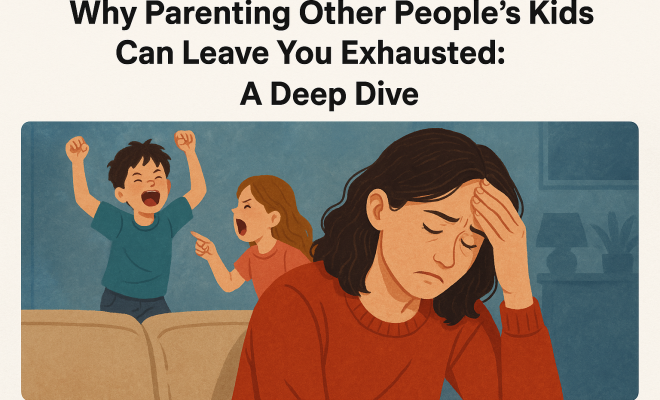
Why Parenting Other People’s Kids Can Leave You Exhausted: A Deep Dive
“`html
Parenting is no small feat, and when you’re tasked with managing your own children, the challenge can feel monumental. But what happens when the responsibility extends beyond your own offspring to include the children of close friends? This is the dilemma faced by a parent who wrote to Dear Abby, expressing feelings of exhaustion after effectively parenting her friends’ undisciplined kids. This situation touches on several critical themes within parenting culture today: boundary-setting, unequal labor among adults, and the frustrations that arise when navigating relationships that involve children. In this article, we’ll explore these issues, delve into the emotional landscape of parenting, and offer actionable parenting advice for managing these complex dynamics.
The Dilemma of Parenting Someone Else’s Children
The letter to Dear Abby brought to light a common frustration that many parents experience but few openly discuss: the exhaustion of taking on the role of a secondary parent. The writer described feeling overwhelmed by the responsibility of overseeing her friends’ children, who lacked basic discipline. It’s an emotionally charged situation that can make any parent feel like they are shouldering an unfair burden.
Parents often find themselves in these roles during playdates or when friends ask for help. It starts innocently enough — a few hours of fun can easily turn into a scenario where one parent becomes the default authority figure. The writer’s exhaustion speaks to the exhaustion many feel when they take on these added responsibilities, often without any formal agreement or acknowledgement from the children’s actual parents.
The Emotional Toll of Unequal Labor
One of the most significant challenges highlighted by this situation is the unequal distribution of parenting labor. When one parent is left managing multiple children, especially those who are unruly or poorly disciplined, the stress can mount quickly. This emotional toll can lead to resentment, frustration, and even isolation.
Many parents find themselves in a position where they feel obligated to help friends out of a sense of loyalty or friendship. However, when the balance tips too far in one direction, it can create feelings of being overwhelmed and unappreciated. In her letter, the parent expressed that her friends weren’t fully acknowledging the effort she was putting in, which only adds to the emotional burden. This scenario ignites a debate around the importance of setting clear boundaries, not just for the sake of mental health, but also for the overall dynamics of friendships.
The Necessity of Setting Boundaries
Setting boundaries is essential in any relationship, and parenting is no exception. When it comes to managing friendships while also parenting, clear communication is key. The writer’s experience serves as a reminder that it’s okay to say no, and more importantly, to set limits on what you’re willing to take on.
Establishing boundaries can be as simple as having a conversation with your friends about what you are comfortable doing. This might mean explaining that while you’re happy to help out occasionally, you cannot take on the role of a primary caregiver for their children. By having these discussions, you create an environment where everyone understands each other’s expectations, reducing the likelihood of frustration or resentment.
Understanding the Impact of Your Parenting Style
The way we parent is often deeply rooted in our own experiences and beliefs. As the letter from Dear Abby illustrated, the writer was faced with children who were undisciplined and who demanded a lot of energy. It’s crucial to consider how different parenting styles can clash, especially when you’re left in charge of children who may be accustomed to a different set of rules.
For instance, if you believe in structured routines and boundaries, having to manage children who don’t follow those expectations can lead to a stressful environment. It’s important to recognize that while you may feel compelled to parent these children in a way that aligns with your values, you also have to respect their home upbringing and the parenting style of their actual parents. This can create a significant conflict and complicate the dynamic even further.
The Role of Communication in Friends with Kids
Effective communication is the backbone of any relationship, especially when it involves children. The writer’s feelings of exhaustion could have been alleviated by openly discussing her concerns with her friends. Talking through issues can foster understanding and empathy, leading to more supportive relationships.
Many parents fear that discussing their feelings might hurt friendships or create tension. However, bringing these feelings to the forefront can actually strengthen bonds. By expressing your needs and concerns, you foster a culture where honesty is valued, allowing for better parenting collaborations. Whether it means establishing playdate guidelines or agreeing on a fair distribution of childcare responsibilities, open dialogue is critical.
The Influence of Social Media on Parenting Expectations
In today’s digital age, social media can heavily influence parenting expectations. Many parents feel pressure to present a perfect image online, which can skew perceptions of what parenting looks like in real life. The reality is that most parents struggle with their own challenges, and sharing these experiences can often lead to a sense of community. (See: CDC resources on parenting.)
In the context of the letter, this social media pressure can exacerbate feelings of inadequacy or exhaustion. Parents may feel they must meet certain standards or exhibit flawless parenting skills, even when managing someone else’s kids. By sharing experiences and challenges openly, parents can create more authentic discussions around the realities of parenting, including how to manage responsibilities when it comes to friends’ children.
Creating a Supportive Community
Building a community that supports parents in navigating situations like the one described in Dear Abby can be incredibly beneficial. This involves creating networks in which parents can share their experiences, offer advice, and support each other through the ups and downs of parenting.
Consider forming or joining a parenting group in your area or online. These platforms allow you to share your frustrations and gain insights from others who might have faced similar challenges. Building a supportive community can help alleviate feelings of isolation, making parenting feel less overwhelming.
The Importance of Self-Care in Parenting
It’s easy to forget about self-care when you’re busy parenting not just your kids but also the children of your friends. The parent who wrote to Dear Abby highlighted the exhaustion that comes from this added responsibility. Taking care of yourself is critical to being an effective parent — and it’s even more important when you’re stretched thin by the demands of others’ children.
Make sure to carve out time for yourself, whether that means engaging in a hobby, exercising, or simply taking a moment to breathe. When you prioritize your well-being, you can better manage the emotional toll that comes from parenting and supporting others. Remember, you can’t pour from an empty cup.
Final Thoughts on Parenting Dynamics
The experience shared in the Dear Abby letter encapsulates a situation many parents can relate to: feeling overburdened by the responsibilities of parenting friends’ kids. It raises essential questions about boundaries, communication, and the emotional labor involved in these relationships. By understanding the importance of setting limits, fostering open communication, and building a supportive community, parents can navigate these complexities with more ease.
Ultimately, parenting is about balance — balancing your needs with those of your children and your friends. Remember, everyone grapples with these issues, and you are not alone in feeling exhausted. Embrace the challenges and seek out the support you need. After all, parenting is a journey best traveled together, even when that means navigating the tricky waters of other people’s kids.
Parenting Styles and Their Effects on Child Behavior
Understanding various parenting styles can shed light on why certain children behave the way they do, especially when you’ve unexpectedly taken on the role of caregiver. Psychologists recognize four main parenting styles: authoritarian, authoritative, permissive, and neglectful. Each style significantly impacts children’s behavior and development.
Authoritarian parents enforce strict rules and expect obedience without question. While this can produce well-disciplined children, it often leads to resentment and rebellion as they grow. In contrast, authoritative parents combine rules with open communication, encouraging independence while maintaining discipline. These children tend to develop better emotional regulation and social skills.
Permissive parents, on the other hand, are lenient. They might prioritize their child’s happiness over discipline, which can result in children who struggle with boundaries and self-control. Finally, neglectful parents provide little guidance or attention, leading to children who feel unvalued and may act out for attention.
When dealing with children from different backgrounds, recognizing these styles can help you navigate interactions more effectively. You might find that children accustomed to a permissive upbringing are more likely to push boundaries, while those from authoritarian homes may be more compliant but less emotionally expressive.
Statistics on Parenting Dynamics
Research provides valuable insights into parenting dynamics, highlighting the prevalence of shared parenting roles among friends and relatives. A survey conducted by the Pew Research Center found that about 56% of parents reported that they have cared for children other than their own within the past year. This statistic illustrates the commonality of the situation depicted in the Dear Abby letter.
Furthermore, the American Psychological Association (APA) highlights that parents who report feeling overwhelmed by their parenting duties are more likely to experience higher stress levels, which can lead to burnout if not addressed. Studies show that parental burnout can significantly affect not just the parent’s well-being, but also the child’s emotional health and behavior. Children often pick up on their parents’ stress, leading to a cycle of tension and anxiety.
In a broader context, research shows that effective communication and boundary-setting among parents can reduce stress and improve relationships. The Journal of Marriage and Family found that families that regularly communicate about parenting expectations experience lower levels of conflict and greater satisfaction in their relationships. (See: NIH on parenting and child behavior.)
Expert Perspectives on Navigating Parenting Friendships
Experts suggest that navigating friendships in the context of parenting requires both empathy and assertiveness. Dr. Laura Markham, a clinical psychologist and parenting expert, emphasizes the importance of self-awareness. She suggests that parents should reflect on their feelings about caring for friends’ children and voice any discomfort to avoid resentment. This might include discussing specific behaviors that are challenging or clarifying the extent of your involvement.
Child psychologist Dr. Wendy Mogel advises parents to foster open conversations about parenting styles and expectations. She recommends approaching these discussions with curiosity rather than judgment, allowing for a more productive dialogue. Dr. Mogel also points out the importance of recognizing when a casual playdate turns into a situation where one parent is doing most of the work. Acknowledging this shift can help establish clearer boundaries and prevent exhaustion and frustration.
Ultimately, expert advice centers on the idea that communication, empathy, and setting boundaries can lead to healthier relationships, reducing the emotional toll on parents. By understanding these principles, you can create a more supportive environment for both yourself and your friends.
FAQ: Addressing Common Concerns in Parenting
How can I politely decline to care for my friend’s children?
It’s important to approach the conversation with honesty and kindness. You might say something like, “I appreciate you thinking of me, but I need to prioritize my time and energy for my own kids right now.” This maintains the friendship while establishing your boundaries.
What if my friends don’t understand my boundaries?
If your friends struggle to accept your boundaries, it might be necessary to clarify your needs further. Explain the reasons behind your limits, and emphasize that it’s not a reflection on them or their children but rather a matter of personal capacity. Good friends should be willing to understand your perspective.
How can I create a more structured playdate environment?
Consider setting some ground rules before playdates. You could establish a schedule for activities, snack times, and even quiet times. Having a clear structure can make the experience more enjoyable for everyone and helps reinforce boundaries for all kids involved.
Is it normal to feel overwhelmed when parenting other people’s kids?
Absolutely. Many parents experience this feeling, especially when taking on additional responsibilities. It’s crucial to acknowledge these feelings and to communicate them. Remember, it’s okay to seek help or support from your friends or a parenting group.
What resources can I turn to for more parenting advice?
There are numerous resources available, from parenting books and blogs to community groups. Websites like Parenting.com, the American Academy of Pediatrics, and social media parenting pages can offer a wealth of information and support.
How can I foster a supportive parenting group?
Start by reaching out to parents in your community and expressing your interest in creating a supportive network. Organize regular meetups, whether in-person or online, where you can share experiences, advice, and strategies for managing parenting challenges together.
Additional Resources for Parenting Advice
When navigating the tricky waters of parenting, having access to reliable resources can make a significant difference. Here are some valuable sources where you can gather parenting advice and find support:
- Parenting Websites: Websites like HealthyChildren.org, run by the American Academy of Pediatrics, provide expert advice and up-to-date research on a variety of parenting topics.
- Parenting Books: Consider reading books such as “The Whole-Brain Child” by Dr. Daniel J. Siegel and Dr. Tina Payne Bryson, which offers insights into child development and effective parenting strategies.
- Online Forums: Joining forums like BabyCenter or WhatToExpect can connect you with other parents who are facing similar challenges, allowing for shared experiences and solutions.
- Podcasts: Listening to parenting podcasts such as “The Longest Shortest Time” can provide insights and tips from experts and fellow parents alike.
- Local Parenting Classes: Many communities offer parenting classes that can provide hands-on advice and support, helping you navigate your unique situation with added confidence.
The Importance of Flexibility in Parenting
As you navigate the complexities of parenting and supporting your friends, remember that flexibility is key. Life can be unpredictable, and your approach to parenting may need to adapt to the changing dynamics of your relationships. Being open to adjusting your boundaries, communication styles, and even parenting methods can lead to more harmonious interactions with friends and their children.
For instance, if you’re planning a playdate and notice tensions rising or misunderstandings occurring, being willing to pause and reassess the situation can help diffuse potential conflicts. It’s important to approach each scenario with compassion and a willingness to find solutions that work for everyone involved.
Balancing Personal and Social Responsibilities
In the hustle of balancing personal responsibilities with social obligations, it’s easy to overlook your own needs. Remember, it’s perfectly reasonable to prioritize your family’s needs above all else, and you don’t have to accept every request for help. Finding that balance can be a challenge, but it’s essential for your mental well-being.
Setting aside time for your family and for yourself is not just beneficial; it’s necessary. If you find yourself constantly saying “yes” to requests from friends, consider taking a step back. Reflect on your priorities and remember that it’s okay to decline invitations or requests that don’t align with your current capacity.
The Long-Term Effects of Parenting Dynamics
The way parenting responsibilities are shared and perceived can have long-term effects on friendships and parenting styles. Children often observe and learn from how their parents interact with others, especially in social settings. If they see parents setting respectful boundaries, they’re likely to emulate those behaviors in their future relationships.
On the other hand, if children witness their parents consistently overextending themselves for others, it may lead to a sense of entitlement or an expectation that others will always be accommodating. Striving to model healthy boundaries and communication can help ensure that the next generation understands the importance of mutual respect and care.
Encouraging Open Dialogue Among Parents
Creating an environment where parents can talk openly about their experiences and challenges is crucial. Encouraging friends to share their own parenting struggles can lead to more balanced relationships. When everyone feels comfortable discussing their needs and limitations, it fosters a sense of community and collective responsibility.
To encourage dialogue, you might consider hosting informal gatherings where parents can come together to share stories and advice. This could be as simple as a coffee morning or a planned potluck dinner. The more we normalize these discussions, the more prepared we’ll be to face the challenges of parenting, especially when it involves others’ children.
Conclusion
Parenting is undoubtedly a multifaceted journey filled with challenges and joys. As you navigate the waters of caring for not just your children but also the children of friends, remember the importance of setting boundaries, engaging in open communication, and prioritizing self-care. By embracing these strategies, you can create a more supportive environment for yourself and your community, alleviating some of the pressures that come with parenting.
With the right tools and perspectives, it’s possible to turn parenting challenges into opportunities for growth and connection. Remember that you’re not alone, and that seeking advice and support can lead to a richer, more fulfilling parenting experience.
“`
Trending Now
Frequently Asked Questions
Why is parenting other people's kids so exhausting?
Parenting other people's kids can be exhausting due to the emotional and physical demands of managing unruly behavior while lacking formal authority. This often leads to feeling overwhelmed and unrecognized for the additional responsibilities taken on during playdates or social gatherings.
How can parents set boundaries with friends regarding their kids?
Setting boundaries with friends about their kids involves clear communication about expectations and responsibilities. Parents should express their limits on involvement and ensure mutual understanding to prevent emotional exhaustion and maintain healthy friendships.
What are the emotional challenges of parenting other people's children?
The emotional challenges include feelings of resentment, frustration, and burnout from managing children who lack discipline. This can create an imbalance in parenting roles, leading to stress and emotional fatigue for the parent stepping in as a secondary caregiver.
How can parents cope with the stress of parenting friends' children?
Parents can cope by establishing clear boundaries, seeking support from their friends, and practicing self-care. Open discussions about parenting styles and responsibilities can help alleviate the stress of managing additional children during social interactions.
What should you do if you feel overwhelmed by parenting other kids?
If feeling overwhelmed, it's important to communicate your feelings to your friends, reassess your involvement, and prioritize your own children's needs. Seeking help or setting limits on how much responsibility you're willing to take on can also alleviate stress.
What’s your take on this? Share your thoughts in the comments below — we read every one.