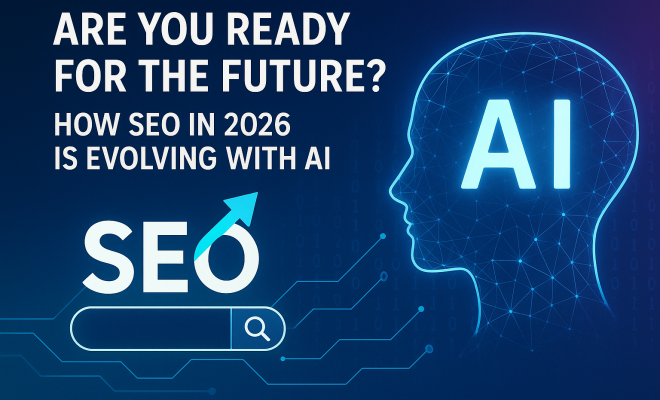
Are You Ready for the Future? How SEO in 2026 is Evolving with AI
“`html
1. Understanding the Landscape of SEO in 2026
As we look into the future of SEO in 2026, one thing is clear: the landscape is changing rapidly. Gone are the days when traditional SEO strategies dominated the scene. The rise of artificial intelligence (AI) technologies is reshaping how search engines operate, particularly Google. With AI search becoming more prevalent, marketers and web creators must adapt their strategies to remain visible in an increasingly competitive environment.
According to recent observations, AI Overviews, which are AI-generated summaries that appear on search results, are now being displayed on approximately 30% to 50% of U.S. queries. This shift is profound and significant. For businesses and content creators, it means reevaluating long-held beliefs about search optimization and understanding the new signals that influence visibility.
SEO in 2026 will not only be about keywords and backlinks; it will require a more nuanced understanding of how AI interprets content and user intent. As algorithms become more sophisticated, they will increasingly mimic human reasoning, demanding a higher level of content strategy that combines technical SEO with a deep understanding of user behavior.
2. The Impact of AI Overviews on Click-Through Rates
One alarming statistic is that AI Overviews can lead to a staggering 61% reduction in click-through rates for affected searches. This indicates that users are increasingly relying on these AI-generated snippets rather than clicking through to individual websites. Consequently, this change poses a serious challenge for anyone who depends on organic traffic to drive business or traffic to their content.
As an SEO professional or digital marketer, it’s crucial to recognize that just ranking in the top spots may not be enough anymore. If your content isn’t appearing alongside AI Overviews, you could be missing out on a significant portion of potential traffic. This statistic sheds light on the urgency of adapting your SEO strategies to align with these new realities.
To combat this decline in click-through rates, businesses may need to invest in creating rich snippets, optimizing their content for voice search, and diversifying their online presence. Engaging in social media marketing, influencer partnerships, and email campaigns can help drive traffic to websites even when organic search results are being overshadowed by AI-generated content.
3. The New Importance of Content Quality
With AI algorithms now playing a pivotal role in determining which content gets featured in search results, the quality of that content is more important than ever. Recent findings suggest that around 76% of URLs included in AI Overviews already rank within Google’s top 10 results. This means that the content that gets favored is not necessarily the one that simply has the most backlinks, but rather the content that demonstrates authority and relevance.
Content depth, readability, and the ability to answer queries directly are the new key performance indicators. As we position ourselves for SEO in 2026, focusing on these aspects will be critical for success, especially as AI continues to refine how it values content.
Moreover, integrating multimedia elements like infographics, videos, and interactive content can significantly boost engagement. Research indicates that articles containing visual content receive 94% more views than those without, underscoring the importance of diverse media in enhancing content quality. This aligns with AI’s preference for comprehensive, engaging content that resonates with users.
4. Redefining Link Building in the Age of AI
Traditionally, backlinks were the cornerstone of SEO success. However, as of 2026, this might not hold the same weight. While backlinks still play a role in establishing credibility, they are no longer the sole indicator of content worthiness. AI’s evolution means that Google’s algorithms are evolving to prioritize branded mentions and contextual relevance over sheer quantity of links.
Marketers should consider how they can integrate their brand mentions across various platforms, enhancing their visibility without relying solely on traditional link-building tactics. This shift requires creativity and adaptability in how we think about online presence, reputation, and authority.
Instead of pursuing backlinks indiscriminately, businesses should prioritize quality over quantity, focusing on obtaining links from reputable sources that align with their industry and target audience. Engaging in thought leadership through guest posts, podcasts, and webinars can create more meaningful connections and establish authority without the reliance on traditional link-building methods.
5. Branded Mentions: A New Signal of Authority
As we navigate SEO in 2026, one of the most significant changes is the emphasis on branded web mentions. These mentions can establish a brand’s authority in its niche and signal to search engines that it is a trusted source. This presents a unique opportunity for businesses to enhance their public relations strategies and increase their online footprint. (See: AI's impact on search engines.)
Instead of focusing solely on backlinks from high-traffic sites, businesses are encouraged to cultivate brand recognition and engagement. This can be accomplished through collaborations, partnerships, and active participation in relevant online conversations. As the algorithms evolve, so too must our strategies for building authority and credibility online.
Utilizing social media platforms to share insights, engage with followers, and participate in trending discussions can amplify brand mentions. Brands that effectively leverage user-generated content and testimonials also contribute to their authority and trustworthiness in the eyes of both consumers and search engines.
6. Enhancing Readability and User Experience
In the new SEO landscape, how easily your audience can consume your content matters more than ever. Readability is now a critical factor influencing SEO rankings. Content that is easy to read and understand increases user engagement, encouraging visitors to stay longer and interact with your site.
Utilizing clear headings, bullet points, and concise language can significantly enhance the user experience. Additionally, incorporating visual elements such as images and videos can make your content more appealing. As you strategize for SEO in 2026, remember that user experience goes hand-in-hand with SEO. Make it a priority to create content that resonates with your audience.
Statistics show that pages with better readability scores can achieve up to 80% higher engagement rates. Tools like the Flesch-Kincaid readability test can help assess and improve your content’s readability, ensuring that it meets the expectations of your audience while complying with SEO best practices.
7. Embracing Q&A Formatting
Another emerging trend in SEO is the use of Q&A formatting. This approach not only answers user questions directly but also caters to the way people search online. With the growing popularity of voice search and AI-powered assistants, providing clear, concise answers in a Q&A format can position your content favorably in search results.
As you create content, consider what questions your target audience might have and ensure that your answers are readily available. This not only helps with SEO but also establishes your brand as a knowledgeable source, enhancing credibility and trust with your audience.
Incorporating FAQs into your web pages, especially on product or service landing pages, can improve your chances of appearing in featured snippets. Structured data markup can also be utilized to help search engines understand and highlight this content, making it essential for optimizing your visibility in search results.
8. Staying Ahead of the Curve: Adapting SEO Strategies
The next few years will require agility and foresight. As we move into SEO in 2026, staying informed and adaptable is crucial. Search algorithms are continuously updated, and consumer behaviors are always shifting. By recognizing these trends early, you can pivot your strategies effectively.
Engage with data analytics to monitor your traffic and visibility shifts. Experiment with different content formats and marketing approaches to see what resonates with your audience. By staying proactive, you can navigate the changes and continue to thrive despite the evolving landscape.
Participating in SEO forums, attending industry conferences, and following thought leaders can keep you up to date on the latest trends and algorithm changes. Keeping an eye on competitors and assessing their strategies can also provide valuable insights into what may work for your business.
9. Why SEO is Not Dead, but Evolving
Despite the challenges presented by AI and changing algorithms, it’s vital to acknowledge that SEO is not dead. Instead, it’s entering a new phase of evolution. Understanding the technological advancements and adapting to them is crucial for marketers and content creators. The essence of SEO remains: to connect users with the information they seek.
As we adapt to AI-driven changes, we must also remember the fundamentals of SEO. Creating valuable, high-quality content that serves user needs will always be significant. As long as there are search engines, there will be a need for SEO. The key is staying informed and agile to keep pace with these shifts.
Additionally, SEO in 2026 will likely require a more multi-channel approach. Integrating SEO with other forms of digital marketing, such as email, social media, and content marketing, can create a unified strategy that enhances brand visibility and engagement across various platforms. (See: Technology's role in user behavior.)
10. Final Thoughts: Preparing for the Future of SEO
As we approach 2026, the landscape of SEO continues to shift under our feet. The emergence of AI technologies, particularly in how search results are presented, signifies a pivotal change in how we approach online visibility. The challenges are substantial, but they also present opportunities for those willing to adapt.
By understanding the influence of AI Overviews, prioritizing content quality, and shifting focus from traditional link-building methods, businesses can position themselves for success. The future of SEO is bright for those ready to embrace change, ensuring they maintain and even enhance their visibility in an AI-driven world.
11. Frequently Asked Questions (FAQ) about SEO in 2026
What are the key changes expected in SEO strategies by 2026?
By 2026, SEO strategies will increasingly emphasize high-quality content, user experience, and AI-driven insights. Marketers will need to embrace new technologies and adapt to changes in search algorithms that prioritize relevance and authority over traditional metrics like backlinks alone.
How will AI impact content creation for SEO?
AI will play a significant role in content creation by helping marketers understand user intent and generate insights into trending topics. Tools powered by AI can assist in optimizing content for better readability and engagement, ensuring it aligns with evolving SEO standards.
Are backlinks still important for SEO in 2026?
While backlinks will still hold some value, their importance will diminish compared to other factors, such as branded mentions and the overall quality of content. It will be essential to focus on authority and relevance rather than merely accumulating backlinks.
What role does user experience play in SEO in 2026?
User experience will be a critical factor in SEO rankings. Websites that prioritize readability, site speed, and overall user engagement will likely perform better in search results. Brands should focus on creating intuitive navigation and engaging content that keeps users on their site.
How can businesses prepare for the changes in SEO by 2026?
Businesses can prepare by staying informed about industry trends, investing in high-quality content, and utilizing analytics tools to monitor performance. Additionally, integrating SEO with other marketing strategies, such as social media and email campaigns, can provide a more holistic approach to online visibility.
Will voice search continue to impact SEO in 2026?
Yes, voice search will continue to influence SEO strategies. As more users rely on voice-activated devices, optimizing content for natural language queries and direct answers will be crucial for brands aiming to capture this growing audience.
What metrics should marketers focus on in the future of SEO?
Marketers should focus on metrics that indicate user engagement, such as time on page, bounce rates, and conversion rates. Additionally, tracking brand mentions and sentiment analysis will provide insights into a brand’s authority and reputation in its niche.
12. Preparing for AI in Content Marketing
As we transition into 2026, the influence of AI on content marketing will only grow. Brands that leverage AI tools to analyze consumer behavior and preferences will have the upper hand. For instance, AI can help tailor content to various segments of the audience, ensuring maximum engagement. A 2023 study found that brands using AI-driven content strategies saw a 25% increase in engagement rates compared to those sticking to traditional methods.
Moreover, machine learning algorithms can help predict which topics will resonate with target audiences, enabling marketers to stay ahead of trends. Brands might also develop AI-generated content that complements human-created pieces, leading to a more diverse content strategy.
However, it’s essential to maintain a balance between human touch and automation. While AI can analyze data and provide insights, it cannot replicate the creativity and emotional resonance that comes from human writers. The future of content marketing will likely be a collaboration between AI and human ingenuity.
13. The Rise of Visual Search and Its SEO Implications
By 2026, visual search is expected to become even more common, transforming how users interact with search engines. Platforms like Pinterest and Google Lens are already enabling users to search using images rather than keywords. As a result, SEO strategies will need to account for visual content optimization, including the use of alt text, image sitemaps, and proper tagging. (See: AI in digital marketing strategies.)
Statistics show that 62% of millennials prefer visual search over text-based search. This trend underscores the necessity for businesses to invest in high-quality images and videos that can enhance their search visibility. By optimizing images for SEO and ensuring they load quickly, brands can significantly improve user engagement and satisfaction.
Additionally, integrating visuals into product descriptions and blog posts can lead to higher conversion rates. As search engines continue to evolve, those who embrace visual search will be better positioned to capture relevant traffic and engage their target audience.
14. The Importance of Local SEO in 2026
As we move into 2026, local SEO will continue to play a crucial role for businesses, especially for those with physical locations. With the increasing use of mobile devices and location-based searches, optimizing for local SEO can significantly impact foot traffic and sales.
Google’s algorithms have evolved to prioritize local results when users search with geographical intent. For example, searches like “restaurants near me” or “best coffee shop in [city]” highlight the importance of having a strong local SEO strategy. Businesses should ensure their Google My Business listings are up to date and include accurate information, such as hours of operation and services offered.
Additionally, obtaining local reviews and engaging with the community through social media and local events can further enhance visibility. According to a survey, 76% of people who search for something nearby visit a business within a day, emphasizing the critical nature of local SEO.
15. Keeping Up with Evolving Search Trends
To thrive in the world of SEO in 2026, staying informed about emerging search trends will be vital. One significant trend is the rise of personalized search results, influenced by user behavior and preferences. Search engines are becoming better at delivering results tailored to individual users, meaning businesses must focus on building a comprehensive understanding of their audience.
Data analytics tools can help marketers assess user behavior patterns and preferences, leading to more personalized content strategies. Furthermore, as privacy regulations evolve, brands must navigate how to collect and use data ethically while still providing relevant content.
Another trend is the increasing importance of mobile-first indexing. Google has already moved to prioritize mobile versions of websites in its ranking, making it essential for businesses to ensure their sites are mobile-friendly. This includes responsive design, fast loading times, and easy navigation.
16. Conclusion: The Future Is Bright for Adaptive Marketers
As we approach the middle of the decade, it’s clear that the future of SEO is full of challenges and opportunities. Those who embrace change, stay informed about industry trends, and adapt their strategies accordingly will thrive. The key to success will lie in integrating AI tools, optimizing for visual and voice search, and maintaining a sharp focus on user experience. Remember, while the landscape of SEO is evolving, the fundamental goal remains the same: connecting users with the information they seek in the most efficient way possible.
“`
Trending Now
- this guide on the future of startups: insights from the kpmg global tech report 2026
- our breakdown of unlocking your future: the it courses you need to succeed in 2026
- 7 Essential NEET Re-Test Tips for Parents to Help Their Children Succeed Again
- our breakdown of james webb telescope makes groundbreaking discovery: methane from interstellar object 3i/atlas
- read the full story
Frequently Asked Questions
How is SEO evolving with AI?
SEO is evolving significantly with the rise of AI technologies. By 2026, traditional strategies are being replaced by AI-driven insights that focus on user behavior and intent. Marketers must adapt to these changes to improve visibility in search engines, as AI algorithms increasingly mimic human reasoning.
What are AI Overviews in SEO?
AI Overviews are AI-generated summaries that appear in search results, affecting how users interact with search engine results. They can significantly reduce click-through rates, as users may rely on these snippets instead of visiting individual websites, altering the landscape for digital marketers.
What impact do AI Overviews have on click-through rates?
AI Overviews can lead to a staggering 61% reduction in click-through rates for affected searches. This indicates a shift in user behavior, where reliance on AI-generated snippets can diminish organic traffic to websites, posing challenges for businesses and content creators.
What should businesses consider for SEO in 2026?
Businesses should consider a more nuanced approach to SEO in 2026, focusing on how AI interprets content and user intent. This includes combining technical SEO with strategies that enhance user engagement and adapting content to align with AI-driven search algorithms.
Why is understanding user intent important for SEO?
Understanding user intent is crucial for SEO as it helps create content that aligns with what users are searching for. With AI's increasing influence on search algorithms, a deep understanding of user behavior will be key to improving visibility and engagement in search results.
What did we miss? Let us know in the comments and join the conversation.