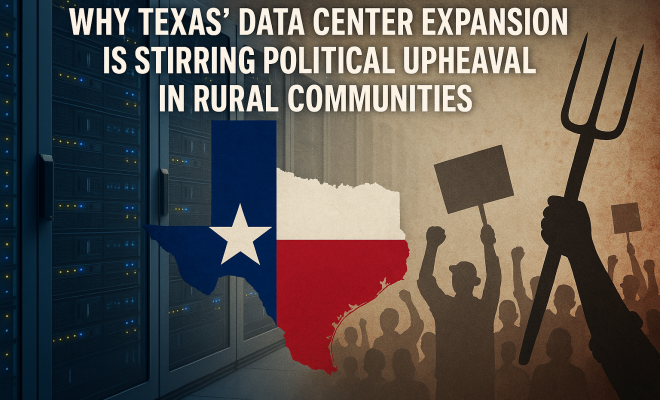
Why Texas’ Data Center Expansion Is Stirring Political Upheaval in Rural Communities
“`html
Texas is currently experiencing a remarkable surge in data center development, a trend that seems to be reshaping not just its economy but also its political landscape. As these facilities proliferate across the state, particularly in rural areas, they are igniting controversies that pit local communities against state leaders, many of whom traditionally enjoy strong support from these same residents. The intersection of big-tech growth, utility strain, and community concerns creates a multifaceted issue that is garnering attention and stirring debates about land use and quality of life.
The Rise of Data Centers in Texas
In recent years, Texas has positioned itself as a leading destination for data center developers, attracted by the state’s favorable business climate, low energy costs, and robust infrastructure. Major tech companies are investing heavily in this sector, establishing massive facilities that house servers, cloud storage, and other digital services crucial to the modern economy. According to a report by Gartner, the data center market is anticipated to grow significantly, with Texas expected to play a pivotal role in this expansion.
This boom is not merely a fleeting trend; it reflects the increased demand for digital services amidst a global shift towards remote work, e-commerce, and streaming services. However, the rapid development of these facilities comes with significant implications for local communities, particularly in rural areas that are now witnessing an influx of large-scale industrial projects.
The Backlash in Rural Communities
As data centers sprout across the Texas landscape, opposition is emerging from local residents who are raising valid concerns about the implications for their communities. Many of these residents, traditionally aligned with the Republican base, are now expressing their dissatisfaction with the state leaders who support these developments.
One of the most pressing issues is land use. Residents worry that the land being repurposed for data centers could have been utilized for agriculture or other community-friendly projects. The shift from rural to commercial land use raises fears about the loss of local identity and the potential degradation of neighborhoods.
Utility Strain: Power and Water Concerns
Beyond land use, the demands that data centers place on local utilities are becoming a significant point of contention. Data centers require substantial amounts of electricity to operate, leading to concerns about the strain on local power grids. Critics argue that the increasing energy consumption could result in higher electricity costs for residents and even potential power shortages during peak demand periods.
Water consumption is another critical issue. Texas is already grappling with water scarcity, and the high water usage associated with cooling data centers exacerbates this problem. Residents are concerned that these facilities are diverting essential resources away from communities, especially in an era of unpredictable climate patterns and droughts.
Quality-of-Life Impacts
At the heart of the residents’ opposition lies a broader concern about quality of life. The influx of data centers can change the character of rural communities, impacting everything from traffic patterns to local ecosystems. Residents express fears of increased noise pollution, traffic congestion, and environmental degradation, which can ultimately lead to a decline in their quality of life.
This is particularly troubling for communities that are often characterized by their tranquil settings and strong community ties. Many residents feel that their voices are not being heard, as their concerns are overshadowed by the promise of economic growth and development.
The Political Ramifications
The conflict surrounding data centers in Texas is significant not just for the communities involved but also for the political landscape in the state. Traditionally, the support for big business has been a cornerstone of Republican politics. However, as local residents push back against data center expansions, state leaders find themselves in a precarious position: balancing economic growth with the needs and concerns of their constituents.
This dynamic could have far-reaching consequences, especially as local elections approach. Politicians who have long relied on rural support may be forced to reconsider their positions on data center developments to avoid alienating their voter base. The backlash against data centers could signal a shift in political priorities, as local leaders may begin to advocate more fiercely for community interests over corporate interests. (See: impact of urban planning on communities.)
Comparative Analysis: Other States
Texas is not alone in its data center boom; other states are also experiencing similar trends. For instance, Virginia has emerged as a significant player in the data center market, attracting many of the same tech giants. However, unlike Texas, Virginia has faced more stringent regulations concerning environmental impacts and land use, which have sparked debates in their communities.
By examining these other states, it becomes evident that a proactive approach to data center development can mitigate some of the concerns that Texas communities are facing. States that incorporate community input and stress sustainable practices may find a way to balance economic growth with local needs more effectively. This approach can serve as a model for Texas as it navigates the challenges posed by its own data center expansion.
Voices of the Community
In the midst of growing tensions, many community members have begun to voice their concerns more loudly. Town hall meetings are increasingly becoming platforms where residents can express their apprehensions about the impacts of data centers. Activism is growing among those who feel their quality of life is at stake, with local leaders advocating for more stringent regulations to protect community interests.
Community organizations are also mobilizing to raise awareness about the potential consequences of unchecked data center development. Efforts include organizing protests, engaging in local politics, and collaborating with environmental groups to ensure that their voices are heard. This grassroots movement is reshaping the local political climate, signaling to state leaders that decisions made without community input may lead to electoral backlash.
Future Outlook: Finding a Balance
As the data center boom continues, the critical question facing Texas is how to find a balance between economic growth and the concerns of local communities. State leaders will need to engage with residents and address their concerns about land use, energy consumption, and the quality of life to maintain support in traditionally Republican areas.
One potential solution is to establish clearer guidelines and regulations for data center development that prioritize community input and environmental sustainability. By fostering a collaborative approach that includes local stakeholders, state leaders can work to ensure that economic growth does not come at the expense of community well-being.
Conclusion: A Political Challenge Ahead
The ongoing conflict related to data centers in Texas illustrates a crucial political challenge for state leaders. As communities push back against rapid development without sufficient consideration of local needs, the potential for political upheaval looms large. The intersection of Texas data center politics with community concerns presents a unique opportunity for state leaders to reassess their approach and forge a path forward that prioritizes both economic growth and community health.
In navigating this complex landscape, Texas can serve as a model for other states grappling with similar issues, showcasing how proactive engagement and thoughtful regulation can lead to a more sustainable and equitable approach to data center development. The stakes are high, and how Texas addresses these challenges may ultimately shape its political landscape for years to come.
Economic Impact of Data Centers
Data centers in Texas are projected to contribute significantly to the state’s economy. According to a report by the Texas Comptroller, the data center sector could generate billions in revenue and create thousands of jobs in both direct and ancillary services. This includes positions in construction, maintenance, and operational support, providing a much-needed boost to local economies that have traditionally relied on agriculture and small businesses.
Moreover, the presence of large data centers can also attract further investments in technology and infrastructure, potentially transforming local economies. State officials argue that this influx of capital can lead to improved public services and infrastructure, benefiting the community at large. However, this perspective is often met with skepticism from residents who question whether the promised benefits will materialize.
Environmental Sustainability and Data Centers
As data centers consume vast amounts of resources, the debate over their environmental impact has intensified. Data centers are notorious for their energy consumption, with estimates suggesting they account for approximately 2% of global electricity use. In Texas, concerns surrounding sustainability are particularly pressing given the state’s ongoing issues with drought and water management.
In response, some data center operators are exploring renewable energy options, such as solar and wind power, to mitigate their environmental footprint. However, community advocates argue that mere investments in renewables do not address the immediate concerns of resource allocation and community health. A more transparent and accountable approach to environmental sustainability could foster better relations between data center developers and the communities they impact. (See: New York Times on Texas data centers.)
Legislative Measures and Advocacy
In light of the rising tensions, several advocacy groups are calling for legislative measures to regulate data center development more effectively. These include proposals for stricter zoning laws, energy efficiency standards, and community engagement requirements that would ensure local voices are heard in the decision-making process.
Additionally, there are calls for tax incentives to be tied to community investment, ensuring that data centers contribute to local infrastructure and services. Such measures could alleviate some of the fears surrounding economic exploitation and foster a more collaborative relationship between data centers and local stakeholders.
FAQ: Texas Data Center Politics
What are data centers, and why are they important?
Data centers are facilities that house computer systems and associated components, such as telecommunications and storage systems. They are critical for supporting cloud computing, websites, applications, and other digital services that are integral to the modern economy.
Why is Texas attracting data centers?
Texas offers a favorable business climate, low energy costs, and a strong infrastructure, making it an attractive destination for data center development. The state’s deregulated energy market and abundant renewable resources further enhance its appeal.
What are the concerns of local communities regarding data centers?
Local communities express concerns about land use changes, increased utility demands (particularly for water and electricity), potential environmental degradation, and impacts on quality of life. These concerns often lead to tensions between residents and state leaders.
How can Texas address these community concerns?
Texas leaders can address community concerns by implementing clearer regulations for data center development, including community engagement processes, sustainability standards, and assurances that local resources will not be disproportionately impacted.
Are there examples of successful data center regulations in other states?
Yes, states like Virginia have implemented more stringent regulations regarding data center development, focusing on environmental impacts and community engagement. These examples highlight the potential for balancing economic growth with local interests.
What is the future outlook for data centers in Texas?
The future of data centers in Texas depends on how effectively state leaders can navigate community concerns while promoting economic growth. Engaging with residents and implementing sustainable practices will be crucial for maintaining support and ensuring that the benefits of data centers extend to local communities.
Comparative Economic Analysis: Texas vs. Other Data Center Hubs
When analyzing the data center landscape, it’s vital to compare Texas with other leading states in this arena. Virginia, for example, has become a prominent hub for data centers, primarily due to its proximity to Washington D.C. which attracts numerous government contracts and tech giants. The data center market in Virginia has seen exponential growth, with companies like Amazon and Microsoft establishing vast facilities.
According to a recent report from the U.S. Department of Energy, Virginia’s data centers utilize approximately 1.6 gigawatts of power, comparable to the entire energy consumption of the city of Richmond. This statistic highlights how other states are also grappling with the challenges of energy consumption and resource allocation. In contrast, Texas is projected to surpass Virginia’s capacity in the coming years, putting additional strain on its resources unless regulatory measures are put in place.
Innovative Solutions for Data Center Development
In response to the challenges posed by rapid data center expansion, innovative solutions are emerging. Some companies are exploring the concept of modular data centers, which are compact, scalable units that can be deployed quickly and efficiently. These centers are designed to be more energy-efficient and can be located closer to renewable energy sources, thus minimizing their carbon footprint and the impact on local grids.
Additionally, initiatives are underway to promote the use of artificial intelligence (AI) and machine learning in energy management for data centers. By optimizing power consumption through smart technology, data centers can significantly reduce their overall energy usage, thus alleviating some of the local residents’ concerns regarding energy demand.
Perspectives from Industry Experts
Experts in technology and urban planning are increasingly weighing in on the discourse surrounding data center development in Texas. Dr. Emily Johnson, a leading urban planner and professor at the University of Texas, emphasizes the necessity for strategic planning: “Data centers can indeed offer economic benefits, but they must be integrated into the community’s fabric carefully. This means involving local stakeholders from the outset and ensuring that developments align with community objectives.”
Similarly, Kevin Lee, a renewable energy consultant, asserts that “Texas has the potential to lead the way in sustainable data center practices, but it requires a shift in mindset. The focus should not just be on speed of development but on creating a legacy of responsible business practices that benefit both technology firms and local communities.”
Community Engagement Initiatives
To address the concerns raised by residents, several data center companies are beginning to adopt community engagement initiatives. These include hosting informational sessions, workshops, and open forums aimed at fostering dialogue between developers and local residents. The intention is to build trust and understanding, which can help mitigate fears and allow for a collaborative approach to development.
Furthermore, companies are exploring partnerships with local universities and research institutions to study the potential impacts of data centers on local ecosystems and economies. By investing in research that benefits the community, data center developers may be able to demonstrate their commitment to corporate social responsibility and transparency.
Long-Term Implications for Texas
The rapid expansion of data centers in Texas carries long-term implications not just for the communities directly affected but for the state’s overall future. As digital infrastructure becomes increasingly critical to the economy, Texas must navigate the balance between attracting businesses and maintaining the quality of life for its residents.
As data centers continue to proliferate, Texas will need to establish guidelines that ensure sustainability, resource management, and community input are prioritized in future developments. The decisions made today will shape the region’s economic landscape, community structure, and environmental health for generations to come.
“`
Trending Now
Frequently Asked Questions
Why are data centers expanding in Texas?
Data centers are expanding in Texas due to a favorable business climate, low energy costs, and robust infrastructure. The state's growth in tech investment is driven by increased demand for digital services, remote work, and e-commerce, making Texas a key player in the data center market.
What are the concerns of rural communities regarding data centers?
Rural communities are concerned about land use, utility strain, and the potential impact on their quality of life. As data centers become industrial projects in these areas, residents express dissatisfaction with state leaders who support such developments, feeling that their needs are overlooked.
How are Texas politicians responding to data center developments?
Texas politicians are facing backlash from constituents who traditionally support them. As local residents raise concerns about data centers, some politicians are caught in a conflict between promoting economic growth and addressing the worries of their communities regarding land use and infrastructure.
What impact do data centers have on local economies in Texas?
Data centers can stimulate local economies by creating jobs and increasing investment. However, the rapid growth also raises questions about infrastructure strain and whether the benefits outweigh the potential disruptions to community life and land use in rural areas.
Are data centers sustainable for rural Texas?
The sustainability of data centers in rural Texas is debated. While they contribute to economic growth, concerns about environmental impact, resource allocation, and community cohesion suggest that careful planning and consideration of local needs are essential for long-term viability.
What’s your take on this? Share your thoughts in the comments below — we read every one.