How a Breakthrough in Platinum Catalyst Ammonia Production Could Transform Global Agriculture
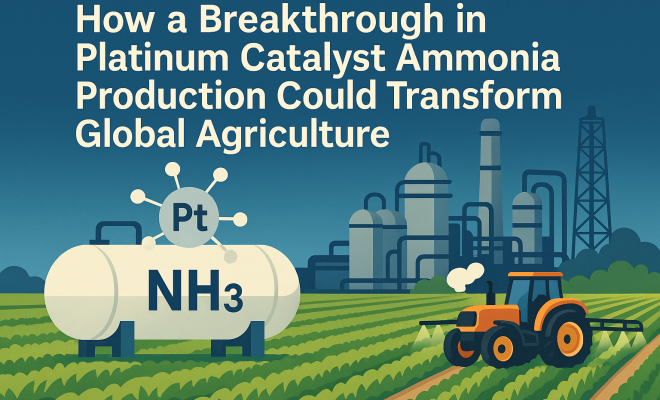
“`html
In a remarkable development within the realm of materials science and chemistry, researchers have made significant advancements in ammonia production through the application of a platinum catalyst. This breakthrough has the potential to reshape not only industrial ammonia production but also has far-reaching implications for environmental sustainability and food security. As ammonia plays a critical role in fertilizer manufacturing, the efficiency and eco-friendliness of its production are of paramount importance for both the agricultural sector and climate change mitigation efforts.
The Importance of Ammonia in Agriculture
Ammonia, a compound of nitrogen and hydrogen, is instrumental in the production of fertilizers, which are essential for crop growth. Historically, the synthesis of ammonia has relied on the Haber-Bosch process, a method developed in the early 20th century that combines nitrogen from the air with hydrogen derived primarily from natural gas. While this process has been revolutionary for agricultural output, it is highly energy-intensive and contributes significantly to greenhouse gas emissions.
According to the United Nations, food production must increase by 70% by 2050 to feed the growing global population, projected to reach nearly 10 billion. Given this context, improving ammonia production through innovative technologies, such as the use of a platinum catalyst, becomes increasingly critical. Not only does it hold the promise of reducing energy consumption and emissions, but it also addresses economic concerns regarding food prices and agricultural sustainability.
The Breakthrough: Platinum Catalyst
The recent discovery involving a platinum catalyst in ammonia synthesis is a game-changer for the industry. Traditional methods of ammonia production are responsible for about 1.8% of global CO2 emissions, underscoring the need for more sustainable alternatives. The platinum catalyst enhances the efficiency of the ammonia synthesis process, leading to a lower activation energy requirement and, consequently, a reduction in overall energy consumption.
This advancement was made possible through extensive research and experimentation, where scientists discovered that by optimizing the structure and surface area of the platinum catalyst, they could achieve higher rates of ammonia production. The implications of this finding are profound, as it not only provides a more sustainable approach but also addresses the economic pressures associated with fertilizer production.
How Does the Platinum Catalyst Work?
The platinum catalyst functions by providing an active surface that facilitates the reaction between nitrogen and hydrogen. In traditional processes, the reaction requires high temperatures and pressures, making it costly and energy-consuming. However, with the platinum catalyst, the reaction can occur at significantly lower temperatures and pressures, which translates to reduced operational costs and energy expenditures.
To put it in perspective, a typical Haber-Bosch reactor operates at around 400 degrees Celsius and 200 atmospheres of pressure. In contrast, the platinum catalyst allows for the production of ammonia at approximately 200 degrees Celsius and 50 atmospheres, showcasing a dramatic decrease in energy requirements. This shift not only makes the process greener but also enhances the overall economic viability of ammonia production.
Economic and Environmental Implications
The economic implications of this breakthrough in platinum catalyst ammonia production are significant. Lower energy consumption directly correlates to reduced operational costs for manufacturers, which can translate to lower prices for fertilizers in the market. This price reduction is crucial, particularly for farmers in developing countries who often struggle with the high costs of fertilizers.
From an environmental standpoint, the reduced emissions resulting from more efficient ammonia production can play a vital role in combatting climate change. Given that agriculture is a major contributor to global emissions, advancements that allow for more sustainable practices are essential. The integration of platinum catalysts into ammonia production processes aligns perfectly with the goals outlined in international climate agreements, such as the Paris Accord, which seeks to limit global warming by reducing greenhouse gas emissions.
Real-World Applications and Future Prospects
As this research progresses towards practical applications, several potential paths emerge. Industries can adopt this platinum catalyst technology to modernize and enhance their ammonia production facilities. Furthermore, the agricultural sector stands to benefit immensely, as more sustainable fertilizer options become available.
Moreover, the findings also open doors to further research in advanced materials and catalysis. Scientists are now exploring the potential for using other transition metals and innovative combinations to enhance ammonia synthesis even further. The ongoing exploration of these materials may lead to further breakthroughs, not only in ammonia production but also in other critical chemical processes. (See: CDC on climate change and food security.)
Challenges Ahead
Despite the significant advantages of using platinum catalysts for ammonia production, there are challenges to consider. The cost of platinum itself can be a limiting factor, as it remains one of the more expensive metals. This could pose a hurdle for widespread adoption in developing countries where cost-effectiveness is paramount.
Furthermore, the long-term stability of the platinum catalysts in industrial conditions is still a subject of ongoing research. Ensuring that these catalysts maintain their effectiveness without degrading over time is crucial for their commercial viability. Efforts are underway to address these concerns through comprehensive studies and testing in real-world environments.
The Global Response to Ammonia Production
The global response to the ammonia production challenge has been multifaceted. Governments, research institutions, and private enterprises are increasingly collaborating to find sustainable solutions. The platinum catalyst breakthrough has garnered attention from various stakeholders, including agricultural companies keen on reducing their carbon footprint and enhancing fertilizer production.
In addition to governmental support for sustainable agricultural practices, international organizations are also encouraging research funding and collaborations. The integration of advanced catalyst technology into ammonia production aligns with broader efforts to promote green technologies and foster economic growth while protecting the environment.
Public Perception and Awareness
As the significance of ammonia in global agriculture becomes more widely recognized, public interest in innovations like the platinum catalyst is likely to grow. The intersection of climate tech, advanced materials, and food security resonates with consumers increasingly concerned about sustainable practices and environmental impact.
By raising awareness about scientific advancements in ammonia production, the public can engage more meaningfully with issues related to food prices and environmental sustainability. This increased awareness can drive consumer demand for sustainably produced fertilizers, further incentivizing industries to adopt greener technologies.
The Role of Platinum Catalysts in Other Industries
While the focus has primarily been on ammonia production, platinum catalysts are also making their mark in numerous other industries. In catalytic converters for automobiles, for example, platinum plays a crucial role in converting toxic gases from engine exhaust into less harmful emissions. The efficiency of these catalytic converters is vital for meeting regulatory standards and minimizing air pollution.
In the petrochemical industry, platinum catalysts facilitate various reactions essential in producing chemicals and fuels. The versatility of platinum as a catalyst extends to processes beyond hydrogenation and dehydrogenation, proving its worth in numerous applications. This adaptability highlights the potential for platinum catalysts to revolutionize not just fertilizer production but also contribute to broader environmental sustainability initiatives across multiple sectors.
Comparative Analysis with Other Catalysts
While platinum catalysts are currently leading the charge in ammonia production, it’s essential to compare their performance and viability with other types of catalysts. For instance, iron catalysts have been used in ammonia synthesis for decades; however, they require significantly higher temperatures and pressures, making them less efficient than platinum catalysts.
Recent advancements have also brought attention to nickel and cobalt-based catalysts, which offer a more cost-effective alternative. Though they may be cheaper, these catalysts often exhibit lower activity and selectivity compared to platinum, leading to questions of their long-term viability and efficiency. The challenge remains to optimize these alternative catalysts to match or exceed the performance of platinum catalysts while maintaining cost-effectiveness.
FAQs about Platinum Catalyst Ammonia
What is a platinum catalyst?
A platinum catalyst is a substance that accelerates a chemical reaction by providing an active site for the reaction to occur, without undergoing permanent changes itself. In ammonia production, it facilitates the reaction between nitrogen and hydrogen at lower temperatures and pressures.
Why is ammonia important for agriculture?
Ammonia is a key ingredient in the production of nitrogen-based fertilizers, which are essential for increasing crop yields. It helps improve soil fertility and ensures that plants receive the necessary nutrients for growth. (See: Nature article on ammonia production.)
What are the environmental benefits of using platinum catalysts in ammonia production?
Using platinum catalysts leads to lower energy consumption and reduced carbon dioxide emissions compared to traditional ammonia production methods, helping mitigate climate change and promoting more sustainable agricultural practices.
What are the challenges associated with platinum catalysts?
Challenges include the high cost of platinum, concerns over the long-term stability of the catalysts under industrial conditions, and the need for further research to optimize their efficiency for commercial applications.
How does the platinum catalyst compare to traditional methods of ammonia production?
Platinum catalysts enable ammonia production at significantly lower temperatures and pressures than traditional methods, resulting in reduced energy consumption and operational costs, making the process more efficient and environmentally friendly.
What is the future of platinum catalysts in industrial applications?
The future looks promising, with ongoing research focused on improving the efficiency and reducing the costs associated with platinum catalysts. Their potential applications may expand beyond ammonia production to other fields, including renewable energy and pollution reduction.
Challenges in the Adoption of Platinum Catalysts
While the benefits of platinum catalysts are significant, the transition to widespread use does not come without challenges. One primary concern is the limited availability of platinum itself. As a precious metal, its extraction and processing are not only costly but also environmentally taxing. The mining processes can lead to habitat destruction and pollution, raising concerns about the overall sustainability of relying on platinum as a catalyst.
Furthermore, the supply chain for platinum can be disrupted by geopolitical factors, as major platinum-producing nations may face political instability or economic challenges. This factor can lead to fluctuations in price and availability, complicating the long-term planning for industries looking to implement these catalysts.
Another challenge is the potential for catalyst deactivation over time. Platinum catalysts can lose their effectiveness due to sintering, poisoning, or carbon deposition during the ammonia synthesis process. Ongoing research is focused on developing more robust catalyst designs and protective coatings that can help mitigate these issues, ensuring consistent performance over extended periods.
Research and Development in Platinum Catalysts
The field of catalyst research is evolving rapidly, with many researchers actively exploring new materials and configurations that could outperform traditional platinum catalysts. For instance, scientists are investigating the use of alloy catalysts, which combine platinum with other metals to improve durability and reduce costs.
Furthermore, advancements in nanotechnology have enabled the development of nanostructured platinum catalysts, which offer a significantly increased surface area, enhancing reaction rates and efficiency. These innovations could pave the way for more sustainable and economically viable ammonia production processes.
In addition, the use of machine learning and artificial intelligence in catalyst design is emerging, allowing researchers to simulate and predict catalyst performance before physical synthesis. This approach can significantly accelerate the discovery of new catalyst formulations and optimize existing ones, leading to further breakthroughs in ammonia production and other chemical processes.
Platinum Catalysts and Renewable Energy Integration
The integration of platinum catalysts in ammonia production is particularly significant in the context of renewable energy. As the world shifts towards cleaner energy sources, the need for efficient energy storage and conversion methods has become crucial. Ammonia, synthesized using platinum catalysts, can serve as a hydrogen carrier, facilitating the transport of hydrogen fuel produced from renewable sources.
This dual benefit highlights the potential of ammonia not just as a fertilizer, but also as a key player in the renewable energy landscape. The ability to utilize ammonia in fuel cells and as a clean energy source further amplifies the importance of developing efficient ammonia production methods. Research is currently underway to explore the viability of ammonia as a carbon-neutral fuel option for power generation and transportation in the future.
Expert Perspectives on the Future of Platinum Catalysts
Industry experts and researchers are optimistic about the role of platinum catalysts in shaping the future of ammonia production and its broader applications. Dr. Emily Chen, a leading materials scientist, emphasizes the need for continuous innovation in catalysis, stating, “The advances we’ve seen with platinum catalysts are just the beginning. As we delve deeper into material science, I believe we’ll uncover even more efficient methods of ammonia synthesis, which could revolutionize agricultural practices globally.”
Furthermore, Dr. Mark Johnson, an environmental economist, points out the economic implications: “By reducing the costs associated with ammonia production, we can make fertilizers more accessible to farmers everywhere, particularly in under-resourced regions. This is not just about efficiency; it’s about ensuring food security for a growing population.” This sentiment underscores the critical nature of developing sustainable production methods as we face the impending challenges of food scarcity and climate change.
Case Studies: Successful Implementation of Platinum Catalysts
Globally, there are already instances where platinum catalyst technology has been successfully implemented in ammonia production. One notable case is the collaboration between a leading fertilizer manufacturer and a research institution that focused on upgrading their ammonia synthesis units. By integrating platinum catalysts, they achieved a remarkable reduction in energy consumption—approximately 30% less compared to their previous operations—while also significantly lowering CO2 emissions.
Another case involved a pilot project in Europe, where a new ammonia plant utilizing platinum catalysts demonstrated the feasibility of producing ammonia sustainably. This plant not only focused on operational efficiency but also incorporated renewable energy sources, showcasing the potential for a fully integrated green ammonia production facility. Such examples are critical in proving the technology’s viability and encouraging other industries to follow suit.
Conclusion: A Transformative Path Forward
The breakthrough in platinum catalyst ammonia production represents a significant leap forward in materials science and environmental sustainability. By enhancing the efficiency of ammonia synthesis, this innovation promises to alleviate economic pressures on farmers while concurrently addressing climate change concerns.
As we move forward, the continued exploration of advanced catalysts and sustainable practices in agriculture will be essential to meeting the growing demands of a rapidly changing world. With ongoing research and collaboration among various stakeholders, the future of ammonia production looks promising, paving the way for a more sustainable and food-secure planet.
“`
Trending Now
Frequently Asked Questions
What is the significance of ammonia in agriculture?
Ammonia is crucial for fertilizer production, which is essential for crop growth. It combines nitrogen and hydrogen to create fertilizers that enhance agricultural output, supporting the need for increased food production to meet the demands of a growing global population.
How does the platinum catalyst improve ammonia production?
The platinum catalyst enhances the efficiency of ammonia synthesis, reducing energy consumption and greenhouse gas emissions compared to traditional methods. This innovation addresses the need for more sustainable ammonia production, crucial for both food security and environmental sustainability.
What are the environmental impacts of traditional ammonia production?
Traditional ammonia production methods, like the Haber-Bosch process, are highly energy-intensive and contribute about 1.8% of global CO2 emissions. This highlights the urgent need for more sustainable alternatives in light of climate change and agricultural demands.
Why is there a need for improved ammonia production methods?
With the global population expected to reach nearly 10 billion by 2050, food production must increase by 70%. Improved ammonia production methods are essential to ensure sufficient fertilizer supply while minimizing environmental impact and managing food prices.
What role does ammonia play in food security?
Ammonia is a key ingredient in fertilizers that boost crop yields, directly impacting food security. As agricultural demands rise, efficient and sustainable ammonia production becomes vital to ensure an adequate food supply for the growing global population.
Have you experienced this yourself? We’d love to hear your story in the comments.