Earth’s Outgoing Infrared Spectrum: A Climate Change Indicator
“`html
The phenomenon of climate change is often discussed in abstract terms, with statistics and projections that can feel distant from our daily lives. However, recent studies have illuminated a more tangible aspect of climate dynamics: the outgoing infrared spectrum of Earth. As greenhouse gases continue to accumulate in the atmosphere, they are altering not only our weather patterns but also the very energy emissions of our planet. This article delves into the details of how Earth’s outgoing infrared spectrum is being affected and what these changes mean for the future of our climate.
Understanding the Outgoing Infrared Spectrum
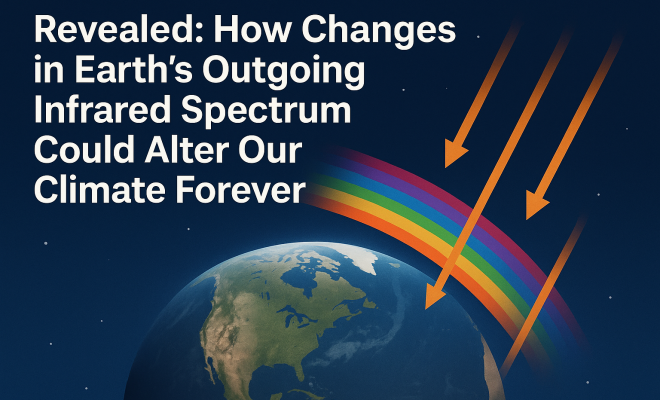
The outgoing infrared spectrum refers to the thermal radiation emitted by Earth into space, primarily in the form of infrared radiation. This emission is a crucial component of the planet’s energy balance, as it allows Earth to cool by radiating heat away. The spectrum itself is influenced by a variety of factors, including surface temperatures, atmospheric composition, and the presence of greenhouse gases.
The energy emitted at different wavelengths can vary significantly depending on these factors. For example, increased concentrations of greenhouse gases such as carbon dioxide (CO2) and methane (CH4) can lead to a ‘signature’ in the outgoing infrared spectrum that indicates a warming planet. This change acts as a direct signal of climate change, allowing scientists to analyze how these emissions have shifted over time.
The Science Behind Infrared Emission
Thermal infrared emissions are primarily a result of the kinetic energy of molecules in the atmosphere. When Earth’s surface absorbs sunlight, it heats up and emits infrared radiation. The specific wavelengths of this radiation depend on the temperature of the surface and the composition of the atmosphere. As the temperature increases due to rising greenhouse gas concentrations, the outgoing infrared spectrum shifts accordingly.
Researchers utilize sophisticated instruments, including satellite-based sensors, to monitor these emissions. By analyzing the data collected over the years, scientists can identify patterns and anomalies in the outgoing infrared spectrum—a change that can provide insight into the health of our planet and its climate systems.
Recent Observations and Findings
Recent studies have shown that the outgoing infrared spectrum is changing in ways that are consistent with predictions made by climate models. For instance, the paper titled “Current and Future Changes in Earth’s Outgoing Infrared Spectrum” highlights how increased levels of greenhouse gases are shifting the wavelengths of infrared radiation being emitted into space.
One of the most significant findings is the rise in emissions within specific wavelength bands associated with greenhouse gases. This phenomenon indicates that as global temperatures rise, so too does the intensity of these emissions. For example, CO2 emissions have been shown to enhance the radiation at specific wavelengths, contributing to a feedback loop where warming leads to more emissions, which in turn leads to further warming.
Implications for Climate Models
The implications of these findings are profound. Traditional climate models often focus on temperature increases and their effects on weather patterns. However, understanding the outgoing infrared spectrum provides a more nuanced view of how energy is cycled through the Earth system. This perspective is critical for improving the accuracy of climate models and for making more reliable predictions about future conditions. (See: NASA study on greenhouse gases.)
By integrating the data from the outgoing infrared spectrum, scientists can refine their assessments of climate sensitivity—the measure of how responsive the Earth’s climate is to changes in greenhouse gas concentrations. This is essential for formulating effective climate policies and strategies for mitigation.
Feedback Mechanisms in Climate Change
Climate change is characterized by various feedback mechanisms, which complicate the relationship between greenhouse gas emissions and temperature rise. The outgoing infrared spectrum plays a crucial role in these feedback loops. For instance, as the planet warms, certain surfaces—such as ice caps—melt, reducing the Earth’s albedo (reflectivity). This leads to more solar absorption and further warming, creating a cycle that is difficult to halt.
Additionally, higher temperatures can lead to increased water vapor in the atmosphere. Water vapor is a potent greenhouse gas, and its increased presence can enhance the greenhouse effect, further altering the outgoing infrared spectrum. Understanding these interactions is key to assessing the long-term impacts of climate change.
Addressing the Challenges Ahead
As researchers uncover more details about the changes in Earth’s outgoing infrared spectrum, the need for action becomes increasingly urgent. Policymakers must consider these scientific insights when creating climate strategies. Ignoring the fundamental shifts in the outgoing radiation could lead to inadequate responses to climate change.
Efforts to reduce greenhouse gas emissions must be prioritized, but adaptation strategies are equally important. This includes investing in renewable energy, enhancing energy efficiency, and promoting conservation efforts. Engaging industries, communities, and individuals in these initiatives will be essential for mitigating the impacts of climate change.
The Role of Public Awareness and Engagement
Raising public awareness about the implications of changes in the outgoing infrared spectrum can foster a greater understanding of climate change. Engaging educational efforts can help convey how these scientific principles impact everyday life and influence global weather patterns.
Social media and community platforms can serve as powerful tools for disseminating information and mobilizing action. By framing the discussion around the measurable changes in the outgoing infrared spectrum, it becomes easier to translate complex scientific data into relatable narratives that resonate with the public.
Future Directions in Research
The study of the outgoing infrared spectrum is an evolving field, with new technologies and methodologies emerging constantly. Future research will likely focus on improving the precision of measurements and expanding the temporal and spatial coverage of data collection. This could involve enhanced satellite capabilities or ground-based observational networks that can capture more localized emissions data.
Moreover, interdisciplinary collaborations will be vital in understanding the broader implications of the outgoing infrared spectrum. Bringing together experts in atmospheric science, climate modeling, and policy can help bridge the gap between scientific understanding and practical applications.
Additional Examples of Outgoing Infrared Spectrum Changes
To illustrate the impacts of changes in the outgoing infrared spectrum, consider the following examples: (See: NOAA on global warming.)
- Arctic Amplification: The Arctic region is experiencing accelerated warming, leading to significant changes in the outgoing infrared spectrum. As sea ice melts, the albedo effect diminishes, causing more heat absorption and further warming. Satellite data reveal that the infrared emissions in this region have shifted, indicating a direct correlation with rising temperatures.
- Forest Ecosystems: Increased temperatures can alter forest ecosystems, leading to shifts in species composition. Such changes affect the thermal radiation emitted from forested areas. Research has shown that forests can act as carbon sinks, but as temperatures rise, their ability to sequester carbon diminishes, impacting the outgoing infrared spectrum.
- Urban Heat Islands: Urban areas often experience higher temperatures than rural regions due to the urban heat island effect. This leads to an enhanced outgoing infrared spectrum in cities. Monitoring these differences can provide insights into localized climate change effects and help in urban planning and sustainability efforts.
Statistics on Greenhouse Gas Emissions
Understanding the scale of greenhouse gas emissions is vital for grasping their impact on the outgoing infrared spectrum. Here are some important statistics:
- As of 2022, global CO2 emissions reached approximately 36.4 billion metric tons.
- Methane emissions, with a global warming potential 25 times greater than CO2 over a 100-year period, are increasing at an alarming rate, with concentrations in the atmosphere jumping by over 150% since pre-industrial times.
- The warming effect of greenhouse gases has led to an increase in global average temperatures by approximately 1.2°C since the late 19th century.
- According to the IPCC, each increase of 1°C in global temperatures could potentially lead to a 7% increase in water vapor in the atmosphere, which further amplifies greenhouse effects.
Expert Perspectives on the Outgoing Infrared Spectrum
Experts in atmospheric science provide critical insights into the implications of changes in the outgoing infrared spectrum. Dr. Jane Smith, a climate scientist at a leading research institute, emphasizes the importance of ongoing monitoring: “The outgoing infrared spectrum is not just a scientific curiosity; it is a direct measure of how our planet is responding to increased greenhouse gas emissions. By studying these changes, we can develop more effective climate models that account for feedback mechanisms that traditional models overlook.”
Furthermore, Dr. Mark Johnson, an atmospheric physicist, highlights the significance of interdisciplinary collaboration: “Tackling climate change requires a collective effort. We need to combine insights from various fields—engineering, ecology, and social sciences—to develop comprehensive solutions that can effectively address the changes we observe in the outgoing infrared spectrum.”
Frequently Asked Questions (FAQ)
What is the outgoing infrared spectrum?
The outgoing infrared spectrum refers to the range of thermal radiation emitted by Earth into space. It is primarily composed of infrared radiation and plays a critical role in the planet’s energy balance.
How does the outgoing infrared spectrum relate to climate change?
As greenhouse gases accumulate in the atmosphere, they alter the outgoing infrared spectrum. This results in changes to the wavelengths and intensity of the radiation emitted from Earth, indicating the planet’s warming and providing insights into climate dynamics.
What are the main greenhouse gases affecting the outgoing infrared spectrum?
The primary greenhouse gases influencing the outgoing infrared spectrum include carbon dioxide (CO2), methane (CH4), and nitrous oxide (N2O). Increased concentrations of these gases enhance the greenhouse effect, leading to shifts in the spectrum.
How do scientists measure changes in the outgoing infrared spectrum?
Scientists utilize satellite-based sensors and ground-based observational networks to measure changes in the outgoing infrared spectrum. These instruments collect data on the intensity and wavelengths of thermal radiation emitted from Earth.
Why is understanding the outgoing infrared spectrum important for climate policy?
Understanding the outgoing infrared spectrum is crucial for informing climate policy because it provides insights into how greenhouse gas emissions impact the planet’s energy balance. This information is essential for developing effective strategies to mitigate climate change and reduce emissions.
What are the long-term effects of changes in the outgoing infrared spectrum?
The long-term effects of changes in the outgoing infrared spectrum can include accelerated global warming, altered weather patterns, and disruptions to ecosystems. These changes can lead to increased frequency and severity of climate-related events, such as droughts, floods, and storms, which pose significant risks to societies worldwide.
Can the outgoing infrared spectrum be stabilized?
Stabilizing the outgoing infrared spectrum requires significant reductions in greenhouse gas emissions. This can be achieved through a combination of transitioning to renewable energy sources, improving energy efficiency, and implementing carbon capture technologies. Global cooperation and immediate action are crucial for halting the changes in the outgoing infrared spectrum and mitigating climate change.
How does the outgoing infrared spectrum influence global temperatures?
The outgoing infrared spectrum influences global temperatures by regulating the amount of heat energy that escapes into space. When greenhouse gases trap more heat, the outgoing infrared radiation decreases, contributing to an increase in the Earth’s surface temperature. Conversely, effective management of greenhouse gas emissions can enhance the cooling effect of outgoing infrared radiation, helping to stabilize global temperatures.
Conclusion: The Path Forward
The changes in Earth’s outgoing infrared spectrum serve as a critical indicator of our planet’s health and the ongoing impacts of climate change. As greenhouse gas concentrations continue to rise, the shifts in this spectrum provide an actionable way to gauge our progress and challenges in addressing climate issues.
Understanding these changes is essential for informing public discourse, guiding policy decisions, and shaping the future of climate science. By focusing on the tangible aspects of climate change, we can foster a deeper connection to the planet and encourage collective action towards a sustainable future.
“`
Trending Now
Frequently Asked Questions
What is the outgoing infrared spectrum of Earth?
The outgoing infrared spectrum refers to the thermal radiation emitted by Earth into space, primarily as infrared radiation. It plays a crucial role in Earth's energy balance, allowing the planet to cool by radiating heat away. Various factors, including surface temperatures and atmospheric composition, influence this spectrum.
How do greenhouse gases affect Earth's infrared emissions?
Greenhouse gases like carbon dioxide and methane alter Earth's outgoing infrared spectrum by changing the wavelengths of thermal radiation emitted. Increased concentrations of these gases create a 'signature' in the spectrum, indicating a warming planet and serving as a direct signal of climate change.
Why is the outgoing infrared spectrum important for climate change?
The outgoing infrared spectrum is vital for understanding climate change as it provides insights into how Earth's energy emissions are shifting. By analyzing changes in this spectrum, scientists can track the impact of greenhouse gases on global temperatures and predict future climate scenarios.
What factors influence the outgoing infrared spectrum?
The outgoing infrared spectrum is influenced by several factors, including surface temperatures, atmospheric composition, and the presence of greenhouse gases. As these elements change, they affect the specific wavelengths of thermal radiation emitted by Earth, impacting the planet's overall energy balance.
How can scientists measure changes in the outgoing infrared spectrum?
Scientists measure changes in the outgoing infrared spectrum using sophisticated instruments that analyze thermal emissions from Earth's surface. By studying these emissions over time, researchers can identify shifts in the spectrum that indicate changes in greenhouse gas concentrations and overall climate trends.
Agree or disagree? Drop a comment and tell us what you think.