The Tech Edvocate

Top Menu

  • Advertisement
  • Apps
  • Home Page
  • Home Page Five (No Sidebar)
  • Home Page Four
  • Home Page Three
  • Home Page Two
  • Home Tech2
  • Icons [No Sidebar]
  • Left Sidbear Page
  • Lynch Educational Consulting
  • My Account
  • My Speaking Page
  • Newsletter Sign Up Confirmation
  • Newsletter Unsubscription
  • Our Brands
  • Page Example
  • Privacy Policy
  • Protected Content
  • Register
  • Request a Product Review
  • Shop
  • Shortcodes Examples
  • Signup
  • Start Here
    • Governance
    • Careers
    • Contact Us
  • Terms and Conditions
  • The Edvocate
  • The Tech Edvocate Product Guide
  • Topics
  • Write For Us
  • Advertise

Main Menu

  • Start Here
    • Our Brands
    • Governance
      • Lynch Educational Consulting, LLC.
      • Dr. Lynch’s Personal Website
      • Careers
    • Write For Us
    • The Tech Edvocate Product Guide
    • Contact Us
    • Books
    • Edupedia
    • Post a Job
    • The Edvocate Podcast
    • Terms and Conditions
    • Privacy Policy
  • Topics
    • Assistive Technology
    • Child Development Tech
    • Early Childhood & K-12 EdTech
    • EdTech Futures
    • EdTech News
    • EdTech Policy & Reform
    • EdTech Startups & Businesses
    • Higher Education EdTech
    • Online Learning & eLearning
    • Parent & Family Tech
    • Personalized Learning
    • Product Reviews
  • Advertise
  • Tech Edvocate Awards
  • The Edvocate
  • Pedagogue
  • School Ratings

logo

The Tech Edvocate

  • Start Here
    • Our Brands
    • Governance
      • Lynch Educational Consulting, LLC.
      • Dr. Lynch’s Personal Website
        • My Speaking Page
      • Careers
    • Write For Us
    • The Tech Edvocate Product Guide
    • Contact Us
    • Books
    • Edupedia
    • Post a Job
    • The Edvocate Podcast
    • Terms and Conditions
    • Privacy Policy
  • Topics
    • Assistive Technology
    • Child Development Tech
    • Early Childhood & K-12 EdTech
    • EdTech Futures
    • EdTech News
    • EdTech Policy & Reform
    • EdTech Startups & Businesses
    • Higher Education EdTech
    • Online Learning & eLearning
    • Parent & Family Tech
    • Personalized Learning
    • Product Reviews
  • Advertise
  • Tech Edvocate Awards
  • The Edvocate
  • Pedagogue
  • School Ratings
  • 100 Best Apps for Systems Thinking

  • 100 Best Apps for Design Thinking

  • 100 Best Apps for Lateral Thinking

  • 100 Best Apps for Creative Thinking

  • 100 Best Apps for Ideation

  • 100 Best Apps for Brainstorming

  • 100 Best Apps for Active Recall

  • 100 Best Apps for Spaced Repetition

  • 100 Best Apps for Building a Second Brain

  • 100 Best Apps for Second Brain

Tech News
Home›Tech News›Artemis 2: Historic Lunar Flyby Ignites New Space Era in 2026

Artemis 2: Historic Lunar Flyby Ignites New Space Era in 2026
By Matthew Lynch
April 2, 2026
0
Spread the love

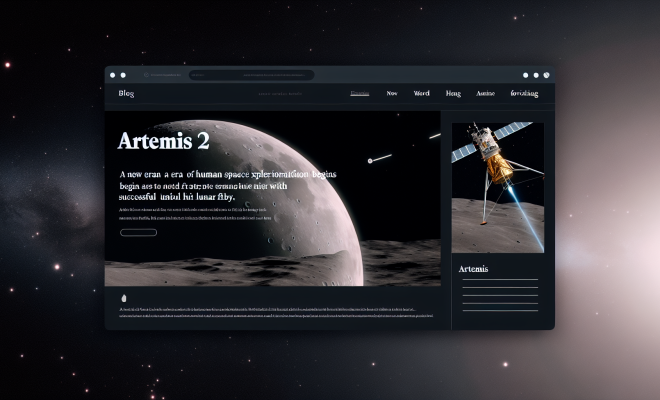
On April 1, 2026, at 6:24 p.m. EDT, NASA marked a historic milestone in space exploration with the launch of the Artemis 2 mission. This mission is particularly noteworthy as it represents the first crewed lunar flyby since the Apollo program concluded in 1972. The Orion capsule, carrying a crew of four astronauts, embarked on a ten-day journey around the Moon, setting the stage for future lunar exploration and potential missions to Mars.

The Launch: A Moment of Anticipation

The atmosphere at Kennedy Space Center was electric as the countdown to launch approached. NASA had been preparing for this moment for years, and as the clock ticked down, the excitement among the team and spectators was palpable. The weather conditions improved significantly, reaching a 90% likelihood of favorable launch conditions just hours before liftoff. This was a crucial factor, as weather had previously posed challenges leading up to the launch date.

Key Maneuvers: Successfully Raising the Apogee

Following its successful launch, the Orion capsule performed a series of critical maneuvers. One of the most significant was an 18-minute burn that raised its apogee to an impressive 43,730 miles above Earth. This maneuver is essential for setting the spacecraft on its trajectory towards the Moon, allowing it to orbit our natural satellite effectively.

Moreover, the mission faced an unexpected challenge early on when the crew encountered a battery temperature issue. However, the team adeptly managed this instrumentation glitch, showcasing the astronauts’ training and the mission control team’s expertise. This incident highlights the complexities and unpredictabilities of space travel, even on well-prepared missions.

A Diverse Crew Ready for the Challenge

The crew of Artemis 2 is composed of four highly trained astronauts, each bringing unique skills and experiences to the mission:

  • Commander – The mission’s leader, responsible for overall mission success and the safety of the crew.
  • Pilot – Assists the commander and handles spacecraft systems during critical phases of flight.
  • Mission Specialist – Focuses on specific mission objectives, including scientific experiments and operations.
  • Payload Specialist – Oversees the experiments and equipment carried aboard Orion, ensuring they function as intended.

This diverse crew not only represents a mix of skills but also highlights NASA’s commitment to inclusivity and representation in space exploration.

What Lies Ahead: Goals of Artemis 2

The Artemis 2 mission is not merely a test flight; it serves as a stepping stone for NASA’s broader goals in lunar exploration and beyond. The mission aims to:

  • Evaluate the performance of the Orion spacecraft in a crewed environment.
  • Test life support systems and crew safety protocols during extended missions.
  • Prepare for future Artemis missions, including Artemis 3, which aims to land astronauts on the lunar South Pole.
  • Gather data that will inform future deep space missions, including potential manned missions to Mars.

Each of these objectives is crucial for ensuring the safety and success of astronauts as they venture into deeper space.

The Importance of the Artemis Program

The Artemis program signifies a renewed commitment by NASA to explore the Moon and prepare for human exploration of Mars. The missions are designed to establish a sustainable human presence on the Moon, which is viewed as a critical step towards understanding how to sustain human life on other planets.

Moreover, the Artemis missions aim to inspire a new generation of scientists, engineers, and explorers. By returning humans to the lunar surface and eventually to Mars, NASA seeks to ignite interest in STEM (Science, Technology, Engineering, and Mathematics) fields, encouraging young minds to pursue careers in these areas.

Looking Beyond: The Future of Space Exploration

The successful launch of Artemis 2 is just the beginning of an exciting era in space exploration. As the mission progresses, the data gathered and the experiences shared by the crew will provide invaluable insights into the challenges of deep space exploration.

NASA’s vision extends beyond the Moon, with plans for future missions that may include establishing permanent lunar habitats and eventually sending humans to Mars. The Artemis program is a testament to human ingenuity and the relentless pursuit of knowledge, paving the way for future generations to explore the cosmos.

As the world watches the Artemis 2 mission unfold, it is clear that humanity’s quest for space exploration is far from over. With each mission, we are one step closer to unraveling the mysteries of the universe and expanding our presence beyond Earth.


Previous Article

NASA Confirms Two Asteroids to Safely Pass ...

Next Article

Artemis II: A Historic Leap Towards Lunar ...

Matthew Lynch

Related articles More from author

  • Tech News

    XCharge to Unveil EV Charging Innovations at Webull Webinar 2026

    April 15, 2026
    By Matthew Lynch
  • Tech News

    Apple Pencil 2 Hits a New All-Time Low Price With This $50 Discount

    January 31, 2024
    By Matthew Lynch
  • Tech News

    FiveThirtyEight’s Model Says Biden Will Win. Don’t Get Too Excited.

    July 18, 2024
    By Matthew Lynch
  • Tech News

    Apple Podcasts library organization tips

    July 27, 2026
    By Matthew Lynch
  • Tech News

    Your Kids Could Get $1,000 From Uncle Sam: Here’s the Catch

    July 30, 2026
    By Matthew Lynch
  • Tech News

    How to create dashboard in Power BI

    July 27, 2026
    By Matthew Lynch

Search

Login & Registration

  • Log in
  • Entries feed
  • Comments feed
  • WordPress.org

Newsletter

Signup for The Tech Edvocate Newsletter and have the latest in EdTech news and opinion delivered to your email address!

About Us

Since technology is not going anywhere and does more good than harm, adapting is the best course of action. That is where The Tech Edvocate comes in. We plan to cover the PreK-12 and Higher Education EdTech sectors and provide our readers with the latest news and opinion on the subject. From time to time, I will invite other voices to weigh in on important issues in EdTech. We hope to provide a well-rounded, multi-faceted look at the past, present, the future of EdTech in the US and internationally.

We started this journey back in June 2016, and we plan to continue it for many more years to come. I hope that you will join us in this discussion of the past, present and future of EdTech and lend your own insight to the issues that are discussed.

Newsletter

Signup for The Tech Edvocate Newsletter and have the latest in EdTech news and opinion delivered to your email address!

Contact Us

The Tech Edvocate
910 Goddin Street
Richmond, VA 23231
(601) 630-5238
[email protected]

Copyright © 2026 Matthew Lynch. All rights reserved.