X1.4 Solar Flare Erupts from AR 4405: Earth Impact Concerns 2026
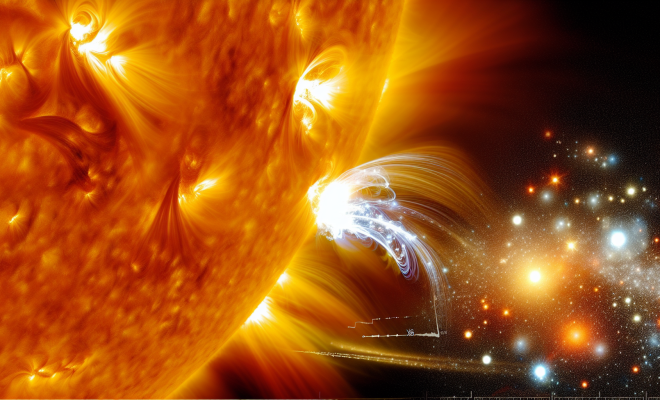
On March 30, 2026, a significant solar event unfolded as a powerful X1.4 solar flare erupted from Active Region 4405. The flare, which reached its peak at 03:19 UTC, marked one of the most intense solar activities recorded in recent months. This event has drawn the attention of space weather forecasters and scientists alike, due to its potential effects on Earth and the solar system.
Understanding Solar Flares and Their Impact
Solar flares are sudden flashes of increased brightness on the Sun, caused by the release of magnetic energy stored in the Sun’s atmosphere. These events can produce intense radiation across the electromagnetic spectrum, including radio waves, visible light, and X-rays. The classification of solar flares is based on their X-ray brightness: the scale ranges from A (the weakest) to X (the strongest). An X1.4 flare indicates a very powerful explosion.
Coronal Mass Ejections (CMEs), often associated with solar flares, are large expulsions of plasma and magnetic field from the Sun’s corona. These eruptions can send billions of tons of solar material into space at speeds of up to several million miles per hour. When directed towards Earth, CMEs can have significant implications for satellite operations, power grids, and even communication systems.
The Eruption of Active Region 4405
Active Region 4405 was the source of the X1.4 solar flare, which began its activity at 02:47 UTC and concluded at 03:44 UTC. The complex magnetic structure of this region is believed to be responsible for the powerful flare.
- Start Time: 02:47 UTC
- Peak Time: 03:19 UTC
- End Time: 03:44 UTC
- Flare Classification: X1.4
The complexity of Active Region 4405 has raised concerns among solar physicists. The region exhibits a tangled web of magnetic fields that can lead to additional flares in the coming days. Scientists are closely monitoring this area for further eruptions, as each flare has the potential to impact space weather conditions.
Implications of the CME
The CME produced by the X1.4 solar flare is currently being monitored for its trajectory and potential impact on Earth. When CMEs reach our planet, they can interact with the Earth’s magnetic field, leading to geomagnetic storms. These storms can cause a variety of effects, including:
- Disruption of satellite communications
- Increased radiation exposure for astronauts in space
- Potential damage to power grids, leading to widespread outages
- Beautiful auroras at higher latitudes
Forecasters are utilizing a range of tools, including satellite observations and ground-based monitoring, to predict the CME’s path and estimate its impact on Earth. The National Oceanic and Atmospheric Administration (NOAA) and the National Aeronautics and Space Administration (NASA) provide updates and alerts regarding space weather, helping to prepare for any potential disruptions.
Historical Context of Solar Flares
Solar flares are not uncommon; they occur regularly as part of the solar cycle, which lasts approximately 11 years. However, the intensity and frequency of solar flares can vary significantly depending on the solar cycle phase. The current solar cycle, Solar Cycle 25, began in December 2019 and is expected to peak in 2025. As we approach this peak, scientists anticipate an increase in solar activity, including more frequent and intense flares.
Historically, powerful solar flares have caused significant disruptions on Earth. For example, the Carrington Event of 1859, one of the largest geomagnetic storms on record, caused widespread telegraph failures and auroras visible as far south as the Caribbean. Modern technology is far more dependent on electrical and communication systems, making today’s society potentially more vulnerable to solar events.
Ongoing Research and Monitoring
The eruption from Active Region 4405 is a reminder of the dynamic nature of our Sun and its influence on space weather. Researchers continue to study solar flares and CMEs to improve forecasting models and mitigate their impacts on technology and infrastructure.
As scientists monitor the aftermath of the X1.4 flare, they emphasize the importance of public awareness regarding space weather. Understanding solar activity not only enhances our knowledge of the Sun but also prepares society for the possible effects of these powerful phenomena.
Conclusion
The X1.4 solar flare from Active Region 4405 serves as a significant event within the current solar cycle, illustrating the intricate workings of solar dynamics and their potential impacts on Earth. As space weather continues to evolve, vigilance and research will be crucial in navigating the challenges posed by these cosmic phenomena.