X1.5 Solar Flare Causes R3 Radio Blackout – March 2026
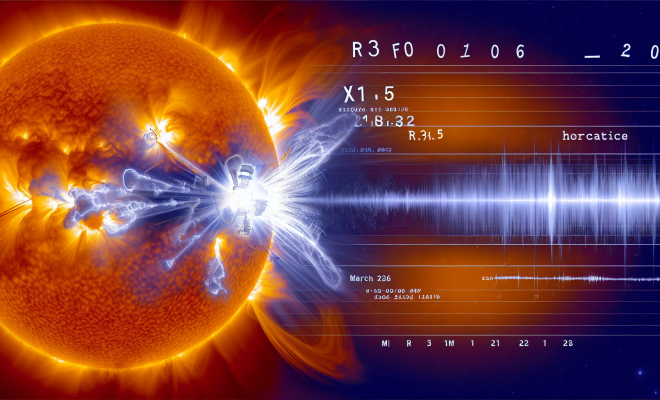
On March 30, 2026, the sun unleashed a powerful X1.5 solar flare from Active Region 4405, marking a significant event in solar activity. Peaking at 0319 UTC, this flare triggered an R3 (Strong) Radio Blackout that predominantly affected the sunlit side of Earth, particularly impacting communication systems in Southeast Asia and Northern Australia.
Understanding Solar Flares and Their Impact
Solar flares are sudden bursts of radiation from the sun, typically associated with sunspots and solar active regions. These phenomena can release energy equivalent to millions of hydrogen bombs and are classified based on their intensity. The classification ranges from A (the weakest) to X (the strongest), with the X-class flares capable of causing significant disruptions in space weather and communication systems on Earth.
The March 30 Event: Key Details
- Peak Time: 0319 UTC
- Classification: X1.5 solar flare
- Affected Region: Sunlit side of Earth
- Radio Blackout Level: R3 (Strong)
- Associated Phenomena: Type II radio sweep and Coronal Mass Ejection (CME)
- Estimated CME Velocity: 1872 km/s
The X1.5 solar flare produced a Type II radio sweep, indicative of the shock waves generated as the flare’s energy traveled through the sun’s atmosphere. This event was particularly noteworthy due to the associated Coronal Mass Ejection (CME), which is a significant release of plasma and magnetic field from the sun’s corona.
Significant Communication Disruptions
According to the NOAA’s Space Weather Prediction Center (SWPC), the R3 radio blackout resulted in widespread disruptions in high-frequency (HF) communications across various regions. The D-RAP modeling indicated that the degradation of these communication systems was concentrated over the Maritime Continent, affecting users in:
- Southeast Asia
- Northern Australia
As the flare reached its peak intensity, many users in these areas experienced temporary loss of contact, which can be critical for aviation, maritime operations, and emergency services that rely on HF communications.
The Role of Active Region 4405
Active Region 4405 was the source of this significant solar event. Active regions on the sun are characterized by intense magnetic activity, which can lead to solar flares and CMEs. Monitoring these regions is crucial for predicting solar storms and understanding their potential impacts on Earth.
Scientists continuously track solar activity to protect infrastructure and ensure safety in various sectors affected by space weather. The SWPC plays a pivotal role in this monitoring, providing timely alerts and updates on solar events, which can have far-reaching implications.
Future Implications and Preparedness
The March 30 event serves as a reminder of the sun’s unpredictable nature and the potential hazards posed by solar activity. While modern technology has advanced significantly, making systems more resilient to such disruptions, the risk associated with solar flares remains a critical concern.
Preparing for solar events involves:
- Monitoring Space Weather: Keeping an eye on solar activity through various satellites and observatories.
- Infrastructure Resilience: Ensuring that communication systems have backup options and that protocols are in place to respond to outages.
- Public Awareness: Educating the public and relevant sectors about the potential impacts of solar flares and the importance of preparedness.
The Importance of Ongoing Research
Research into solar flares and their effects on Earth continues to evolve. Understanding the mechanics behind these phenomena helps scientists improve forecasting models, which in turn enhances preparedness for future events. The collaboration between solar physicists, meteorologists, and communication experts is vital for developing effective strategies to mitigate the impacts of solar activity.
Conclusion
The X1.5 solar flare from Active Region 4405 on March 30, 2026, is a stark reminder of the sun’s powerful influence on our planet. As technology continues to advance, so does our ability to monitor and respond to such solar events. Ensuring that both public and private sectors are equipped to deal with the impacts of solar flares will be essential as we move forward in a world increasingly reliant on technology and communication.