The Tech Edvocate

Top Menu

  • Advertisement
  • Apps
  • Home Page
  • Home Page Five (No Sidebar)
  • Home Page Four
  • Home Page Three
  • Home Page Two
  • Home Tech2
  • Icons [No Sidebar]
  • Left Sidbear Page
  • Lynch Educational Consulting
  • My Account
  • My Speaking Page
  • Newsletter Sign Up Confirmation
  • Newsletter Unsubscription
  • Our Brands
  • Page Example
  • Privacy Policy
  • Protected Content
  • Register
  • Request a Product Review
  • Shop
  • Shortcodes Examples
  • Signup
  • Start Here
    • Governance
    • Careers
    • Contact Us
  • Terms and Conditions
  • The Edvocate
  • The Tech Edvocate Product Guide
  • Topics
  • Write For Us
  • Advertise

Main Menu

  • Start Here
    • Our Brands
    • Governance
      • Lynch Educational Consulting, LLC.
      • Dr. Lynch’s Personal Website
      • Careers
    • Write For Us
    • The Tech Edvocate Product Guide
    • Contact Us
    • Books
    • Edupedia
    • Post a Job
    • The Edvocate Podcast
    • Terms and Conditions
    • Privacy Policy
  • Topics
    • Assistive Technology
    • Child Development Tech
    • Early Childhood & K-12 EdTech
    • EdTech Futures
    • EdTech News
    • EdTech Policy & Reform
    • EdTech Startups & Businesses
    • Higher Education EdTech
    • Online Learning & eLearning
    • Parent & Family Tech
    • Personalized Learning
    • Product Reviews
  • Advertise
  • Tech Edvocate Awards
  • The Edvocate
  • Pedagogue
  • School Ratings

logo

The Tech Edvocate

  • Start Here
    • Our Brands
    • Governance
      • Lynch Educational Consulting, LLC.
      • Dr. Lynch’s Personal Website
        • My Speaking Page
      • Careers
    • Write For Us
    • The Tech Edvocate Product Guide
    • Contact Us
    • Books
    • Edupedia
    • Post a Job
    • The Edvocate Podcast
    • Terms and Conditions
    • Privacy Policy
  • Topics
    • Assistive Technology
    • Child Development Tech
    • Early Childhood & K-12 EdTech
    • EdTech Futures
    • EdTech News
    • EdTech Policy & Reform
    • EdTech Startups & Businesses
    • Higher Education EdTech
    • Online Learning & eLearning
    • Parent & Family Tech
    • Personalized Learning
    • Product Reviews
  • Advertise
  • Tech Edvocate Awards
  • The Edvocate
  • Pedagogue
  • School Ratings
  • The Hidden Cost of EVs: Why Your Battery Could Cost More Than Your Car in 2026

  • Jensen Huang’s Shock Exit: This Unbelievable Scandal Just Rocked Nvidia and the AI World

  • Big Walk developer House House Confirms ‘Sparing’ Use of Gen AI – Press Start

  • Baffling: How a Cyber Breach at South Korea’s Top Security Watchdog Exposed Millions

  • Wenn Ordnung den Bildschirm beruhigt: Warum klare Abläufe Casino-Unterhaltung einladender machen

  • Reddit AI Reviews: The Quiet Reshaping of Online Opinion

  • The Chilling Truth: Iran Cyberattacks Europe’s Food and Blood Supplies

  • Anthropic’s $3.4 Billion Bet on Gas: The Unseen Cost of AI’s Future

  • Tribit FlyBuds C3 Earbuds: Premium Features at a Budget-Friendly Price

  • Is AuraCam Pro’s Emotional AI a Privacy Nightmare or Security Breakthrough?

Tech News
Home›Tech News›Elevating Campus Health: Beyond Illness to Student Well-being

Elevating Campus Health: Beyond Illness to Student Well-being
By Matthew Lynch
March 16, 2026
0
Spread the love

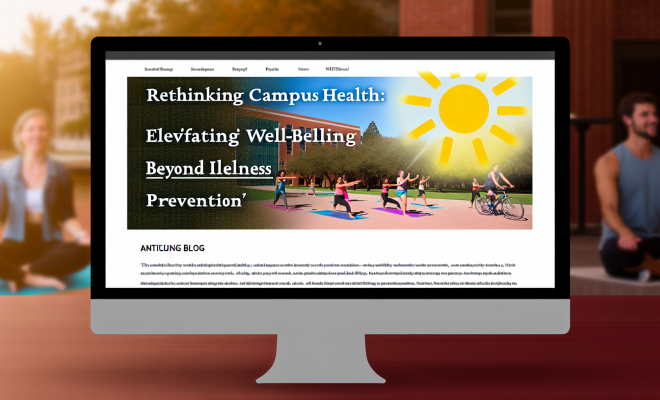
In recent years, the conversation surrounding health—especially on college campuses—has evolved significantly. While traditional public health discussions often center around illness prevention and treatment, there’s a growing recognition that true health encompasses much more than simply avoiding disease. Public health columnist Kegan Tulloch argues that it’s time for universities to expand their focus to include well-being and flourishing, which are crucial for student success and overall happiness.

The Importance of Well-Being

Well-being is not a one-size-fits-all concept; it is deeply interconnected with systemic factors such as socioeconomic status, access to healthcare, and community support. For students, particularly those from marginalized communities, these factors can create significant barriers to achieving well-being. Tulloch highlights that students facing financial strain or limited access to healthcare often wrestle with heightened levels of stress, anxiety, and burnout. These challenges are compounded by the pressures of academic performance and the societal expectations placed upon them.

Beyond Individual Resilience

While individual strategies such as maintaining good sleep hygiene, engaging in physical activity, and cultivating meaningful relationships are essential components of personal well-being, Tulloch emphasizes that they are not enough on their own. Focusing solely on personal resilience can inadvertently obscure the underlying systemic issues that contribute to poor mental health among students.

For instance, many college counseling centers are understaffed, struggling to meet the increasing demand for mental health services. This scarcity of resources can lead to long wait times for appointments and limited access to essential support, leaving many students feeling isolated and helpless. Furthermore, the normalization of a burnout culture—where overworking and stress are seen as badges of honor—only exacerbates these mental health challenges.

Shifting the Narrative

Tulloch advocates for a reframing of the conversation around health to prioritize well-being. This shift is not just about encouraging self-care practices but also about fostering a structural awareness that recognizes the broader context in which students live and learn. It calls for collective action rather than individualistic approaches to well-being.

To truly promote well-being on campuses, universities must adopt policies and practices that support all students, particularly those from marginalized backgrounds. This means not only improving access to mental health services but also addressing issues such as food insecurity, housing stability, and financial assistance. By doing so, institutions can create environments where students feel supported and empowered to thrive.

Collective Action for Change

Implementing systemic changes requires a concerted effort from various stakeholders within the university ecosystem. Administrators, faculty, and students must collaborate to advocate for policies that promote equitable access to resources and support systems. Here are some actionable steps that universities can take:

  • Increase Funding for Mental Health Services: Allocate more resources to counseling centers to hire additional staff and reduce wait times for students seeking help.
  • Promote Awareness and Education: Develop programs that educate students about mental health and well-being, highlighting the importance of seeking help and the resources available to them.
  • Foster Inclusivity: Ensure that mental health services are culturally competent and sensitive to the diverse backgrounds of students.
  • Encourage Work-Life Balance: Implement policies that discourage overworking, such as limiting after-hours emails or promoting designated downtime.

The Role of Community

Well-being is not just an individual pursuit; it is a collective responsibility. Creating a supportive community can significantly enhance the well-being of students. Encouraging peer support networks, mentorship programs, and community-building activities can help foster connections that alleviate feelings of isolation and anxiety.

Moreover, students themselves can play a pivotal role in advocating for change on their campuses. By organizing initiatives that address mental health awareness, self-care workshops, and community support groups, they can help shift the narrative from survival to flourishing. Empowering students to take an active role in their well-being can lead to a more vibrant and resilient campus culture.

Conclusion

Rethinking health and well-being on campuses is essential for nurturing a thriving student body. By shifting the focus from mere illness prevention to fostering true well-being, universities can create environments where all students, particularly those from marginalized communities, have the opportunity to flourish. As Tulloch poignantly reminds us, prioritizing well-being requires both individual strategies and collective action aimed at dismantling systemic barriers. Only then can we ensure that all students have the support and resources they need to thrive academically, socially, and emotionally.


Previous Article

IEA Releases Emergency Oil to Stabilize Asian ...

Next Article

ALS Research Funding Cuts: A Genetic Carrier’s ...

Matthew Lynch

Related articles More from author

  • Tech News

    Why iBrandox Takes the Lead as the Best Website Redesigning Company

    March 13, 2024
    By Matthew Lynch
  • Tech News

    How to use breakout rooms in Zoom

    July 15, 2026
    By Matthew Lynch
  • Tech News

    Boost Your Flexibility: 10 Innovative Methods for 2024

    July 2, 2026
    By Matthew Lynch
  • Tech News

    How to use gesture navigation Android

    June 19, 2026
    By Matthew Lynch
  • Tech News

    Wall Street Rallies in April 2026 Amidst Geopolitical Tensions

    April 14, 2026
    By Matthew Lynch
  • Tech News

    Geopolitical Tensions & Soaring Prices: Global Energy in 2026

    March 28, 2026
    By Matthew Lynch

Search

Login & Registration

  • Log in
  • Entries feed
  • Comments feed
  • WordPress.org

Newsletter

Signup for The Tech Edvocate Newsletter and have the latest in EdTech news and opinion delivered to your email address!

About Us

Since technology is not going anywhere and does more good than harm, adapting is the best course of action. That is where The Tech Edvocate comes in. We plan to cover the PreK-12 and Higher Education EdTech sectors and provide our readers with the latest news and opinion on the subject. From time to time, I will invite other voices to weigh in on important issues in EdTech. We hope to provide a well-rounded, multi-faceted look at the past, present, the future of EdTech in the US and internationally.

We started this journey back in June 2016, and we plan to continue it for many more years to come. I hope that you will join us in this discussion of the past, present and future of EdTech and lend your own insight to the issues that are discussed.

Newsletter

Signup for The Tech Edvocate Newsletter and have the latest in EdTech news and opinion delivered to your email address!

Contact Us

The Tech Edvocate
910 Goddin Street
Richmond, VA 23231
(601) 630-5238
[email protected]

Copyright © 2026 Matthew Lynch. All rights reserved.