The Tech Edvocate

Top Menu

  • Advertisement
  • Apps
  • Home Page
  • Home Page Five (No Sidebar)
  • Home Page Four
  • Home Page Three
  • Home Page Two
  • Home Tech2
  • Icons [No Sidebar]
  • Left Sidbear Page
  • Lynch Educational Consulting
  • My Account
  • My Speaking Page
  • Newsletter Sign Up Confirmation
  • Newsletter Unsubscription
  • Our Brands
  • Page Example
  • Privacy Policy
  • Protected Content
  • Register
  • Request a Product Review
  • Shop
  • Shortcodes Examples
  • Signup
  • Start Here
    • Governance
    • Careers
    • Contact Us
  • Terms and Conditions
  • The Edvocate
  • The Tech Edvocate Product Guide
  • Topics
  • Write For Us
  • Advertise

Main Menu

  • Start Here
    • Our Brands
    • Governance
      • Lynch Educational Consulting, LLC.
      • Dr. Lynch’s Personal Website
      • Careers
    • Write For Us
    • The Tech Edvocate Product Guide
    • Contact Us
    • Books
    • Edupedia
    • Post a Job
    • The Edvocate Podcast
    • Terms and Conditions
    • Privacy Policy
  • Topics
    • Assistive Technology
    • Child Development Tech
    • Early Childhood & K-12 EdTech
    • EdTech Futures
    • EdTech News
    • EdTech Policy & Reform
    • EdTech Startups & Businesses
    • Higher Education EdTech
    • Online Learning & eLearning
    • Parent & Family Tech
    • Personalized Learning
    • Product Reviews
  • Advertise
  • Tech Edvocate Awards
  • The Edvocate
  • Pedagogue
  • School Ratings

logo

The Tech Edvocate

  • Start Here
    • Our Brands
    • Governance
      • Lynch Educational Consulting, LLC.
      • Dr. Lynch’s Personal Website
        • My Speaking Page
      • Careers
    • Write For Us
    • The Tech Edvocate Product Guide
    • Contact Us
    • Books
    • Edupedia
    • Post a Job
    • The Edvocate Podcast
    • Terms and Conditions
    • Privacy Policy
  • Topics
    • Assistive Technology
    • Child Development Tech
    • Early Childhood & K-12 EdTech
    • EdTech Futures
    • EdTech News
    • EdTech Policy & Reform
    • EdTech Startups & Businesses
    • Higher Education EdTech
    • Online Learning & eLearning
    • Parent & Family Tech
    • Personalized Learning
    • Product Reviews
  • Advertise
  • Tech Edvocate Awards
  • The Edvocate
  • Pedagogue
  • School Ratings
  • Zola Suite pricing 2026

  • How to become Airbnb Superhost

  • Yelp Elite status how to get

  • Rocket Matter vs CosmoLex comparison

  • Lawyaw vs Documate which is better

  • How to use Yelp for marketing

  • How many templates in Lawyaw

  • Can TripAdvisor reviews be edited

  • How to manage documents in Zola Suite

  • Filevine vs Litify features

Early Childhood & K-12 EdTech
Home›Early Childhood & K-12 EdTech›Why I transformed my sixth grade science class into a coding class, and how you can too

Why I transformed my sixth grade science class into a coding class, and how you can too
By Matthew Lynch
June 8, 2017
0
Spread the love

Originally posted on Chalkbeat by Ruth Mesfun

Like many middle school science teachers, I’ve spent more time talking about rocks and minerals than I care to discuss.

As a sixth-grade science teacher at Excellence Girls Charter School, an Uncommon school, earth science was an important part of my work. And throughout my career, I have found ways to make those lessons engaging: One day, students were handed a top-secret mission from NASA to create a planet similar to Earth, requiring them to learn about the interior of our planet, its atmosphere, and the water, carbon, and nitrogen cycles. Another day, the students walked into a classroom filled with fog. They could barely find their desks, and that’s how they learned about cumulus clouds.

Still, I questioned whether those topics were the best use of my students’ time.

It was difficult to give students a real answer about how the curriculum would affect their futures, especially for the ones who might opt to go down a technical track after high school. Not that there aren’t plenty of careers in health and environmental sciences they might choose from, but I wanted to equip them with knowledge that would create tangible career options for every single one of them.

A few years ago, I read an article about a homeless man who learned how to code and got a job at Microsoft without a college degree. I thought, “My students love technology. If he can learn to code and springboard himself into a lucrative career, so can they.” That’s when I started a coding club in my school in North Carolina.

There was one problem: I didn’t know the first thing about how to code.

The night before each club meeting, I would practice lessons on Codeacademy and then teach them to my students. We fell in love with coding together.

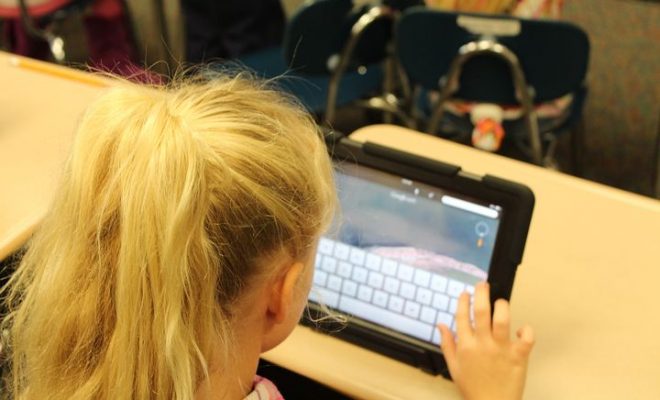
Many of the students that hadn’t performed well academically in the past did extremely well in coding club. They also started showing up to my science class fully engaged. They had found a class where they could see a future for themselves. Still, I was troubled that the girls almost seemed to feel out of place.

I started at Excellence Girls Middle Academy one and a half years ago, and yes, I started out teaching rocks and minerals. My principal, a former science teacher, is amazing and loves math and technology. She immediately agreed that we needed a coding enrichment initiative, and I started my coding club there with 20 girls.

The girls in the club were fearless. They exuded confidence that they could do anything and be anyone. Being surrounded by each other, it was a no-brainer to them that women could be programmers.

In my coding brain, this means: < if girls == fearlessness && excellence> < Girls + coding == empowerment >. How could I deny any of my students this opportunity?

At the end of my first year at Excellence Girls, I told my principal I couldn’t teach rocks and minerals anymore, and that I could only stay if we replaced my earth science class with a computer science class.

She agreed. I found a summer fellowship that the Flatiron School was offering in partnership with Teach For America, and since I was a TFA alumnus, I got to learn to code for free. I now have a solid foundation in Ruby on Rails, HTML, and CSS, and I teach 87 girls an introduction to computer science course full time.

My point is not to draw more attention to what I’m doing or to downplay the importance of more traditional subjects.

But I see my coding class as giving students an important opportunity they might not otherwise have: to grow comfortable enough to pursue coding in the future, which could lead to in-demand career options for them and more much-needed diversity in the tech sector.

I’m inspired to see the mayor rolling out the Computer Science For All initiative over the next 10 years, and it’s great to see Teach For America getting involved. But I urge teachers not to wait for the city’s initiatives to reach their schools. You don’t have to be a part of TFA to do this either. Just start a coding club at your school this year.

I know firsthand how unnerving it can be, especially if you don’t have any coding experience. Turn to organizations like ScriptEd, New York on Tech, and the iZone, which provide free lesson plans and tools. If you want your students to be exposed to other people of color in STEM fields, my blog POCIT (People of Color in Tech) provides interviews with people with diverse backgrounds.

It’s possible to turn sixth-grade science class into a place that engages students now, and helps them engage with their futures.

Chalkbeat is a nonprofit news site covering educational change in public schools.

TagsCodingEdtechedtechchatSTEAMSTEM
Previous Article

Ask an Expert: Using technology to promote ...

Next Article

Do classroom clickers improve learning? It depends.

Matthew Lynch

Related articles More from author

  • Early Childhood & K-12 EdTech

    7 Must Have Edtech Apps, Tools, and Resources for Preschoolers

    August 18, 2017
    By Matthew Lynch
  • EdTech Startups & Businesses

    Why Edtech Companies Don’t Make It

    November 3, 2017
    By Matthew Lynch
  • Best of the Best ListsEarly Childhood & K-12 EdTech

    17 Online Grading Tools for Busy Educators

    June 25, 2017
    By Matthew Lynch
  • EdTech FuturesEdTech Policy & Reform

    Involving Everyone in Educational Technology Initiatives

    November 9, 2016
    By Matthew Lynch
  • Early Childhood & K-12 EdTechEdTech Futures

    How to Create a Makerspace in any Space

    March 10, 2017
    By Matthew Lynch
  • Best of the Best Lists

    The Tech Edvocate’s List of 10 Education Podcasts That You Must Listen to

    January 10, 2017
    By Matthew Lynch

Search

Login & Registration

  • Log in
  • Entries feed
  • Comments feed
  • WordPress.org

Newsletter

Signup for The Tech Edvocate Newsletter and have the latest in EdTech news and opinion delivered to your email address!

About Us

Since technology is not going anywhere and does more good than harm, adapting is the best course of action. That is where The Tech Edvocate comes in. We plan to cover the PreK-12 and Higher Education EdTech sectors and provide our readers with the latest news and opinion on the subject. From time to time, I will invite other voices to weigh in on important issues in EdTech. We hope to provide a well-rounded, multi-faceted look at the past, present, the future of EdTech in the US and internationally.

We started this journey back in June 2016, and we plan to continue it for many more years to come. I hope that you will join us in this discussion of the past, present and future of EdTech and lend your own insight to the issues that are discussed.

Newsletter

Signup for The Tech Edvocate Newsletter and have the latest in EdTech news and opinion delivered to your email address!

Contact Us

The Tech Edvocate
910 Goddin Street
Richmond, VA 23231
(601) 630-5238
[email protected]

Copyright © 2026 Matthew Lynch. All rights reserved.