The Tech Edvocate

Top Menu

  • Advertisement
  • Apps
  • Home Page
  • Home Page Five (No Sidebar)
  • Home Page Four
  • Home Page Three
  • Home Page Two
  • Home Tech2
  • Icons [No Sidebar]
  • Left Sidbear Page
  • Lynch Educational Consulting
  • My Account
  • My Speaking Page
  • Newsletter Sign Up Confirmation
  • Newsletter Unsubscription
  • Our Brands
  • Page Example
  • Privacy Policy
  • Protected Content
  • Register
  • Request a Product Review
  • Shop
  • Shortcodes Examples
  • Signup
  • Start Here
    • Governance
    • Careers
    • Contact Us
  • Terms and Conditions
  • The Edvocate
  • The Tech Edvocate Product Guide
  • Topics
  • Write For Us
  • Advertise

Main Menu

  • Start Here
    • Our Brands
    • Governance
      • Lynch Educational Consulting, LLC.
      • Dr. Lynch’s Personal Website
      • Careers
    • Write For Us
    • The Tech Edvocate Product Guide
    • Contact Us
    • Books
    • Edupedia
    • Post a Job
    • The Edvocate Podcast
    • Terms and Conditions
    • Privacy Policy
  • Topics
    • Assistive Technology
    • Child Development Tech
    • Early Childhood & K-12 EdTech
    • EdTech Futures
    • EdTech News
    • EdTech Policy & Reform
    • EdTech Startups & Businesses
    • Higher Education EdTech
    • Online Learning & eLearning
    • Parent & Family Tech
    • Personalized Learning
    • Product Reviews
  • Advertise
  • Tech Edvocate Awards
  • The Edvocate
  • Pedagogue
  • School Ratings

logo

The Tech Edvocate

  • Start Here
    • Our Brands
    • Governance
      • Lynch Educational Consulting, LLC.
      • Dr. Lynch’s Personal Website
        • My Speaking Page
      • Careers
    • Write For Us
    • The Tech Edvocate Product Guide
    • Contact Us
    • Books
    • Edupedia
    • Post a Job
    • The Edvocate Podcast
    • Terms and Conditions
    • Privacy Policy
  • Topics
    • Assistive Technology
    • Child Development Tech
    • Early Childhood & K-12 EdTech
    • EdTech Futures
    • EdTech News
    • EdTech Policy & Reform
    • EdTech Startups & Businesses
    • Higher Education EdTech
    • Online Learning & eLearning
    • Parent & Family Tech
    • Personalized Learning
    • Product Reviews
  • Advertise
  • Tech Edvocate Awards
  • The Edvocate
  • Pedagogue
  • School Ratings
  • The AI Job Apocalypse: Are Companies Hiding The Real Reason For Mass Layoffs?

  • One Crucial Factor Could Decimate Your US Auto Insurance Rates in 2026

  • Unbelievable: Meta Hit With $25 Billion Fine — Is Your Health Data Next?

  • 10 Crucial AI Literacy Courses Every Parent Needs Now

  • The Unseen Force Quietly Reshaping Rural Life: 7 Satellite Internet Providers Battling for Supremacy

  • Best Buy’s Gamers Hub: The Unbelievable Truth About Its “Rewards” And Discounts

  • 8 Crucial Reasons Why MAI-DxO Just Obliterated Doctors in a Head-to-Head Diagnosis Battle

  • The Brutal Truth About Student Loan Refinancing for New Grads in 2024

  • The Brutal Truth: AI Just Blew Up PHP Security – Here’s How to Survive ‘Black October’

  • Sodium-ion storage maker Peak Energy raises $108 million in GM-led round – PV Magazine

Digital & Mobile Technology
Home›Digital & Mobile Technology›What Is an LZMA File?

What Is an LZMA File?
By Matthew Lynch
July 14, 2023
0
Spread the love

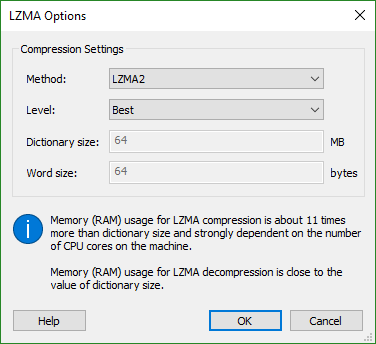
An LZMA file is a type of compressed file format that uses the LZMA compression algorithm to reduce the size of the file. This compression algorithm is known for its high compression ratio, which means that it can compress files to a much smaller size than other compression algorithms.

How does it work?

The LZMA compression algorithm works by analyzing the data in a file and identifying repeated patterns. It then replaces these patterns with shorter codes, which reduces the size of the file. The algorithm also uses a technique called dictionary compression, which stores frequently used patterns in a dictionary to further reduce the size of the file.

What are the advantages of using LZMA files?

There are several advantages to using LZMA files for file compression:

1. High compression ratio: The LZMA compression algorithm is known for its high compression ratio, which means that it can compress files to a much smaller size than other compression algorithms. This makes it ideal for storing large files on a computer or sharing them over the internet.

2. Fast decompression: While compressing files using the LZMA algorithm can take longer than other compression algorithms, decompressing LZMA files is much faster. This means that you can quickly access your files after they have been compressed.

3. Cross-platform compatibility: LZMA files can be used on a wide range of operating systems, including Windows, Linux, and Mac OS X. This makes it easy to share compressed files with others, regardless of the operating system they are using.

How to open LZMA files?

To open an LZMA file, you need to use a file archiver that supports the LZMA compression algorithm. Some of the popular file archivers that can open LZMA files include:

1. 7-Zip

2. WinRAR

3. PeaZip

4. Bandizip

Conclusion

In conclusion, an LZMA file is a type of compressed file format that uses the LZMA compression algorithm to reduce the size of the file. It offers several advantages, including high compression ratio, fast decompression, and cross-platform compatibility. If you want to open an LZMA file, you can use a file archiver that supports the LZMA compression algorithm.

Previous Article

ViewSonic’s Portable 4K OLED Monitor Is Something ...

Next Article

How to Fix Mfc42.dll Not Found or ...

Matthew Lynch

Related articles More from author

  • Digital & Mobile Technology

    How to Use Google Drive for Desktop

    June 23, 2023
    By Matthew Lynch
  • Digital & Mobile Technology

    A Guide to Changing the Wi-Fi Name (SSID) on a Network Router

    July 24, 2023
    By Matthew Lynch
  • Digital & Mobile Technology

    What is User Acceptance Testing (UAT)?

    May 14, 2023
    By Matthew Lynch
  • Digital & Mobile Technology

    How to Screen Share With FaceTime on a Mac

    June 7, 2023
    By Matthew Lynch
  • Digital & Mobile Technology

    What Is a Switch? Computer Networking

    June 4, 2023
    By Matthew Lynch
  • Digital & Mobile Technology

    How to Unofficially Play Halo Infinite’s Split-Screen Co-Op

    June 26, 2023
    By Matthew Lynch

Search

Login & Registration

  • Log in
  • Entries feed
  • Comments feed
  • WordPress.org

Newsletter

Signup for The Tech Edvocate Newsletter and have the latest in EdTech news and opinion delivered to your email address!

About Us

Since technology is not going anywhere and does more good than harm, adapting is the best course of action. That is where The Tech Edvocate comes in. We plan to cover the PreK-12 and Higher Education EdTech sectors and provide our readers with the latest news and opinion on the subject. From time to time, I will invite other voices to weigh in on important issues in EdTech. We hope to provide a well-rounded, multi-faceted look at the past, present, the future of EdTech in the US and internationally.

We started this journey back in June 2016, and we plan to continue it for many more years to come. I hope that you will join us in this discussion of the past, present and future of EdTech and lend your own insight to the issues that are discussed.

Newsletter

Signup for The Tech Edvocate Newsletter and have the latest in EdTech news and opinion delivered to your email address!

Contact Us

The Tech Edvocate
910 Goddin Street
Richmond, VA 23231
(601) 630-5238
[email protected]

Copyright © 2026 Matthew Lynch. All rights reserved.