The Tech Edvocate

Top Menu

  • Advertisement
  • Apps
  • Home Page
  • Home Page Five (No Sidebar)
  • Home Page Four
  • Home Page Three
  • Home Page Two
  • Home Tech2
  • Icons [No Sidebar]
  • Left Sidbear Page
  • Lynch Educational Consulting
  • My Account
  • My Speaking Page
  • Newsletter Sign Up Confirmation
  • Newsletter Unsubscription
  • Our Brands
  • Page Example
  • Privacy Policy
  • Protected Content
  • Register
  • Request a Product Review
  • Shop
  • Shortcodes Examples
  • Signup
  • Start Here
    • Governance
    • Careers
    • Contact Us
  • Terms and Conditions
  • The Edvocate
  • The Tech Edvocate Product Guide
  • Topics
  • Write For Us
  • Advertise

Main Menu

  • Start Here
    • Our Brands
    • Governance
      • Lynch Educational Consulting, LLC.
      • Dr. Lynch’s Personal Website
      • Careers
    • Write For Us
    • The Tech Edvocate Product Guide
    • Contact Us
    • Books
    • Edupedia
    • Post a Job
    • The Edvocate Podcast
    • Terms and Conditions
    • Privacy Policy
  • Topics
    • Assistive Technology
    • Child Development Tech
    • Early Childhood & K-12 EdTech
    • EdTech Futures
    • EdTech News
    • EdTech Policy & Reform
    • EdTech Startups & Businesses
    • Higher Education EdTech
    • Online Learning & eLearning
    • Parent & Family Tech
    • Personalized Learning
    • Product Reviews
  • Advertise
  • Tech Edvocate Awards
  • The Edvocate
  • Pedagogue
  • School Ratings

logo

The Tech Edvocate

  • Start Here
    • Our Brands
    • Governance
      • Lynch Educational Consulting, LLC.
      • Dr. Lynch’s Personal Website
        • My Speaking Page
      • Careers
    • Write For Us
    • The Tech Edvocate Product Guide
    • Contact Us
    • Books
    • Edupedia
    • Post a Job
    • The Edvocate Podcast
    • Terms and Conditions
    • Privacy Policy
  • Topics
    • Assistive Technology
    • Child Development Tech
    • Early Childhood & K-12 EdTech
    • EdTech Futures
    • EdTech News
    • EdTech Policy & Reform
    • EdTech Startups & Businesses
    • Higher Education EdTech
    • Online Learning & eLearning
    • Parent & Family Tech
    • Personalized Learning
    • Product Reviews
  • Advertise
  • Tech Edvocate Awards
  • The Edvocate
  • Pedagogue
  • School Ratings
  • Viaim Opennote Review: The AI Note-Taker That Disappears Into Your Daily Routine

  • A Visitors Guide to Long Beach (CA), United States

  • A Visitor’s Guide to Fresno (CA), United States

  • A Visitors Guide to New Orleans (LA), United States

  • A Visitors Guide to Sacramento (CA), United States

  • A Visitors Guide to Lyon, France

  • JisuLife Ultra2 Portable Fan: A Powerful Multi-Function Cooling Solution

  • A Visitors Guide to Viña del Mar, Chile

  • A Visitors Guide to Århus, Denmark

  • A Visitors Guide to Bakersfield (CA), United States

Early Childhood & K-12 EdTech
Home›Early Childhood & K-12 EdTech›5 Trends That Are Improving K-12 Digital Learning Experiences

5 Trends That Are Improving K-12 Digital Learning Experiences

By Matthew Lynch
July 21, 2018
0
Spread the love

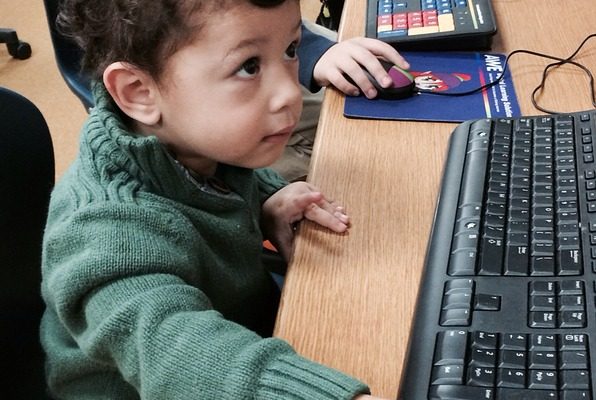
In this age of technology and innovation, the K-12 learning is continually evolving in order to adapt to the times. It’s important that teachers keep up-to-date with the latest helpful technology for their students and that parents understand the ramifications of that technology, too.

Here are five major classroom trends that are impacting the K-12 digital learning process:

  1. BYOD: This movement which embraces mobile technology through the devices that students already own has already gained momentum in many districts across the country, and it is rapidly moving towards mass adoption. Places like Chesapeake Public Schools are already allowed to use privately owned electronic devices to access the wireless network on the school system’s filtered Internet. In Chesapeake, as in the other public and private schools where BYOD policies exist, students must sign a responsibility form that says they will only use the mobile device for academic enrichment while on school property. Students who bring their own devices into the classroom eliminate the initial costs and are also already comfortable with the technology. The downside of course is that not all students can readily afford such technology, but look for schools to develop technology financial assistance programs for families to help offset the full cost and maintenance of school-owned devices.
  2. Customized learning experiences: Self-initiated and self-directed learning experiences are based upon individual needs, preferences and abilities of students who are then the masters of their own success.  The traditional way to look at learning is through teachers creating and assigning all work for students in a one-size-fits-all approach. On the flip side, customized learning has the ability to incorporate a variety of resources, such as virtual learning, to aid in the learning process while making it a way for teachers to moderate one-on-one learning experiences in practical ways. I think that the idea of handing control to students is hypothetically frightening to some educators and administrators but once they’ve actually tried it on a small scale, personalized learning actually looks more attractive from an adult’s perspective.
  3. Online learning: Virtual learning is certainly not new to the K-12 scene, but its increasing popularity can’t be ignored. It used to be that online learning was associated only with distance learning, or students who went through the academic process off of school grounds. Today, online learning is more segmented and often just one part of a more traditional learning experience. Virtual learning is no longer all or nothing; it has become mainstream and will continue to transform in-classroom learning.
  4. Early education emphasis: Optional preschool is quickly becoming a thing of the past. Research shows that students who start the formal education experience, even one year earlier than Kindergarten, fare better long term in their academic careers. Thirty eight states offer free, voluntary preschool learning programs and nearly 1.6 million low-income families receive assistance from the federal Child Care Development Fund to pursue early childhood education. That fund is just one portion of President Obama’s $75 billion plan to expand early childhood learning in order to give American students a stronger foundation going into Kindergarten. I expect that in the next decade, our terminology will change from K-12 to PK-12 when we talk about student benchmarks.
  5. Strengthening STEM education: A greater focus on science, technology, engineering and math (STEM) learning has been a “trend” for at least the better part of a decade.  Specifically, teachers are looking for innovative ways to deliver STEM material (mobile technology is just one way, virtual science labs are another) and more stringent benchmarks are being created at the local, state and federal level. It is no longer enough for American students to just get by in comparison to each other in STEM subjects; global competition is proving that students in the U.S. need more focus in these subjects to lead the worldwide marketplace as adults.

As you can see, K-12 classrooms are not at all static, but will continue to incorporate cutting-edge technology and socially relevant practices into the curriculum. Understanding and supporting this technology is vital to advancing K-12 students to the next level of their educational success.

 

Previous Article

Digital Learning on a Budget: How to ...

Next Article

8 Attributes of Successful Schools in the ...

Matthew Lynch

Related articles More from author

  • Early Childhood & K-12 EdTech

    How to Use AR Interactive Print in the Classroom

    April 8, 2018
    By Matthew Lynch
  • Early Childhood & K-12 EdTech

    Teaching Students about the Interplay of Ethics and Technology

    August 30, 2018
    By Matthew Lynch
  • Early Childhood & K-12 EdTechFeaturedFresh

    Why Higher Education Needs More Chief Innovation Officers

    November 3, 2018
    By Matthew Lynch
  • Best of the Best ListsEarly Childhood & K-12 EdTech

    The Tech Edvocate’s List of 20 Must-Follow K-12 Edtech Twitter Feeds

    January 31, 2017
    By Matthew Lynch
  • Early Childhood & K-12 EdTech

    Apps and Tools That Will Help You Develop an Individualized Family Service Plan (IFSP)

    June 8, 2018
    By Matthew Lynch
  • Best of the Best ListsEarly Childhood & K-12 EdTech

    Consider These Six Digital Resources for Your Classroom

    August 29, 2017
    By Matthew Lynch

Search

Login & Registration

  • Register
  • Log in
  • Entries feed
  • Comments feed
  • WordPress.org

Newsletter

Signup for The Tech Edvocate Newsletter and have the latest in EdTech news and opinion delivered to your email address!

About Us

Since technology is not going anywhere and does more good than harm, adapting is the best course of action. That is where The Tech Edvocate comes in. We plan to cover the PreK-12 and Higher Education EdTech sectors and provide our readers with the latest news and opinion on the subject. From time to time, I will invite other voices to weigh in on important issues in EdTech. We hope to provide a well-rounded, multi-faceted look at the past, present, the future of EdTech in the US and internationally.

We started this journey back in June 2016, and we plan to continue it for many more years to come. I hope that you will join us in this discussion of the past, present and future of EdTech and lend your own insight to the issues that are discussed.

Newsletter

Signup for The Tech Edvocate Newsletter and have the latest in EdTech news and opinion delivered to your email address!

Contact Us

The Tech Edvocate
910 Goddin Street
Richmond, VA 23231
(601) 630-5238
[email protected]

Copyright © 2025 Matthew Lynch. All rights reserved.