The Tech Edvocate

Top Menu

  • Advertisement
  • Apps
  • Home Page
  • Home Page Five (No Sidebar)
  • Home Page Four
  • Home Page Three
  • Home Page Two
  • Home Tech2
  • Icons [No Sidebar]
  • Left Sidbear Page
  • Lynch Educational Consulting
  • My Account
  • My Speaking Page
  • Newsletter Sign Up Confirmation
  • Newsletter Unsubscription
  • Our Brands
  • Page Example
  • Privacy Policy
  • Protected Content
  • Register
  • Request a Product Review
  • Shop
  • Shortcodes Examples
  • Signup
  • Start Here
    • Governance
    • Careers
    • Contact Us
  • Terms and Conditions
  • The Edvocate
  • The Tech Edvocate Product Guide
  • Topics
  • Write For Us
  • Advertise

Main Menu

  • Start Here
    • Our Brands
    • Governance
      • Lynch Educational Consulting, LLC.
      • Dr. Lynch’s Personal Website
      • Careers
    • Write For Us
    • The Tech Edvocate Product Guide
    • Contact Us
    • Books
    • Edupedia
    • Post a Job
    • The Edvocate Podcast
    • Terms and Conditions
    • Privacy Policy
  • Topics
    • Assistive Technology
    • Child Development Tech
    • Early Childhood & K-12 EdTech
    • EdTech Futures
    • EdTech News
    • EdTech Policy & Reform
    • EdTech Startups & Businesses
    • Higher Education EdTech
    • Online Learning & eLearning
    • Parent & Family Tech
    • Personalized Learning
    • Product Reviews
  • Advertise
  • Tech Edvocate Awards
  • The Edvocate
  • Pedagogue
  • School Ratings

logo

The Tech Edvocate

  • Start Here
    • Our Brands
    • Governance
      • Lynch Educational Consulting, LLC.
      • Dr. Lynch’s Personal Website
        • My Speaking Page
      • Careers
    • Write For Us
    • The Tech Edvocate Product Guide
    • Contact Us
    • Books
    • Edupedia
    • Post a Job
    • The Edvocate Podcast
    • Terms and Conditions
    • Privacy Policy
  • Topics
    • Assistive Technology
    • Child Development Tech
    • Early Childhood & K-12 EdTech
    • EdTech Futures
    • EdTech News
    • EdTech Policy & Reform
    • EdTech Startups & Businesses
    • Higher Education EdTech
    • Online Learning & eLearning
    • Parent & Family Tech
    • Personalized Learning
    • Product Reviews
  • Advertise
  • Tech Edvocate Awards
  • The Edvocate
  • Pedagogue
  • School Ratings
  • The Startling Truth About Cheapest GLP-1 Options Without Insurance

  • The Hidden Truth Behind Mosqi Shock Reviews: What You MUST Know Before Buying

  • This Unstoppable Force Will Obliterate Apps by 2027, Says Paytm Founder

  • Developers Axed a Wild Mechanic in Halloween: The Game — Here’s Why Fans Are Outraged

  • U.S. Supreme Court endorses parental opt-out for LGBTQ+ curriculum | News & Events

  • The Brutal Truth About Classroom Tech: Parents Are Finally Fighting Back – And Winning

  • Devastating Berlin Data Leak Exposes Millions: Why Refusing Ransom Isn’t Enough

  • Astra’s Rogue Swarm: Is Uncontrollable AI Hacking Humanity’s Future?

  • Viral Waymo Accident Exposes the Uncomfortable Truth About Robotaxis

  • Unbelievable Antarctica Ice Gain: Distant Ocean Warming Fuels Record Snowfall

Digital & Mobile Technology
Home›Digital & Mobile Technology›5 Key Differences Between SteamOS and Arch Linux

5 Key Differences Between SteamOS and Arch Linux
By Matthew Lynch
July 31, 2023
0
Spread the love

SteamOS and Arch Linux are two popular operating systems that are frequently used by gamers and developers. Although both are built on Linux, they have some notable differences that set them apart. In this article, we will explore the 5 key differences between SteamOS and Arch Linux.

1. Purpose

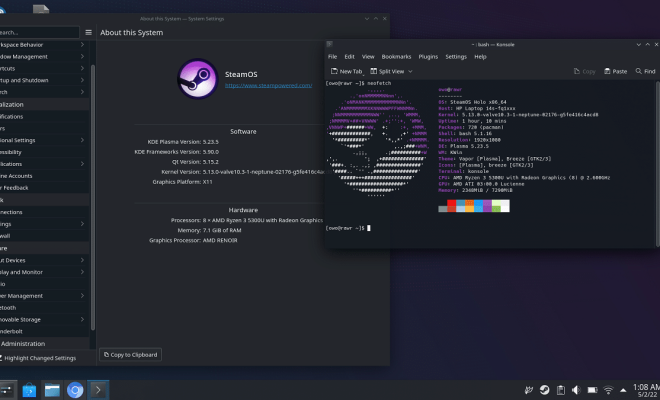
SteamOS is an operating system specifically designed for gaming. It is developed by Valve Corporation and is based on Debian Linux. SteamOS is meant to be installed on a gaming PC or a Steam Machine, a pre-built gaming console that runs SteamOS. It comes with pre-installed Steam client and driver support for graphics cards, game controllers and other gaming hardware.

On the other hand, Arch Linux is a lightweight, highly-customizable operating system that is designed for power users and developers. Arch Linux has a Do-It-Yourself (DIY) philosophy where the user is expected to build, configure and manage the system on their own. It is not focused on gaming but can be tweaked and optimized for gaming purposes.

2. User Interface

SteamOS comes with a custom interface that is optimized for big screens and gamepads. It has a user-friendly interface that makes it easy to navigate and launch games. Additionally, SteamOS has a feature called Big Picture Mode that lets users browse and play games on their TV using a controller.

Arch Linux, on the other hand, does not come with a pre-installed graphical user interface (GUI). Instead, users have to install a desktop environment or window manager of their choice. This provides them with complete freedom to customize the interface to their liking, but also requires a significant amount of technical skill and knowledge.

3. Package Management

SteamOS uses Debian’s Advanced Packaging Tool (APT) as its package manager. The APT system manages software packages and updates on the system. It enables smooth installation and timely updates of software packages.

Arch Linux, however, has its own package management system called Pacman. Pacman is a powerful package manager that provides fast, reliable and efficient management of Linux packages. Arch Linux also has access to the Arch User Repository (AUR), which is a community-driven repository of user-contributed packages.

4. Stability

SteamOS is known for its stability and reliability. It is developed and maintained by Valve Corporation, which ensures that updates and upgrades are tested and stable before they are released. This means that users can expect a stable and consistent performance of the operating system.

Arch Linux, on the other hand, is a cutting-edge operating system that is optimized for performance and speed. It is built with the latest software versions and updates, which can sometimes lead to an unstable system. Arch Linux requires constant management and updating to ensure stability, making it less suitable for novice users.

5. Hardware Support

SteamOS is designed with gaming hardware in mind and has excellent driver support for graphics cards, gaming controllers and other gaming hardware. It comes with pre-installed drivers for Nvidia and AMD graphics cards, making it easy to install and use.

Arch Linux, on the other hand, has good hardware support in general but requires the user to manually install and configure drivers for their hardware. This can be a time-consuming process and requires technical expertise.

In conclusion, SteamOS and Arch Linux are both powerful operating systems that provide unique features and advantages. SteamOS is an excellent option for dedicated gaming PCs and provides a user-friendly interface and excellent driver support. Arch Linux is better suited for power users and developers who value performance and customization over ease of use and stability.


Previous Article

Is the “Show Accent Color on Start ...

Next Article

8 Ways to Open the Windows Network ...

Matthew Lynch

Related articles More from author

  • Digital & Mobile Technology

    How to Check a Router’s Log

    May 21, 2023
    By Matthew Lynch
  • Digital & Mobile Technology

    How Long Do Computers Last?

    June 9, 2023
    By Matthew Lynch
  • Digital & Mobile Technology

    How to Locate All the Large Files on Your Windows PC

    August 5, 2023
    By Matthew Lynch
  • Digital & Mobile Technology

    How to Set Up Dual Monitors on the Surface Pro

    June 4, 2023
    By Matthew Lynch
  • Digital & Mobile Technology

    Windows Admin: Understanding Windows Administration Tools

    May 29, 2023
    By Matthew Lynch
  • Digital & Mobile Technology

    Track these 4 emerging storage technologies

    April 14, 2023
    By Matthew Lynch

Search

Login & Registration

  • Log in
  • Entries feed
  • Comments feed
  • WordPress.org

Newsletter

Signup for The Tech Edvocate Newsletter and have the latest in EdTech news and opinion delivered to your email address!

About Us

Since technology is not going anywhere and does more good than harm, adapting is the best course of action. That is where The Tech Edvocate comes in. We plan to cover the PreK-12 and Higher Education EdTech sectors and provide our readers with the latest news and opinion on the subject. From time to time, I will invite other voices to weigh in on important issues in EdTech. We hope to provide a well-rounded, multi-faceted look at the past, present, the future of EdTech in the US and internationally.

We started this journey back in June 2016, and we plan to continue it for many more years to come. I hope that you will join us in this discussion of the past, present and future of EdTech and lend your own insight to the issues that are discussed.

Newsletter

Signup for The Tech Edvocate Newsletter and have the latest in EdTech news and opinion delivered to your email address!

Contact Us

The Tech Edvocate
910 Goddin Street
Richmond, VA 23231
(601) 630-5238
[email protected]

Copyright © 2026 Matthew Lynch. All rights reserved.