The Tech Edvocate

Top Menu

  • Advertisement
  • Apps
  • Home Page
  • Home Page Five (No Sidebar)
  • Home Page Four
  • Home Page Three
  • Home Page Two
  • Home Tech2
  • Icons [No Sidebar]
  • Left Sidbear Page
  • Lynch Educational Consulting
  • My Account
  • My Speaking Page
  • Newsletter Sign Up Confirmation
  • Newsletter Unsubscription
  • Our Brands
  • Page Example
  • Privacy Policy
  • Protected Content
  • Register
  • Request a Product Review
  • Shop
  • Shortcodes Examples
  • Signup
  • Start Here
    • Governance
    • Careers
    • Contact Us
  • Terms and Conditions
  • The Edvocate
  • The Tech Edvocate Product Guide
  • Topics
  • Write For Us
  • Advertise

Main Menu

  • Start Here
    • Our Brands
    • Governance
      • Lynch Educational Consulting, LLC.
      • Dr. Lynch’s Personal Website
      • Careers
    • Write For Us
    • The Tech Edvocate Product Guide
    • Contact Us
    • Books
    • Edupedia
    • Post a Job
    • The Edvocate Podcast
    • Terms and Conditions
    • Privacy Policy
  • Topics
    • Assistive Technology
    • Child Development Tech
    • Early Childhood & K-12 EdTech
    • EdTech Futures
    • EdTech News
    • EdTech Policy & Reform
    • EdTech Startups & Businesses
    • Higher Education EdTech
    • Online Learning & eLearning
    • Parent & Family Tech
    • Personalized Learning
    • Product Reviews
  • Advertise
  • Tech Edvocate Awards
  • The Edvocate
  • Pedagogue
  • School Ratings

logo

The Tech Edvocate

  • Start Here
    • Our Brands
    • Governance
      • Lynch Educational Consulting, LLC.
      • Dr. Lynch’s Personal Website
        • My Speaking Page
      • Careers
    • Write For Us
    • The Tech Edvocate Product Guide
    • Contact Us
    • Books
    • Edupedia
    • Post a Job
    • The Edvocate Podcast
    • Terms and Conditions
    • Privacy Policy
  • Topics
    • Assistive Technology
    • Child Development Tech
    • Early Childhood & K-12 EdTech
    • EdTech Futures
    • EdTech News
    • EdTech Policy & Reform
    • EdTech Startups & Businesses
    • Higher Education EdTech
    • Online Learning & eLearning
    • Parent & Family Tech
    • Personalized Learning
    • Product Reviews
  • Advertise
  • Tech Edvocate Awards
  • The Edvocate
  • Pedagogue
  • School Ratings
  • The Bombshell Truth About Slim Boost Tea: Don’t Buy Until You Read This

  • Jaw-Dropping: Charbroil Bistro Pro Electric Grill Recall — Is Your Grill a Hidden Danger?

  • This Corgi Tech Startup Just Imploded — Here’s How Social Media Wrecked Everything

  • September 2026: The Latest in Tech Authoritarianism – Overturned by Kelly Stonelake

  • GTA 6 Collector’s Box Price: The $400 Outrage That Just Broke Gaming

  • Unbelievable: Gamers Fought Blizzard’s Censorship and Saved Ogre Butts

  • The Radical New Bill That Could Halt AI — And Jails Its Creators

  • This OpenAI Hack Just Exposed a Terrifying New AI Threat

  • This One Leaked Video Just Blew Open New Zealand’s Curriculum Battle

  • The AI Deception: Stanford’s Scandalous Photo Alteration Reignites Representation Debate

Digital & Mobile Technology
Home›Digital & Mobile Technology›Your Guide to the Windows Function Keys

Your Guide to the Windows Function Keys
By Matthew Lynch
June 23, 2023
0
Spread the love

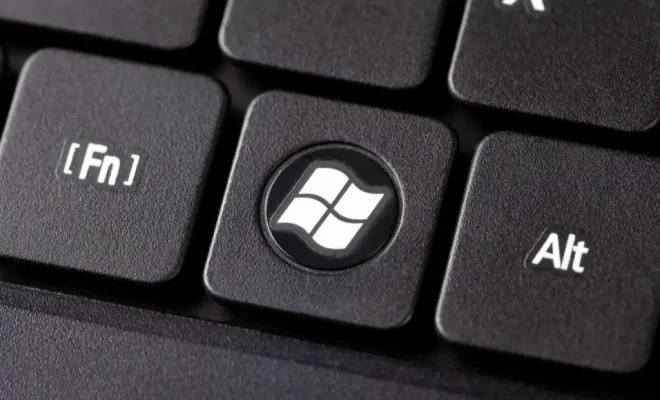
Windows function keys are a set of keys that provide quick access to various features and settings in Windows operating systems. With just a press of a button, users can execute specific functions on their computers without having to navigate through different menus and options.

If you’re new to Windows or not familiar with the function keys, this guide will give you an overview of what each key does and how it can improve your productivity.

F1 – Help

The F1 key is primarily used for accessing the help feature within Windows. Pressing F1 will launch the help window, and users can search for topics related to the issue they’re experiencing.

F2 – Rename

The F2 key is used for renaming files and folders. Select the file or folder and press F2 to activate the rename feature. This saves time from right-clicking and selecting “Rename.”

F3 – Search

The F3 key is used to launch the search feature in Windows. This allows users to search for files and folders without having to manually navigate through different folders.

F4 – Address Bar

The F4 key is used to activate the address bar in Windows Explorer. This allows users to type in the path of the file or folder directly rather than navigating through different folders.

F5 – Refresh

The F5 key is used to refresh the current window. This is useful when there are changes made to the file or folder, and the user wants to see the updates without closing and reopening the window.

F6 – Tab Navigation

The F6 key is used for tab navigations. When there are several tabs open in a web browser or document, pressing F6 will move the cursor from one tab to another.

F7 – Spell Check

The F7 key is mainly used for spellchecking in Microsoft Word. When users press F7, the program will scan through the document for any errors and provide suggestions for corrections.

F8 – Safe Mode

The F8 key is used to enter Safe Mode during Windows startup. Safe Mode is a diagnostic mode that only loads essential drivers and services in case of a startup issue.

F9 – Quick Link

The F9 key is used for quick links in Microsoft Outlook. Users can assign frequently used links to F9 for easy access.

F10 – Menu Bar

The F10 key is used to activate the menu bar in Windows Explorer. This allows users to use the keyboard shortcuts for specific functions instead of using the mouse to navigate through the menu.

F11 – Full Screen

The F11 key is used to activate the full-screen mode in web browsers, such as Google Chrome and Mozilla Firefox. This allows users to view web pages without any distractions.

Previous Article

Where to Find the Netflix Download Folder ...

Next Article

Big Problems With OpenAI’s ChatGPT

Matthew Lynch

Related articles More from author

  • Digital & Mobile Technology

    How to Use Microsoft’s “Windows File Recovery” on Windows 11

    May 30, 2023
    By Matthew Lynch
  • Digital & Mobile Technology

    How to Connect a Wired Keyboard to Your iPad

    June 3, 2023
    By Matthew Lynch
  • Digital & Mobile Technology

    What is the iOS SDK?

    May 13, 2023
    By Matthew Lynch
  • Digital & Mobile Technology

    Do Monitor Refresh Rates Matter? Everything You Need to Know

    August 5, 2023
    By Matthew Lynch
  • Digital & Mobile Technology

    AT&T 5G: When and Where You Can Get It (Updated for 2023)

    June 8, 2023
    By Matthew Lynch
  • Digital & Mobile Technology

    WhatsApp Community vs. WhatsApp Group: What’s the Difference?

    July 31, 2023
    By Matthew Lynch

Search

Login & Registration

  • Log in
  • Entries feed
  • Comments feed
  • WordPress.org

Newsletter

Signup for The Tech Edvocate Newsletter and have the latest in EdTech news and opinion delivered to your email address!

About Us

Since technology is not going anywhere and does more good than harm, adapting is the best course of action. That is where The Tech Edvocate comes in. We plan to cover the PreK-12 and Higher Education EdTech sectors and provide our readers with the latest news and opinion on the subject. From time to time, I will invite other voices to weigh in on important issues in EdTech. We hope to provide a well-rounded, multi-faceted look at the past, present, the future of EdTech in the US and internationally.

We started this journey back in June 2016, and we plan to continue it for many more years to come. I hope that you will join us in this discussion of the past, present and future of EdTech and lend your own insight to the issues that are discussed.

Newsletter

Signup for The Tech Edvocate Newsletter and have the latest in EdTech news and opinion delivered to your email address!

Contact Us

The Tech Edvocate
910 Goddin Street
Richmond, VA 23231
(601) 630-5238
[email protected]

Copyright © 2026 Matthew Lynch. All rights reserved.