The Tech Edvocate

Top Menu

  • Advertisement
  • Apps
  • Home Page
  • Home Page Five (No Sidebar)
  • Home Page Four
  • Home Page Three
  • Home Page Two
  • Home Tech2
  • Icons [No Sidebar]
  • Left Sidbear Page
  • Lynch Educational Consulting
  • My Account
  • My Speaking Page
  • Newsletter Sign Up Confirmation
  • Newsletter Unsubscription
  • Our Brands
  • Page Example
  • Privacy Policy
  • Protected Content
  • Register
  • Request a Product Review
  • Shop
  • Shortcodes Examples
  • Signup
  • Start Here
    • Governance
    • Careers
    • Contact Us
  • Terms and Conditions
  • The Edvocate
  • The Tech Edvocate Product Guide
  • Topics
  • Write For Us
  • Advertise

Main Menu

  • Start Here
    • Our Brands
    • Governance
      • Lynch Educational Consulting, LLC.
      • Dr. Lynch’s Personal Website
      • Careers
    • Write For Us
    • The Tech Edvocate Product Guide
    • Contact Us
    • Books
    • Edupedia
    • Post a Job
    • The Edvocate Podcast
    • Terms and Conditions
    • Privacy Policy
  • Topics
    • Assistive Technology
    • Child Development Tech
    • Early Childhood & K-12 EdTech
    • EdTech Futures
    • EdTech News
    • EdTech Policy & Reform
    • EdTech Startups & Businesses
    • Higher Education EdTech
    • Online Learning & eLearning
    • Parent & Family Tech
    • Personalized Learning
    • Product Reviews
  • Advertise
  • Tech Edvocate Awards
  • The Edvocate
  • Pedagogue
  • School Ratings

logo

The Tech Edvocate

  • Start Here
    • Our Brands
    • Governance
      • Lynch Educational Consulting, LLC.
      • Dr. Lynch’s Personal Website
        • My Speaking Page
      • Careers
    • Write For Us
    • The Tech Edvocate Product Guide
    • Contact Us
    • Books
    • Edupedia
    • Post a Job
    • The Edvocate Podcast
    • Terms and Conditions
    • Privacy Policy
  • Topics
    • Assistive Technology
    • Child Development Tech
    • Early Childhood & K-12 EdTech
    • EdTech Futures
    • EdTech News
    • EdTech Policy & Reform
    • EdTech Startups & Businesses
    • Higher Education EdTech
    • Online Learning & eLearning
    • Parent & Family Tech
    • Personalized Learning
    • Product Reviews
  • Advertise
  • Tech Edvocate Awards
  • The Edvocate
  • Pedagogue
  • School Ratings
  • The Silent Revolution: How AI Property Valuation Is Quietly Reshaping Real Estate

  • The Astonishing Truth: Why Your Dream Car Is Now a $52,000 Illusion

  • Toxic Algorithms: Why Your Bank’s AI Could Cost You Everything

  • OpenAI’s GPT-6 Cyber: A Dangerous New AI Threat or Our Ultimate Digital Guardian?

  • This Game-Changing Natural Ozempic Alternative Just Blew Up on Social Media

  • Bónuszösszeg, ingyen pörgetés és befizetési feltétel: üdvözlő és befizetés nélküli kaszinóajánlatok magyar játékosoknak

  • 9 Critical Reasons Why Athexio Might Be The Investment You Need (Or Should Avoid)

  • A Single Breakthrough Could Finally Kill Range Anxiety for Millions of EV Owners

  • Your Money, Their AI: The Secret Agents Invading Bank Accounts

  • US Battery as a Service Market Shifts Toward Fleet-Based Energy

Tech Advice
Home›Tech Advice›Yes, you can use Windows software on a Chromebook

Yes, you can use Windows software on a Chromebook
By Matthew Lynch
July 13, 2023
0
Spread the love

In recent years, Chromebooks have gained popularity as an affordable and user-friendly alternative to traditional laptops. These lightweight devices run on Google’s Chrome OS, which is designed to be simple, fast, and cloud-based. However, one of the common concerns among potential Chromebook users is the limited software options compared to Windows devices. If you’re wondering whether it’s possible to use Windows software on a Chromebook, you’ll be pleased to know that the answer is yes! This article will walk you through the methods available to make this happen.

1. Google Play Store – Android Apps

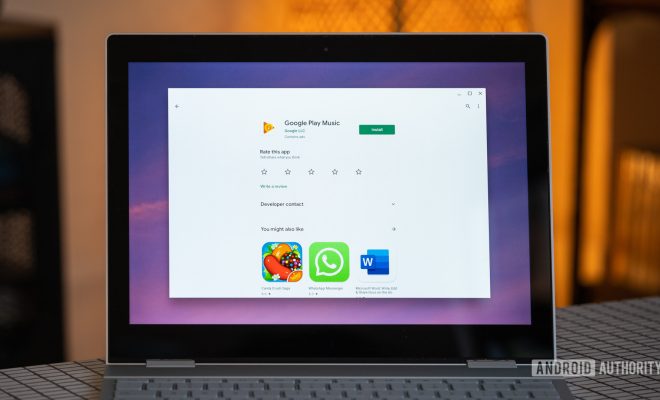
Firstly, as Chrome OS has matured over time, the Google Play Store has become increasingly integrated into these devices. This means that many Android apps, including some of your favorite Windows software, are available for download on your Chromebook.

Of course, not all Windows software has an Android version. However, many popular productivity tools like Microsoft Office and Adobe Suite have made their way onto the platform. Simply access the Google Play Store from your Chromebook and search for the desired application to check whether it’s available.

2. Crouton

Another option for those who want fuller access to Windows software on their Chromebooks is installing an alternate operating system—the most popular choice being Linux. One of the easiest ways to accomplish this installation is through Crouton.

Crouton allows you to run a full-fledged Linux environment alongside your existing Chrome OS installation without any need for disk partitioning or hardware configuration changes. Once you have Linux installed on your device using Crouton, you can access thousands of desktop Linux applications and even some Windows applications with compatibility layers such as Wine or PlayOnLinux.

However, using Crouton does require putting your Chromebook into developer mode, which could potentially void your device’s warranty and make it less secure.

3. Remote Connectivity

If neither of these options works for you, you can still access your favorite Windows software from your Chromebook using remote connectivity apps. These applications allow you to connect to another device, such as a Windows computer or server, and use the software installed on that system.

For instance, Chromebooks come with Google’s own remote desktop app called Chrome Remote Desktop. This app enables users to control other devices running Chrome entirely through the cloud. Additionally, there are third-party options like TeamViewer and SplashTop that offer similar capabilities.

Although leveraging remote connectivity tools may not be as convenient as having these applications installed directly on your Chromebook, it can often serve as a sufficient workaround for many users.

In conclusion, while it’s true that Chromebooks don’t natively support Windows software, there are several alternatives available. Whether it’s through Android apps, alternate operating systems like Linux, or remote connections to other devices, it is entirely possible to enjoy your Windows favorites on a Chromebook with a bit of creativity and adaptation. So go ahead and explore these options to get the most out of your versatile Chromebook!


Previous Article

‘This PC can’t run Windows 11’: How ...

Next Article

How to get your Ethernet-only gadgets on ...

Matthew Lynch

Related articles More from author

  • Tech Advice

    The Best Third-Party Bands for the Titanium-Clad Apple Watch Ultra

    August 11, 2023
    By Matthew Lynch
  • Tech Advice

    2024 Mercedes-AMG S63 First Drive: Marvel at This Hybrid Supersedan’s Immense Power

    August 19, 2023
    By Matthew Lynch
  • Tech Advice

    Hidden Figures’ and the true NASA stories behind the movie

    July 4, 2023
    By Matthew Lynch
  • Tech Advice

    Microsoft shows off Xbox trailers, hardware, services at E3

    January 31, 2024
    By Matthew Lynch
  • Tech Advice

    Car Insurance for Unmarried Couples: Everything You Need to Know

    August 18, 2023
    By Matthew Lynch
  • Tech Advice

    2024 Lincoln Nautilus Gains 48.0-Inch Screen, Hybrid Powertrain

    August 11, 2023
    By Matthew Lynch

Search

Login & Registration

  • Log in
  • Entries feed
  • Comments feed
  • WordPress.org

Newsletter

Signup for The Tech Edvocate Newsletter and have the latest in EdTech news and opinion delivered to your email address!

About Us

Since technology is not going anywhere and does more good than harm, adapting is the best course of action. That is where The Tech Edvocate comes in. We plan to cover the PreK-12 and Higher Education EdTech sectors and provide our readers with the latest news and opinion on the subject. From time to time, I will invite other voices to weigh in on important issues in EdTech. We hope to provide a well-rounded, multi-faceted look at the past, present, the future of EdTech in the US and internationally.

We started this journey back in June 2016, and we plan to continue it for many more years to come. I hope that you will join us in this discussion of the past, present and future of EdTech and lend your own insight to the issues that are discussed.

Newsletter

Signup for The Tech Edvocate Newsletter and have the latest in EdTech news and opinion delivered to your email address!

Contact Us

The Tech Edvocate
910 Goddin Street
Richmond, VA 23231
(601) 630-5238
[email protected]

Copyright © 2026 Matthew Lynch. All rights reserved.